
Pruning
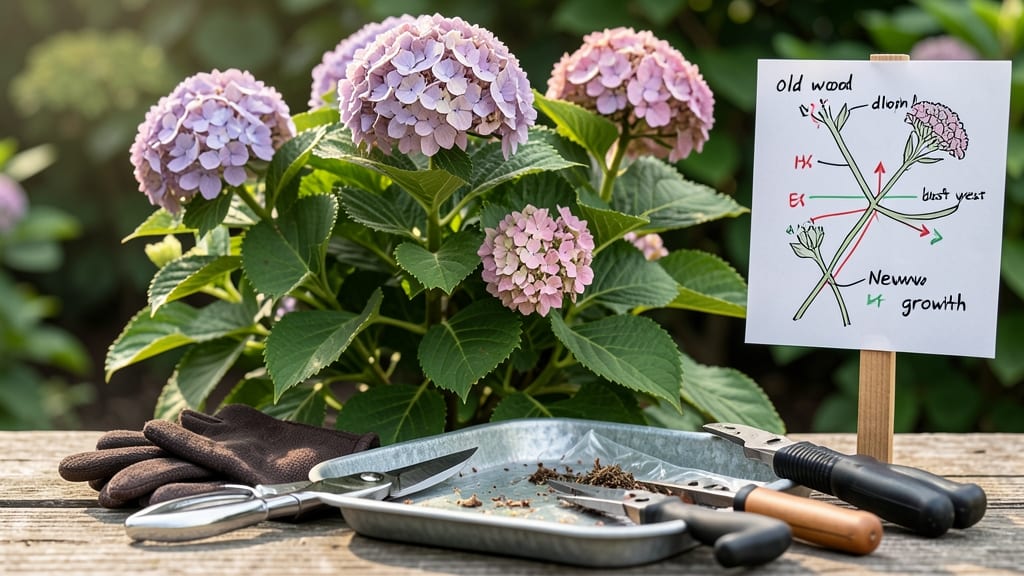
Can hydrangeas be pruned—absolutely—but timing and technique make all the difference. ✂️ I’ve learned the hard way that cutting at the wrong season can mean fewer blooms or even no flowers at all. The secret is knowing whether your hydrangea blooms on old wood, new wood, or both—and when to prune for maximum impact.
Most hydrangeas should be pruned in late winter or early spring, before new growth starts. You’ll need sharp pruners, gloves, and a clear day to see what you’re doing.
The goal is to shape the plant, remove dead wood, and encourage strong new growth—without cutting off next year’s flowers by accident.
After pruning, your hydrangeas will reward you with longer stems, fuller blooms, and healthier foliage. Just avoid the common mistakes: pruning too late, cutting back too aggressively, or ignoring dead branches. With the right approach, you’ll end up with lush, vibrant plants that keep blooming all season.
This method works for bigleaf, panicle, and oakleaf hydrangeas alike. Whether you’re dealing with a sprawling bush or a compact variety, the principles stay the same. Let’s get those blooms thriving!
📚 In This Guide
- What you need
- Instructions
- Tips and common mistakes
- Wrapping up and next steps
What you need
- ● Pruning shears – Bypass pruners (sharp, clean blades) for clean cuts on smaller stems. Specs: 4-6 inch blades, ergonomic grip.
- ● Loppers – For thicker stems (½ inch or larger). Specs: 18-24 inch handles, bypass or anvil type (bypass preferred).
- ● Garden gloves – Heavy-duty, cut-resistant (e.g., mechanized or reinforced) to protect hands from thorns and sharp edges.
- ● Disinfectant – 70% isopropyl alcohol or rubbing alcohol to sterilize tools between cuts (prevents disease spread).
- ● Rag or paper towels – For wiping tools clean before and after use.
- ○ Marking twine or flags – Optional but helpful for labeling stems if you’re rejuvenating or renewing a hydrangea.
- ● Pruning saw – For very thick stems (over 1 inch in diameter). Specs: curved blade for smooth cuts.
- ● Hydrangea-specific fertilizer – Balanced NPK (10-10-10) or acid-loving plant fertilizer to replenish nutrients post-pruning.
- ● Mulch – Organic mulch (pine bark or shredded leaves) to protect roots after trimming.
- ● Plant tie or twine – To support heavy stems if you’re heavily pruning for shape.
How to prune hydrangeas for thicker, more abundant blooms
Pruning hydrangeas in late winter or early spring isn't just about shaping—it's the secret to bigger, longer-lasting flowers next season. Here's the method I've used for years to transform my overgrown shrubs into showstopping bloomers.
✂️ Step 1: Identify Your Hydrangea Type First
This is the moment that matters: knowing your variety determines everything. Bigleaf hydrangeas (Hydrangea macrophylla) bloom on old wood, so you prune lightly. Panicle and smooth hydrangeas bloom on new wood, so you can cut back harder. I always check the flower shape—bigleaf blooms are round clusters, while panicle types have cone-shaped flowers.
If you're unsure, look for last year's flower stems. If they're still brown and dead, you're dealing with new-wood bloomers. If they're green and growing, you've got old-wood types. This simple visual check prevents the biggest pruning mistake of all—cutting back too aggressively on the wrong variety.
🌿 Step 2: Clean Up Dead and Weak Growth
Grab your pruners and start by removing any dead, diseased, or crossing branches. I like to work from the bottom up, cutting back to the base or to a strong outward-facing bud. Look for branches that are completely brown inside when you snap them—these are dead and need to go. You'll also see weak, spindly growth that never bloomed well; trim these back completely.
Don't worry about being perfect here. The goal is to open up the center of the shrub so air circulates better. You'll see the plant's natural shape emerge as you remove the clutter. For old-wood types, avoid cutting back more than 10-15% of the plant's total size—this keeps next year's flower buds intact.
✂️ Step 3: Shape for Better Airflow and Light
Now we're getting to the fun part—shaping. Step back and visualize an open, rounded form. Cut back branches that grow inward to create space in the center. For new-wood bloomers, you can cut all the way back to 4-6 inches from the ground on older stems, but leave some framework for new growth. I always make my cuts at a 45-degree angle just above a bud that faces outward.
Watch for water sprouts—those fast-growing, vertical shoots that never flower. Snip them off completely. You'll know you're doing it right when the plant starts looking like an airy, bushy cloud rather than a dense tangle. This open structure prevents fungal diseases and lets sunlight reach all the buds.
☀️ Step 4: Time Your Pruning for Maximum Blooms
For old-wood types like bigleaf hydrangeas, prune right after flowering or in early spring before new growth starts. For new-wood types, prune in late winter or early spring before buds swell. I mark my calendar so I never miss the window—pruning at the wrong time means fewer flowers next year.
After pruning, give your hydrangeas a good drink of water to help them recover. You'll see fresh, vibrant growth within a few weeks. This is when the real magic happens—the plant redirects its energy into producing stronger stems and more abundant flower buds for next season.
🪴 Step 5: Clean Up and Mulch for Recovery
Rake up all the pruned branches and dispose of them—don't compost diseased material. Then, spread 2-3 inches of mulch around the base, keeping it a few inches away from the stem. I use shredded bark mulch because it breaks down slowly and improves soil moisture over time.
This final step protects your hydrangeas from temperature swings and keeps weeds down. You'll notice new shoots emerging from the base within 3-4 weeks. That's your signal everything is working—watch for those first green leaves and you'll know the plant is ready to burst into bloom next season.
Tips & tricks for pruning hydrangeas like a pro
These simple strategies will help you avoid common mistakes and get the most out of your dormant-season pruning.
Type-Specific Pruning: The biggest mistake I see is treating all hydrangeas the same. For old-wood types like bigleaf hydrangeas, never cut back more than 10-15% of the plant's total size—this preserves next year's flower buds. With new-wood types, you can be more aggressive, cutting all the way back to 4-6 inches from the ground on older stems. I always make my cuts at a 45-degree angle just above an outward-facing bud to encourage proper regrowth.
Dead Branch Test: Before you cut, snap a branch between your fingers. If it's completely brown inside, it's dead and needs to go. If it's green, leave it alone. This simple test prevents you from removing healthy growth that might still produce flowers. I've learned this the hard way—once I accidentally pruned a perfectly good branch because it looked dry on the outside!
Mulch Matters: After pruning, spread 2-3 inches of mulch around the base but keep it a few inches away from the stem. I use shredded bark mulch because it breaks down slowly and helps maintain soil moisture. This step is often overlooked but makes a huge difference in helping your hydrangeas recover and establish strong new growth.
Timing is Everything: For old-wood types, prune right after flowering or in early spring before new growth starts. For new-wood types, late winter or early spring is ideal. I mark my calendar so I never miss this window—pruning at the wrong time means fewer flowers next year. The 3-4 weeks after pruning are critical for new shoot development, so keep an eye out for those first green leaves!
Pro Tips for Can Hydrangeas Be Pruned
- These simple strategies will help you avoid common mistakes and get the most out of your dormant-season pruning.
- Type-Specific Pruning: The biggest mistake I see is treating all hydrangeas the same. For old-wood types like bigleaf...
- Dead Branch Test: Before you cut, snap a branch between your fingers. If it's completely brown inside, it's dead and ...
Frequently asked questions
Got questions about pruning your hydrangeas? You’re not alone! Here are some of the most common concerns—plus clear, actionable answers to help you trim with confidence.
When is the best time to prune hydrangeas?
The ideal window is late winter to early spring (just before new growth starts), or right after they bloom in summer—depending on your hydrangea type. Bigleaf and oakleaf varieties (like ‘Endless Summer’) bloom on old wood, so prune after flowering. Panicle and smooth hydrangeas bloom on new wood, so trim in late winter.
Can I prune hydrangeas in fall?
Pruning in fall is risky—it leaves stems vulnerable to winter dieback or frost damage. If you must trim, wait until after the first hard frost but before the ground freezes. Otherwise, save it for dormant-season pruning in late winter.
What if I prune at the wrong time?
Don’t panic! If you cut back old wood by mistake, your hydrangea may skip blooming that season—but it’ll recover. For new wood bloomers, late pruning can delay or reduce flowers. Just adjust next year’s timing and keep an eye on new growth.
How much can I cut back without hurting my hydrangea?
For old wood types, trim only dead or damaged stems—never more than 1/3 of the plant. For new wood varieties, you can be bolder: cut back by 1/2 to 2/3 in late winter to encourage bushier growth. Always leave at least 2–3 buds per stem.
What if my hydrangeas won’t bloom after pruning?
Check these fixes:
- Wrong type: Old-wood hydrangeas need patience—skip pruning for 1–2 years.
- Over-pruned: Revert to minimal trimming next year.
- Poor conditions: Ensure 6+ hours of sun and consistent moisture.
- Fertilizer shock: Use a balanced, slow-release fertilizer in early spring.
Wrapping up and next steps
Pruning your hydrangeas during dormancy is a game-changer for vibrant blooms and a healthier plant! 🌸 Whether you’re shaping old wood or rejuvenating overgrown shrubs, timing and technique make all the difference. With the right tools and a little patience, you’ll enjoy lush, long-lasting flowers year after year.
Ready to level up your pruning skills? Grab your gloves and shears—your hydrangeas are waiting for their big transformation! 🌿 For more tips, check out our pruning guide or explore other seasonal care strategies.