
Pruning
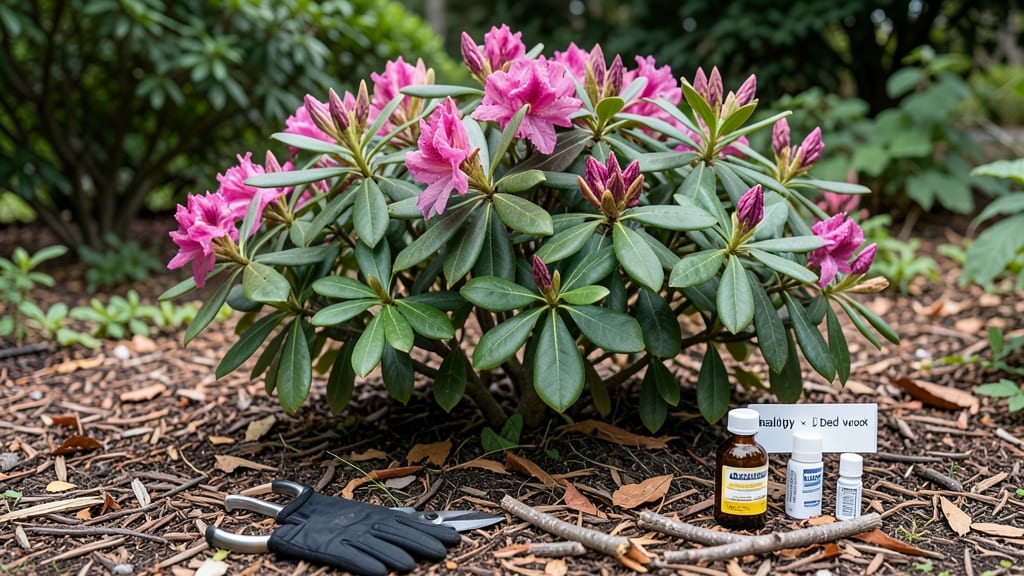
You can prune rhododendrons in the fall only when removing dead or diseased branches, as late-season cuts may damage next year's flower buds and weaken winter hardiness. For most varieties, light trimming after blooming in late spring or early summer is safest.
Fall pruning is risky because rhododendrons form flower buds in late summer—cutting too late removes next year's blooms entirely. 🌸 The tender new growth also struggles to harden off before winter, leaving plants vulnerable to frost damage and fungal infections from fall's damp conditions.
Even experienced gardeners often wait until late spring when the plant's energy shifts back to growth rather than dormancy.
If you must prune in fall, focus on removing only dead, diseased, or crossing branches—never more than 10% of the plant's total volume. Use sterilized shears and make clean cuts just above a bud or branch collar to minimize stress.
After trimming, apply a 2-3 inch layer of mulch around the base to protect roots from temperature swings.
Some evergreen varieties handle light fall pruning better than deciduous types, but even then, timing matters. For example, Rhododendron 'Catawbiense' can tolerate minor shaping in early fall, while azalea hybrids (a close relative) often bloom on old wood and should never be pruned after mid-summer.
Always research your specific cultivar before making cuts.
💡 In This Article
- Why Fall Pruning Harms Rhododendrons: Growth and Bloom Risks
- When and How to Safely Trim Rhododendrons in Fall
Why fall pruning harms rhododendrons: growth and bloom risks
Rhododendrons begin forming next year's flower buds in late summer—typically between July and August—when days shorten and temperatures cool.
These delicate buds develop at the tips of branches, and any pruning after mid-September risks removing them entirely. 🌸 When you cut back in fall, you're essentially snipping off the potential blooms before they've even fully formed, which explains why gardeners often see fewer flowers the following spring after late-season pruning.
The timing of fall pruning also disrupts the plant's natural hardening process. Rhododendrons enter dormancy gradually, and new growth from late cuts lacks time to mature and develop protective layers against winter frost.
Studies show that tender new shoots exposed to below 20°F temperatures can suffer irreversible damage, leaving the plant weakened. Additionally, fall's damp conditions create ideal environments for fungal pathogens like Phytophthora, which can enter through fresh pruning wounds.
Compare this to the ideal pruning window: late spring or early summer, after flowering but before bud set in late July. During this period, the plant has already allocated energy to blooms and is ready to focus on new growth.
Pruning then removes only spent flowers and encourages fresh foliage without compromising next year's display. The contrast in timing explains why professional gardeners emphasize waiting—fall cuts are like trimming a tree's branches in December instead of spring.
Another critical factor is the plant's energy reserves. Rhododendrons store carbohydrates in their roots and stems over summer to fuel winter survival and spring growth. Fall pruning depletes these reserves by removing foliage that would otherwise photosynthesize until dormancy.
This depletion forces the plant to divert energy from root strengthening and flower bud formation, creating a three-year cycle of reduced blooms after a single late-season cut.
Consider the example of Rhododendron 'Nova Zembla', a popular evergreen variety. When pruned in fall, it may produce only 30-50% of its usual flowers the following season, with buds often failing to open properly.
The same plant, when pruned in late May, maintains full bloom potential while encouraging denser foliage. This variety-specific response highlights why fall pruning should be a last resort—only for emergency removal of dead wood or disease.