
How To
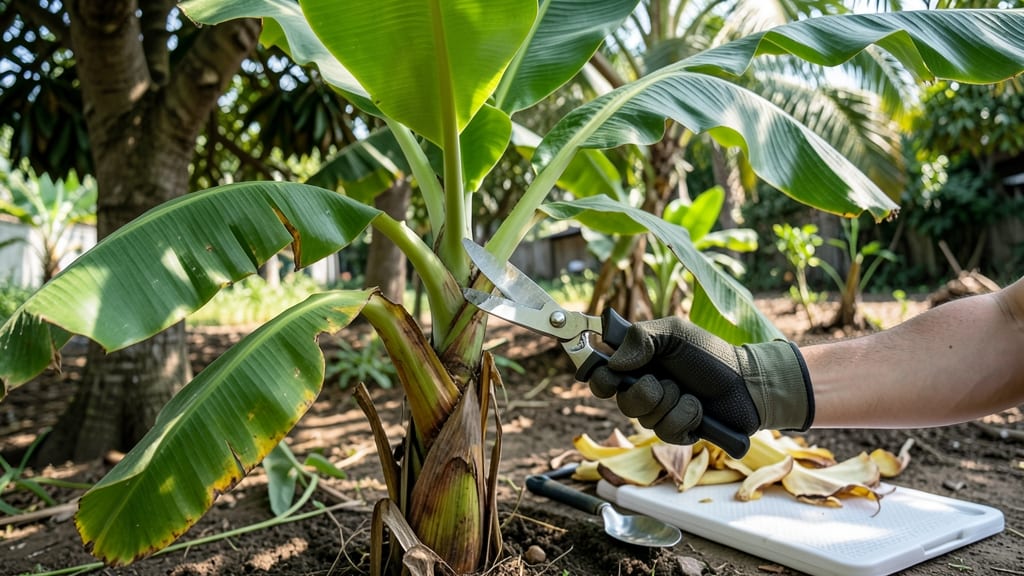
Pruning a banana tree isn't just about cutting back—it's about unlocking taller growth and bigger harvests while keeping your plant healthy. 🌿 I’ve learned the hard way that skipping this step leads to crowded fronds, fewer bananas, and a weaker trunk.
The key is timing: prune after fruiting or during dormancy, when the plant redirects energy into new shoots instead of wasted maintenance.
Start with clean cuts on dead or yellowing fronds, then thin out the oldest leaves to let sunlight reach the center. Avoid over-trimming—leave at least half the fronds to keep photosynthesis flowing.
With the right technique, you’ll see fresh, vibrant shoots within weeks, and your next harvest could be 20% larger than before. Just don’t rush: patience here means stronger regrowth.
📚 In This Guide
- What you need
- Instructions
- Tips and common mistakes
- Wrapping up and next steps
What you need
- ● Pruning shears or loppers: Sharp, sterilized (70% isopropyl alcohol works great) tools to avoid spreading disease. Choose bypass pruners (for clean cuts) or loppers (for thicker stems, up to 2" diameter).
- ● Garden gloves: Heavy-duty, cut-resistant gloves (size medium or large) to protect your hands from thorns and sap.
- ○ Disinfectant (optional but recommended): 1 part bleach to 9 parts water for wiping tools between cuts, or a copper fungicide (like Bordeaux mixture) to prevent fungal infections.
- ● Rope or twine: ¼" thick, strong twine or jute rope (10–15 feet) to support the tree post-pruning.
- ● Sharp knife or machete: A folding saw or pruning saw for larger branches (if your tree has thick pseudostems).
- ● Compost or mulch: A 2–3 inch layer of well-aged compost or straw to nourish the soil after pruning.
- ● Plant food: A balanced fertilizer (10-10-10 or similar) to replenish nutrients post-trimming.
- ● Spray bottle with water: To dampen sawdust and reduce fire risk if pruning in dry conditions.
- ● Safety goggles: If your tree has sharp edges or you’re working with a saw.
- ● Check the weather forecast—prune on a dry, overcast day to avoid stressing the tree.
- ● Wait until the tree is at least 3–4 feet tall (younger plants are too delicate).
- ● Ensure the tree is healthy (no signs of pests like banana weevils or fungal spots like Sigatoka disease).
- ● Have a clear workspace: Remove debris, rocks, or obstacles within a 6-foot radius.
Step-by-Step instructions for pruning a banana tree
Here's how I prune my banana trees to keep them healthy, productive, and looking their best.
✂️ Step 1: Identify and Remove Dead or Diseased Leaves
Start by inspecting your banana tree from top to bottom. Look for leaves that are completely brown, yellowed, or showing signs of disease like black spots or mold. These leaves are dead weight and can attract pests or spread disease to healthy foliage. I always work from the bottom up—it’s easier to spot issues when the lower leaves are out of the way.
Use clean, sharp pruning shears to cut each dead leaf at its base, making a clean cut just above where the leaf meets the stem. Avoid leaving stubs, as they can trap moisture and encourage rot. If you find any leaves with minor damage but still green, leave them—they’re still contributing to the plant’s energy production.
✂️ Step 2: Trim Overcrowded or Weak Growth
Banana trees grow quickly, and sometimes the center of the plant becomes overcrowded with weak, competing growth. Look for stems that are thin, leggy, or growing inward toward the center of the plant. These stems won’t produce strong fruit and can block sunlight from reaching the heart of the tree.
Use your pruning shears to trim back any stems that are growing in the wrong direction or competing with healthier growth. Focus on removing stems that are less than ½ inch in diameter—these are the ones that won’t contribute much to fruit production. Leave the thick, sturdy stems intact; these are the powerhouses of your tree.
✂️ Step 3: Prune Suckers for Better Fruit Production
Suckers are the small shoots that grow from the base of your banana tree. While they can eventually become new plants, they drain energy from your main tree if left unchecked. If you’re not planning to propagate new trees, remove all but one or two of the strongest suckers—these can replace your main tree once it’s done fruiting.
To remove a sucker, use your pruning shears to cut it off at the base, just above the soil line. Be careful not to damage the roots of the main plant. If you’re keeping a sucker to grow into a new tree, leave it attached but stake it separately to give it room to grow. This ensures your main tree has enough energy to focus on producing fruit.
✂️ Step 4: Cut Back Old Fruit Stems After Harvest
Once your banana tree has finished fruiting, the old flower stalk will turn brown and dry out. This is a clear signal that it’s time to remove it. Cut the old fruit stem back to the base of the plant using your pruning shears. This prevents the tree from wasting energy maintaining a dead stalk and encourages new growth.
After removing the old stalk, you’ll notice new shoots emerging from the center of the plant. These are the beginning of your next cycle of growth. Keep an eye on the tree in the coming weeks—you’ll see fresh leaves unfurling, and soon, a new flower stalk will begin to form. This is your cue that the tree is recovering and preparing for its next harvest.
✂️ Step 5: Clean Up and Maintain the Pruned Area
After pruning, gather all the trimmings and dispose of them properly. If any of the leaves or stems show signs of disease, bag them and throw them away to prevent spreading spores to other plants. Healthy trimmings can be composted or used as mulch around the base of the tree to enrich the soil.
Finally, give your banana tree a good watering to help it recover from the pruning. Focus on soaking the soil around the base rather than wetting the leaves, which can encourage fungal growth. With regular pruning and care, your banana tree will stay strong, produce abundant fruit, and continue to thrive for years to come.
Tips & tricks for pruning a banana tree
Banana trees reward careful pruning with bigger harvests and healthier growth. Here's what I've learned after years of working with these tropical giants.
Timing is Everything: The best time to prune is right after your tree has finished fruiting. This is when the plant naturally shifts energy toward recovery and new growth. Avoid pruning during flowering or when fruit is developing—you’ll stress the tree and risk losing your harvest. I always wait until the old flower stalk turns completely brown before cutting it back.
Tool Prep Makes All the Difference: Your pruning shears should be clean, sharp, and sterilized before you start. I dip mine in rubbing alcohol between cuts on diseased leaves to prevent spreading pathogens. Dull blades tear tissue, creating larger wounds that invite infection. For thick stems, I use a pruning saw for clean cuts without crushing the plant.
Visual Cues for Healthy Growth: When trimming overcrowded stems in Step 2, look for the "V" shape where new leaves emerge from the stem. Healthy growth will have vibrant green leaves with a firm texture. If you see yellowing or curling at the edges, that's a sign of stress—cut those stems back immediately. The thickest stems (over ½ inch) are your tree's energy producers; never remove these.
Sucker Strategy for Long-Term Fruit: If you're keeping suckers to replace your main tree, mark the strongest one with a plant tag during Step 3. I stake these suckers separately at a 45-degree angle to encourage upward growth. This prevents them from competing with the main plant while they develop. Remember, you only need one or two strong suckers—more than that will drain your tree's energy.
Pro Tips for Prune A Banana Tree
- Banana trees reward careful pruning with bigger harvests and healthier growth. Here's what I've learned after years o...
- Timing is Everything: The best time to prune is right after your tree has finished fruiting. This is when the plant n...
- Tool Prep Makes All the Difference: Your pruning shears should be clean, sharp, and sterilized before you start. I di...
Frequently asked questions
Got questions about pruning your banana tree? You’re not alone! Here are answers to the most common concerns—so you can trim with confidence and keep your tropical beauty thriving.
When is the best time to prune a banana tree?
Prune your banana tree after it’s finished fruiting or during its dormant phase (late winter/early spring in tropical climates). Avoid pruning during heavy fruit production—this stresses the plant. If you’re in a frost-prone area, wait until spring to prevent cold damage to fresh cuts.
Can I prune a banana tree too much?
Yes! Over-pruning removes too much energy storage (in the corm) and can stunt growth or reduce fruit yield. Never remove more than 30-40% of the leaves at once. Focus on dead, yellow, or damaged foliage first—healthy leaves are your tree’s power source!
Will pruning my banana tree increase fruit production?
Pruning can boost fruit production if done correctly. By removing old or diseased leaves, you redirect energy to new growth and flower stalks. However, prune only mature trees (3+ years old)—young plants need all their energy to establish roots. Patience pays off!
What if my banana tree doesn’t have any leaves to prune?
If your tree is nearly bare, it might be stressed, diseased, or dying. Check for pests (like banana weevils) or fungal issues (like sigatoka). If the pseudostem is healthy and firm, prune aggressively to encourage regrowth. If it’s soft or rotting, the tree may be beyond saving—consider replanting.
Do I need special tools to prune a banana tree?
Not necessarily! A sharp bypass pruner or loppers work for small branches, but larger cuts (like removing the entire pseudostem) require a pruning saw or handsaw. For safety, wear gloves and long sleeves—banana leaves have serrated edges that can cut!
Wrapping up and next steps
Pruning your banana tree might seem daunting, but with the right tools and techniques, you’ll boost growth, improve fruit production, and keep your plant healthy—all while avoiding common mistakes. 🌱 Remember, timing, sharp tools, and patience are your best friends!
Now that you’re armed with knowledge, grab those shears and get pruning—your banana tree (and future harvest) will thank you.
Ready to take it further? Next, explore how to fertilize or repot your banana tree for even better results!