
How To
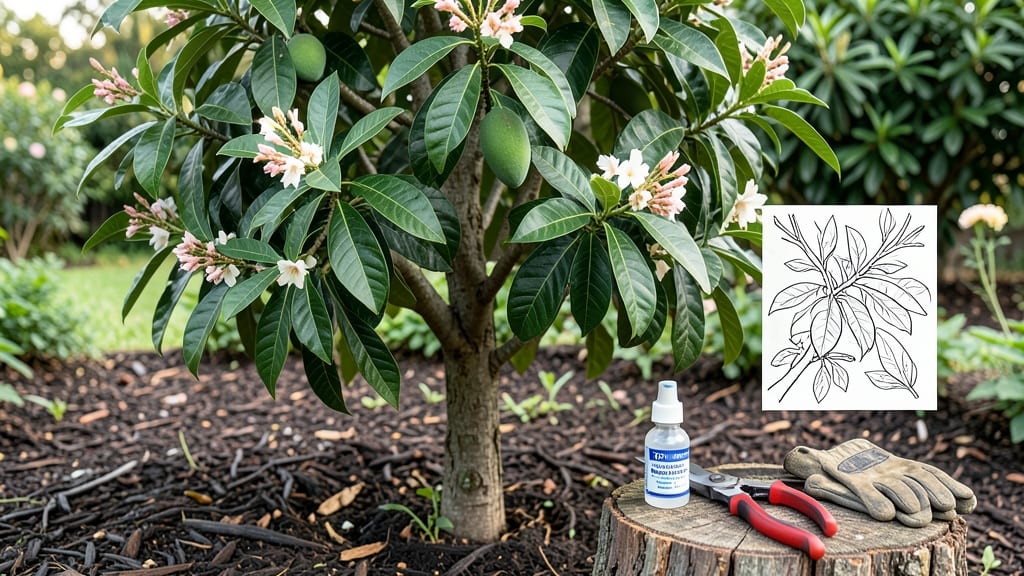
Pruning a mango tree transforms a scraggly mess into a fruit-bearing powerhouse. 🌱 I’ve watched my own tree go from tangled branches to a sunlit canopy bursting with sweet, juicy fruit—just by cutting at the right time and in the right way.
The key isn’t just trimming; it’s sculpting the tree’s future while keeping it healthy and productive.
Start with the right tools—a sharp bypass pruner, loppers, and gloves—and focus on three critical cuts: removing dead wood, thinning crowded branches, and shaping for airflow.
Timing matters too—light pruning during the growing season encourages new growth, while heavier cuts in late winter or early spring set the stage for the year’s harvest. Avoid over-pruning, or you’ll sacrifice next year’s fruit.
📚 In This Guide
- What you need
- Instructions
- Tips and common mistakes
- Wrapping up and next steps
What you need
- ● Pruning shears (bypass or anvil type) – Choose 6- to 8-inch blades for cutting branches up to ½ inch thick.
- ● Loppers – For branches ½ to 1½ inches thick (look for 20- to 24-inch handles for leverage).
- ● Pruning saw – For thicker branches (1½+ inches) (a curved-tooth saw prevents tearing).
- ● Gloves (cut-resistant) – Heavy-duty leather or mesh gloves to protect hands from thorns and sharp edges.
- ● Disinfectant (70% isopropyl alcohol or bleach solution) – Clean tools between cuts to prevent disease spread.
- ● Rubbing alcohol or hand sanitizer – For sanitizing hands after handling sap or thorns.
- ○ Bucket or trash bag – For collecting pruned branches (optional: line with a plastic bag for easy disposal).
- ● Ladder or step stool – Adjustable height, 12-16 feet tall (if your tree is mature).
- ○ Sharpie or permanent marker – For marking cuts (optional, but helpful for planning).
- ● Safety glasses – Protects eyes from debris (especially when using a saw).
- ● Long sleeves and pants – Thorn-resistant fabric (e.g., denim or thick cotton).
- ● Work boots or closed-toe shoes – Steel-toe recommended for heavy branches.
- ● Weather check – Prune on a dry, cloudy day (avoid extreme heat or wind).
- ● Tree health assessment – Inspect for pests/disease before pruning (treat issues first if needed).
- ● Pole pruner – For high branches (extends reach up to 20 feet).
- ○ Tree wound dressing (optional) – Pruning sealant for large cuts (controversial—some experts say it’s unnecessary!).
- ● Notebook & pen – To sketch your pruning plan or track progress.
- ● Hose or water spray – To clean sap off tools and refresh cuts.
How to prune a mango tree: seasonal techniques for optimal growth
Pruning isn't just about shaping—it's about unlocking your mango tree's potential for bigger fruit and stronger branches.
🌿 Step 1: Identify the Right Time for Pruning
Timing matters most with mango trees. I always prune during the dormant season, which in most tropical climates is late winter to early spring—just before new growth begins. This gives the tree time to heal before the flowering season. If you're in a subtropical zone, aim for February-March when days start warming but before buds swell.
Watch for leaf drop as your signal—this indicates the tree is preparing for its next growth cycle. Avoid pruning during flowering or fruiting periods, as this stresses the tree and can reduce yield. In emergency cases (like storm damage), you can prune anytime, but plan regular maintenance for the dormant season.
✂️ Step 2: Remove Dead, Diseased, or Crossing Branches First
Start with your pruning shears and cut out any branches that are dead, diseased, or rubbing against each other. These are the weak points that can invite pests or limit airflow. I look for branches with blackened tips, fungal spots, or hollow centers—these need immediate removal. For crossing branches, remove the smaller one to avoid future conflicts that can weaken the tree.
Cut just outside the branch collar—the swollen area where the branch meets the trunk. This ensures the wound heals properly. Use sharp, clean tools to make clean cuts; ragged edges slow healing and invite infections. If a branch is larger than 2 inches in diameter, use a pruning saw and seal the wound with pruning paint afterward.
☀️ Step 3: Thin the Canopy for Better Light Penetration
The goal here is to create an open, airy structure that lets sunlight reach the inner branches. I target branches growing inward or downward, removing about 20-30% of the foliage in one session. This encourages the tree to focus energy on producing larger, healthier fruit rather than dense, shaded growth.
Look for branches that grow toward the center of the tree or block light from reaching the lower canopy. Cut these back to a lateral branch or bud, leaving a small stub. Avoid over-thinning—you want to maintain the tree's natural shape while improving airflow. After pruning, step back and visualize how sunlight will now reach different parts of the tree.
🌱 Step 4: Shape the Tree for Balance and Fruit Production
Now it's time to refine the tree's shape. Mango trees benefit from a central leader structure—one main trunk with evenly spaced branches. I focus on creating a balanced canopy where branches are spaced 12-18 inches apart along the trunk. This prevents overcrowding and makes harvesting easier.
For horizontal branches, I cut back to a 45-degree angle just above an outward-facing bud. This encourages new growth to continue outward, away from the trunk. If a branch is too long, shorten it by one-third to stimulate bushier growth. Always make cuts just above a bud or lateral branch to encourage proper regrowth.
⏰ Step 5: Post-Pruning Care for Faster Recovery
After pruning, the tree needs time to recover. Water deeply to help it adjust, especially if you've made large cuts. I usually apply a balanced fertilizer (like 10-10-10) a few weeks after pruning to support new growth. Avoid heavy fertilizing right after pruning—it can stress the tree as it heals.
Monitor the tree closely for the first few weeks. New growth should appear within 4-6 weeks, signaling that the pruning was successful. If you notice yellowing leaves or slow recovery, reduce watering slightly and ensure the tree gets plenty of sunlight. Pruning wounds should seal over within a few months, but avoid pruning again until the next dormant season.
Tips & tricks for pruning a mango tree
These essential techniques will help you transform your mango tree into a thriving fruit powerhouse.
Seasonal Timing: The dormant season window of February-March is non-negotiable for tropical climates. If you're in a subtropical zone, wait until you see those first signs of leaf drop—this natural signal means the tree is ready to heal before flowering. I've learned the hard way that pruning during flowering can slash your yield by up to 40% as the tree focuses on fruit production instead of recovery.
Tool Preparation: Never skip sterilizing your pruning shears between cuts! I dip my blades in rubbing alcohol after each diseased branch to prevent spreading pathogens. For branches larger than 2 inches, I always have my pruning saw and wound sealant ready—those larger cuts need special care to prevent entry points for pests. Remember, clean tools mean faster healing and healthier growth.
Canopy Visualization: Step back frequently during Step 3 and imagine sunlight streaming through your tree. The goal is to remove enough inward-growing branches to let light reach the lower canopy while maintaining that natural shape. I aim to see sunlight hitting the trunk by midday—this tells me I've achieved the right balance. Too much thinning creates weak growth, but too little keeps your tree struggling with shaded branches.
Post-Pruning Recovery: That first deep watering after pruning is critical, especially if you've made large cuts. I've seen trees recover beautifully when given this extra hydration boost. The 4-6 week window for new growth is your progress report—if you don't see fresh leaves emerging, check your watering schedule and sunlight exposure. Yellowing leaves after pruning often signal overwatering rather than stress from the cuts themselves.
Pro Tips for Prune A Mango Tree
- These essential techniques will help you transform your mango tree into a thriving fruit powerhouse.
- Seasonal Timing: The dormant season window of February-March is non-negotiable for tropical climates. If you're in a ...
- Tool Preparation: Never skip sterilizing your pruning shears between cuts! I dip my blades in rubbing alcohol after e...
Frequently asked questions
Got questions about pruning your mango tree? You’re not alone! Here are some of the most common concerns—plus straightforward answers to keep your tree thriving.
When is the best time to prune a mango tree?
The ideal time is late winter or early spring, just before new growth begins. This gives your tree time to heal before the hot season. Avoid pruning during heavy fruit production or extreme weather. For tropical climates, prune during the dry season to minimize disease risk.
Should I prune my mango tree every year?
Yes! Annual pruning keeps your tree healthy and productive. Focus on light maintenance (removing dead/diseased branches) yearly, with heavier pruning every 2–3 years to shape the canopy. Over-pruning can stress the tree, so balance is key.
Will pruning reduce my mango yield?
Not if done correctly! Pruning actually boosts fruit quality by improving airflow and sunlight penetration. However, avoid heavy cuts during fruiting seasons. Young trees may take 1–2 years to recover, but mature trees often produce larger, sweeter mangos after proper pruning.
What if my mango tree starts bleeding sap after pruning?
Sap bleeding is normal and harmless—it’s the tree’s way of sealing wounds. To minimize it, use sharp, clean tools and avoid pruning during wet weather. Apply a thin layer of pruning sealant (optional) to large cuts. The sap will stop in a few days.
Can I prune a mango tree without professional help?
With basic tools (pruners, saw, gloves) and research, DIY pruning is manageable. Start small, study your tree’s structure, and never remove more than 25% of foliage at once. Watch tutorials or consult local agricultural extensions for guidance.
Still unsure? Drop your question below—we’re happy to help your mango tree reach its full potential!
Wrapping up and next steps
Pruning your mango tree isn’t just about shaping—it’s about unlocking its full potential! 🌱 By following these steps, you’ll encourage bigger, healthier fruit and a stronger canopy while keeping pests at bay. Remember, consistency is key, so check your tree regularly and adjust as it grows.
Ready to take the next step? Start small—pick a branch or two this season, observe the changes, and build your confidence. Soon, you’ll be a pruning pro, and your mango tree will thank you with a bountiful harvest! 🍈✨