
Pruning
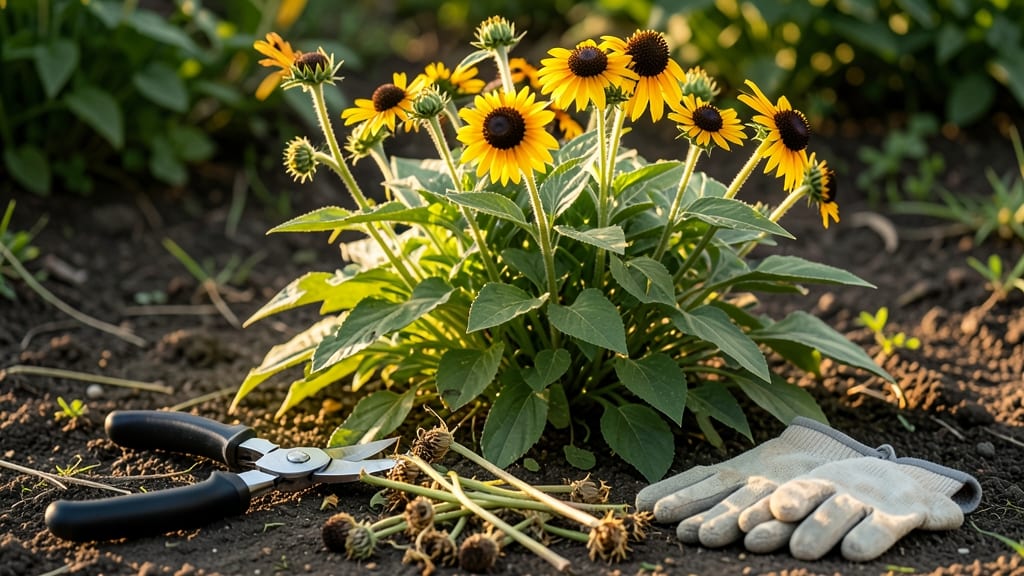
Pruning black-eyed Susans isn't just about tidying up—it's how you get nonstop summer blooms that last until frost. 🌻 I used to let mine flop around after flowering, but one spring I cut them back early and ended up with twice as many vibrant blooms all season.
The key is timing and technique, not brute force.
You'll need sharp pruners (clean them with rubbing alcohol first) and about 30 minutes on a calm day. The best time to prune is late winter or early spring, right before new growth starts.
This encourages bushier stems and more flowers. If you wait until summer, you can still deadhead spent blooms to keep the show going, but you won't get as many new stems.
Start by cutting back any dead or damaged stems to the base. Then, trim the remaining stems back by one-third to encourage branching. The goal is to shape the plant while leaving enough leaves to feed it.
You'll see fresh green shoots within 2-3 weeks, and by midsummer, you'll have a bushy plant covered in those classic golden-yellow blooms with dark centers.
This method works for both garden beds and containers, and it keeps your plants healthy for years to come. Just avoid pruning in fall—let the stems stand until winter cleanup. Ready to transform those floppy stalks into a blooming powerhouse?
📚 In This Guide
- What you need
- Instructions
- Tips and common mistakes
- Wrapping up and next steps
What you need
- ● Pruning shears: Bypass pruners (sharp, clean blades) for clean cuts—avoid dull tools that crush stems. Recommended: Felco F-2 or similar (5–7-inch blades).
- ● Garden gloves: Heavy-duty, cut-resistant gloves (e.g., Fiskars or Workhorse) to protect hands from thorns and sharp stems.
- ○ Disinfectant (optional but wise): 70% isopropyl alcohol or a gardening disinfectant spray to sterilize tools between cuts (prevents disease spread).
- ● Garden twine or plant ties: For securing stems if you’re training or shaping (e.g., 1/4-inch twine).
- ● Compost bin or bag: To collect spent blooms and stems for nutrient-rich compost.
- ● Watering can or hose: A light watering post-pruning helps plants recover (especially in dry climates).
- ○ Staking material (optional): If your Black-Eyed Susans are leggy or flopping, use 3–4 ft bamboo stakes or tomato cages for support.
- ● Best time to prune: Early morning or late afternoon on a cloudy day (reduces stress on plants).
- ● Weather check: Avoid pruning if rain is forecasted within 24 hours (wet stems = higher disease risk).
- ● Plant health: Prune only when plants are actively growing (spring/early summer). Skip if they’re stressed or diseased.
Step-by-Step instructions for pruning Black Eyed Susans
Here's how I keep my Black Eyed Susans blooming like crazy all summer long.
✂️ Step 1: Identify and Remove Spent Blooms
Start by scanning each plant for faded blooms—these are the ones with browned petals and seed heads forming. Use clean, sharp pruners to snip the stem just above the first set of healthy leaves below the bloom. This encourages new flower buds to form at the base of the stem.
I like to work on a dry morning when the stems are firm. If you wait until blooms fully brown, the plant wastes energy producing seeds instead of new flowers. You'll see fresh buds forming within 2-3 weeks of proper deadheading.
✂️ Step 2: Thin Overcrowded Stems
Black Eyed Susans naturally develop multiple stems. When stems grow too close together, they compete for nutrients and produce smaller blooms. Select the strongest, healthiest stems—those with the most vibrant green leaves—and remove the weaker ones at the base using clean pruners.
Leave about 3-5 strong stems per plant for optimal air circulation. This prevents fungal diseases and ensures each remaining stem has room to produce large, showy blooms. You'll notice the remaining stems thicken and grow more vigorously within a week.
✂️ Step 3: Lightly Prune Leggy Growth
If your plants develop long, leggy stems with few leaves, it's time for a light structural prune. Cut back the leggiest stems by about one-third their length, making the cut just above a leaf node or bud. This encourages bushier, more compact growth.
Do this pruning in early summer after the first flush of blooms has finished. You'll see new side shoots emerge within 10-14 days, creating a fuller plant. Avoid heavy pruning late in the season—it removes next year's flower buds.
✂️ Step 4: Clean Up and Sterilize Tools
After pruning, wipe your pruners with rubbing alcohol or a 10% bleach solution to prevent spreading disease between cuts. I keep a small bottle of rubbing alcohol in my gardening tool bag for quick sterilization between plants.
Remove all pruned material from the garden area. While some gardeners compost spent blooms, I prefer to discard them to prevent volunteer plants from popping up where I don't want them. Sterilized tools and clean workspace keep your Black Eyed Susans healthy for years.
Tips & tricks for pruning Black Eyed Susans
Here's what nobody tells you about keeping these sun-loving perennials blooming all season.
Timing is Everything: The 2-3 week window mentioned in Step 1 is your best bet for seeing fresh blooms. I've found that deadheading in the morning gives stems time to heal before evening moisture sets in. If you're late and blooms turn completely brown with seed heads forming, you've missed the boat—those plants are focused on seed production, not new flowers.
Tool Tip: Invest in a good pair of pruners with sharp, bypass blades—dull tools crush stems instead of cleanly cutting them. I keep mine in a small bucket of water with a drop of dish soap between uses to prevent rust and keep them sharp. A clean cut heals faster and reduces the risk of disease entering the plant.
Visual Cue for Step 2: When thinning stems, look for ones with the most vibrant green leaves and the thickest stems. These are your winners. The weaker stems often have yellowing leaves or thin, wiry growth. You'll know you've left the right number (3-5) when you can easily see sunlight reaching the center of the plant—this is key for preventing fungal issues.
Pruning Calendar: Mark your calendar for early summer after the first flush of blooms has finished—that's when you should tackle leggy growth. I've seen gardeners accidentally prune too late in the season and wonder why their plants didn't bloom the next year. The 10-14 day recovery time mentioned in Step 3 is when those new side shoots will appear, so don't rush this step.
Pro Tips for Pruning Black Eyed Susans
- Here's what nobody tells you about keeping these sun-loving perennials blooming all season.
- Timing is Everything: The 2-3 week window mentioned in Step 1 is your best bet for seeing fresh blooms. I've found th...
- Tool Tip: Invest in a good pair of pruners with sharp, bypass blades—dull tools crush stems instead of cleanly cuttin...
Frequently asked questions
Got questions about pruning Black Eyed Susans (BES) to keep those bold blooms coming?
You’re not alone! Here are answers to the most common queries—so you can deadhead like a pro and enjoy nonstop summer color.
When is the best time to prune Black Eyed Susans?
Prune after blooms fade (late summer) to encourage a second flush of flowers. For spring cleanup, trim back dead stems to the ground before new growth starts—just avoid pruning in fall, as it can stress the plant before winter.
Do I need to cut all the way to the ground?
Not always! For first-year plants, trim stems to 1/3 of their height to avoid over-pruning. Mature plants (2+ years old) can be cut back harder—even to the ground—since they’ve built up energy reserves. Pro tip: Wear gloves—those stems are spiky!
What if my Black Eyed Susans don’t rebloom after pruning?
Several factors could be at play:
- Over-pruning (cut too late or too aggressively).
- Poor soil/nutrients—feed with balanced fertilizer (10-10-10) in early spring.
- Drought stress—water deeply before and after pruning.
- Shade—BES thrive in full sun (6+ hours/day).
Can I prune Black Eyed Susans in containers?
Container-grown BES need regular deadheading (every 2–3 weeks) to prevent legginess. Trim stems just above a leaf node (where new growth can sprout). Bonus: Use the cuttings for propagation—root them in water or soil for free plants!
What should I do if I prune at the wrong time?
Don’t panic! If you prune too early (spring) or too late (fall), your plant may skip blooming that year. Focus on soil health and sun exposure next season. Pro tip: Mulch after pruning to protect roots and retain moisture.
Wrapping up and next steps
Pruning your Black Eyed Susans doesn’t have to be intimidating—it’s all about giving your plants the care they need to thrive! By deadheading spent blooms and trimming back leggy stems, you’ll encourage vibrant, long-lasting color all summer long.
With the right tools and timing, you’ll enjoy a garden bursting with cheerful yellow blooms year after year.
Ready to take action? Grab your pruners and head outside! Start small—pick just a few blooms to deadhead this weekend—and watch your Black Eyed Susans reward you with bold, healthy growth. Happy pruning! 🌼✂️