
Pruning
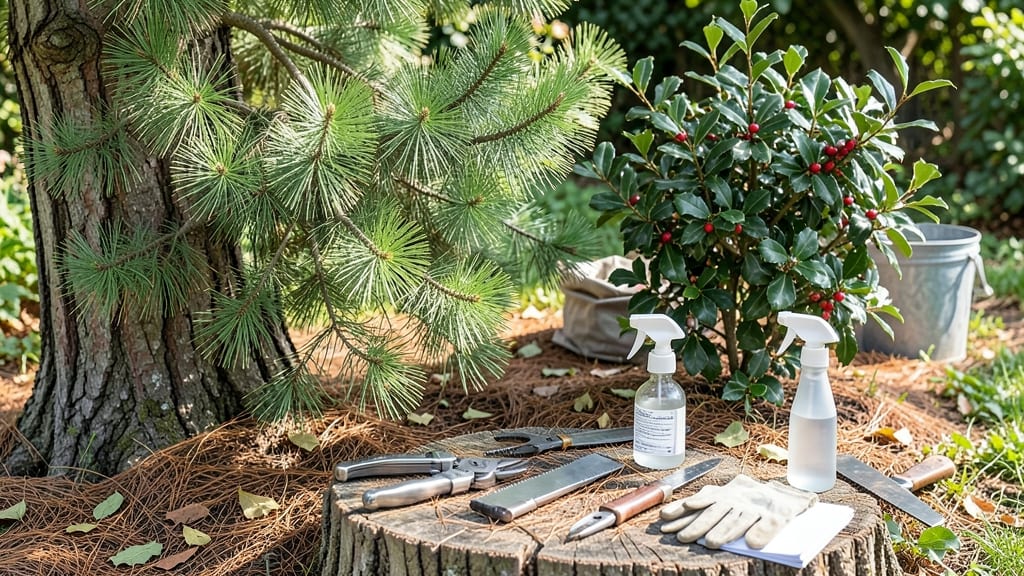
Pruning evergreen trees and shrubs transforms your yard from scraggly to showstopping—and the best part? You can do it year-round. 🌲 I’ve pruned everything from towering pines to delicate boxwoods, and the secret isn’t just cutting branches—it’s understanding why and when to prune for lasting health.
Evergreens grow differently than deciduous plants, so traditional rules don’t apply here.
You’ll need just three essential tools: sharp bypass pruners for small branches, a pruning saw for thicker growth, and a sturdy ladder for high branches. Timing matters too—spring and early summer are ideal for most evergreens, but some, like pines, need winter pruning to avoid disease.
The goal? Shape without stressing the plant, so it keeps its lush, vibrant look all year.
By the end, your evergreens will have neater shapes, fewer dead branches, and stronger growth. You’ll spot the subtle signs of over-pruning (like yellowing needles) and know exactly how to fix it. This isn’t just about aesthetics—it’s about keeping your plants alive and thriving for decades.
Whether you’re tackling a towering arborvitae or a low-growing juniper, the same principles apply. Let’s get those shears ready and make your evergreens the envy of the neighborhood!
📚 In This Guide
- What you need
- Instructions
- Tips and common mistakes
- Wrapping up and next steps
What you need
- ● Pruning shears: Bypass pruners (for small branches, ¼"–¾" thick) – one pair (look for sharp, stainless-steel blades).
- ● Loppers: For medium branches (¾"–2" thick) – one pair (choose bypass-style for clean cuts).
- ● Pruning saw: For thicker branches (2"+) – one handheld or folding saw (avoid dull teeth!).
- ○ Extension pole: Optional but handy for high branches (10–15 ft) – one adjustable pole with saw or shears attachment.
- ● Gloves: Heavy-duty, cut-resistant (e.g., leather or synthetic) – one pair (protects from thorns and sap).
- ● Safety glasses: To shield eyes from debris – one pair (non-negotiable!).
- ● Heavy-duty trash bags: For collecting clippings – 2–3 bags (knot tightly to avoid pests).
- ● Disinfectant: 70% isopropyl alcohol or bleach solution (1 part bleach to 9 parts water) – small spray bottle (sterilizes tools between cuts).
- ○ Rake or broom: For clearing fallen needles/branches – one (optional but helpful).
- ● Ladder: Only if needed (stable, 3–4 ft tall) – one (never stand on wobbly ladders!).
- ● Hand pruners with ratcheting mechanism: For stubborn branches (extra grip!).
- ● Tree wound dressing: Pruning sealant (controversial—skip if unsure; healthy trees heal without it!).
- ● Notebook & pen: To jot down pruning notes or branch locations.
- ● Pruning rope: For securing branches during complex cuts (e.g., ¼" nylon rope).
Step-by-step instructions for pruning evergreen trees and shrubs
Here’s how I keep evergreens thriving year-round with precise cuts that encourage lush, healthy growth.
✂️ Step 1: Time Your Pruning for Optimal Growth
Evergreens respond best to pruning during their active growing season, which varies by type. For most conifers, late winter or early spring—just as new growth begins—is ideal. Azaleas and rhododendrons should be pruned right after flowering, while junipers and pines tolerate light shaping anytime except mid-summer. Avoid heavy pruning in fall, as new growth won’t harden off before winter.
Look for fresh, vibrant buds along the branches—this signals readiness. If you’re unsure, err on the side of caution and wait until early spring. The goal is to stimulate growth without stressing the plant during dormancy or extreme heat.
✂️ Step 2: Assess and Plan Your Cuts
Start by examining the plant’s structure from all sides. Remove dead, diseased, or crossing branches first—these compete for resources and can harbor pests. Use sharp pruning shears to make clean cuts just outside the branch collar (the swollen area where the branch meets the trunk). This ensures faster healing and reduces the risk of infection.
Next, thin out crowded branches to improve airflow and sunlight penetration. Aim to open the canopy by removing up to 25% of the foliage in one session. For shaping, focus on maintaining the plant’s natural form rather than forcing symmetry. Evergreens grow slowly, so subtle adjustments over time yield the best results.
🌿 Step 3: Prune for Health and Shape
For conifers like pine or spruce, use hand pruners or a pruning saw to trim back overgrown branches to a side shoot or bud. Avoid cutting into old wood—new growth will only emerge from the current year’s growth. For broadleaf evergreens like boxwood or holly, step back frequently to check your progress and avoid over-pruning.
Watch for signs of stress, like yellowing needles or wilting branches, which can indicate over-pruning. If you notice these, pause and let the plant recover before making additional cuts. Healthy evergreens should bounce back quickly, with new growth appearing within 4-6 weeks of pruning.
⏰ Step 4: Clean Up and Monitor Recovery
After pruning, sterilize your tools with rubbing alcohol to prevent the spread of disease. Remove all clippings from the area—evergreen debris can harbor pests and pathogens. Water the plant deeply to help it recover, especially if you’ve made significant cuts. Mulch around the base to retain moisture and protect roots.
Keep an eye on the plant in the weeks following pruning. New growth should emerge within 2-4 weeks, depending on the species and season. If you notice browning or dieback, it may be a sign of over-pruning or environmental stress. Adjust your approach for next time—evergreens are resilient, but patience is key to long-term health.
Tips & tricks for perfect evergreen pruning
These insights will help you avoid common mistakes and keep your evergreens thriving for years to come.
Seasonal Timing Secret: The ideal pruning window for most evergreens is when you see fresh, vibrant buds forming—typically late winter to early spring. For azaleas and rhododendrons specifically, wait until right after flowering to avoid cutting off next year's blooms. I've learned the hard way that pruning too early can stress plants still in dormancy, while waiting too long can encourage new growth that won't harden off before winter.
Tool Technique: Sharp tools make all the difference—dull shears tear tissue, creating larger wounds that take longer to heal. I always sterilize my pruners with rubbing alcohol between cuts to prevent disease spread. For larger branches, use a pruning saw to make clean cuts just outside the branch collar (that swollen area where the branch meets the trunk). This technique promotes faster healing and reduces the risk of infection.
Thinning Strategy: When opening up the canopy in Step 2, focus on removing branches that cross or rub against each other—these compete for sunlight and resources. I aim to thin out no more than 25% of the foliage in one session to avoid shocking the plant. For broadleaf evergreens like boxwood, step back frequently to check your progress and maintain that natural, organic shape rather than forcing symmetry.
Recovery Watch: After pruning, monitor your plants closely for signs of stress like yellowing needles or wilting branches. Healthy evergreens typically show new growth within 2-4 weeks, depending on the species and season. If you notice browning or dieback, it's often a sign of over-pruning or environmental stress—evergreens are resilient, but they need time to recover. Mulching around the base helps retain moisture and protects roots during this critical recovery period.
Pro Tips for Pruning Evergreen Trees And Shrubs
- These insights will help you avoid common mistakes and keep your evergreens thriving for years to come.
- Seasonal Timing Secret: The ideal pruning window for most evergreens is when you see fresh, vibrant buds forming—typi...
- Tool Technique: Sharp tools make all the difference—dull shears tear tissue, creating larger wounds that take longer ...
Frequently asked questions
Got questions about pruning evergreens? You’re not alone! Here are some of the most common concerns—and their straightforward answers—to help you prune like a pro.
When is the best time to prune evergreen trees and shrubs?
The ideal time depends on the type of evergreen. For most, late winter or early spring (just before new growth starts) is best. Needle-bearing evergreens (like pines and spruces) should be pruned in late summer or early fall to avoid sap loss. Always avoid pruning in extreme heat or cold.
How much can I prune off an evergreen without harming it?
Never remove more than 25-30% of the foliage in a single session—this prevents stress. For shaping, focus on selective pruning to maintain natural form. Over-pruning can lead to sunburn, disease, or stunted growth. When in doubt, prune conservatively!
Should I prune evergreens after rain? What if it’s too wet?
Wait for dry weather to prune—wet conditions can spread disease and make tools slippery. If rain is forecast, prune at least 24 hours beforehand. Avoid pruning during prolonged dampness (like spring rains) to protect cuts from fungal infections.
My evergreen looks unhealthy after pruning—what went wrong?
Common issues include yellowing needles, bare spots, or slow regrowth. Check for:
- Over-pruning (trimmed too aggressively).
- Improper cuts (too close to the trunk or jagged).
- Pests/disease (like spider mites or fungal spots).
If needed, apply a balanced fertilizer and monitor for recovery. Severe damage may require professional help.
Can I prune evergreens in containers or small spaces?
Yes! Container evergreens benefit from regular light pruning to encourage bushiness. Use hand pruners for precision in tight spaces. For small shrubs, thin out crowded branches to improve airflow. Avoid heavy pruning—containers have limited resources for recovery.
Wrapping up and next steps
Pruning evergreen trees and shrubs is a rewarding way to keep your landscape thriving year-round! By following the right techniques—whether for seasonal timing, tool selection, or shape maintenance—you’ll encourage healthier growth, reduce pests, and enhance curb appeal. 🌿✨
Now that you’re armed with the know-how, grab your pruners and get started! For best results, tackle a little pruning every few months—your greenery will thank you with lush, vibrant foliage. Happy pruning!