
Pruning
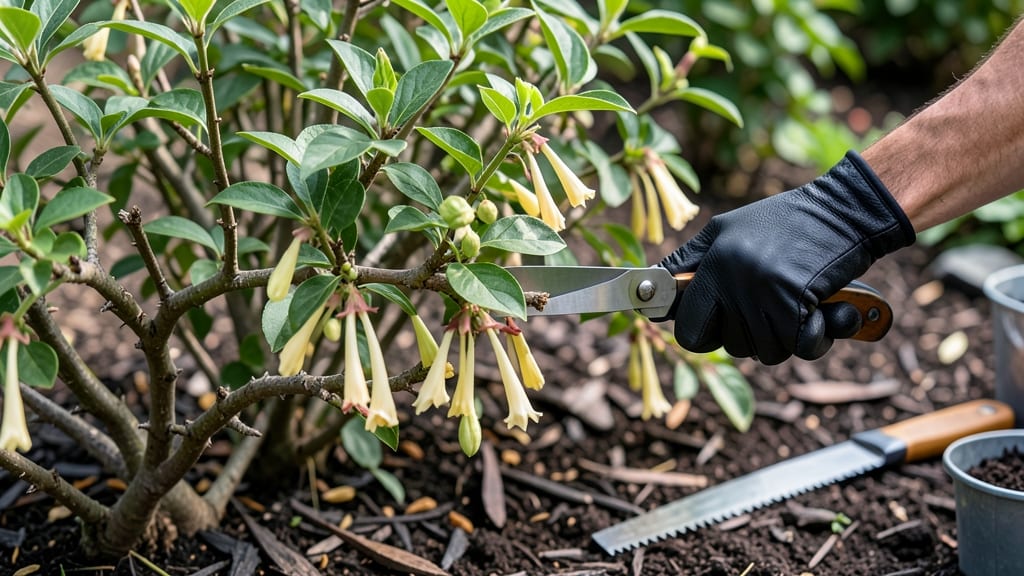
Pruning honeysuckle bushes in late winter isn’t just about tidying up—it’s how you unlock next year’s longest, healthiest blooms while keeping the plant strong. 🌿 I’ve watched my tangled honeysuckle go from a wild mess to a fragrant, sunlit showpiece by pruning just 20 minutes in February, and the difference is night and day.
The key? Timing, sharp tools, and knowing which stems to cut back (and which to leave alone).
Most gardeners overdo it by cutting too much at once, which stresses the plant and delays blooming. Instead, focus on removing dead, crossing, or weak stems first—these are the ones choking your bush’s growth.
Then, thin out older branches to let sunlight reach the center, where those fragrant summer blooms will form. A clean cut at a 45-degree angle just above a bud (facing outward) keeps water from pooling and encourages new growth.
What you’ll end up with is a bush that blooms earlier, denser, and longer than before, with fewer diseases and pests. The right pruning turns honeysuckle from a chaotic tangle into a structured, fragrant centerpiece that hummingbirds will fight over.
And the best part? You’ll spend less time wrestling with it all summer.
Works for both older established bushes and younger plants—just adjust the intensity. For neglected bushes, spread the pruning over two years to avoid shock. Here’s how to do it without a single regret.
Root Causes Of Overgrowth
Honeysuckle bushes can become unruly and overgrown for several key reasons—each tied to the plant’s natural biology, environmental conditions, or human intervention. Understanding these causes helps you take targeted action to restore your bush to its lush, manageable best. Here’s why your honeysuckle might be sprawling out of control:
Honeysuckle bushes (Lonicera spp.) are fast-growing, woody vines or shrubs designed to spread aggressively in their native habitats. This isn’t laziness—it’s survival strategy! Here’s the science behind it:
- Rapid cell division: Honeysuckle stems contain meristematic tissue that actively produces new cells, allowing vines to grow up to 30 feet per year if unchecked. This is especially true for varieties like Lonicera japonica (Japanese honeysuckle), which was introduced as an ornamental but now behaves like an invasive weed.
- Twining growth pattern: Unlike shrubs that grow outward, honeysuckle vines coil clockwise around supports (trees, fences, or trellises) to maximize sunlight exposure. Without proper pruning, they’ll smother nearby plants by blocking light.
- Root suckers: Many honeysuckle varieties (like Lonicera maackii) produce underground runners that sprout new shoots. These "suckers" can emerge 10+ feet from the parent plant, creating dense thickets.
💡 Pro Tip: If you’re dealing with a honeysuckle that’s taken over your yard, check for hidden root systems—digging up just the visible stems won’t stop it. Use a shovel or root saw to sever underground growth in late winter before new shoots emerge.
Pruning at the wrong time or using incorrect cuts can trigger a surge in new growth. Honeysuckle responds to pruning like a feedback loop—cut it back improperly, and it’ll compensate by growing even harder. Here’s how:
| Mistake | Why It Backfires | Fix It With |
|---|---|---|
| Pruning in spring or summer | Stimulates excessive leafy growth (not flowers) because the plant perceives the cut as a "stress signal" to reproduce quickly. This diverts energy from blooms. | Late-winter pruning (just before buds swell, typically February–March in most climates). |
| Cutting too close to the trunk | Removes buds at the base of branches, forcing the plant to grow longer, leggier shoots to reach sunlight. This weakens structure. | Leave 1/4-inch stubs above buds (look for swollen nodes where leaves or flowers emerge). |
| Shearing instead of selective pruning | Encourages dense, bushy growth with fewer flowers. Honeysuckle blooms on new wood, so random cuts confuse the plant’s growth pattern. | Thinning cuts—remove 1/3 of oldest stems at the base to improve airflow and light penetration. |
⚠️ Warning: Avoid topping (cutting the main stem flat)—this creates multiple weak leaders and a messy, overgrown bush. Think of pruning as shaping a tree, not hacking it back.
Honeysuckle thrives in disturbed or nutrient-rich soil, and when conditions change, it reacts by growing wildly to compensate. Common triggers include:
- Compacted or poor soil: If your honeysuckle’s roots can’t access water or nutrients, it sends up more shoots to search for resources. Test your soil—pH below 6.0 or high clay content can stunt root growth.
- Excess nitrogen: Fertilizers high in nitrogen (like lawn fertilizers blowing in) promote leafy growth over flowers. Honeysuckle responds by growing taller, thinner stems to reach more light.
- Lack of sunlight: Shady conditions cause honeysuckle to stretch and thin out as it searches for light. This makes it more susceptible to pests (like spider mites) and diseases.
- Waterlogging or drought: Both extremes stress the plant. Overwatering leads to root rot and weak stems, while drought forces the plant to grow longer, thirstier shoots.
💡 Pro Tip: If your honeysuckle is growing in partial shade, prune to open the center of the bush to let light reach the core. This encourages bushier, healthier growth and more blooms.
A honeysuckle bush under attack from pests or disease will prioritize recovery over controlled growth, leading to chaotic sprawl. Common culprits:
- Japanese beetles & aphids: These sap-sucking insects weaken stems by removing nutrients. The plant responds by growing long, weak shoots to compensate.
- Powdery mildew: Fungal infections (common in humid, shaded areas) cause leaves to yellow and drop. The bush then focuses energy on new shoots to replace lost foliage.
- Canker diseases: Bacterial or fungal stem rot creates dead zones on branches. The plant "abandons" infected stems and grows new, unchecked vines elsewhere.
🔥 Action Step: Before pruning, inspect your bush for:
- Holes in leaves (beetle damage)
- White powdery residue (mildew)
- Oozing sap or sunken lesions (canker)
Revitalize Your Honeysuckle Now
---
Late-winter pruning is your secret weapon for a lush, blooming honeysuckle bush that thrives all season. Whether your plant is overgrown, leggy, or struggling to flower, these targeted solutions will restore its vigor—without stressing you (or the bush!).
Below, we map common issues to simple fixes, plus pro tips to keep your honeysuckle happy long-term.
---
Cause: Neglected pruning over years leads to dense, tangled growth that blocks sunlight and air flow. Fix:
- 🔪 Trim back 1/3 of the oldest stems—cut to the ground or to a strong outward-facing bud. These stems are past their prime and sap energy from new growth.
- 🌱 Thin out crowded branches by removing entire stems at their base. Aim for open space so light reaches the center.
- 📏 Shape with precision: Use bypass pruners for clean cuts (avoid jagged edges). For thick stems, sterilize your tools with rubbing alcohol to prevent disease.
💡 Prevention Tip: Prune lightly every late winter (before buds swell) and again after flowering to maintain shape. Set a reminder—consistency is key!
---
Cause: Honeysuckle blooms on new wood, so old, woody stems produce fewer flowers. Over-fertilizing with nitrogen (for foliage) also reduces blooms. Fix:
- 🌱 Encourage new growth by pruning selectively—remove only the oldest, thickest stems (those wider than a pencil). Leave younger, thinner stems to flower.
- 🍃 Feed for blooms: After pruning, apply a balanced fertilizer (10-10-10) or one high in phosphorus (like 5-10-5) to promote flowering. Avoid high-nitrogen fertilizers.
- ☀️ Ensure full sun: Honeysuckle needs 6+ hours of sunlight daily. If shaded, thin surrounding plants or transplant to a sunnier spot.
💡 Prevention Tip: Prune after flowering to avoid cutting off next year’s buds. Deadhead spent blooms in summer to redirect energy to new flowers.
---
Cause: Fungal diseases (like powdery mildew) or pests (aphids, spider mites) thrive in dense, humid foliage. Fix:
- 🧼 Clean up first: Remove all diseased leaves/stems and dispose of them in the trash (not compost). Sterilize pruners with a 10% bleach solution.
- ✂️ Prune for airflow: Cut back branches to improve circulation. Aim for a vase-like shape with an open center.
- 💧 Water wisely: Water at the base in the morning to keep foliage dry. Avoid overhead sprinklers.
- 🛡️ Treat as needed:
- For fungus: Spray with neem oil or a copper fungicide.
- For pests: Blast off aphids with water or use insecticidal soap.
💡 Prevention Tip: Mulch with 3 inches of organic mulch (like wood chips) to deter soil-borne diseases. Choose disease-resistant varieties (e.g., ‘American Beauty’ or ‘Dolce’).
---
Cause: Lack of sunlight, over-pruning, or poor soil leads to elongated, weak stems. Fix:
- 🌞 Move or prune for light: If possible, transplant to a sunnier location. If not, prune to reduce height—cut back leggy stems by 1/2 to encourage bushier growth.
- 🌱 Fertilize for strength: Use a balanced fertilizer (like 10-10-10) in early spring. Add compost to the soil for nutrients.
- 📏 Pinch young shoots in early summer to promote branching. Simply snip the tips of new growth with your fingers or pruners.
💡 Prevention Tip: Prune lightly in late winter and avoid heavy cuts—honeysuckle responds better to gradual shaping than drastic trims.
---
Timing matters! Follow this step-by-step schedule for best results:
| Task | When | Tools/Materials |
|---|---|---|
| Remove dead/diseased wood | Late winter (before buds swell) | Bypass pruners, sterilizing solution |
| Thin out crowded branches | Late winter | Hand pruners, gloves |
| Fertilize for blooms | Early spring (after pruning) | Balanced fertilizer, compost |
| Deadhead spent blooms | Summer (after flowering) | Pruners, shears |
| Light shape maintenance | Late summer (optional) | Pruners, loppers for thick stems |
⏰ Pro Tip: If you miss late winter, prune in early spring—just avoid cutting back into dormant buds. Never prune in fall, as it encourages tender new growth that won’t survive winter.
---
With these fixes, your honeysuckle will bounce back with vibrant blooms and sturdy growth. Remember: Less is often more—prune with purpose, and your bush will reward you with fragrant, long-lasting flowers all season!
Frequently asked questions
When is the absolute best time to prune my honeysuckle bush?
Late winter, just before buds begin to swell, is ideal—typically February to March in most climates. This timing ensures you remove dead wood while stimulating fresh growth for spring blooms. Never prune in fall, as new growth won't harden off before winter.
How do I know which stems to cut back?
Focus on three types of stems: dead/diseased wood (cut to the base), crossing or rubbing branches (remove one of the pair), and the oldest 1/3 of stems (cut back to ground level). Always leave 1/4-inch stubs above outward-facing buds to encourage new growth.
Can I prune my honeysuckle too much?
Yes! Cutting back more than 1/3 of the plant at once stresses honeysuckle, delaying blooms and weakening structure. For severely overgrown bushes, spread pruning over two years. Always prioritize removing dead wood and thinning crowded branches over dramatic reshaping.
What should I do if my honeysuckle isn't blooming after pruning?
Check these three factors: sunlight (needs 6+ hours daily), fertilizer (use low-nitrogen, phosphorus-rich formula), and pruning timing (avoid cutting back into dormant buds). If you pruned too late, next year's blooms will form on new growth.
How do I sterilize my pruning tools to prevent disease?
Wipe blades with rubbing alcohol or soak in a 10% bleach solution (1 part bleach to 9 parts water) for 10 minutes between cuts. For thick stems, use a sharp bypass pruner to make clean cuts that heal faster. This prevents fungal spread between branches.