
Pruning
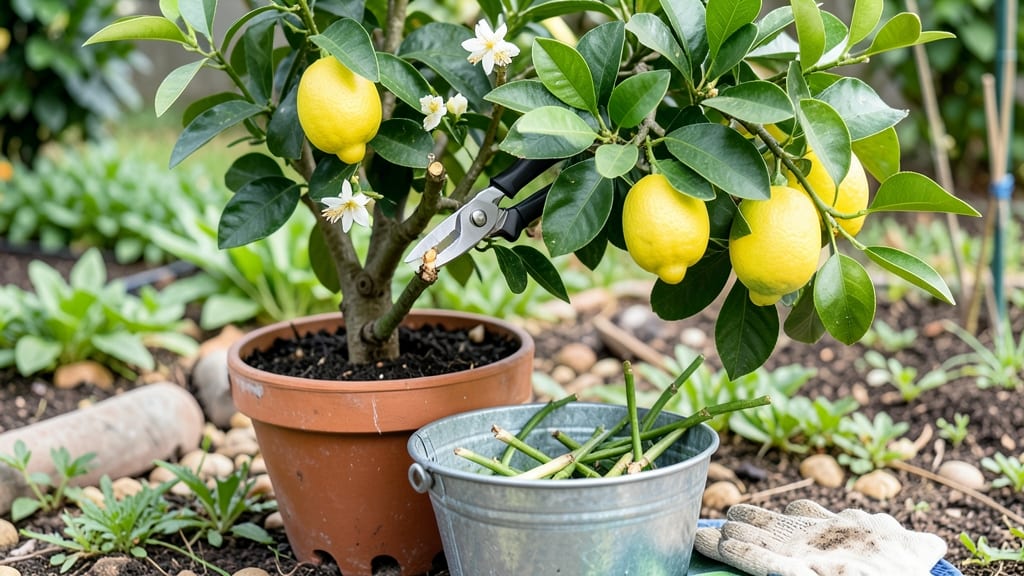
Pruning lemon trees in pots isn't about drastic cuts—it's about 3 simple, strategic snips that keep your tree productive, healthy, and compact year-round. ✂️ I learned the hard way that skipping pruning leads to crowded branches, fewer lemons, and a tree that outgrows its pot faster than you'd think.
The right cuts encourage airflow, sunlight penetration, and even more fruit—without stressing the plant. You’ll need just three tools: sharp, sterilized pruning shears (to avoid disease), a small hand saw for thicker branches, and a pair of gloves (lemon sap can irritate skin).
Timing matters too: prune lightly after harvest in late winter, then again in early summer to shape growth. The goal is to remove dead wood, crossing branches, and any growth that crowds the center—never more than 25% of the foliage at once.
After pruning, give your tree a deep watering and hold off on heavy fertilizing for 4-6 weeks while it recovers. This is when you’ll notice new growth pushing from the pruned areas—bright green, vigorous shoots that signal success.
For potted trees, check root congestion too: if roots circle the pot, it’s time to repot into a container just 2-3 inches larger in diameter. The biggest mistake? Over-pruning or cutting too close to the trunk. Always leave a small bump (about 1/4 inch) above the branch collar.
With these cuts, your potted lemon tree will stay productive for years, yielding more fruit with less stress. Let’s get those shears ready!
📚 In This Guide
- What you need
- Instructions
- Tips and common mistakes
- Wrapping up and next steps
What you need
- ● Pruning shears: Bypass pruners (sharp, clean, and sterilized to prevent disease—think of them as a surgeon’s scalpel for your tree! 🩺). Size: 5-7 inches (for precision cuts).
- ● Gloves: Heavy-duty gardening gloves (to protect from thorns and sap). Bonus: Nitrile-coated for extra grip!
- ● Disinfectant: Rubbing alcohol (70%+ isopropyl) or hydrogen peroxide (3%) (for sterilizing tools between cuts).
- ○ Sealing wax or pruning paste: Optional but helpful for sealing larger cuts (prevents sap oozing and disease entry).
- ● Small container or bucket: For collecting pruned branches (compost them later—nothing goes to waste! ♻️).
- ● Ladder or step stool: If your tree is taller than 5 feet (safety first—no contortionist moves!).
- ● Sharp knife or saw: For thick branches (>1/2 inch) (if your shears can’t handle it).
- ● Plant food: Balanced citrus fertilizer (apply 2-4 weeks post-pruning to give your tree a nutrient boost!).
- ● Twine or plant ties: If you’re training new growth (e.g., staking a young branch).
Step-by-step instructions for pruning lemon trees in pots
Here’s how I keep my potted lemon trees thriving year-round with just three strategic cuts.
✂️ Step 1: Clean Up Dead or Diseased Wood First
Start by removing any branches that are brown, mushy, or showing signs of disease—these are the weakest points where pests and rot can take hold. I use sharp, sterilized pruning shears to make clean cuts just above a healthy leaf node or outward-facing bud. This prevents water from pooling at the cut and inviting fungal infections.
Look for branches that snap easily when bent or have dark, crumbling wood at the base. These are clear candidates for removal. If you’re unsure, make a small cut to check the interior—healthy wood should be pale green or white inside, not dark or hollow.
✂️ Step 2: Thin Out Crowded or Crossing Branches
Next, focus on branches that rub against each other or grow inward toward the center of the tree. These compete for sunlight and nutrients, weakening the tree’s structure. I target branches that are thinner than a pencil or growing at sharp angles toward the trunk.
Make your cut at the base of the branch, just outside the branch collar—the swollen area where the branch meets the trunk. Avoid leaving stubs, as they can rot and attract pests. If you’re unsure where to cut, imagine a small triangle of bark pointing toward the branch—cut just outside that triangle.
✂️ Step 3: Shape for Airflow and Light Penetration
The final cut is about balance. Step back and visualize how light and air move through the tree. Remove any branches that block airflow to the center or cast too much shade on lower leaves. I aim to create an open, vase-like shape that lets sunlight reach all sides of the tree.
For potted lemon trees, I avoid heavy pruning—never remove more than 25% of the canopy in one session. Focus on selective trimming to encourage new growth at the outer edges. If you’re pruning in late winter or early spring, this will stimulate fresh, fruiting wood for the season ahead.
💧 Step 4: Post-Pruning Care for Faster Recovery
After pruning, water the tree deeply to help it recover from the stress. I add a balanced, water-soluble fertilizer to the soil to support new growth. Avoid heavy watering for the first 48 hours, though—this gives the cuts time to seal slightly and reduces the risk of infection.
Keep the tree in a spot with bright, indirect light for a week or two while it adjusts. You’ll notice new growth emerging from the trimmed areas within 2-4 weeks, signaling that the tree is healing and preparing for its next flush of leaves or fruit.
Tips & tricks for pruning lemon trees in pots
Here's what nobody tells you about keeping your potted lemon tree healthy through every season.
Tool Prep: Sterilize your pruning shears with rubbing alcohol before you begin—this prevents spreading disease between cuts. I also like to sharpen my blades with a fine file so they make clean cuts rather than tearing the bark. This step is especially important if you're working with multiple branches, as contaminated tools can quickly spread infection throughout your entire tree.
Visual Cues for Healthy Wood: In Step 1, when checking for healthy wood, look for that pale green or white interior—it's your golden ticket to knowing the branch is viable. Dark, hollow, or crumbling wood is a clear sign to remove that branch immediately. I've learned this the hard way after leaving a slightly questionable branch on my tree for too long, which led to a fungal infection that took months to clear.
Branch Collar Technique: The branch collar is your guide in Step 2—never cut flush with the trunk. That little triangle of bark pointing toward the branch? Cut just outside it. This ensures the tree can heal properly and prevents water from pooling at the cut site, which is a common invitation for rot. I've seen too many trees develop cankers from improper cuts, so this is non-negotiable for me.
Post-Pruning Recovery Timeline: Those first 48 hours after pruning are critical. While you're waiting, monitor your tree's leaves—they'll tell you everything. If they start wilting or yellowing, it's a sign your tree is stressed. After that initial period, you should see new growth emerging within 2-4 weeks, which is your reward for doing it right.
Pro Tips for Pruning Lemon Trees In Pots
- Here's what nobody tells you about keeping your potted lemon tree healthy through every season.
- Tool Prep: Sterilize your pruning shears with rubbing alcohol before you begin—this prevents spreading disease betwee...
- Visual Cues for Healthy Wood: In Step 1, when checking for healthy wood, look for that pale green or white interior—i...
Frequently asked questions
Got questions about keeping your potted lemon tree thriving with the right pruning? Here are answers to the most common concerns—so you can prune with confidence!
When is the best time to prune a lemon tree in a pot?
The ideal time is late winter or early spring (just before new growth starts). However, you can also prune lightly after flowering to encourage fruit production. Avoid heavy pruning in fall—it stresses the tree before winter dormancy.
Can I prune my lemon tree in winter?
Light pruning (removing dead or diseased branches) is fine in winter, but avoid heavy cuts. Cold snaps can weaken the tree, so wait until temperatures stabilize. If you must prune, do it on a dry, mild day to minimize stress.
Will pruning my potted lemon tree reduce fruit production?
Not if done correctly! Pruning opens the canopy to sunlight and air, which actually boosts fruit quality. Just avoid over-pruning—keep 3-4 main branches for balance. Focus on removing crowded or weak growth to encourage healthier, more productive branches.
How do I know if I’ve over-pruned my lemon tree?
Signs include yellowing leaves, stunted growth, or no new buds after 4-6 weeks. If this happens, reduce watering slightly and fertilize lightly (with citrus-specific food) to help recovery. Over-pruned trees may need a full year to rebound.
What’s the difference between pruning and trimming?
Pruning
is strategic—removing specific branches to shape the tree, improve airflow, or encourage growth. Trimming is more cosmetic, like snipping back leggy stems or shaping the foliage. For potted lemon trees, pruning is key for health, while trimming keeps them tidy!
Do I need to sterilize my pruners between cuts?
Wipe blades with rubbing alcohol or a 10% bleach solution before and after pruning to prevent spreading disease. Potted trees are especially vulnerable—clean tools reduce the risk of fungal infections or bacterial blight.
How often should I prune a lemon tree in a pot?
Aim for 1-2 major pruning sessions per year (late winter/early spring and post-flowering). Plus, do light maintenance trims throughout the growing season (spring-fall) to remove dead wood, suckers, or crossing branches.
Wrapping up and next steps
Pruning your potted lemon tree isn’t just about keeping it tidy—it’s the secret to bountiful harvests and a thriving plant year-round! 🌿 With just three simple cuts (and the right tools), you’ll encourage stronger growth, better airflow, and juicier lemons.
Remember: timing and technique matter most, so don’t rush—your tree will thank you!
Ready to take the next step? Grab your pruners, dust off that pot, and give your lemon tree the care it deserves. Watch it flourish—and soon, you’ll be savoring homegrown lemons like a pro! 🍋✨