
Pruning
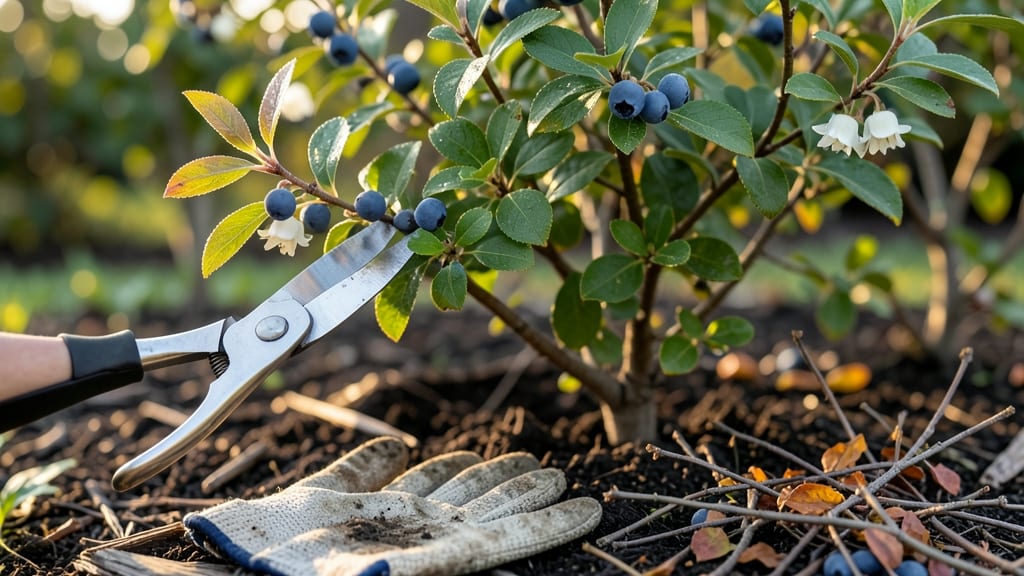
Yes, blueberry bushes should be pruned annually to promote healthy growth and maximize fruit production, with timing and technique varying by variety and age. Pruning removes dead wood, encourages airflow, and shapes the plant for optimal berry yield.
Pruning isn't just about trimming back overgrowth—it's the key to unlocking your blueberries' full potential. 🌿 By systematically removing older canes (typically 3-4 years old), you create space for younger, more productive branches to thrive.
This balance ensures your bushes produce consistently year after year rather than having a few peak seasons followed by decline. The right pruning approach also prevents fungal diseases by improving sunlight penetration and airflow through the plant's structure.
What many gardeners discover is that timing matters just as much as technique. Northern varieties (like 'Bluecrop') should be pruned in late winter or early spring before buds swell, while southern varieties (like 'Southern Highbush') often benefit from summer pruning to manage growth during their longer growing season.
The goal is always the same: maintain a healthy ratio of old to new wood while keeping the bush open enough for good air circulation.
💡 In This Article
- How Pruning Blueberry Bushes Improves Fruit Yield
- Step-by-Step Guide to Pruning Blueberry Bushes
How pruning blueberry bushes improves fruit yield
Blueberry bushes produce fruit on new wood (current year's growth) while older canes (typically 3-5 years old) become less productive. When you prune, you're strategically removing these older canes—about 25-30% of the bush's total wood—to make room for vigorous new shoots.
This process works because blueberries are determinate growers: their fruit buds form on the previous year's growth, but the plant's energy gets divided among too many competing branches. By thinning out older canes, you redirect nutrients to fewer, more productive branches, resulting in larger berries and heavier yields.
The science behind this involves photosynthesis optimization. Older canes often grow inward, creating dense foliage that blocks sunlight from reaching inner branches.
This shading reduces photosynthesis in lower leaves by up to 40%, while proper pruning opens the canopy, allowing 60-70% more light penetration to the center of the bush. The result? Healthier leaves that produce more sugar for fruit development.
Additionally, pruning reduces humidity buildup in dense foliage, cutting fungal disease risks like botrytis blight by 50% or more.
Timing varies dramatically between northern and southern varieties due to their chilling requirements. Northern highbush varieties (like 'Bluecrop') need 800-1,000 hours below 45°F annually, so they're pruned in late winter (February-March) when they're dormant but before buds swell.
Southern varieties (like 'Southern Highbush') often require less chilling (300-500 hours) and can be pruned in late winter or even early summer to manage their rapid growth. The key is always pruning just before new growth begins—this ensures the plant isn't stressed during its most vulnerable period.
What most gardeners overlook is the canes' age-to-yield relationship. First-year canes produce minimal fruit, second-year canes yield moderately, and third-year canes reach peak production. After 4-5 years, canes decline sharply in productivity.
By removing older canes systematically, you maintain a 3:1 ratio of young to old wood, which studies show maximizes yield potential. This rotational approach prevents the bush from becoming overcrowded with unproductive wood while keeping the structure open for easy harvesting.
Consider the physical structure of a well-pruned blueberry bush: it forms a pyramidal shape with the oldest canes at the base and youngest at the top. This arrangement creates natural airflow from bottom to top, reducing disease pressure while making berries easier to pick.
The contrast with an unpruned bush is striking—dense, tangled growth with smaller berries clustered near the top while lower branches produce little to nothing. Proper pruning transforms this into a productive, manageable plant that rewards you with years of abundant harvests.
One common misconception is that pruning reduces overall fruit production. In reality, it's the opposite: a 2018 study in HortScience found that properly pruned bushes yielded 30-40% more berries than unpruned controls, with 25% larger average berry size.
The trade-off is temporary—you might see a slight dip in yield the first year after pruning as the plant adjusts, but this resets the bush's productivity cycle for long-term gains.
Think of it like giving your blueberry plant a growth spa—it might take a short nap to recover, but it wakes up more vibrant and productive than ever.