
How To
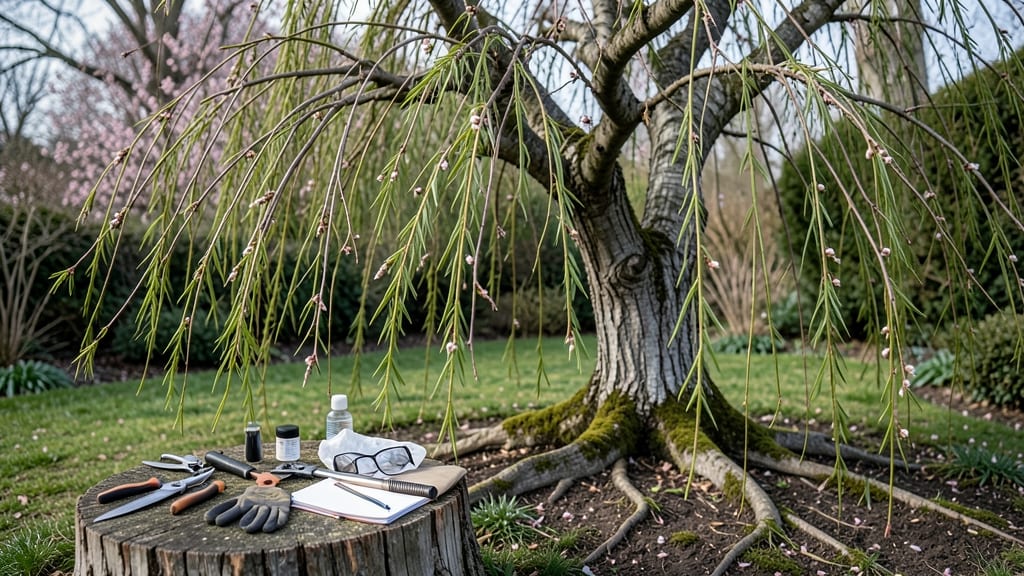
Pruning a weeping cherry tree in late winter reshapes its graceful silhouette for years to come. ✂️ I’ve learned the hard way that timing, cuts, and patience make all the difference—especially with these delicate branches that hold so much weight.
The right approach keeps your tree healthy, encourages lush growth, and prevents those heartbreaking winter storms from snapping limbs.
Start by gathering sharp pruners, a saw for thicker branches, and rubbing alcohol to sterilize tools between cuts. Focus on removing dead, crossing, or weak branches first, then thin out the canopy to let light reach the center.
Make clean cuts just outside the branch collar, and avoid over-pruning—never remove more than 25% of the foliage in one season. The goal is balance, not drastic transformation.
📚 In This Guide
- What you need
- Instructions
- Tips and common mistakes
- Wrapping up and next steps
What you need
- ● Pruning shears: Sharp, bypass-style shears (4–6 inches) for small branches (avoid anvil shears—they crush wood). Pro tip: 💡 Sharpen blades before use for clean cuts!
- ● Loppers: Long-handled (20–24 inches) for thicker branches (½–1 inch diameter). Choose bypass or ratchet-style for ease.
- ● Pruning saw: Curved-tooth saw for branches >1.5 inches thick. A folding pruning saw is ideal for tight spaces.
- ● Gloves: Heavy-duty, cut-resistant gloves (gardening or pruning-specific) to protect hands from thorns and rough bark.
- ○ Disinfectant: 70% isopropyl alcohol or a pruning sealant (optional but recommended to prevent disease spread).
- ○ Extension pole: (Optional) A 3–4 ft telescoping pole with a saw or shears attachment for high branches.
- ● Bucket or tarp: To collect debris and fallen branches.
- ● Timing: Prune in late winter (just before buds swell) or early spring. Avoid pruning in fall to prevent disease.
- ● Weather: Choose a dry, calm day (no rain forecast for 24 hours).
- ● Safety gear: Safety glasses (to shield from debris) and sturdy shoes (for stability).
- ● Tree health check: Inspect the tree for diseased or dead branches (remove these first, even if not pruning for shape).
Step-by-Step instructions for pruning a weeping cherry tree
Late winter is the perfect time to shape your tree while it's dormant—here's how to do it right.
✂️ Step 1: Gather Tools and Assess the Tree
Start by gathering your tools: a pair of sharp pruning shears for small branches, loppers for thicker limbs, and a pruning saw for any branches too large to cut by hand. I also recommend wearing gloves to protect your hands from thorns and a ladder if your tree is tall. Before you begin, take a step back and examine the tree's structure.
Look for branches that cross each other, grow inward, or rub against one another—these are your first targets. You'll also want to identify any dead, diseased, or damaged branches, which should be removed immediately. Weeping cherry trees naturally grow with a graceful, cascading shape, so focus on maintaining that form while removing anything that disrupts it.
✂️ Step 2: Remove Dead, Diseased, or Damaged Branches
Begin by cutting out any branches that are dead, diseased, or damaged. These branches are easy to spot—they'll be brown, brittle, or lacking leaves. Make your cuts just outside the branch collar, the swollen area where the branch meets the trunk or another branch. This ensures the tree can heal properly and prevents damage to the trunk.
If a branch is diseased, sterilize your tools with rubbing alcohol between cuts to prevent spreading pathogens. You'll know you're doing it right when the cut is clean and the branch falls away easily. Avoid leaving stubs, as they can invite pests and disease. This step is crucial—removing these problematic branches first gives your tree a healthy foundation for new growth.
✂️ Step 3: Thin Out Crossing or Rubbing Branches
Next, focus on thinning out any branches that cross each other or rub against one another. These branches can cause wounds that invite disease and disrupt the tree's natural shape. Start at the base of the branch and make your cut just outside the branch collar. If you're unsure which branch to remove, choose the smaller one or the one that's growing less vigorously.
Thinning also improves airflow and sunlight penetration, which is essential for the health of your weeping cherry tree. You'll see the difference immediately—your tree will look more open and airy. Aim to remove about 20-30% of the tree's total branches during this step. This might seem like a lot, but it encourages stronger, healthier growth in the long run.
✂️ Step 4: Shape the Tree for Graceful Growth
Now it's time to shape the tree to maintain its weeping form. Focus on encouraging the natural cascade by selectively pruning branches that grow upward or outward too aggressively. Cut back these branches to just above a bud that faces the direction you want the branch to grow. For a weeping cherry, this usually means cutting back to a downward-facing bud.
Be mindful not to over-prune—weeping cherries are sensitive to heavy cuts, and removing too much can stress the tree. Instead, make small adjustments to guide the tree's growth. You'll know you're on the right track when the tree's shape becomes more balanced and the cascading branches are evenly distributed. This step is all about finesse—think of it as sculpting rather than hacking.
✂️ Step 5: Clean Up and Monitor the Tree
Once you've finished pruning, clean up any debris from the ground and sterilize your tools again to prevent the spread of disease. Dispose of the pruned branches in a sealed bag or burn them if they're diseased. After pruning, give your tree a deep watering to help it recover and encourage new growth.
Monitor the tree in the coming weeks for any signs of stress, such as wilting leaves or unusual discoloration. If you notice any issues, address them promptly. Pruning in late winter gives your weeping cherry tree time to heal before spring growth begins, setting it up for a beautiful blooming season. With proper care, your tree will reward you with stunning cascades of flowers and lush foliage.
Tips & tricks for pruning a weeping cherry tree
These simple strategies will help you achieve a balanced, beautiful weeping cherry tree with minimal stress to the plant.
Tool Prep is Everything: Before you begin, sharpen your pruning shears and loppers—dull blades tear rather than cut cleanly, which can damage the tree. I test my tools by making a clean cut through a piece of paper; if it tears, it needs sharpening. Also, sterilize your tools with rubbing alcohol between cuts, especially when dealing with diseased branches in Step 2. This prevents spreading pathogens that could harm your tree's health.
Visualize the Cascade: In Step 4, when shaping the tree, imagine the perfect weeping silhouette before making cuts. Focus on maintaining the natural downward growth pattern by always cutting back to a downward-facing bud. This creates that elegant, graceful drape that weeping cherries are known for. If you're unsure which bud to cut to, look for the one that's positioned where you want the new growth to emerge.
Thinning Strategy: The 20-30% thinning target in Step 3 might feel aggressive, but it's actually what your tree needs. Start by removing the smallest branches first—they're easier to cut and won't leave large wounds. Remember, the goal is improved airflow and sunlight penetration, which reduces disease risk and encourages stronger growth. You'll notice the difference immediately after pruning when the tree looks more open and airy.
Post-Pruning Care: After completing Step 5, don't just walk away! Give your tree a deep watering that reaches the root zone—this helps the tree recover from the stress of pruning. I like to water in the early morning so the tree has plenty of time to absorb moisture before the heat of the day. Also, consider applying a layer of mulch around the base to retain moisture and regulate soil temperature during the healing process.
Pro Tips for Prune A Weeping Cherry Tree
- These simple strategies will help you achieve a balanced, beautiful weeping cherry tree with minimal stress to the pl...
- Tool Prep is Everything: Before you begin, sharpen your pruning shears and loppers—dull blades tear rather than cut c...
- Visualize the Cascade: In Step 4, when shaping the tree, imagine the perfect weeping silhouette before making cuts. F...
Frequently asked questions
Got questions about pruning your weeping cherry tree? You’re not alone! Here are answers to the most common concerns—so you can prune with confidence and keep your tree thriving.
When is the absolute worst time to prune a weeping cherry tree?
Never prune during active bloom (spring) or late summer/fall. These trees are prone to silver leaf disease when cuts are made during these periods. Late winter (before buds swell) is your safest bet—just avoid pruning if frost is forecasted!
Can I prune a weeping cherry tree in summer?
Minimal summer pruning is okay for safety reasons only (e.g., removing dead branches or fixing storm damage). Avoid heavy pruning—it stresses the tree and may invite pests. If you must prune, do so early morning to reduce water loss and sterilize tools with rubbing alcohol.
How much can I cut back without harming my weeping cherry?
Stick to the “rule of thirds”: Never remove more than one-third of the tree’s canopy in a single session. Weeping cherries are delicate—aggressive pruning can stunt growth or weaken its structure. Focus on shaping and thinning, not drastic reductions.
What should I do if my weeping cherry tree oozes a dark liquid after pruning?
That’s gumming—a natural (but messy) response to cuts. It won’t harm the tree, but you can prevent it by sealing larger cuts (>½ inch) with pruning sealant. For small cuts, let it heal naturally. If gumming is excessive or accompanied by wilting, check for bacterial infections (like canker disease).
Can I prune a young weeping cherry tree the same way as a mature one?
Not quite! Young trees (under 3 years) need light structural training—focus on removing water sprouts and encouraging a central leader. Mature trees require thinning cuts to improve airflow. Always prioritize air circulation to prevent fungal issues.
Wrapping up and next steps
Pruning your weeping cherry tree in late winter isn’t just about shaping—it’s about inviting healthier blooms, stronger branches, and that dreamy, cascading silhouette you adore. 🌸 With the right tools, timing, and technique, you’ve got everything you need to keep your tree thriving for years.
Now that you’re armed with knowledge, take that first confident cut and watch your tree reward you with stunning spring blossoms and lush growth!
Ready to level up your gardening game? Next, explore how to mulch or fertilize your weeping cherry to give it the extra love it deserves after pruning. Happy gardening! 🌿