
Pruning
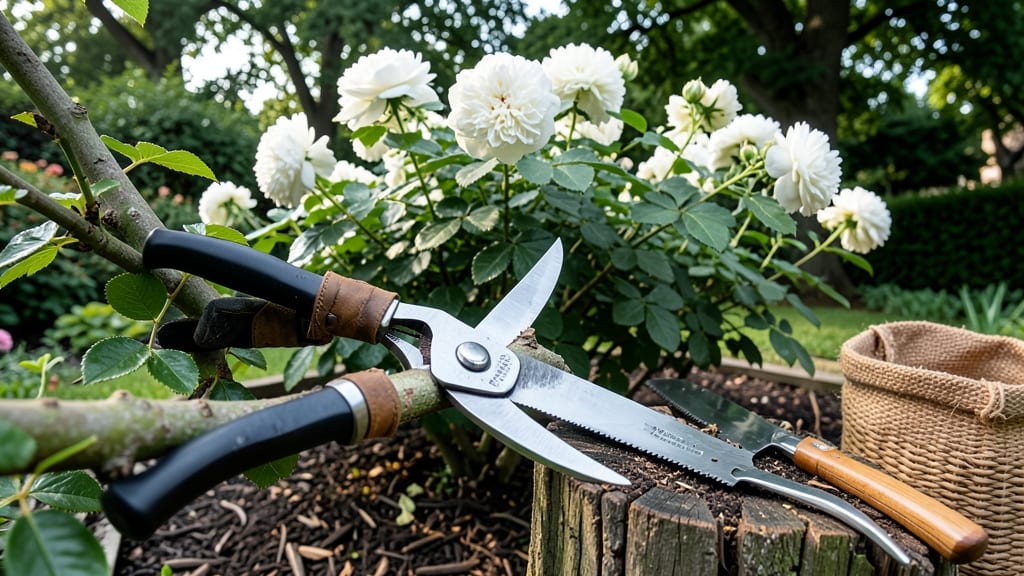
Late-winter pruning transforms your Iceberg roses from tangled messes into bold, bushy powerhouses by summer. 🌹 I’ve pruned these beauties for years, and the difference between a ragged bush and a showstopper comes down to three sharp cuts—and knowing when to make them.
Most gardeners wait too late, but timing is everything for these prolific bloomers.
The right tools make all the difference: bypass pruners for clean cuts, sharp loppers for thicker stems, and disinfectant to prevent disease spread. You’ll also need gloves (those thorns don’t play nice) and a bucket for trimmings.
The goal? Shape the bush to encourage airflow and sunlight penetration—both critical for preventing fungal issues and maximizing blooms.
By mid-March, you’ll see new red shoots pushing through the soil, signaling your pruning paid off. These stems will grow into sturdy canes that support hundreds of blooms by June.
Just avoid the temptation to over-prune—Iceberg roses bloom on both old and new wood, so leave some last year’s growth unless it’s dead or diseased.
After pruning, feed with balanced rose fertilizer and water deeply to help roots recover. Keep an eye out for aphids or black spot, which love fresh cuts. With this method, your Iceberg roses won’t just survive winter—they’ll outshine every neighbor’s garden by summer’s end.
📚 In This Guide
- What you need
- Instructions
- Tips and common mistakes
- Wrapping up and next steps
What you need
- ● Pruning shears: Sharp, bypass-style shears (4-6" blades) for clean cuts—1 pair (sterilize with rubbing alcohol between cuts!).
- ● Hand pruners: For thicker stems (up to ½" diameter)—1 pair with ergonomic grips for comfort.
- ● Disinfectant: 70% isopropyl alcohol or a copper-based fungicide (small bottle, ~8 oz).
- ● Garden gloves: Heavy-duty, cut-resistant (1 pair) to protect from thorns and debris.
- ● Rake or broom: For clearing fallen leaves/debris from the base (1 unit).
- ○ Pruning sealant (optional but helpful): Wound paint (like Tanglefoot Pruning Seal) for large cuts.
- ● Choose a dry, overcast day (avoid pruning when wet or freezing to prevent disease).
- ● Wait until after the last frost (typically late winter/early spring, Zone 5-9: February–March).
- ● Identify dead, diseased, or crossing branches—mark them with a twist tie if unsure.
Step-by-Step guide to pruning Iceberg roses for maximum blooms
Here’s how I transform leggy winter growth into a lush, flowering powerhouse—every cut matters.
✂️ Step 1: Remove Dead or Diseased Wood
Start by inspecting each stem for signs of life. Dead wood is brittle, hollow, or lacks green pith when cut open. Snip these stems back to the base with clean, sharp pruners—no half-measures here. Diseased canes (blackened, moldy, or oozing) go straight to the compost bin. This isn’t just about aesthetics; removing dead wood prevents fungal spores from spreading to healthy growth.
I like to work in stages: first pass for obvious deadwood, second pass for questionable stems. If a cane feels mushy inside, it’s better to err on the side of removal. You’ll know you’re doing it right when your pruners come away with only healthy, firm wood.
✂️ Step 2: Open the Center for Airflow
Iceberg roses thrive when their centers aren’t too crowded. Aim to create an open vase shape by cutting back older canes to about 12-18 inches from the ground. Target stems that cross or rub against each other—these are prime candidates for removal. The goal is sunlight and air reaching the center of the bush, which reduces humidity-related diseases like black spot.
Here’s the thing—I often leave a few strong stems slightly longer than others. These will become your primary blooming branches. Watch for stems with multiple buds along their length; these are your future flower producers. If a stem has only one or two buds, consider cutting it back further to encourage new growth from lower buds.
✂️ Step 3: Prune for Shape and Structure
Now it’s time to sculpt. Step back and visualize the ideal rounded shape of an Iceberg rose bush. Cut back any stems that disrupt this form, making sure your cuts are at a 45-degree angle, about ¼ inch above an outward-facing bud. This angle helps water bead off the cut and prevents rot.
For stems with multiple buds, trim just above the third or fourth bud from the base. This ensures you have enough stem left to support new growth while still encouraging strong flowering branches. Avoid leaving stubs—always cut cleanly just above the bud. You’ll see the difference in how evenly your bush fills out come summer.
✂️ Step 4: Thin Out Overcrowded Areas
Iceberg roses produce dense foliage, which can lead to crowded centers where air doesn’t circulate well. Thin out the weakest stems in each cluster—usually the smaller, thinner canes that haven’t established strong roots. Aim to leave about 3-5 strong stems per cluster, spaced evenly around the bush.
This is where patience pays off. If you’re unsure which stems to keep, wait until spring when new growth appears. The strongest stems will shoot upward quickly, while weaker ones lag behind. You can always do a second round of thinning in early spring if needed. The key is balance—never leave large gaps, but don’t overcrowd either.
🌱 Step 5: Clean Up and Fertilize
After pruning, rake up all the clippings and dispose of them properly—never leave them on the ground where they can harbor pests or diseases. Now’s the time to apply a balanced rose fertilizer (10-10-10 or similar) around the base of the bush, working it into the top 2-3 inches of soil. This jumpstarts new growth before the active growing season begins.
Water deeply after fertilizing to help the nutrients penetrate the soil. Avoid overhead watering for a few days to let the cuts heal. You’ll know you’ve done it right when you see fresh, vibrant green shoots emerging within 2-3 weeks. These new stems will be your foundation for the bold summer blooms you’re after.
Tips & tricks for pruning Iceberg roses
Confession: I skipped proper pruning for years and ended up with a tangled mess—until I learned these game-changing techniques.
Tool Prep: Sterilize your pruners with rubbing alcohol between cuts to prevent spreading disease. I also sharpen blades monthly—dull tools crush stems instead of cutting cleanly, which invites infections. Use bypass pruners for clean cuts rather than anvil types that crush the stem.
Bud Selection: When making cuts in Step 3, look for outward-facing buds—they'll grow away from the center, creating that perfect rounded shape. The third or fourth bud from the base is ideal because it gives you enough stem length for strong growth while still encouraging flowering. Think of it like sculpting: you're shaping the future growth pattern.
Timing Secret: Late winter is perfect because the plant is still dormant but about to wake up. If you prune too early, you risk damaging new growth; too late, and you'll cut off potential blooms. Aim for just before buds begin to swell—this is your window for maximum impact. In most climates, that's February to early March.
Cleanup Strategy: After pruning, don't just toss clippings in the yard—they can harbor fungal spores. Instead, bag diseased wood separately and compost only healthy trimmings. I also like to spray the cuts with a 1:9 water-to-bleach solution to disinfect. This simple step can prevent years of fungal issues down the road.
Pro Tips for Pruning Iceberg Roses
- Confession: I skipped proper pruning for years and ended up with a tangled mess—until I learned these game-changing t...
- Tool Prep: Sterilize your pruners with rubbing alcohol between cuts to prevent spreading disease. I also sharpen blad...
- Bud Selection: When making cuts in Step 3, look for outward-facing buds—they'll grow away from the center, creating t...
Frequently asked questions
Got questions about pruning your Iceberg roses like a pro? You’re in the right place! Here are answers to the most common queries—from timing to tools—to help you crush late-winter pruning with confidence.
When is the exact best time to prune Iceberg roses?
Prune Iceberg roses in late winter (just before new growth starts, typically February–March in most U.S. zones). Aim for a day when temperatures are above freezing but buds haven’t yet swollen. Never prune in fall—it invites disease and weakens the plant for winter.
How much can I cut back my Iceberg roses?
For mature Iceberg roses, cut back 1/3 to 1/2 of the plant’s height, focusing on removing dead, crossing, or weak stems. Leave 3–5 strong canes (about pencil-thick) to encourage bushy growth. Over-pruning risks stunted blooms—think less is more!
What if my Iceberg roses bleed sap after pruning?
Sap bleeding (a sticky, watery ooze) is normal but can attract pests. To minimize it, prune on a dry, cool day and seal cuts with pruning sealant (or even horticultural wax). Avoid fertilizing right after pruning—wait 4–6 weeks to let cuts heal.
Can I prune Iceberg roses in early spring instead?
Yes, but it’s not ideal. Early spring pruning (April+) risks damaging tender new growth if a late frost hits. If you miss late winter, wait until after the last frost and prune lightly—focus on shaping, not heavy cuts. Iceberg roses are forgiving, but timing matters for bigger, healthier blooms!
What should I never do when pruning Iceberg roses?
Don’t:
- Prune in wet or windy weather (spreads disease).
- Use dull shears—crushed stems invite rot.
- Leave stubs (cut at a 45° angle, 1/4" above a bud).
- Prune in full sun (stresses the plant; do it in the morning).
Wrapping up and next steps
Mastering the art of pruning iceberg roses in late winter is your ticket to a showstopping summer display! With the right tools, timing, and technique, you’ll encourage lush, healthy growth and abundant blooms.
Remember: confidence comes with practice—don’t hesitate to trim those canes back boldly for the best results.
Ready to transform your garden? Grab your pruners, mark your calendar for late winter, and get pruning! For even more tips, check out our guide on seasonal rose care—your roses will thank you with vibrant, long-lasting blooms all season long. 🌸✨