
Pruning
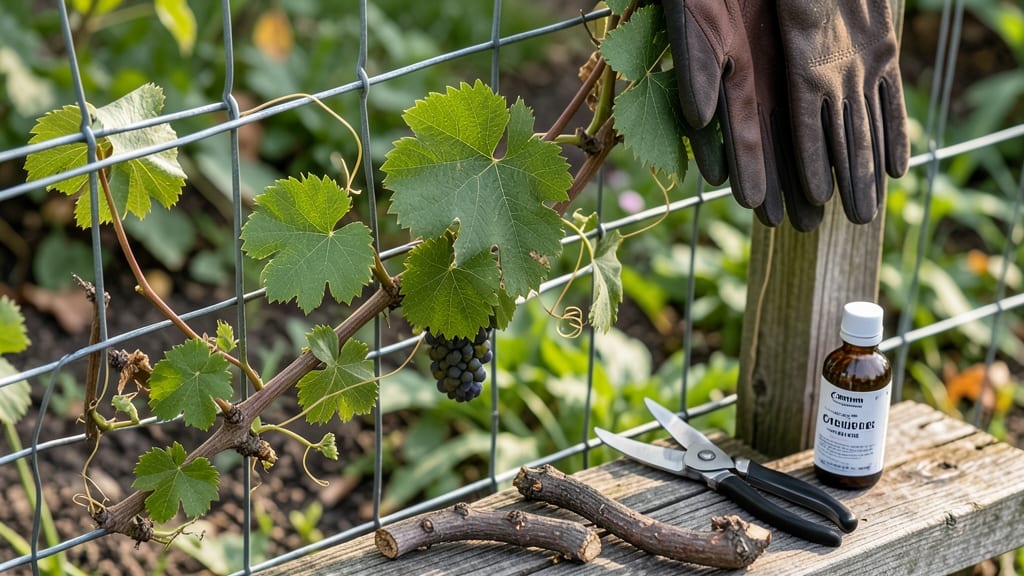
Pruning Concord grape vines in late winter unlocks their full potential—thicker canes, more clusters, and sweeter fruit. ✂️ I’ve been growing these vines for years, and the difference between a pruned and unpruned plant is like night and day.
A well-timed cut in February or March sets the stage for a harvest that’ll make your neighbors jealous.
You’ll need sharp pruners, a saw for thick canes, and a clear day to work—grapevines bleed sap when cut in cold, wet weather. The goal is to keep 3-5 strong canes (the main stems) per vine, cutting back old wood to encourage new growth.
Each cane should have 5-7 buds facing outward to catch sunlight. It’s not about removing everything, but shaping the vine for balance and airflow.
After pruning, your vines will look like a tangled mess—but that’s normal. Within weeks, new shoots will burst from those buds, and by summer, you’ll have a lush, productive plant. The key is patience: resist the urge to prune too lightly, and avoid over-pruning, which stresses the vine.
A good rule is to leave more buds than you think you need—you can always adjust next year.
This method works for both young vines and mature plants, whether you’re training them on a trellis or letting them sprawl. Once you master it, you’ll wonder how you ever struggled with grape pruning. Let’s get those vines ready for another amazing harvest!
📚 In This Guide
- What you need
- Instructions
- Tips and common mistakes
- Wrapping up and next steps
What you need
- ● Pruning shears or loppers: Sharp, bypass-style shears (for small canes) or loppers (for thicker branches). Choose 5- to 7-inch blades for precision.
- ● Hand pruners: A 4- to 6-inch pair for trimming smaller shoots—keep them sterilized with rubbing alcohol to prevent disease.
- ● Gloves: Heavy-duty, cut-resistant gloves (e.g., mechanics’ or gardening gloves) to protect against thorns and blisters.
- ● Disinfectant: A 10% bleach solution (1 part bleach to 9 parts water) or rubbing alcohol (70%+) to sterilize tools between cuts.
- ● Rake or broom: For clearing debris from the pruning area—18-inch garden rake works well.
- ● Heavy-duty trash bags: 20-30 gallon bags for hauling away pruned canes and leaves.
- ○ Pruning sealant (optional): Wound dressing (e.g., Tanglefoot Tree Wound Pruning Sealer) for large cuts—only if needed for grapevines.
- ● Timing: Prune in late winter or early spring (before buds swell) when the vine is dormant.
- ● Weather: Choose a dry, sunny day (50–70°F) to minimize sap bleeding and disease risk.
- ● Safety gear: Safety glasses (to shield from debris) and long sleeves/pants (for thorn protection).
- ● Vine health check: Inspect vines for diseases (e.g., black rot, powdery mildew)—prune infected canes last to avoid spreading spores.
Step-by-step guide to pruning Concord grape vines
Reviving your grapevines starts with the right cuts—here’s how to shape them for maximum fruit and vigor.
✂️ Step 1: Time Your Pruning for Dormancy
Prune Concord grapevines in late winter, just before buds swell but before new growth begins—typically February to early March in most climates. This timing ensures the plant directs energy into new shoots rather than repairing wounds. If you’re in a warmer zone, wait until chill hours accumulate (around 500-800 hours below 45°F).
Check the buds: they should look plump but still firm, not soft or green. If you see any green, you’ve waited too long. Pruning too early can expose tender wood to frost damage, while pruning too late encourages weak spring growth. I always mark the date on my calendar—Concords reward precision.
🌿 Step 2: Identify and Remove Dead or Weak Wood
Start by inspecting the vine for dead, diseased, or crossing branches. Dead wood is easy to spot—it’s gray, brittle, and snaps when bent. Diseased wood often has blackened cankers or oozing sap. Cut these out first, using clean, sharp pruners to make clean cuts just ½ inch above a healthy bud or branch collar.
Next, remove any branches that cross or rub against each other—they’ll create wounds that invite disease. Thin out crowded canes to improve airflow, aiming for 5-7 main arms (larger permanent branches) per vine. I like to step back and visualize the vine’s shape—Concords thrive when light and air reach the center.
✂️ Step 3: Shape the Vine for Fruit Production
Concords produce fruit on one-year-old wood, so focus on retaining last year’s healthy canes (they’ll be thicker and brown). Cut back these canes to 4-6 buds from the base—this encourages strong, fruiting shoots. For newer canes (thinner, greenish), prune to 2-3 buds to promote growth for next year’s harvest.
Use the "open-center" method for mature vines: leave 3-5 canes spaced evenly around the vine’s base. This prevents overcrowding and makes harvesting easier. If a cane is longer than 12 inches, shorten it by ⅓ to balance growth. I always make cuts at a 45-degree angle, just above an outward-facing bud—this helps water run off and reduces rot risk.
🪴 Step 4: Clean Up and Protect the Vine
After pruning, sterilize your tools with rubbing alcohol or a 10% bleach solution to prevent spreading disease. Remove all pruned debris from the area—leaving it can harbor pests or fungi. If your vine is young or in a cold climate, consider wrapping the base with burlap to protect it from late frosts or gnawing animals.
Apply a 2-inch layer of mulch (like wood chips) around the vine’s base, keeping it 6 inches away from the trunk to prevent rot. Water deeply if the ground isn’t moist—this helps the vine recover from pruning stress. I also add a balanced fertilizer (like 10-10-10) at this time to support spring growth, but avoid heavy applications until new shoots appear.
⏰ Step 5: Monitor and Adjust Through the Season
Once buds break in early spring, watch for suckers (shoots growing from the base or along the trunk)—remove these immediately, as they drain energy from fruit production. Thin out any new shoots that grow too close together, leaving 6-8 inches between them for optimal air circulation.
By late spring, you’ll see clusters forming. If the vine looks overloaded, prune again to reduce clusters by ⅓—this ensures larger, sweeter grapes. I always check for powdery mildew (white fuzz on leaves) and treat it early with neem oil if spotted. A well-pruned Concord vine should have sunlight reaching the center and no more than 30 clusters per vine for best results.
Tips & tricks for pruning Concord grape vines
Mastering the art of pruning Concord grapevines transforms your harvest—here's how to avoid common mistakes and elevate your results.
Timing is Everything: The 500-800 chill hours below 45°F are your guide for when to prune. In warmer climates, check your local weather station for chill hour accumulation—this is the single most important factor for timing. I've seen vines struggle when pruned too early, so always confirm buds are still firm but plump, not starting to swell. A simple finger test works: press a bud gently—it should dent slightly but not feel soft.
Tool Preparation Matters: Your pruners are just as important as your timing. Sterilize them between cuts with rubbing alcohol or a 10% bleach solution to prevent spreading disease from one cut to another. I keep a small spray bottle of 70% isopropyl alcohol handy during pruning sessions. Also, make sure your blades are sharp—dull blades crush wood instead of cutting cleanly, creating larger wounds that invite infection. Test your pruners by cutting a piece of paper; if it tears, your blades need sharpening.
Visualizing the Vine's Future: Before making any cuts, step back and visualize how your vine will look after pruning. Concord vines thrive with an open center that allows sunlight to reach all parts of the plant. Aim for 3-5 main canes spaced evenly around the base, leaving room for airflow. I find it helpful to sketch a rough diagram on paper first—this prevents over-pruning or leaving too many crowded canes that compete for resources.
Seasonal Follow-Up Strategy: The late-spring cluster adjustment is often overlooked but makes a huge difference. When you reduce clusters by ⅓, focus on keeping the largest, healthiest-looking clusters that are well-spaced along the canes. This simple step prevents overloading the vine and ensures you get bigger, sweeter grapes. I mark these clusters with a small piece of twine tied around the cane so I remember which ones to prioritize during harvest.
Pro Tips for Prune Concord Grape Vines
- Mastering the art of pruning Concord grapevines transforms your harvest—here's how to avoid common mistakes and eleva...
- Timing is Everything: The 500-800 chill hours below 45°F are your guide for when to prune. In warmer climates, check ...
- Tool Preparation Matters: Your pruners are just as important as your timing. Sterilize them between cuts with rubbing...
Frequently asked questions
Got questions about pruning Concord grape vines? You’re not alone! Here are some of the most common concerns—plus straightforward answers to help you prune like a pro.
When is the absolute best time to prune Concord grape vines?
Late winter (just before buds swell) is ideal—typically January to early March in most climates. This timing balances dormancy (reducing disease risk) with early-season growth. Avoid pruning in fall or spring when buds are active, as wounds heal slower and pests/diseases may thrive. Pro tip: If you missed late winter, wait until early spring but do it quickly to minimize stress.
How much should I cut back—is there a rule of thumb?
For established vines, aim to remove 1/3 to 1/2 of last year’s growth, focusing on:
- Dead, diseased, or crossing canes (cut at the base).
- Weak or thin shoots (prune to the strongest bud).
- Old wood (canes >3 years old) to rejuvenate vigor.
Will pruning Concord grapes spread disease? How do I avoid it?
Pruning itself doesn’t spread disease, but dirty tools or open wounds can. Prevent issues by:
- Disinfecting pruners with rubbing alcohol or a 10% bleach solution between cuts.
- Avoiding pruning during wet weather (wounds take longer to heal).
- Removing and destroying (don’t compost!) diseased canes immediately.
What if I prune too late? Can I still save my vine?
If you prune after buds swell (March–April), you won’t kill the vine, but you’ll delay growth and reduce fruit yield. Damage control:
- Focus on sanitizing cuts and removing only dead/diseased wood.
- Avoid heavy pruning—just shape and thin out crowded canes.
- Fertilize lightly with balanced 10-10-10 to boost recovery.
Can I prune Concord grapes without a trellis? What’s the alternative?
Yes! If your vines are not trellised, prune to:
- Encourage an open center (like an apple tree) for airflow.
- Remove low-hanging canes to prevent soil-borne diseases.
- Train 2–3 main arms and prune back lateral shoots to 12–18 inches.
Wrapping up and next steps
Pruning your Concord grape vines in late winter isn’t just about tidying up—it’s the secret to explosive growth and sweeter, juicier grapes come harvest time! 🍇 By mastering the art of selective cutting, you’ll encourage stronger canes, better airflow, and fewer pests, setting the stage for a bountiful season.
Now that you’ve got the know-how, grab those pruners and roll up your sleeves—your future harvest is waiting!
Ready to take it further? Mark your calendar for early spring and plan your vineyard’s next steps—whether that’s training new canes, monitoring for pests, or even experimenting with trellis designs. Happy pruning—and here’s to a grape-filled future! 🌱