
Pruning
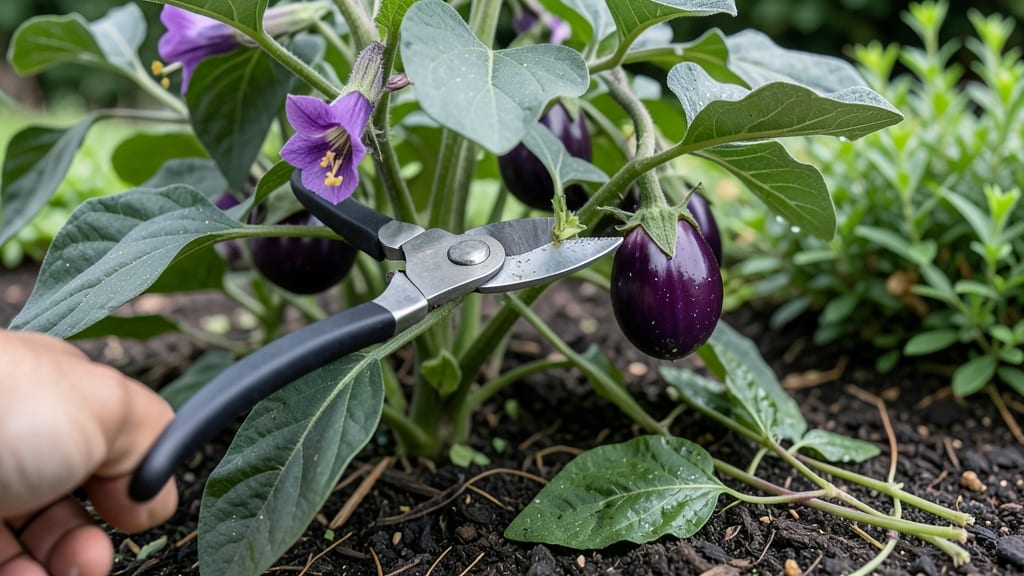
Pruning eggplant isn't just about cutting—it’s about unlocking bushier plants and more fruit with every snip. 🌱 I’ve learned that skipping this step means fewer harvests and leggy plants, but the right technique turns eggplants into productive powerhouses.
The key? Timing and precision—trim at the right stage, and you’ll see stronger stems and heavier yields by summer’s end.
Start with clean, sharp pruners (sterilized with rubbing alcohol) to avoid damaging stems. Focus on removing suckers—those small shoots that form in the leaf axils—while leaving the main stem and lower branches intact.
Morning pruning prevents stress on the plant, and always cut just above a leaf or bud, never at a joint, to encourage new growth.
You’ll notice a difference within 2-3 weeks: thicker stems, more flowers, and—if you’re lucky—eggplants appearing sooner. The goal is to redirect energy from excessive foliage to fruit production, so don’t go overboard. A little pruning goes a long way, especially in hot climates where plants already struggle.
This method works for both bush and indeterminate varieties, though bush types need less aggressive trimming. For beginners, start small: prune just the suckers and damaged leaves, and watch your plants respond. Soon, you’ll be harvesting glossy, plump eggplants like a pro.
📚 In This Guide
- What you need
- Instructions
- Tips and common mistakes
- Wrapping up and next steps
What you need
- ● Bypass pruners – Sharp, clean, and sterilized (avoid anvil pruners to prevent crushing stems). Quantity: 1 pair.
- ● Garden shears or loppers – For thicker stems (if your eggplant is mature). Quantity: 1 pair.
- ● Disinfectant (70% isopropyl alcohol or bleach solution) – To sterilize tools and prevent disease spread. Quantity: Small bottle or spray.
- ○ Gloves (optional but recommended) – Protects hands from thorns and sap. Type: Nitrile or leather gardening gloves.
- ○ Pruning sealant (optional) – Helps larger cuts heal faster (e.g., tree wound pruning paste). Quantity: Small tube.
- ● Choose the right time – Prune in the early morning or late afternoon to avoid stressing the plant in peak sun.
- ● Healthy plant check – Ensure your eggplant is free of pests or disease before pruning. Skip if the plant is struggling.
- ● Weather conditions – Wait for a dry, calm day (no rain in the forecast for 24 hours).
- ● Sharp tools only! – Dull blades tear stems and invite infections. Pro tip: Test your pruners on a scrap piece of wood first.
- ● Hose with spray nozzle – For rinsing tools and cleaning sap off blades mid-pruning.
- ● Small bucket or bag – To collect pruned branches (compost them later!).
- ● Hand lens or magnifying glass – Helps spot tiny pests or signs of disease on stems.
- ● Plant markers (if labeling varieties) – Useful if you’re pruning multiple eggplant types.
Step-by-step instructions for pruning eggplant
Here's the method I've used for years to transform leggy, sparse eggplants into productive, bushy powerhouses.
✂️ Step 1: Identify and Remove Suckers Early
Eggplants grow suckers—those small shoots that form in the leaf axils where branches meet the stem. These compete with your main fruit for energy, so remove them when they're no bigger than a pencil eraser. Use clean, sharp pruning shears to make a clean cut just above the leaf node where the sucker emerges.
I prune suckers every 5-7 days during the growing season. Watch for new growth in the leaf axils—those tiny 1-inch sprouts are your targets. The sooner you remove them, the less energy the plant wastes on unwanted growth. This ensures all resources go toward developing your main fruit.
🌿 Step 2: Prune Lower Leaves to Improve Airflow
Start by removing the lowest 3-4 sets of leaves when the plant reaches 12-18 inches tall. These leaves touch the soil and can harbor diseases like powdery mildew. Use your fingers to gently twist leaves off rather than cutting—they'll come away cleanly without damaging the stem.
Continue pruning lower leaves as the plant grows, maintaining a 12-inch gap between the soil and the first leaf cluster. This improves airflow, reduces humidity at the base, and prevents rot. You'll notice the plant's energy shifts upward, producing stronger stems and more fruit-bearing branches.
☀️ Step 3: Thin Fruit Clusters for Larger Harvests
When eggplants set fruit, they often produce 2-3 small fruits per cluster. Leave only 1-2 of the largest, healthiest fruit per cluster—the others will compete for nutrients and stay small. Use your fingers to gently twist off excess fruit at the base of the stem.
I prioritize keeping fruits that are firm and uniformly shaped over those that show signs of cracking or disease. Thin clusters when fruit reaches 3-4 inches long—this gives remaining fruits room to grow to full size. You'll end up with fewer but much larger, higher-quality eggplants.
⏰ Step 4: Prune Laterals to Encourage Bushier Growth
Once your eggplant reaches 3 feet tall, focus on pruning lateral branches that grow beyond the main stem. Cut back any branches that extend more than 6 inches beyond the plant's natural bush shape. This redirects energy to the central stem and main fruit clusters.
I also trim back any branches that grow toward the center of the plant—these create dense areas where airflow is poor. You'll see new lateral growth emerge from the leaf axils, creating a fuller, more productive plant. Stop pruning laterals 6-8 weeks before your first frost to allow remaining fruit time to mature.
🌱 Step 5: Clean Up and Prepare for Harvest
As your eggplants near maturity, do a final cleanup by removing all yellow or diseased leaves and any remaining small fruit. This prevents pests and diseases from overwintering in plant debris. Use sterilized pruners to make clean cuts just above a leaf node.
I also prune back any overly leggy stems to 18-24 inches tall if they've grown too tall. This makes harvesting easier and prevents the plant from toppling over. Your pruned eggplant should now have a compact, bushy shape with plenty of space between branches for airflow.
Tips & tricks for perfect eggplant pruning
Transforming your eggplants into productive, bushy plants starts with these precision techniques that prevent common gardening mistakes.
Timing Secret: The 5-7 day sucker removal schedule might seem frequent, but it's crucial—those tiny 1-inch sprouts grow surprisingly fast. I check my plants every 3-4 days during peak growing season (late spring to early summer) because warm weather accelerates sucker growth. Use a magnifying glass if needed to spot the pencil-eraser-sized shoots before they become established.
Tool Technique: Sterilize your pruning shears between cuts with rubbing alcohol to prevent spreading disease. I keep a small bottle in my gardening tool pouch and wipe blades after every 5 cuts. For lower leaves, fingers work best—twisting them off prevents stem damage that can invite fungal infections. Save shears for thicker stems and suckers where precision cutting matters.
Visual Growth Cues: When thinning fruit clusters, look for these signs of healthy selection: the remaining eggplants should have smooth, glossy skins and be slightly heavier than their peers. I also check for even spacing—aim for 6-8 inches between fruits on the same branch. This spacing prevents overcrowding that leads to misshapen, undersized eggplants.
Seasonal Transition: The 6-8 week pruning cutoff before frost is flexible based on your climate. In my zone 8 garden, I stop lateral pruning 7 weeks before first frost, but in cooler zones, you might extend this to 9 weeks. Watch for fruit color changes—when eggplants develop their mature hue (usually purple or black), they're nearing harvest readiness regardless of frost dates.
Pro Tips for Prune Eggplant
- Transforming your eggplants into productive, bushy plants starts with these precision techniques that prevent common ...
- Timing Secret: The 5-7 day sucker removal schedule might seem frequent, but it's crucial—those tiny 1-inch sprouts gr...
- Tool Technique: Sterilize your pruning shears between cuts with rubbing alcohol to prevent spreading disease. I keep ...
Frequently asked questions
Got questions about pruning eggplant? You’re not alone! Here are answers to the most common concerns—from timing to troubleshooting—to help you prune like a pro.
When is the best time to prune eggplant?
Prune eggplant after it’s established (about 4–6 weeks old) and before flowering or fruiting begins. Focus on removing suckers (side shoots) in the morning when plants are hydrated and cuts heal faster. Avoid pruning late in the season—it can stress plants before harvest.
Do I need to sterilize my pruners?
Sterilize pruners with rubbing alcohol or a 10% bleach solution before and after pruning to prevent spreading diseases like bacterial wilt or fungal infections. Clean tools between cuts if working with multiple plants.
What if I prune too much?
Over-pruning can weaken eggplants, reducing fruit production. Stick to removing only suckers (shoots in the leaf axils) and 1–2 main stems if needed. If you’ve already overdone it, focus on watering deeply, fertilizing lightly, and avoiding future cuts until new growth appears.
Will pruning increase eggplant yield?
Yes! Pruning encourages bushier growth and directs energy to fruit production. By removing suckers, you improve airflow (reducing disease) and help the plant focus on larger, healthier eggplants. Just avoid heavy pruning—small, strategic cuts work best.
Can I prune eggplant if it’s already flowering?
Minimize pruning during flowering/fruiting, but you can lightly trim diseased or overcrowded leaves. Save major pruning for early growth stages. If you must prune later, do so early in the day and avoid removing more than 20% of the foliage at once.
What if my eggplant doesn’t have suckers?
Some varieties (like compact or determinate types) produce fewer suckers. Focus on removing yellow/damaged leaves and thinning crowded stems to improve airflow. If no suckers appear, your plant may be stressed—check for pests, water consistently, and fertilize with a balanced formula.
Wrapping up and next steps
Pruning eggplant might seem tricky, but with the right techniques—like removing suckers, thinning branches, and sanitizing tools—you’ll encourage bushier growth and a bountiful harvest. 🌿 Remember, timing and precision matter most, so don’t hesitate to roll up your sleeves and give it a try!
Once you’ve mastered pruning, why not explore companion planting or organic pest control to take your eggplant game to the next level?