
Pruning
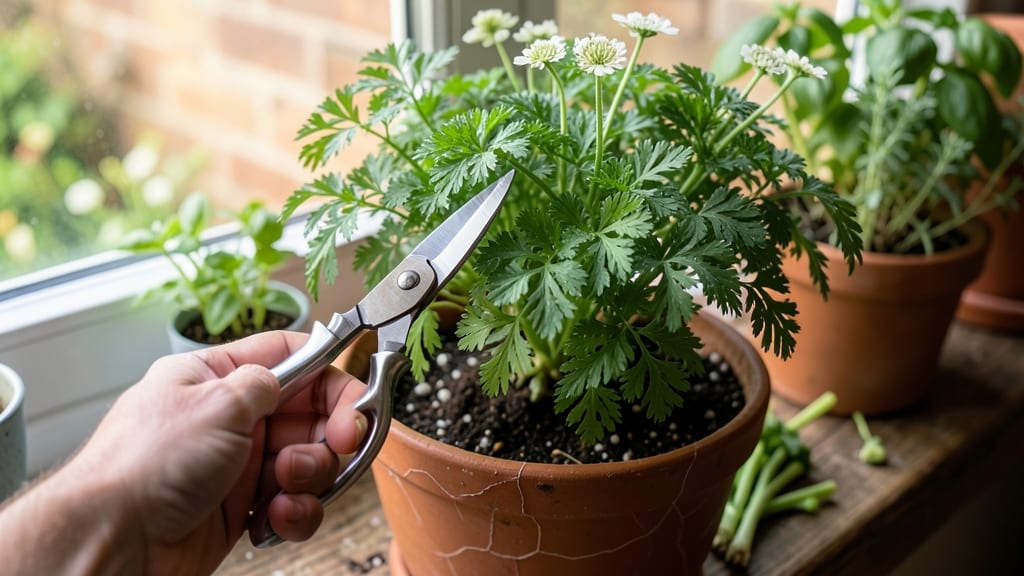
Pruning herbs like cilantro isn’t just about keeping it tidy—it’s the secret to nonstop harvests all season. 🌿 I’ve learned that skipping this step means bitter bolts and sparse leaves, but with just three strategic cuts, you’ll coax fresh, fragrant growth that rivals store-bought (without the price tag).
The key? Timing, technique, and knowing exactly where to snip—no guesswork required.
Start when your cilantro reaches 6-8 inches tall, pinching off the top sets of leaves just above a pair of lower leaves. This forces the plant to branch out, giving you more stems to harvest later.
Repeat every 2-3 weeks during active growth, always cutting just above a leaf node where new shoots will emerge. Avoid chopping into woody stems—cilantro hates that—and never take more than one-third of the plant at once.
What you’ll end up with is a bushier, more productive plant that stays tender and sweet for weeks longer than neglected cilantro. The leaves will stay bright green, the flavor will stay fresh, and you’ll avoid the bitterness that creeps in when plants bolt.
Even leggy cilantro can bounce back with the right cuts—just give it a haircut and a little patience.
This method works for both container-grown cilantro and in-ground plants, and it’s just as effective in partial shade as it is in full sun. The only rule? Never skip the harvest—wilting stems mean wasted growth. Ready to transform your cilantro from sad to spectacular?
📚 In This Guide
- What you need
- Instructions
- Tips and common mistakes
- Wrapping up and next steps
What you need
- ● Sharp pruning shears or clean kitchen scissors – Dull blades crush stems, so opt for a pair with a
- ● Cilantro plant (potted or in-ground) – Ideally 4–6" tall with at least 3–5 sets of leaves for pruning.
- ● Watering can or hose with a gentle spray nozzle – For post-pruning hydration.
- ● Compost bin or small container – To collect clippings for future garden use.
- ○ Gloves (optional but recommended) – If your cilantro has thorns or you’re sensitive to sap.
- ● Balanced liquid fertilizer (5-5-5 or 10-10-10) – Dilute to half-strength for a post-prune nutrient boost.
- ● Mulch (straw or shredded leaves) – Retains moisture and protects new growth.
- ● Label or marker – If you’re pruning multiple herb varieties to stay organized.
- ● Small bowl or jar – For harvesting fresh cilantro to use in recipes!
How to prune cilantro for maximum regrowth
Here's the method I use to keep cilantro thriving all season—no fancy tools needed, just three strategic cuts.
✂️ Step 1: Harvest the Right Amount at the Right Time
Wait until your cilantro has at least 4-6 inches of growth before making your first cut. This ensures the plant has enough energy stored to regrow. I always look for mature leaves—they're darker green and have a stronger flavor than the younger, softer growth at the top.
Use clean, sharp scissors or pruning shears to make your first cut. Snip just above a set of leaves where the stem meets the main plant. This encourages new growth to sprout from that node. Never take more than one-third of the plant at a time—this prevents stress and ensures recovery.
🌿 Step 2: Prune for Bushier Growth
After your first harvest, focus on shaping the plant. Look for any long, leggy stems that are stretching toward the light. These stems won’t produce new leaves effectively, so prune them back to just above a leaf node where side branches can form.
I like to make a second cut about 2-3 weeks after the first harvest. This time, I target the outermost leaves rather than the top. Removing these encourages the plant to fill out and grow denser. You’ll notice new shoots emerging from the base within 5-7 days—that’s your cue that the pruning worked.
⏰ Step 3: Time Your Final Cut for Winter Hardiness
As temperatures drop below 50°F, cilantro slows down. Make your final harvest just before the first frost hits. Cut the plant back by half its height, leaving only the lowest set of leaves intact. This helps the roots store energy for next season and prevents bolting from stress.
After the final cut, water deeply to help the roots absorb nutrients. If you’re in a mild climate, you might get one more flush of growth in early spring. Otherwise, pull the plant up and compost it—it’s served its purpose for the year.
💧 Bonus: Water and Feed After Pruning
Pruning stresses the plant, so water thoroughly right after each cut to help it recover. I also add a balanced liquid fertilizer (like 10-10-10) diluted to half strength. This gives the plant a quick nutrient boost to support regrowth without overwhelming it.
Watch for yellowing leaves after pruning—this is normal and means the plant is redirecting energy. If the yellowing spreads beyond a few leaves or the stems wilt, you’ve pruned too aggressively. Next time, take smaller cuts and give the plant more time between harvests.
Tips & tricks for pruning herbs cilantro
Here's what nobody tells you about keeping cilantro thriving after each harvest—these tricks make all the difference between a one-time harvest and a season-long supply.
Pruning Precision: When making your first cut in Step 1, look for the point where the stem meets the main plant—this is called the "leaf node." Cutting just above it (about 1/4 inch) triggers new growth from that exact spot. I've found that using clean, sharp scissors prevents crushing stems, which can invite disease. For even better results, rotate your cutting angle slightly with each harvest to encourage even bushier growth.
Growth Cycle Timing: The 2-3 week window between harvests in Step 2 is critical for cilantro's recovery. In hotter climates (above 75°F), you might need to reduce this to 1-2 weeks since growth accelerates. Watch for the 5-7 day regrowth signal—new shoots emerging from the base mean you've hit the sweet spot between harvests. If you're in a cooler climate, you can extend this to 3-4 weeks, but don't let the plant get leggy.
Winter Survival Strategy: That 50°F threshold in Step 3 is your cue to prepare for dormancy. Before your final cut, examine the plant's health—if leaves are already yellowing or stems are woody, it's time to pull it rather than forcing another harvest. In mild winter areas, I've successfully gotten one more harvest by protecting plants with row covers when temperatures dip below 40°F, but this requires careful monitoring.
Recovery Boost: After any pruning, the immediate watering and fertilizer application in the Bonus step is non-negotiable. I've seen cilantro plants bounce back from aggressive pruning when given this recovery cocktail, but plants that aren't watered properly often develop brown edges on leaves—a clear sign of stress. For container-grown cilantro, I recommend adding a handful of compost to the soil after each harvest to replenish nutrients lost during growth.
Pro Tips for Pruning Herbs Cilantro
- Here's what nobody tells you about keeping cilantro thriving after each harvest—these tricks make all the difference ...
- Pruning Precision: When making your first cut in Step 1, look for the point where the stem meets the main plant—this ...
- Growth Cycle Timing: The 2-3 week window between harvests in Step 2 is critical for cilantro's recovery. In hotter cl...
Frequently asked questions
Got questions about pruning cilantro like a pro?
You’re in the right place! Here are answers to the most common queries to keep your cilantro thriving and flavorful.
How often should I prune cilantro for regrowth?
Prune cilantro every 3–4 weeks to encourage bushier growth. For best results, trim just above a set of leaves (where new growth emerges). Avoid over-pruning—cilantro is delicate and may bolt if stressed. Consistency is key!
Can I prune cilantro too much?
Yes! Over-pruning can weaken the plant, leading to bolting (flowering) or stunted growth. Stick to 1/3 of the plant per trim and avoid cutting into the woody stems. If you’ve already overdone it, reduce frequency and focus on watering and shade.
What if my cilantro bolts after pruning?
Bolting happens when cilantro senses stress (heat, drought, or over-pruning). If it flowers, harvest the seeds (great for spicy dishes!) or pull the plant. To prevent it, keep cilantro in cool temps (50–75°F), water consistently, and prune lightly.
Can I use pruned cilantro stems in cooking?
Stems are edible
—chop them finely for soups, pestos, or garnishes. They’re more fibrous but packed with flavor. For a milder taste, blanch stems briefly before using. Waste not, flavor forever!
What’s the best time of day to prune cilantro?
Prune in the morning when plants are hydrated and temperatures are mild. Avoid pruning in hot afternoons—it stresses the plant. If you must prune later, do it in partial shade and water afterward to help recovery.
Wrapping up and next steps
Pruning your cilantro isn’t just about keeping it tidy—it’s the secret to a bountiful, flavorful harvest that’ll make your dishes shine! 🌿 With just three simple cuts and a little patience, you’ll transform wilty stems into lush, vibrant regrowth.
Now that you’re armed with the know-how, grab those shears and give your cilantro the TLC it deserves—your taste buds (and future recipes) will thank you!
Next step: Try pruning your cilantro this weekend and share your progress in the comments—we’d love to see your green thumb in action! 🌱