
Pruning
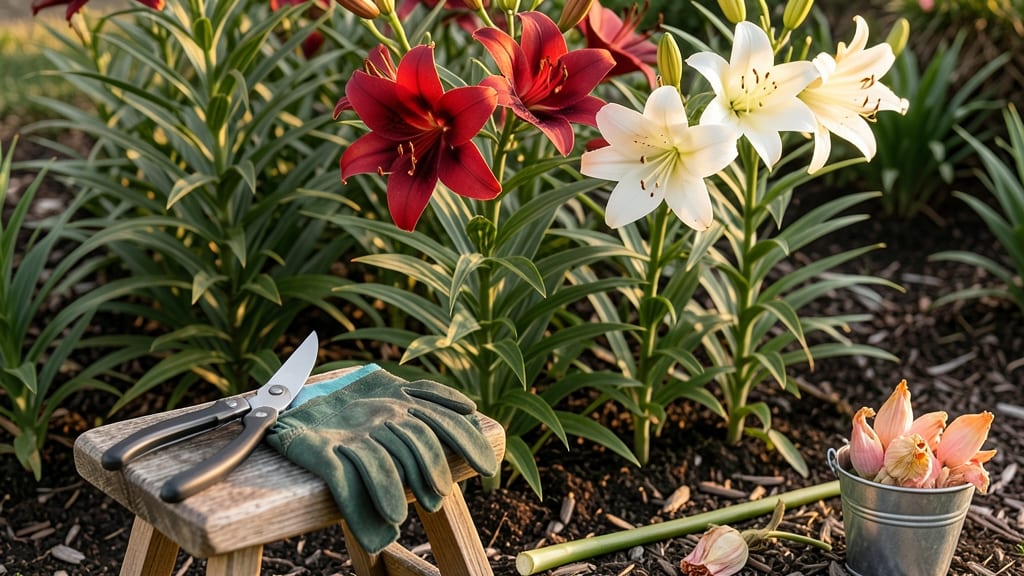
Pruning Asian lilies isn’t just about cleanup—it’s the secret to longer, showier blooms next year. ✂️ I’ve learned the hard way that skipping this step means fewer flowers and weaker stems.
The right cuts after blooming (or in late fall) redirect energy to next season’s growth, while wrong cuts invite rot or disease. You’ll need sharp pruners, gloves, and a clear day—no soggy soil or windy conditions.
Cut back stems to 6 inches above ground after blooms fade, removing all dead foliage. This isn’t just tidying; it’s training your lilies to store energy for their big comeback. By late fall, when leaves yellow, trim everything back to 2-3 inches above soil level.
The stubble might look harsh, but it’s how you protect the bulb’s winter rest. Mulch lightly to shield from freezing temps, and watch as fresh shoots emerge in spring—thicker, stronger, and ready to bloom.
Works for both garden beds and containers, and the same rules apply whether you have one plant or a dozen. Let’s get those lilies ready for their best show yet!
📚 In This Guide
- What you need
- Instructions
- Tips and common mistakes
- Wrapping up and next steps
What you need
- ● Pruning shears: Sharp, bypass-style shears (avoid anvil-style to prevent crushing stems). 1 pair is all you need—just ensure they’re clean and sanitized with rubbing alcohol.
- ● Garden gloves: Heavy-duty, cut-resistant gloves (thorny stems are no joke!). Opt for 1 pair with a snug fit for dexterity.
- ● Disinfectant: 70% isopropyl alcohol or bleach solution (1 part bleach to 9 parts water). 1 small spray bottle for quick clean-ups.
- ● Compost bin or bag: For disposing of pruned foliage. 1 large bin or 2-3 sturdy bags should suffice.
- ● Watering can or hose: To hydrate lilies post-pruning. 1 lightweight option with a gentle spray nozzle works best.
- ● Hand pruners: For smaller stems or tight spaces. 1 pair for precision.
- ● Knee pad: If you’re working on the ground for extended periods. 1 padded pad for comfort.
- ● Plant food: Balanced, slow-release fertilizer (10-10-10 or similar). 1 small bag to give your lilies a post-pruning boost.
- ● Mulch: Organic mulch (straw, shredded bark, or leaves). 2-3 inches worth to protect roots.
Step-by-step guide to pruning Asian lilies
Here's how to give your Asian lilies a clean, strategic trim for stronger blooms next year.
✂️ Step 1: Time Your Pruning for Optimal Regrowth
Wait until 2-3 weeks after flowering when the foliage has fully browned and died back naturally. This ensures the plant has stored enough energy in its bulbs for next season's growth. I always prune in early fall—around mid-October in my zone 7 garden—because this gives roots time to recover before winter dormancy.
Never cut back foliage while it's still green. The leaves photosynthesize and feed the bulb—removing them too soon starves the plant. You'll know it's time when the stems turn crispy brown and crumble easily between your fingers.
✂️ Step 2: Cut Back Stems to the Ground
Use sharp, clean pruners to make a clean cut 1-2 inches above the soil line. This prevents disease from entering through ragged cuts. I like to sterilize my pruners with rubbing alcohol between cuts—it keeps fungal spores from spreading between stems.
Don't leave any stubs taller than ½ inch. These can trap moisture and rot. For large clumps, work in sections to avoid overcrowding the space. You'll see the bulb's neck clearly once you remove the dead stems—this is your visual cue that you're cutting correctly.
✂️ Step 3: Remove Old Flower Stems at the Base
Dig around the base of the plant to locate the leathery seed pods that form after blooms fade. These pods drain energy from the bulb. Snip them off at the base with clean pruners, being careful not to damage any new shoots that might be emerging.
I always check for any remaining flower stalks hidden beneath the foliage. These sneakily steal nutrients. After removing them, give the area a light raking to clear away any debris—this reduces overwintering pests.
🌱 Step 4: Divide and Replant if Needed
Every 3-4 years, Asian lilies form dense clumps that need dividing. Wait until after pruning when the foliage has fully died back. Gently dig around the bulb with a fork, lifting the entire clump. You'll see individual bulbs connected by rhizomes.
Separate bulbs with your hands, ensuring each has at least 1-2 healthy shoots. Replant immediately in well-draining soil with the top of the bulb just above soil level. Water lightly after planting to settle the soil around the roots.
⏰ Step 5: Apply Mulch and Winter Prep
Spread 2-3 inches of organic mulch around the base after pruning. I use shredded leaves or straw because they break down slowly and insulate the bulbs through winter. This protects against freezing and thawing cycles that can damage the bulbs.
Skip any fertilizer at this stage—your lilies are entering dormancy. The pruned stems and removed pods have already reduced the plant's energy demands. Next spring, you'll see fresh green shoots emerging from the center of the clump as a sign your pruning paid off.
Tips & tricks for perfect Asian lilies pruning
Here's what nobody tells you about giving your lilies the perfect trim for next year's showstopping blooms.
Timing is Everything: The 2-3 weeks after flowering is your golden window—this is when the plant has finished photosynthesizing and stored energy in the bulbs. I learned this the hard way after pruning too early and getting sparse blooms the following spring. Wait until the foliage turns completely crispy brown and crumbles easily between your fingers. This visual cue is your best friend for knowing it's time to prune.
Tool Prep Prevents Problems: Sterilizing your pruners with rubbing alcohol between cuts is a game-changer for preventing fungal spread between stems. I keep a small bottle of 70% isopropyl alcohol in my gardening toolkit specifically for this purpose. Sharp, clean cuts heal better and reduce the risk of disease entering the plant. Don't skip this step—it's the difference between healthy lilies and potential rot.
Dividing Strategy: When you're dividing those 3-4 year old clumps, focus on separating bulbs that each have at least 1-2 healthy shoots. This ensures each new planting has the energy to establish itself. I like to work in the late afternoon when the ground is slightly cooler—it's easier on the bulbs and me! Replant immediately after dividing to minimize stress on the roots.
Mulch Matters: That 2-3 inches of organic mulch isn't just decoration—it's insulation. I use shredded leaves because they break down slowly and create a cozy blanket for the bulbs through winter. This protection is crucial in preventing freeze-thaw damage that can weaken next year's blooms. Plus, it saves me from winterizing worries until spring.
Pro Tips for Asian Lilies Pruning
- Here's what nobody tells you about giving your lilies the perfect trim for next year's showstopping blooms.
- Timing is Everything: The 2-3 weeks after flowering is your golden window—this is when the plant has finished photosynthesizing and stored energy in the bulbs.
- Tool Prep Prevents Problems: Sterilizing your pruners with rubbing alcohol between cuts is a game-changer for preventing fungal spread between stems.
Frequently asked questions
Got questions about pruning your Asian lilies? You’re not alone! Here are some of the most common concerns—plus straightforward answers to keep your blooms thriving.
When is the best time to prune Asian lilies?
Prune Asian lilies after they’ve finished blooming in late summer or early fall. This gives the plant time to store energy in its bulbs for next year’s growth. Avoid pruning in spring—new shoots need all the energy they can get!
How far back should I cut the stems?
Cut stems back to about 1–2 inches above the ground (or just above the soil line). This prevents disease by removing dead foliage while leaving enough leaves to photosynthesize and feed the bulb. Never cut into the bulb itself!
What if I skip pruning? Will my lilies still bloom?
Yes, but expect fewer and smaller blooms next season. Pruning redirects energy to bulb storage, ensuring stronger growth. Skipping it may lead to leggy stems or weak flowers—but even unpruned lilies often bounce back with patience!
My lily leaves turned brown after pruning. Is this normal?
Brown leaves post-pruning are usually normal if the cuts were clean and healthy. However, yellowing or mushy stems signal rot—likely from overwatering or fungal issues. Adjust care (reduce water, improve airflow) and monitor for recovery.
Can I prune Asian lilies in containers differently?
Container lilies follow the same rules, but reduce pruning intensity if space is limited. Leave 2–3 healthy leaves per stem to maximize photosynthesis. After blooming, trim faded flowers (deadheading) to encourage reblooming in some varieties.
Wrapping up and next steps
Pruning your Asian lilies might seem intimidating, but with the right tools and timing, it’s a simple way to boost next season’s blooms and keep your garden thriving! 🌸 The key is patience—focus on removing spent flowers, cleaning up debris, and giving your plants room to grow.
Once you’ve mastered these steps, you’ll enjoy stunning, long-lasting blooms year after year.
Ready to take your gardening skills to the next level? Grab your pruners and schedule your pruning session during the early fall or late spring—your lilies will thank you! 🌱