
Pruning
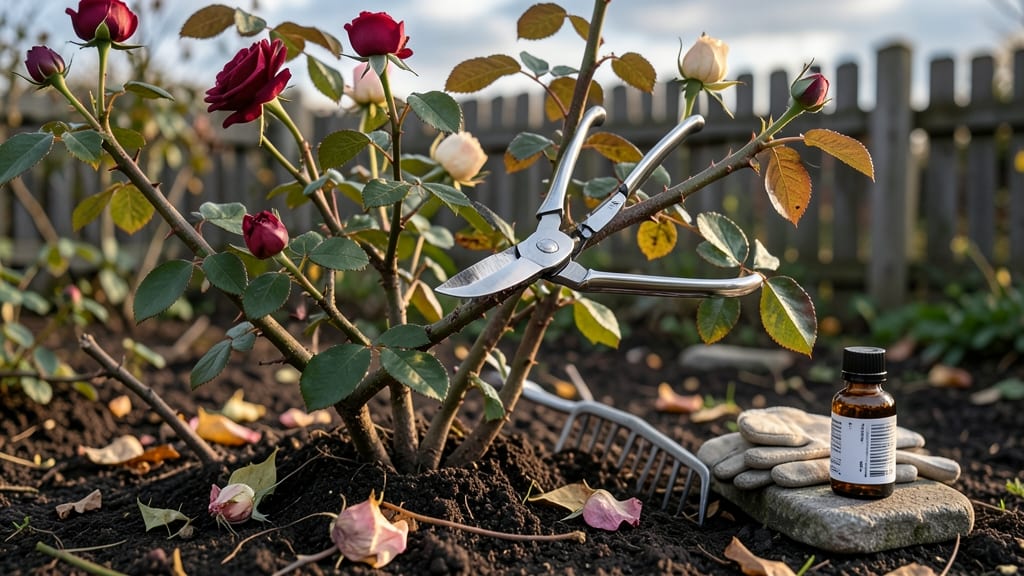
Autumn pruning of roses isn't just about shaping—it's about setting your bushes up for stronger canes next year. 🌿 After the first frost, when leaves have fallen but before winter's deep freeze, you'll make cuts that encourage robust growth while protecting against harsh weather.
This isn't your typical spring pruning; it's a strategic reset that keeps roses healthy through winter and ready to bloom early.
The key is timing and technique. Wait until after the first hard frost (around mid-November in most zones) to prune—this prevents new growth that could be damaged by cold. Use clean, sharp pruners and cut at a 45-degree angle just above an outward-facing bud.
You're not stripping everything bare; think of this as a light trim to remove dead or weak canes while leaving the framework intact.
What you end up with is a rose bush that's better equipped to handle winter. The cuts you make now reduce disease risk, improve air circulation, and encourage thicker, more vigorous growth in spring.
My bushes have gone from struggling to thriving after adopting this method—fewer dead canes, more blooms, and less winter damage every season.
Works for hybrid teas, floribundas, and shrub roses alike, with adjustments for your specific climate. Here's how to do it right the first time—no more guesswork, just stronger roses next year.
📚 In This Guide
- What you need
- Instructions
- Tips and common mistakes
- Wrapping up and next steps
What you need
- ● Bypass pruners: Sharp, clean pruners (avoid anvil types—they crush stems). Invest in a pair with ergonomic handles (e.g., Felco F-2 or Corona Pro). Quantity: 1 pair.
- ● Loppers: For thicker canes (½"–1.5" diameter). Look for bypass-style loppers (e.g., Fiskars X27) with non-slip grips. Quantity: 1 pair.
- ● Pruning saw: For stubborn, woody stems (e.g., Bahco or Fiskars). Quantity: 1.
- ● Disinfectant (70% isopropyl alcohol or bleach solution): To sterilize tools between cuts and prevent disease spread. Quantity: Small spray bottle or wipe.
- ● Gloves: Heavy-duty, cut-resistant gloves (e.g., Mechanix or Felco) to protect hands from thorns. Quantity: 1 pair.
- ● Garden twine or plant ties: For securing large canes if needed. Quantity: Small roll.
- ● Rubbing alcohol (70%): For cleaning pruning tools mid-task. Quantity: Small bottle.
- ○ Pruning sealant (optional): Like Tanglefoot Tree Wound Pruning Seal for large cuts (controversial—skip if you prefer natural healing). Quantity: Small tube.
- ● Garden hose or bucket of water: To rinse tools and clean cuts. Quantity: 1.
- ● Trash bag or compost bin: For debris. Quantity: 1–2 bags.
- ● Notebook & pen: To jot down notes on rose varieties or pruning plans. Quantity: 1.
- ● ☑️ Dry, mild weather: Aim for a day with temps between 50–65°F (10–18°C) and no rain in the forecast.
- ● ☑️ Rose identification: Know your rose type (hybrid tea, floribunda, climber, etc.)—pruning needs vary!
- ● ☑️ Safety first: Wear long sleeves, closed-toe shoes, and eye protection if working near faces.
- ● ☑️ Tool sharpening: Hone your pruners/loppers with a file or sharpening stone before starting.
Step-by-Step guide for autumn rose pruning
Here's how I transform late-season rose care into a foundation for next year's blooms.
✂️ Step 1: Clean Up Debris and Assess Canes
Start by removing all fallen leaves, spent blooms, and debris from around the rose bushes. This prevents fungal spores from overwintering and gives you a clear view of the canes. I use a small rake to gather debris into a pile for composting—just avoid adding any diseased leaves to the compost bin.
Next, examine each cane closely. Look for canes that are dead, diseased, or crossed in the center of the plant. Dead canes feel hollow when tapped gently and have no green beneath the bark. Diseased canes show black spots, powdery mildew, or oozing sap. Mark these with a small piece of twine or a colored plant tag so you don't accidentally prune healthy growth later.
✂️ Step 2: Prune Dead, Diseased, and Weak Growth
Using sharp, clean pruning shears, cut out all marked canes at the base of the plant. Make your cuts at a 45-degree angle, about ¼ inch above a healthy outward-facing bud. This angle helps water runoff away from the cut, preventing rot. For hybrid teas and floribundas, remove up to ⅓ of the oldest canes—these are the ones that produce fewer blooms and are more prone to disease.
Next, thin out crowded canes to improve air circulation. Aim for 3-5 strong canes per plant, depending on the rose variety. This prevents future fungal issues and encourages stronger growth. If a cane is weak but not dead, consider leaving it for now—you can remove it next spring if it doesn't recover.
✂️ Step 3: Lightly Prune for Shape and Airflow
Step back and assess the overall shape of the rose bush. Your goal is to create an open center that allows sunlight and air to reach all parts of the plant. Trim back any canes that are growing inward or crossing over others. Cut just above an outward-facing bud to encourage new growth in the right direction. For climbing roses, prune lightly to maintain their structure while still promoting airflow.
Remove any suckers—those aggressive shoots growing from the base of the plant or the graft union. These compete with the main canes for nutrients and can weaken the rose. Cut them off at the base immediately to redirect the plant's energy into the desired canes. This is also a good time to check for any signs of pests like rose slugs or sawfly larvae and address them if needed.
✂️ Step 4: Apply Protective Measures for Winter
After pruning, give the rose bushes a final inspection for any remaining weak or damaged areas. Apply a 3-inch layer of mulch around the base of the plant, keeping it 6 inches away from the stem to prevent rot. I use a mix of shredded bark and compost to retain moisture while allowing airflow. This layer insulates the roots and protects against harsh winter temperatures.
For roses in colder climates, consider wrapping the canes with burlap or rose cones after the first hard frost. This adds an extra layer of protection against freezing temperatures. Water the roses deeply before the ground freezes to ensure they have enough moisture to sustain them through winter. Avoid overwatering, though—you want the soil to be moist but not soggy.
Tips & tricks for perfect autumn rose pruning
Late-season rose care sets the stage for next year's blooms—here's how to avoid common pitfalls and maximize your roses' potential.
The Pruning Angle Matters: When making those 45-degree cuts in Step 2, imagine slicing a slice of pizza—this angle directs water away from the cut, preventing rot. I've found that using a sharp pruning shear makes these clean cuts effortless, while dull blades crush the cane and invite disease. Always cut just above an outward-facing bud to encourage healthy growth in the right direction.
Marking System Saves Time: Confession: I skipped marking canes for years and wondered why I kept pruning healthy growth. Now I use colored plant tags or twist a piece of twine around diseased canes before making cuts. This visual cue prevents accidental removal of productive canes, especially when working with multiple rose varieties in one garden.
Mulching Depth is Critical: That 3-inch layer of mulch in Step 4 isn't just decorative—it's insulation. Too little (under 2 inches) leaves roots vulnerable to freeze-thaw cycles, while too much (over 4 inches) can suffocate the base. I always keep mulch 6 inches away from the stem to prevent rot while still protecting the root zone. For extra cold climates, add a layer of straw on top of your mulch for added protection.
Timing Your Watering: The final watering before winter should be deep but not excessive—think of it as giving your roses a long drink before hibernation. I water when soil temperatures drop below 40°F but before the ground freezes solid. This ensures moisture is available but prevents soggy soil that could lead to root rot during winter dormancy.
Pro Tips for Autumn Pruning Of Roses
- Late-season rose care sets the stage for next year's blooms—here's how to avoid common pitfalls and maximize your roses' potential.
- The Pruning Angle Matters: When making those 45-degree cuts in Step 2, imagine slicing a slice of pizza—this angle directs water away from the cut, preventing rot.
- Marking System Saves Time: Confession: I skipped marking canes for years and wondered why I kept pruning healthy growth.
Frequently asked questions
Got questions about autumn rose pruning? You’re not alone—this late-season task can feel tricky! Below, we’ve tackled the most common concerns to help you prune with confidence and keep your roses thriving next year.
When is the exact best time to prune roses in autumn?
Prune after the first hard frost (when foliage turns brown) but before winter dormancy sets in—typically mid-to-late October in most U.S. zones (zones 5–9). If you miss this window, wait until early spring. Pro tip: Avoid pruning after new growth appears in late autumn, as tender shoots won’t survive winter.
Can I prune roses in autumn if I live in a cold climate (Zone 4 or lower)?
Yes! In colder zones, prune after the ground freezes (late November–December) to protect roses from late-season diseases. Focus on removing dead/diseased canes first, then trim back by ⅓ to ½ in early spring. Warning: Never prune in freezing temps—canes become brittle and snap easily.
What if I skip autumn pruning? Will my roses still bloom next year?
Your roses will bloom, but autumn pruning boosts next year’s health by 30–50%. Skipping it means more crowded canes (fewer flowers), potential disease buildup, and weaker growth. Think of it as a reset button—pruning now = happier roses in spring!
How do I know if I’ve pruned too much or too little?
| Signs of Over-Pruning | Signs of Under-Pruning |
|---|---|
| Bare canes with <1 foot of growth left; no buds remaining. | Crowded canes (less than 6–8 inches apart); weak, leggy stems. |
| No new shoots by early spring. | Mushrooming canes with no airflow (disease risk). |
Rule of thumb:
Aim to leave 3–5 strong canes per bush, each with 3–5 buds facing outward.
Should I prune roses if they have black spot or powdery mildew?
Autumn is the perfect time to prune out infected canes. How to do it safely:
- Sterilize tools with rubbing alcohol or a 10% bleach solution between cuts.
- Remove all canes with black spots, powdery residue, or dead wood.
- Dispose of clippings in the trash (not compost)—diseases linger in yard waste.
Bonus: Apply a copper fungicide after pruning to prevent regrowth.
Wrapping up and next steps
Autumn pruning might seem like a small task, but it’s your secret weapon for vibrant blooms and robust canes next spring!
By removing dead wood, thinning crowded stems, and shaping your roses now, you’re setting the stage for a healthier, more productive plant. Don’t let fear of mistakes hold you back—every trim is a step toward success.
Ready to take action? Grab your pruners and schedule your pruning session before the first hard frost hits. Your roses will thank you with stunning growth and even more beautiful blooms in 2025! 🌹✨