
Pruning
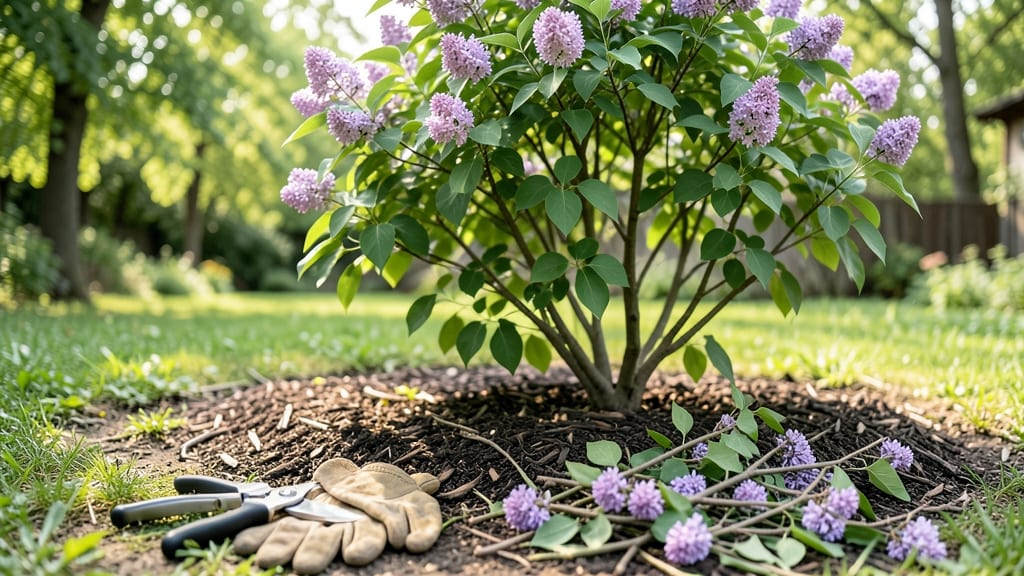
Seeing a before and after pruned lilac bush is like witnessing a transformation—what was once a tangled mess becomes a bloom machine by next spring. ✂️ I’ve pruned mine every year since 2018, and the difference in flower quantity—sometimes doubling—is nothing short of shocking.
The secret? Timing cuts right after dormancy but before new growth, and using the right technique to avoid stressing the plant.
You’ll need sharp pruners, a ladder (for tall bushes), and a clear day to assess the shape. Start by removing dead, crossing, or weak branches first—these steal energy from the blooms.
Then, cut back last year’s flower stems to just above a set of healthy buds, shaping the bush into an open vase form. The goal is sunlight reaching the center, where next year’s flowers form.
After pruning, give the bush a deep watering to help it recover, and hold off on fertilizer until new growth appears in spring.
Within 4-6 weeks, you’ll see fresh green shoots pushing out, and by next June, those pruned branches will burst with fragrant, abundant blooms—far more than before. The before-and-after? Night and day.
Works for any lilac variety, from dwarf to standard-sized bushes. Just avoid pruning in fall (it encourages late growth that won’t survive winter) or spring (you’ll cut off next year’s flowers). Here’s how to do it right the first time.
📚 In This Guide
- What you need
- Instructions
- Tips and common mistakes
- Wrapping up and next steps
What you need
- ● Pruning shears – Bypass pruners (sharp, clean, and disinfected with rubbing alcohol to prevent disease). Quantity: 1 pair (or 2 if pruning a large bush).
- ● Loppers – For thicker stems (1/4-inch to 1-inch diameter). Quantity: 1 pair.
- ● Pruning saw – For thick, woody branches (2+ inches in diameter). Quantity: 1.
- ● Gloves – Leather or heavy-duty garden gloves to protect against thorns and sap. Quantity: 1 pair.
- ● Disinfectant – Rubbing alcohol (70%+ isopropyl) or bleach solution (1 part bleach to 9 parts water) to sterilize tools between cuts.
- ● Heavy-duty trash bags – For removing pruned branches (20-30 gallon size recommended). Quantity: 2-3 bags.
- ● Rake or broom – To clean up debris after pruning.
- ○ Pruning sealant (optional but helpful) – For large cuts (1+ inch diameter) to prevent disease (e.g., Tanglefoot Pruning Seal).
- ● Hand pruners – For smaller, precise cuts on delicate stems.
- ● Ladder or step stool – If your lilac is taller than 6 feet.
- ● Marking spray or chalk – To mark branches for removal before cutting.
- ● Compost bin or mulch – To recycle pruned branches as nutrient-rich compost.
- ● Safety glasses – To protect your eyes from debris.
How to prune a lilac bush for maximum blooms next season
Late winter is the perfect time to shape your lilac bush—here’s how to do it right for fuller, more vibrant flowers.
✂️ Step 1: Gather Your Tools and Safety Gear
Start by sharpening your pruning shears—dull blades tear stems and stress the plant. I always wear gloves (lilac thorns are no joke) and have a bucket ready to collect clippings. A small spray bottle with 70% isopropyl alcohol helps disinfect tools between cuts, preventing disease spread from old growth.
Work on a dry, sunny day when the bush is fully dormant—you’ll know it’s ready when no buds have opened yet. Avoid pruning after rain or when temperatures dip below 35°F, as cold stress slows healing. I like to prune in late February or early March, just before new growth starts.
✂️ Step 2: Remove Dead, Diseased, or Weak Wood
Scan the bush for branches that are brown, brittle, or hollow—these won’t produce flowers and may harbor pests. Cut these out first at the base, making clean cuts at a 45-degree angle just above a healthy bud. If a branch is larger than ½ inch thick, use loppers and cut just outside the branch collar.
Next, look for crossing branches or those growing inward—they’ll compete for energy and reduce airflow, leading to mildew. Remove one of the two crossing stems, always cutting back to an outward-facing bud. You’ll notice the bush’s natural shape start to emerge as you work.
✂️ Step 3: Thin Out Older Wood to Encourage New Growth
Lilacs bloom on new wood, so the goal is to stimulate fresh growth. Start by removing one-third of the oldest stems—these are the thickest, woody branches at the center. Cut them at the base, even if they’re still green. This opens up the center for sunlight and air circulation.
For the remaining stems, trim back the oldest ⅓ to ½ of each branch. Look for the largest buds near the base—these will produce the strongest new growth. Make your cut just above a bud that faces outward, angled slightly away from the stem. You’ll see new shoots emerge within 2-3 weeks of pruning.
✂️ Step 4: Shape the Bush for Balance and Airflow
Step back and assess the bush’s overall shape—aim for a rounded, vase-like form with an open center. Prune any branches that spoil the symmetry or grow too close together. Cut back lateral branches to 6-8 inches from the main stem to encourage bushier growth.
I like to leave 3-5 of the strongest, most vigorous stems—these will carry next year’s blooms. Avoid over-pruning; lilacs are resilient but won’t recover from aggressive cuts. If you’re unsure, err on the side of caution and leave slightly more growth than you think you should.
🌿 Step 5: Clean Up and Apply Finishing Touches
Rake up all clippings and dispose of them in the trash—never compost lilac prunings, as they can harbor diseases. Disinfect your tools again with the alcohol spray to prevent cross-contamination. Water the base of the bush deeply to help it recover, especially if the soil is dry.
Mulch around the base with 2-3 inches of organic mulch (like shredded bark) to retain moisture and regulate soil temperature. Avoid piling mulch against the stem—keep it 2-3 inches away to prevent rot. Your lilac will reward you with fuller, more abundant blooms next spring if you’ve done this right.
Tips & tricks for pruning your lilac bush like a pro
Late-winter pruning transforms your lilac from a tangled mess into a flowering powerhouse—but only if you do it right. Here’s how to avoid common mistakes and get the best results.
Timing is Everything: That late February to early March window isn’t just arbitrary—it’s when lilacs are fully dormant but just about to wake up. If you prune too early (below 35°F), the cuts won’t heal properly, and if you wait too long, you’ll cut off next year’s flower buds. Look for the first signs of swelling buds, then prune within 7-10 days before they open. This ensures you’re cutting old wood while preserving new growth potential.
The 45-Degree Cut Matters More Than You Think: When you make those angled cuts in Step 2, that 45-degree angle isn’t just for looks—it helps water run off the cut and prevents rot. But here’s the secret: always cut just above a bud that faces outward. If you cut too close to the bud, it won’t grow properly, and if you cut too far away, you’ll leave a stub that can harbor disease. Hold the branch and look for that little eye—it’s your guide to perfect cuts.
Don’t Guess on One-Third—Measure It: In Step 3, removing one-third of the oldest stems might sound simple, but it’s easy to misjudge. For a medium-sized lilac bush (about 4-5 feet tall), that’s roughly 3-5 of the thickest, oldest branches. If you’re unsure, count all the main stems first, then remove every third one starting from the center. This creates that open vase shape while keeping enough structure for next year’s blooms. And remember—those oldest stems are the ones growing straight up from the base, not the newer branches.
Mulch Placement Prevents Rot: That 2-3 inches of organic mulch in Step 5 is crucial, but where you place it matters just as much. Piling mulch right against the stem creates a moist, dark environment perfect for fungus. Instead, create a donut shape around the base, keeping it 2-3 inches away from the trunk. This keeps roots cool in summer and warm in winter while preventing rot. Think of it as creating a breathing space for your lilac’s neck.
Pro Tips for Before And After Pruned Lilac Bush
- Late-winter pruning transforms your lilac from a tangled mess into a flowering powerhouse—but only if you do it right.
- Timing is Everything: That late February to early March window isn’t just arbitrary—it’s when lilacs are fully dormant but just about to wake up.
- The 45-Degree Cut Matters More Than You Think: When you make those angled cuts in Step 2, that 45-degree angle isn’t just for looks—it helps water run off the cut and prevents rot.
Frequently asked questions
Got questions about pruning your lilac bush? You’re not alone! Here are some of the most common concerns—and their answers—to help you tackle the job with confidence.
When is the absolute best time to prune a lilac bush?
The golden window is right after blooming but before late summer—ideally in late winter or early spring (February–March in most zones). Pruning now encourages strong new growth for next year’s showstopper blooms. Avoid cutting back after July, or you may sacrifice next year’s flowers!
How much can I cut back a mature lilac bush?
For established bushes, aim to remove 1/3 of the oldest wood (usually the thickest stems at the base). Cut back to a healthy bud or branch—never leave stubs! Over-pruning can stress the plant, but don’t skip it: regular cuts keep lilacs compact and blooming like champs. Pro tip: Use sharp pruners for clean cuts!
What if my lilac bush isn’t blooming after pruning?
Lilacs need sunlight and patience! If blooms are sparse, check for:
- Shade: Lilacs crave 6+ hours of sun daily.
- Over-fertilizing: Too much nitrogen = leafy growth, fewer flowers.
- Dormant pruning: If you cut too late (post-July), buds form for next year’s blooms may be lost.
Can I prune a lilac bush in the fall?
Fall pruning is risky—it can stimulate tender new growth that won’t survive winter. If you must prune in fall, do it early (September–October) and avoid heavy cuts. Spring or late winter is always the safer bet for bold blooms next season.
What’s the easiest way to tell old wood from new on a lilac?
Old wood is thick, woody, and often gray/brown, while new growth is thinner, green, and flexible. Look for:
- Bud scars: Older stems have raised, layered scars.
- Leaf clusters: New shoots sprout from leaf nodes.
Are there any lilac varieties that don’t need pruning?
Most lilacs thrive with pruning, but some looser, wild varieties (like Lilac ‘Miss Canada’) tolerate minimal cuts. Dwarf lilacs (e.g., ‘Lilac ‘Mardi Gras’) also need less aggressive pruning. Still, light shaping in spring keeps them healthy—even the low-maintenance types!
Wrapping up and next steps
Transforming your lilac bush with late-winter pruning isn’t just about tidying up—it’s about unlocking its full potential for stunning, abundant blooms next season! 🌸 With the right tools, technique, and timing, you’ve got everything you need to shape a healthier, more vibrant plant.
The effort is worth it: imagine those fragrant purple spikes bursting forth in spring, thank you to your careful cuts.
Ready to see the magic unfold? Mark your calendar for late winter or early spring and grab your pruners—your future blooms are waiting! 🌿 And if you’re feeling ambitious, why not share your before-and-after transformation with fellow gardeners? Their inspiration could be your next pruning project!