
Pruning
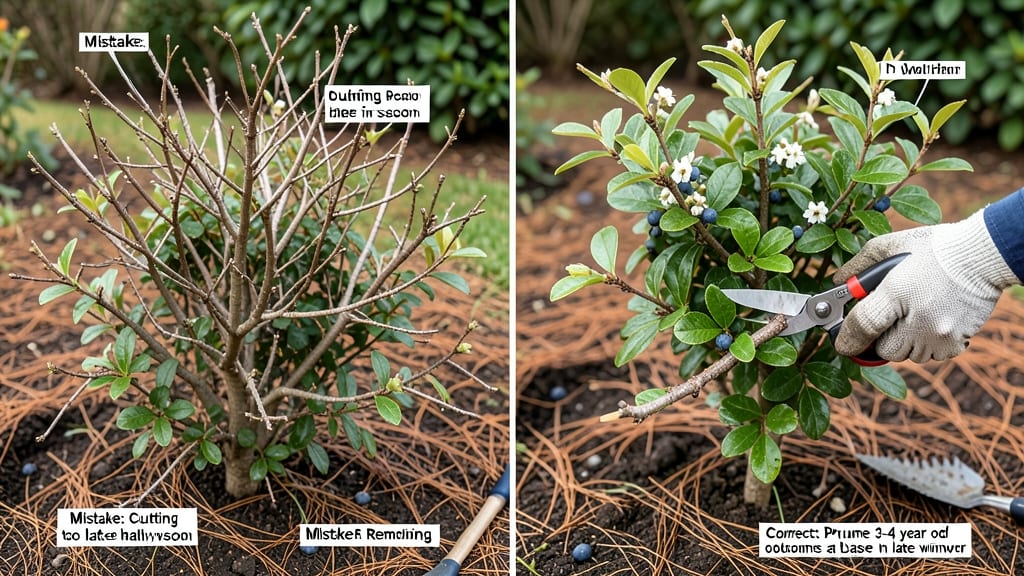
Blueberry bush pruning mistakes can turn your productive harvest into a sad, berry-less memory. ✂️ I’ve watched perfectly healthy bushes decline after just one wrong cut—here’s how to avoid the five critical errors that sabotage growth and fruit production.
The biggest mistake? Pruning at the wrong time. Blueberries need their winter dormancy to set next year’s buds, so cutting back in late winter or early spring—when new growth is just starting—can strip away those potential berries.
Even worse, improper cuts (like leaving stubs or tearing bark) invite disease and stress the plant.
Good news: recovery is possible. If you’ve already made mistakes, focus on proper timing next season (late winter, before buds swell) and clean cuts just outside the branch collar. Within a year, your bush can bounce back with stronger growth and a better harvest.
This isn’t just about saving your harvest—it’s about unlocking the full potential of your blueberry bushes. With the right pruning, you’ll see thicker canes, more flowers, and berries that last from early summer through fall. Let’s fix what went wrong and set you up for success next year.
📚 In This Guide
- What you need
- Instructions
- Tips and common mistakes
- Wrapping up and next steps
What you need
- ● Pruning shears: Bypass pruners (sharp, clean blades, 5–8" length) – 1 pair (avoid anvil shears; they crush stems).
- ● Loppers: Bypass-style (for thicker branches, 8–12" handles) – 1 pair (for branches up to 1.5" thick).
- ○ Hand saw: Pruning saw with curved blade (for stubborn, woody branches) – 1 (optional but handy for mature bushes).
- ● Disposable gloves: Nitrile or leather (to protect from thorns and sap) – 1–2 pairs.
- ● Rubbing alcohol (70%+) or bleach solution: 1:10 bleach-water mix (to sterilize tools between cuts and prevent disease).
- ● Trash bags or bucket: (for collecting pruned debris) – 1–2.
- ● Permanent marker: (to label branches if needed) – 1.
- ● Pruning sealant: (for larger cuts on older bushes to prevent disease entry).
- ● Knee pads: (if your bush is low to the ground or you’ll be kneeling).
- ● Extension pole: (for high branches, attachable to loppers/saws).
- ● Spray bottle with water: (to keep cuts moist if working in dry conditions).
- ● Notebook & pen: (to sketch your bush’s structure before pruning).
- ● Know your blueberry bush’s variety and age (pruning needs differ for rabbiteye, southern highbush, or northern highbush).
- ● Check the best pruning time for your climate (late winter/early spring for dormant bushes).
- ● Have a clear day (avoid pruning in wet or windy conditions).
- ● Review your bush’s structure—identify dead, diseased, or crossing branches before cutting.
How to prune blueberry bushes without ruining your harvest
Pruning blueberries seems simple, but these five common errors can wreck your bushes—and your harvest. Here’s how to avoid them.
✂️ Step 1: Never Prune at the Wrong Time of Year
Blueberries need pruning right after harvest, typically in late summer (August-September for most regions). This timing ensures you don’t remove next year’s fruit buds, which form over summer. If you prune in fall, winter, or early spring, you risk cutting off flower clusters before they develop, leaving you with no berries.
Here’s the trick: Wait until all fruit has been picked, then prune within 2-3 weeks. You’ll see fresh, green growth starting on the stems—this is your signal that buds are already forming. If you prune too late, you’ll accidentally snip off next year’s crop.
✂️ Step 2: Don’t Over-Prune or Remove Too Many Branches
Many gardeners panic and cut back more than 25% of the bush at once, thinking it’s necessary for growth. But blueberries are delicate—they need a balanced structure to produce fruit. If you remove too many branches, the plant struggles to support new growth and flowering.
Instead, focus on thinning out only the oldest, thickest canes (those 5+ years old) and any dead, diseased, or crossing branches. You’ll know you’re pruning correctly when you’re left with 3-4 strong, younger canes per foot of bush width. These are the ones that produce the most fruit.
✂️ Step 3: Avoid Cutting Back to the Ground or Main Stem
Some gardeners think blueberries need a "hard cutback" like shrubs, but this is a harvest killer. Blueberries fruit on second-year wood—meaning the branches that grew last year will produce this year’s berries. If you cut them back to the ground, you’re removing next year’s crop entirely.
Instead, prune just above a bud or side branch that’s growing outward. Make your cuts at a 45-degree angle to prevent water from pooling on the wound. You’ll see the remaining branches thicken and sprout new growth within a few weeks.
✂️ Step 4: Ignoring the Bush’s Natural Shape Leads to Poor Airflow
Blueberries need good airflow to prevent fungal diseases like botrytis. If you leave the bush too dense or let branches grow inward, moisture gets trapped, and diseases spread. Many gardeners skip pruning entirely, letting the bush grow wild, which leads to smaller, lower-quality fruit.
Here’s how to fix it: Remove any branches growing into the center of the bush or rubbing against others. Aim for an open, vase-like shape with branches spaced 6-12 inches apart. You’ll notice fewer yellowing leaves and healthier berries as the season progresses.
✂️ Step 5: Using the Wrong Tools or Making Jagged Cuts
Dull shears or hedge trimmers crush stems and leave ragged edges, inviting disease. Many gardeners use hand pruners that are too small, forcing them to make multiple cuts or tear branches, which weakens the plant.
Invest in sharp, bypass pruners (4-6 inches long) and cut just outside the bud collar (the swollen area where leaves and branches meet). You’ll see clean cuts that heal faster, and the bush will recover more quickly. Sterilize your tools with rubbing alcohol between cuts to prevent spreading disease.
Tips & tricks for pruning blueberry bushes like a pro
Real talk: I've watched perfectly healthy blueberry bushes turn into sad, fruitless shadows because of pruning mistakes. Here's what nobody tells you—these tricks will save your harvest.
Timing is Everything: The 2-3 week window after harvest is your golden opportunity. If you're unsure whether buds have formed, look for fresh green growth on the stems—this means buds are already there. I once pruned too early in August and lost half my next year's crop because the buds hadn't formed yet. Trust me, that was a painful lesson.
The 25% Rule: Never remove more than 25% of the bush at once. I learned this the hard way after over-pruning and watching my bushes struggle to recover. Focus on removing only the oldest canes (5+ years) and any dead or crossing branches. You'll know you're doing it right when you're left with 3-4 strong, younger canes per foot of bush width—these are your fruit-producing powerhouses.
Second-Year Wood Matters: Remember, blueberries fruit on second-year wood. That means the branches that grew last year will produce this year's berries. If you cut them back to the ground, you're essentially saying "no thanks" to next year's harvest. Always prune just above a bud or side branch growing outward—this ensures you're preserving next year's fruit potential while shaping the bush properly.
Tool Talk: Sharp, bypass pruners are a game-changer. I used to struggle with dull shears that crushed stems and left ragged edges, which just invited disease. Invest in good pruners (4-6 inches long) and always cut just outside the bud collar at a 45-degree angle. Sterilize your tools between cuts with rubbing alcohol—this simple step prevents spreading disease from one part of the bush to another.
Pro Tips for Blueberry Bush Pruning Mistakes
- Real talk: I've watched perfectly healthy blueberry bushes turn into sad, fruitless shadows because of pruning mistakes.
- Timing is Everything: The 2-3 week window after harvest is your golden opportunity.
- The 25% Rule: Never remove more than 25% of the bush at once.
Frequently asked questions
When is the best time to prune blueberry bushes?
The ideal time to prune blueberry bushes is late winter or early spring (before buds swell) for dormant pruning. For summer pruning, focus on removing dead or diseased wood immediately. Avoid heavy pruning in fall—it can stress the plant and invite pests. Pro tip: Southern varieties may need a light prune after harvest to shape growth.
What if I accidentally prune too much?
If you’ve over-pruned (cutting back more than 25% of the bush), don’t panic! Blueberries are resilient. Stop pruning immediately and focus on watering deeply and fertilizing with acid-loving plant food. Monitor for new growth—if none appears, prune less aggressively next time. Severe over-pruning may reduce fruit for 1–2 years but won’t kill the bush.
Can I prune blueberry bushes in the fall?
Fall pruning is not recommended for most blueberry varieties. Pruning too late can expose the plant to winter dieback or fungal diseases. However, you can remove dead, diseased, or crossing branches anytime. Save major structural pruning for late winter when the plant is dormant. Exception: In mild climates, light shaping after harvest is safe.
Why are my blueberry bushes not fruiting after pruning?
Poor fruiting after pruning often stems from over-pruning old wood (blueberries bear fruit on 2-year-old wood) or improper timing. Check for:
These are two key pruning techniques:
If issues persist, adjust next year’s pruning to preserve older canes.
What’s the difference between “heading back” and “thinning out”?
For blueberries, thinning is more critical than heading back. Focus on opening the center of the bush for airflow. Remember: Never remove more than 25% of the plant in one season!
Wrapping up and next steps
Pruning your blueberry bushes might seem tricky, but avoiding these 5 critical mistakes will set you up for a bountiful harvest! 🌱 Remember, timing, technique, and tool care are everything—don’t overlook the little details that make a big difference.
Now that you’re armed with the right knowledge, it’s time to grab those shears and give your bushes the love they deserve.
Ready to take action? Start by inspecting your bushes this weekend—look for dead wood, overcrowded branches, and any signs of stress. With patience and practice, you’ll master the art of pruning and enjoy plump, juicy blueberries for years to come! 🍇