
Pruning
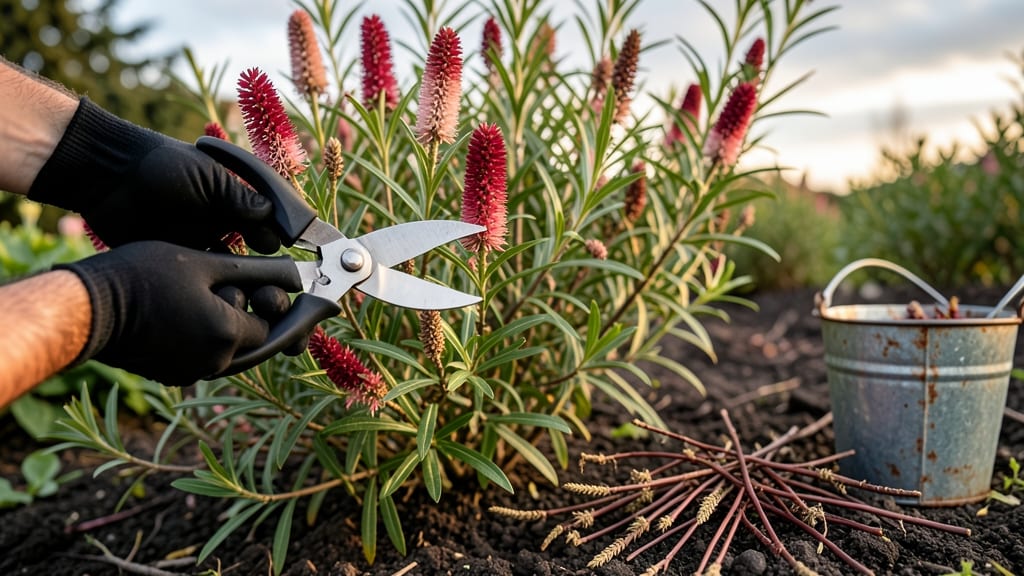
Late-winter pruning turns your Callistemon into a blooming powerhouse. ✂️ I’ve watched my bottlebrush plants go from straggly to showstopping with just a few strategic cuts—here’s how to do it right, without overdoing it.
The magic happens when you cut back one-third of the oldest stems to the ground, while leaving younger branches to fuel new growth. This isn’t just about shaping—it’s about forcing the plant to put energy into fresh, flower-laden branches.
Timing is everything: do it in late winter or early spring, before new shoots appear. You’ll see thicker foliage and longer, more vibrant blooms by summer, with fewer gaps between flowers. The key is patience—rush it, and you’ll end up with a leggy mess instead of a bushy masterpiece.
Works for both young plants and mature shrubs, whether you’re shaping a hedge or encouraging more dramatic bottlebrush blooms. Let’s get those shears sharp!
📚 In This Guide
- What you need
- Instructions
- Tips and common mistakes
- Wrapping up and next steps
What you need
- ○ Pruning shears: Bypass pruners (sharp, clean, and 10-12 inches long) for small to medium branches. Optional: Anvil pruners for thicker stems (but avoid crushing woody stems!).
- ● Loppers: 18-24 inches long with bypass blades for branches ½–2 inches thick.
- ● Pruning saw: Curved-tooth or folding saw for branches over 2 inches thick.
- ● Garden gloves: Heavy-duty, cut-resistant (e.g., nitrile-coated) to protect hands from thorns and sharp edges.
- ● Disinfectant: 70% isopropyl alcohol or 10% bleach solution (1 part bleach to 9 parts water) to clean tools between cuts and prevent disease.
- ● Trash bag or bucket: For collecting pruned branches (aim for 5+ gallons if tackling a large bush!).
- ● Rag or paper towels: For wiping tools and hands.
- ● Hand pruners: For tiny twigs (under ¼ inch) if you’re a detail-oriented pruner.
- ● Pruning sealant: Tree wound dressing (e.g., Tanglefoot) for large cuts over ½ inch thick (controversial but useful for some gardeners).
- ● Ladder or step stool: If your Bottle Brush is taller than 6 feet—safety first!
- ● Notebook & pen: To sketch a quick map of your pruning plan before you start.
- ● Sunscreen & hat: Because late-winter pruning might still mean sunny days!
- ● Know your plant’s age: Mature Bottle Brush (3+ years old) can handle heavier pruning than young saplings.
- ● Check the weather: Prune on a dry, calm day (avoid wind or rain for 24 hours before/after).
- ● Gather inspiration: Snap a photo of your bush before pruning to reference shapes and bloom spots.
- ● Clear the area: Remove debris, rocks, or toys from a 3-foot radius around the plant.
Step-by-step guide for pruning Callistemon bottle brush
Here's how to revive your bottle brush's shape and encourage vibrant blooms—no guesswork involved.
✂️ Step 1: Time Your Pruning for Late Winter
Wait until late winter, just before new growth begins—usually 6-8 weeks before your last frost date. You'll know it's time when the plant shows swollen buds along the stems but hasn't sprouted leaves yet. Pruning too early can leave it vulnerable to cold snaps, while waiting too long reduces next season's flowers.
I always check the calendar and the plant: if daytime temps consistently stay above 40°F and buds are visible, it's go time. Grab your pruners and gloves—bottle brush branches are sharp!—and work on a dry, sunny morning when the plant is fully hydrated.
✂️ Step 2: Remove Dead or Damaged Wood First
Start by cutting out any dead, diseased, or crossing branches at their base. Look for stems that are brown inside when cut or show peeling bark—these won't regrow properly. Remove any branches growing straight into the center of the plant, as they create dense, shaded areas that discourage blooms.
I like to make clean cuts at a 45-degree angle about ¼ inch above a bud or side branch. This prevents water from pooling on the cut and encourages new growth. If a branch is over ½ inch thick, use your loppers to avoid tearing the bark.
✂️ Step 3: Shape the Plant for Bushier Growth
Now focus on the overall shape. Bottle brush responds well to moderate pruning—never cut more than ⅓ of the plant's total height at once. Start by trimming back the longest branches to just above a leaf node (where leaves or buds attach). This encourages the plant to branch out rather than grow tall and leggy.
For a fuller look, I step back every few cuts to visualize the shape. Aim for an open center with branches spaced evenly. If your bottle brush has grown too tall, you can cut the main stems back by ⅓ to promote bushier regrowth. Just remember: the more you prune, the more flowers you'll get next season!
✂️ Step 4: Encourage Longer Blooms with Strategic Cuts
To maximize flower production, cut back the oldest wood (the thickest stems) by ⅓ to ½ of their length. New growth will sprout from these cuts, and these younger branches produce the most vibrant blooms. For younger plants or those that haven't bloomed yet, prune lightly—just enough to shape them without stressing the plant.
Watch for pencil-thin stems growing from the base—these are the future bloomers. Let them grow for a season before pruning them back. After finishing, give the plant a light watering to help it recover from the cuts. You'll see fresh, green growth within 2-3 weeks if you've pruned at the right time.
🌿 Step 5: Clean Up and Monitor for New Growth
Rake up all the pruned branches and dispose of them—don't compost diseased wood. Wipe down your pruners with rubbing alcohol to prevent spreading any potential infections. Now, keep an eye on the plant: new shoots will emerge from the cut stems and leaf nodes within 3-4 weeks.
If you notice any yellowing leaves or stunted growth after pruning, it might mean you cut too aggressively. Next time, err on the side of caution—bottle brush is resilient, but it won't bounce back from severe pruning. Once new growth appears, you're on track for a stunning spring bloom!
Tips & tricks for perfect Callistemon bottle brush pruning
Here's what nobody tells you about pruning bottle brush—these tricks will transform your plant from scraggly to stunning.
Timing is Everything: The 6-8 week window before your last frost is non-negotiable. I learned this the hard way after pruning too early and watching my plant struggle through a cold snap. Use your local frost date calculator as your guide—this timing ensures your plant has time to recover before spring growth. If you're unsure, check for those swollen buds along the stems as your final confirmation.
The 45-Degree Angle Secret: When making cuts in Step 2, that 45-degree angle isn't just for looks—it's about water runoff. The sloped cut prevents water from pooling on the stem, which could rot the cut and invite disease. For thicker branches over ½ inch, use your loppers to avoid crushing the stem. I always make a quick test cut on a smaller branch first to check my angle before committing to the main branches.
Visualizing the Shape: Step back every few cuts during Step 3—literally. I step back 6-8 feet to see the overall shape. This helps you spot uneven growth patterns and prevents over-pruning. Think of your bottle brush like a vase: you want an open center with branches radiating outward. If you're struggling to visualize, snap a photo before you start—it's amazing how much clearer the shape becomes when you see it from a distance.
Post-Pruning Care: That light watering after Step 4 isn't just optional—it's crucial. The plant needs to recover from the stress of pruning, and water helps it establish new root growth. I always water deeply after pruning, then monitor the soil moisture closely for the next 2-3 weeks. Yellowing leaves after pruning? You might have cut too aggressively. Next time, remember the ⅓ rule: never remove more than one-third of the plant's total height at once.
Pro Tips for Callistemon Bottle Brush Pruning
- Here's what nobody tells you about pruning bottle brush—these tricks will transform your plant from scraggly to stunning.
- Timing is Everything: The 6-8 week window before your last frost is non-negotiable.
- The 45-Degree Angle Secret: When making cuts in Step 2, that 45-degree angle isn't just for looks—it's about water runoff.
Frequently asked questions
Got questions about pruning your Callistemon (aka Bottle Brush)? You’re not alone!
Here are the most common queries—plus expert answers to keep your plant thriving and blooming like crazy.
When is the best time to prune Callistemon for maximum blooms?
The golden window is late winter (just before new growth starts) or early spring. This timing encourages dense, bushier growth and longer flower spikes for the next season. Avoid pruning in fall—it can leave your plant vulnerable to cold or disease. Pro tip: If you’re in Zone 8+, aim for February–March; cooler zones may wait until April.
How much can I cut back my Bottle Brush without harming it?
Don’t panic—these tough plants love a good haircut! You can safely remove up to ⅓ of the plant’s height (or even more if it’s overgrown). Focus on dead, crossing, or weak branches first, then thin out crowded stems. For a rejuvenation prune, cut back to 6–12 inches from the base—just avoid scalping the bark.
What if my Callistemon doesn’t bloom after pruning?
Bloomless panic? Check these fixes:
- Timing issue: Pruned too late? New flowers need 6–8 weeks to form. Adjust next year’s schedule.
- Nutrient deficit: Feed with low-nitrogen fertilizer (like 5-10-10) after pruning to support blooms.
- Light love: Ensure it gets full sun (6+ hours/day)—shady spots = fewer flowers.
- Prune on a dry, cool day (not hot or rainy).
- Use sharp, clean tools to avoid crushing stems.
- Wipe sap off with a damp cloth if it bothers you.
Over-pruned? If you cut back more than ⅓, give it a year to recover.
Can I shape my Bottle Brush into a hedge or topiary?
While Callistemon isn’t a traditional hedge, you can train it into a rounded shape with regular pruning. Use hand pruners for detail work and hedge shears for bulk shaping. For topiary, prune new growth evenly and pinch back tips to encourage bushiness. Just avoid shearing into old wood—it won’t regrow!
What’s the deal with “bleeding” sap after pruning?
That reddish ooze is totally normal—it’s just the plant’s maple syrup! While it’s harmless, it can attract pests like ants. To minimize it:
Wrapping up and next steps
Mastering Callistemon bottle brush pruning in late winter is your secret to vibrant, long-lasting blooms and a lush, healthy plant. 🌿 With the right tools, timing, and technique, you’ll encourage bushier growth and stunning floral displays year after year.
Now that you’re armed with expert tips, grab those shears and give your bottle brush the care it deserves—your garden will thank you!
Next step: Mark your calendar for late winter (or early spring in milder climates) and start pruning. Watch your Callistemon thrive! 🌸