
Pruning
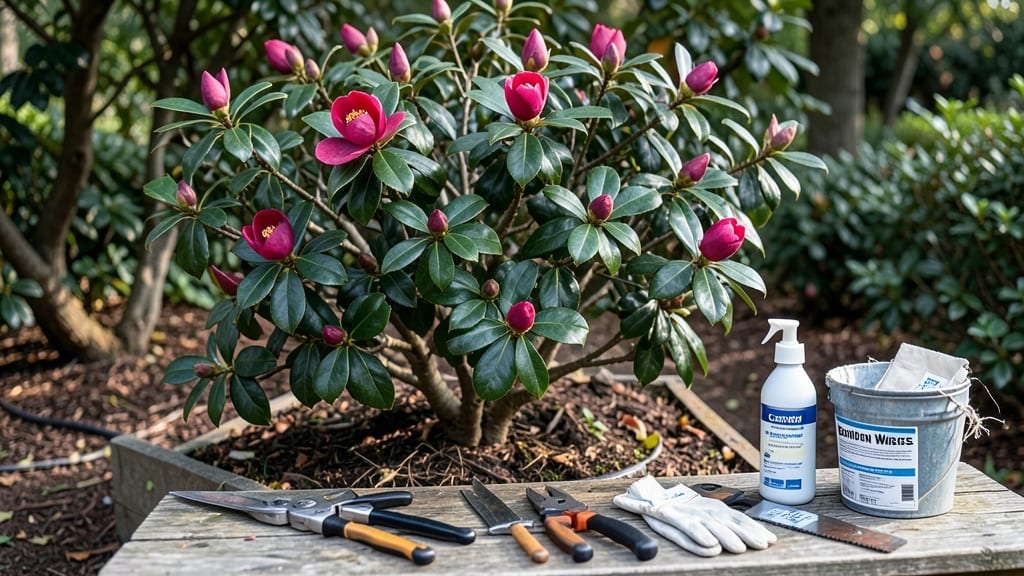
Pruning camellia trees immediately after blooming helps maintain their health and ensures vibrant flowers next season. Use clean, sharp tools to trim dead branches while preserving the plant's natural form, and avoid heavy cuts in late summer or fall when new buds form.
Timing matters because camellias set flower buds on old wood—meaning last year's growth will produce this year's blooms. 🌸 If you prune too late, you risk cutting off next season's potential flowers.
I always recommend doing a light shaping trim right after the last bloom falls, focusing on removing only the dead or crossing branches. This keeps the tree's energy focused on root and branch growth rather than repairing pruning wounds.
For tools, invest in a pair of bypass pruners (they make cleaner cuts) and sterilize them with rubbing alcohol between cuts to prevent fungal spread. Always cut just outside the branch collar—the swollen area where the branch meets the trunk—to promote faster healing.
Avoid "topping" (cutting the top flat), as this stresses the plant and leads to weak, leggy growth.
💡 In This Article
- When and Why to Prune Camellias for Optimal Flowering
- Essential Tools and Step-by-Step Camellia Pruning Guide
When and why to prune camellias for optimal flowering
Camellias produce flower buds on last year's growth, a process called monopodial branching. When you prune after blooming, you're allowing the plant to focus its energy on developing next year's buds along these established branches.
The key is timing—pruning too late (after July in most climates) risks cutting off the axillary buds that form on old wood, which are the precursors to next season's flowers. In warm climates like Southern California, where camellias bloom later (winter-spring), you have until mid-August to prune safely.
The plant's natural growth cycle shows why post-bloom pruning works best. After flowering, camellias enter a vegetative growth phase, producing new leaves and stems. If you prune during this time, you're removing dead or weak branches while leaving the healthy framework intact.
For example, a mature camellia might have 50-70% of its branches bearing flower buds—cutting these would drastically reduce next year's blooms. The ideal is to remove only 10-20% of the plant's volume during this pruning session.
Climate plays a surprising role in pruning timing. In cooler regions (USDA Zones 7-8), where camellias bloom in late winter to early spring, you have a 6-8 week window after blooming to prune safely.
In warmer zones (9-10), where blooming extends into spring, you can wait until early September before new buds form. The rule of thumb is to prune when 50% of the leaves have matured on new growth—this indicates the plant has shifted from flowering to vegetative growth.
What most gardeners don't realize is how pruning affects the plant's photosynthetic efficiency. Removing dense, crossing branches improves air circulation, reducing humidity around leaves—which prevents fungal diseases like anthracnose that thrive in camellia's moist, tropical environment.
I've seen camellias in humid climates recover dramatically after just one season of proper pruning, with 30-50% more flowers the following year due to improved light penetration and reduced stress.
For those with overgrown camellias, rejuvenation pruning is an option—but it requires patience. You'll need to do this over 3 years, removing one-third of the oldest branches each year. This gradual approach mimics the plant's natural growth patterns and prevents shock.
The key is to always cut back to a healthy bud or branch, never to a stub, as this invites disease and weakens the plant.
One common mistake is pruning camellias in late summer or fall to "clean them up" before winter. This is when the plant begins forming next year's flower buds, and aggressive cuts can remove 50-70% of potential blooms.
Instead, focus on removing only the dead, diseased, or crossing branches—these are the only safe cuts to make after mid-August. 🌿