
Pruning
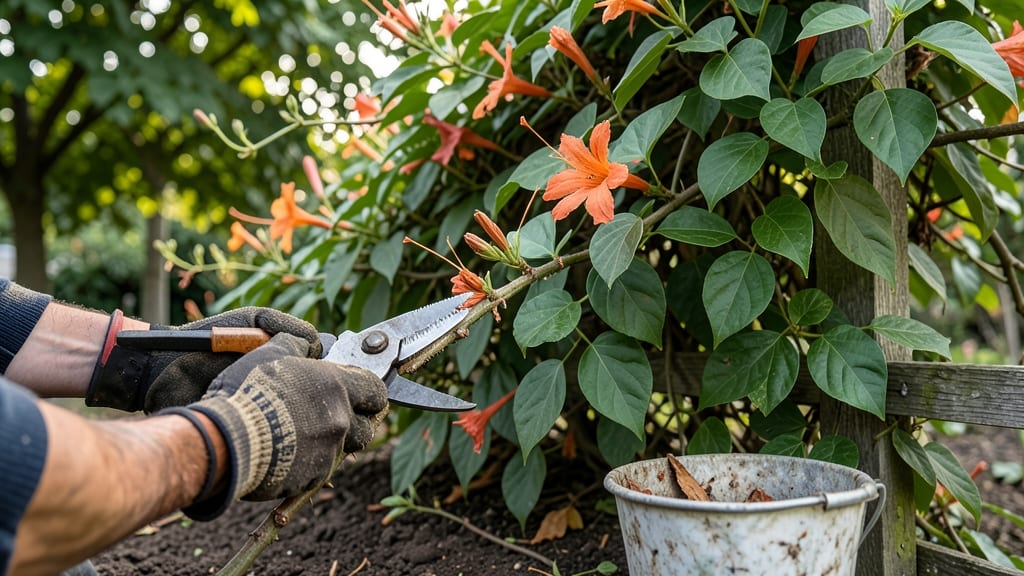
Late-winter pruning transforms your trumpet vine from a thorny tangle into a vibrant, thorn-less showstopper by summer. 🌿 I’ve spent years wrestling with Campsis radicans—its aggressive growth and sharp thorns make it intimidating, but the right cuts in February or March (before buds swell) unlock a canopy so lush you’ll forget it ever had thorns.
The secret lies in three strategic cuts: remove dead or crossing branches first, then thin out overcrowded stems to improve airflow, and finally shape the vine to direct growth where you want it—along trellises or away from walkways.
You’ll need bypass pruners, gloves, and a ladder (for taller vines), but the process takes less than an hour for established plants.
By summer, you’ll see new growth shooting from the base of cuts, and those thorns? Mostly gone—replaced by smooth, velvety leaves and clusters of trumpet-shaped blooms. The vine’s natural vigor kicks in, producing stronger stems that handle storms better and support heavier flowers.
Works for trellis-trained vines or sprawling ground covers, and the same principles apply whether you’re pruning a 10-foot specimen or a young vine in a container. Here’s how to do it without turning your gloves into pincushions.
📚 In This Guide
- What you need
- Instructions
- Tips and common mistakes
- Wrapping up and next steps
What you need
- ○ Pruning shears: Bypass shears (for clean cuts on smaller branches, 5–8 inches long, with sharp stainless steel blades). Optional: Loppers (for thicker branches, 8–12 inches, with a long handle for leverage).
- ● Pruning saw: Curved-tooth saw (for branches thicker than 2 inches; choose a lightweight, ergonomic design).
- ● Heavy-duty gloves: Thick leather or thorn-proof gloves (rated for puncture resistance; look for palm reinforcements).
- ● Safety glasses: ANSI-rated (to protect against debris—this vine does throw thorns!).
- ● Ladder or step stool: Sturdy, non-slip (extendable ladder preferred for tall vines; ensure weight capacity exceeds 250 lbs).
- ● Disposable pruning bags: Mesh or heavy-duty plastic (3–5 gallon size; attaches to waist or branches for easy debris collection).
- ● Rake or grabber: Long-handled (for sweeping up fallen leaves/thorns post-prune).
- ● Rubbing alcohol or bleach solution: 70% isopropyl alcohol or 1:10 bleach-water mix (to sterilize tools between cuts and prevent disease).
- ○ Sealing wax or pruning paint: Optional but helpful (for large cuts >2 inches in diameter to protect against pests/disease).
- ● Weather check: Prune on a dry, calm day (avoid frost or rain within 24 hours).
- ● Tool sharpening: Test blade sharpness by slicing through a paper bag—dull tools crush branches, inviting disease.
- ● Safety brief: Wear closed-toe shoes and avoid loose clothing (thorns are not playful!).
Instructions for late-winter Campsis radicans pruning
Here's how to revitalize your trumpet vine with precision cuts that boost growth and reduce thorns.
✂️ Step 1: Time Your Pruning for Optimal Regrowth
Prune late winter to early spring, just as new growth begins but before buds swell. This timing ensures you remove dead wood while stimulating vigorous new shoots. I wait until mid-February in my zone 7 garden—when forsythia blooms signal it's safe to start. Avoid pruning in fall, as new growth won't harden off before winter.
Look for dormant brown stems (dead wood) versus green or slightly swollen buds (live growth). Cut only the dead sections—never remove more than 25% of the plant's total volume in one year. This prevents shock and maintains the vine's structural strength.
🌿 Step 2: Remove Dead Wood and Weak Growth
Start by cutting out any blackened, mushy, or hollow stems at the base with clean, sharp pruners. These are disease vectors and sap robbers. I disinfect my tools with 70% rubbing alcohol between cuts to prevent spreading fungal spores. Next, identify thin, leggy growth—these stems rarely produce flowers and create dense thorn patches.
Cut these back to a strong lateral branch or bud. You'll see small, rounded buds along the main stem—these are your growth points. Aim to leave 3-5 buds per stem to encourage balanced regrowth. The goal is to open the center of the plant for better air circulation and sunlight penetration.
🌱 Step 3: Shape for Airflow and Light Penetration
Step back and visualize the vine's structure. Campsis radicans thrives with an open, airy canopy, so focus on thinning out crowded branches rather than just trimming tips. Remove branches that cross or rub against others—these create wounds that invite disease. I look for stems growing inward and cut them back to the main trunk or a strong outward-facing branch.
For height control, prune the longest stems by one-third to encourage bushier growth. Make cuts just above a leaf node or outward-facing bud. Avoid leaving stubs—always cut at a 45-degree angle about ¼ inch above the bud. This prevents water from pooling and reduces rot risk.
🪴 Step 4: Clean Up and Encourage New Growth
After pruning, remove all debris from the base of the plant and surrounding area. This prevents fungal spores from overwintering. I rake up fallen leaves and dispose of them in the trash—not the compost—since diseased material can reinfect next year's growth. Now's also the time to apply a 2-3 inch layer of mulch around the base, keeping it 6 inches away from the trunk.
Water deeply after pruning to help the plant recover. You'll see new green shoots emerging within 3-4 weeks if conditions are right. Fertilize lightly with a balanced 10-10-10 formula to support regrowth, but avoid heavy feeding—Campsis radicans prefers lean soil and over-fertilizing leads to weak, thorny growth.
⏰ Step 5: Monitor for Regrowth and Adjust
Check the plant weekly for new shoots in spring. If growth stalls after 6 weeks, it may need more sunlight or better drainage. I've found that morning sun with afternoon shade works best in hot climates—too much afternoon heat stresses the vine. If you notice yellowing leaves, it could signal overwatering or poor drainage.
For thorn reduction, focus on pruning in subsequent years to maintain an open structure. Thorns develop on crowded, shaded growth, so keeping the center open naturally reduces them. By summer, your vine should show healthier, less thorny growth with better flower production—proof the pruning worked.
Tips & tricks for perfect late-winter Campsis radicans pruning
These precision-focused tips will help you transform your trumpet vine into a thriving, thorn-free beauty with minimal stress to the plant.
Timing is Everything: The late winter to early spring window is critical—prune when forsythia blooms signal new growth is about to start. I've found that mid-February works perfectly in my zone 7 garden, but adjust based on your local climate. If you miss this window, you risk either pruning too early (when the plant is still dormant) or too late (when buds have already swollen). The goal is to catch that sweet spot between dormancy and active growth.
Equipment Matters: Invest in a good pair of bypass pruners for clean cuts that heal properly. I use a pair with a 45-degree angle on the blades—this creates a natural water-shedding surface that reduces rot risk. For larger branches, a small handsaw with a fine-tooth blade works best. Always disinfect your tools between cuts with 70% rubbing alcohol to prevent spreading fungal diseases between branches.
Visual Cues for Success: When shaping your vine, look for the small, rounded buds along the main stems—these are your growth points. Aim to leave 3-5 buds per stem after pruning. For height control, focus on pruning the longest stems by one-third rather than just trimming tips. This encourages bushier growth while maintaining the vine's natural structure. Remember, you're sculpting—not hacking.
Post-Pruning Care: After you've finished pruning, don't forget the cleanup. Remove all debris from the base and surrounding area to prevent fungal spores from overwintering. Apply a 2-3 inch layer of mulch around the base (keeping it 6 inches away from the trunk) to conserve moisture and regulate soil temperature. Water deeply immediately after pruning to help the plant recover—you'll see new green shoots emerging within 3-4 weeks if conditions are right.
Pro Tips for Campsis Radicans Pruning
- These precision-focused tips will help you transform your trumpet vine into a thriving, thorn-free beauty with minimal stress to the plant.
- Timing is Everything: The late winter to early spring window is critical—prune when forsythia blooms signal new growth is about to start.
- Equipment Matters: Invest in a good pair of bypass pruners for clean cuts that heal properly.
Frequently asked questions
Got questions about pruning Campsis radicans (Trumpet Vine)? You’re not alone!
Here are the most common concerns—and expert answers—to help you prune like a pro. Let’s tackle those thorns and shape that vine with confidence.
When is the best time to prune Trumpet Vine?
The ideal window is late winter (just before new growth starts) or early spring. This timing stimulates vigorous summer blooms while removing dead or weak wood. Avoid pruning in fall—it can leave cuts vulnerable to disease or frost damage. Pro tip: Wait until temps consistently stay above 40°F (4°C) to minimize shock.
How much can I cut back without harming the plant?
Trumpet Vine is hardy and resilient, so don’t be shy! You can safely remove up to ⅓ of the plant’s height in one season. For aggressive vines, prune back old, leggy stems to 1–2 feet (30–60 cm) from the ground to encourage bushier, thorn-free regrowth. Just avoid over-pruning—aim to maintain structure while promoting airflow.
Why does my Trumpet Vine keep growing thorns after pruning?
Thorns are natural defense mechanisms—and yes, they’ll return if the plant feels stressed or overcrowded. To reduce them:
- Prune early and often (thorns form on new growth, so stay ahead).
- Use sharp, clean tools to avoid jagged cuts that invite pests/disease.
- Train vines on a trellis or arbor to limit wild sprawl.
Can I prune Trumpet Vine in summer? What’s the risk?
Summer pruning is possible but risky. If you must trim (e.g., to control spread), do it after flowering to avoid cutting off next year’s blooms. Risks include:
- Slower regrowth in hot weather.
- Increased stress, making the vine susceptible to pests.
- Potential loss of autumn foliage color if pruned too late.
What should I do if my Trumpet Vine looks dead after pruning?
Don’t panic! Trumpet Vine is tougher than it looks. If stems appear brown or brittle:
- Check for green buds at the base—these signal life!
- Water deeply and avoid fertilizing until new growth appears (usually 2–4 weeks).
- If no regrowth by spring, the vine may be beyond saving—start fresh with a cutting or new plant.
Wrapping up and next steps
Pruning Campsis radicans in late winter isn’t just about shaping—it’s your secret weapon for a thorn-free, vibrant canopy that thrives all season. By following the right techniques, you’ll encourage stronger growth, better airflow, and fewer pesky thorns while keeping your trumpet vine healthy and stunning.
Now that you’re armed with the know-how, grab those shears and get pruning! 🌿✂️
Ready to take it further? Mark your calendar for late-winter pruning next year—or experiment with early-spring maintenance to fine-tune your vine’s shape. Your garden (and your skin!) will thank you.