
Pruning
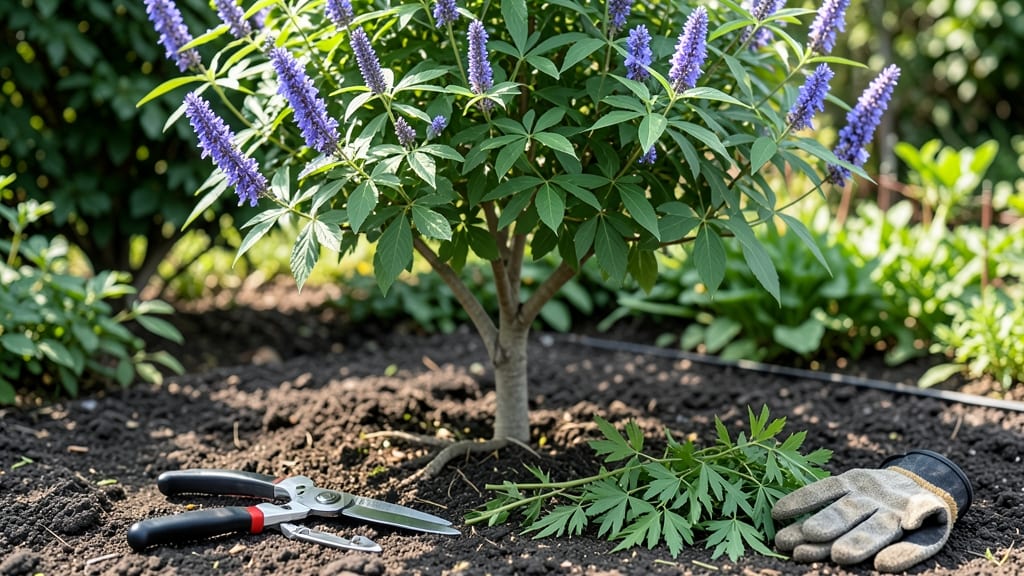
Late-winter chaste tree pruning transforms your plant from a scraggly mess into a bloom machine by next summer. 🌿 I’ve pruned mine every year since my first attempt—back when I nearly hacked off half the plant—and now it’s the most reliable bloomer in my yard.
The key is cutting back one-third of last year’s growth right before new buds swell, which forces energy into fresh, vigorous shoots.
You’ll need just three things: sharp bypass pruners, a pair of gloves (those thorns don’t play nice), and a clear morning to work. Start by removing any dead or crossing branches first—they’re the easiest cuts and won’t stress the plant.
Then, look for the thickest stems from last year and trim them back to a strong outward-facing bud. This isn’t about making your chaste tree look perfect now; it’s about setting it up for a showstopping summer display.
After pruning, step back and admire your work—you’ve just given your plant a fresh start. The new growth will be denser, the flowers will be bigger, and you’ll avoid the common mistake of pruning too late (which delays blooming).
Within 6-8 weeks, you’ll see lush green shoots pushing out, and by mid-summer, those signature lavender spikes will appear like clockwork. The best part? Your neighbors will ask how you got such a thriving chaste tree, and you’ll know it’s all thanks to those late-winter cuts.
This method works for chaste trees in zones 5-9, whether you’re dealing with a mature shrub or a young plant. Just remember: prune when the plant is still dormant but buds are starting to swell—usually February to early March in most regions.
If you’ve been avoiding pruning because it seemed complicated, this is your sign to grab those shears and get started. Your future summer blooms will thank you!
📚 In This Guide
- What you need
- Instructions
- Tips and common mistakes
- Wrapping up and next steps
What you need
- ● Pruning shears: Bypass pruners (4–6" blades) for small branches; avoid anvil shears to prevent crushing.
- ● Loppers: 8–12" bypass loppers for thicker branches (up to 2" diameter).
- ● Pruning saw: Curved-tooth saw for branches >2" in diameter (avoid rust—clean with rubbing alcohol).
- ● Disinfectant: 70% isopropyl alcohol or 10% bleach solution (1 part bleach to 9 parts water) to sterilize tools between cuts.
- ● Garden gloves: Heavy-duty, cut-resistant gloves (e.g., mechanics’ gloves or pruning-specific).
- ● Extension pole: 6–10 ft telescoping pole with pruning head (for high branches).
- ● Heavy-duty trash bags: 30–50 gallon capacity for debris (chaste tree branches can be heavy!).
- ● Sharpie marker: Permanent marker to label branches if making structural cuts.
- ○ Pruning sealant: Optional but helpful for cuts >0.5" diameter (e.g., Tanglefoot Tree Wound Pruning Seal).
- ● Weather check: Prune on a dry, calm day (avoid frost or rain within 24 hours).
- ● Safety glasses: Protect your eyes from debris (even small branches can snap back!).
- ● Sturdy ladder: Only if needed—use a 3-point contact ladder rated for your weight + tools.
- ● First-aid kit: Include antiseptic wipes and bandages for minor cuts.
- ● Water & snacks: Pruning is hard work—hydrate and fuel up!
- ● Sharpen tools first! Dull blades tear wood, inviting disease. Use a file or sharpening stone on shears/loppers.
- ● Wear long sleeves & pants: Chaste tree branches have thorns—protect yourself!
- ● Check local regulations: Some areas require permits for large-scale pruning (especially near power lines).
Step-by-step guide for pruning chaste trees in late winter
Here's the method I rely on to refresh your chaste tree and set it up for vibrant blooms next season.
✂️ Step 1: Assess the Tree's Structure and Identify Dead or Weak Growth
Start by examining your chaste tree from all sides, looking for branches that are dead, damaged, or crossing each other. Dead branches will be brittle and snap easily when bent, while weak growth often appears thin and lacks leaves. I like to work on a dry day when the branches are easier to see against the sky.
Use your hands to gently shake each branch—healthy branches will feel firm, while hollow or diseased ones will crumble or smell unpleasant. Mark these branches with a small piece of twine or a bright-colored flagging tape so you don't miss them later. This step ensures you only remove what truly needs cutting, preserving the tree's natural shape.
✂️ Step 2: Remove Dead, Diseased, and Crossing Branches
Begin pruning by cutting out the dead and diseased branches first. Make clean cuts just outside the branch collar—the swollen area where the branch meets the trunk or another branch. Use sharp pruning shears or a pruning saw for thicker branches, and always cut at a 45-degree angle to help water run off.
Next, remove any branches that are crossing or rubbing against each other. These often create wounds that invite pests or disease. If two branches are growing in the same direction, leave the stronger one and prune the weaker. I always step back after each cut to check the tree's balance—you want an open center that allows sunlight and air to reach the inner branches.
✂️ Step 3: Thin Out Overcrowded Areas and Shape the Tree
Now focus on thinning out the tree by removing about one-third of the oldest wood to encourage new growth. Look for branches that are growing inward or downward—they compete with the main structure for nutrients and light. Cut these back to a healthy lateral branch or the branch collar, making sure your cuts are smooth and precise.
Shape the tree by selectively pruning branches that disrupt its natural form. Chaste trees have a graceful, arching habit, so aim to maintain that silhouette. Avoid cutting more than 25% of the tree’s total foliage in one season—this keeps stress levels low and ensures a strong recovery. Step back frequently to visualize the tree’s new shape as you work.
✂️ Step 4: Clean Up and Apply Wound Dressing (Optional)
After pruning, rake up and dispose of all the debris to prevent disease from spreading. While wound dressing isn’t necessary for chaste trees, you can apply it if you’re concerned about larger cuts. Simply brush a thin layer of pruning sealant over the wounds to protect them from moisture and pests. I usually skip this step unless the cuts are particularly large.
Finally, sharpen your tools and clean them with rubbing alcohol to prevent the spread of bacteria. Store them in a dry place until your next pruning session. Your chaste tree will thank you with healthier growth and even more stunning blooms next year—just remember to avoid heavy pruning in late summer or fall, as this can stimulate new growth that won’t harden off before winter.
Tips & tricks for perfect chaste tree pruning
Late-winter pruning sets the stage for your chaste tree's best blooms yet—here's how to avoid common pitfalls and get professional results.
Timing is Everything: Late winter is the absolute best time to prune chaste trees because they're dormant but just starting to show signs of new growth. This timing lets you remove unwanted branches without stimulating premature leafing. I aim for right after the last hard frost but before buds begin to swell—usually February to early March in most climates. If you miss this window, wait until early spring before buds break.
The Right Tools Make All the Difference: Sharp, clean tools are non-negotiable for healthy cuts. I use bypass pruners for branches up to ½-inch thick and a pruning saw for anything larger. Always sterilize your tools with rubbing alcohol between cuts to prevent spreading disease. Dull tools crush branches instead of making clean cuts, which invites infection and slows healing. Before you start, give your tools a quick once-over to ensure they're sharp enough to cut cleanly through a pencil with one motion.
Visualize the Final Shape First: Before making any cuts, take a step back and study your tree's natural form. Chaste trees have an elegant, arching habit, so I mentally sketch how I want it to look after pruning. Focus on creating an open center that allows sunlight to reach the inner branches—this prevents crowded growth and encourages better blooms. I often sketch a rough outline on paper first, then mark branches to remove with flagging tape. This prevents over-pruning and helps maintain that graceful silhouette.
Don't Forget the Branch Collar: When removing branches, always cut just outside the branch collar—the swollen area where the branch meets the trunk. This collar contains healing tissues that help the tree recover faster. Cutting too close to the trunk can leave unsightly stubs and increase the risk of disease. For larger branches, I make a slight undercut first to prevent tearing, then make my final cut just outside the collar at a 45-degree angle to help water run off.
Pro Tips for Chaste Tree Pruning
- Late-winter pruning sets the stage for your chaste tree's best blooms yet—here's how to avoid common pitfalls and get professional results.
- Timing is Everything: Late winter is the absolute best time to prune chaste trees because they're dormant but just starting to show signs of new growth.
- The Right Tools Make All the Difference: Sharp, clean tools are non-negotiable for healthy cuts.
Frequently asked questions
Got questions about pruning your chaste tree (Vitex agnus-castus) for the best blooms next year? Here are answers to the most common concerns—so you can prune with confidence!
When is the exact best time to prune a chaste tree?
The ideal window is late winter to early spring (February–March in most U.S. zones), before new growth starts. This timing ensures you’re not cutting off next year’s flower buds while still removing dead wood. Avoid pruning in fall—it can stimulate tender new growth that won’t survive winter freezes.
How much can I cut back my chaste tree? Is there a “too much”?
You can safely prune back up to ⅓ of the plant’s height in one season, but avoid drastic cuts (like hacking it down to the ground). Focus on removing dead, diseased, or crossing branches first, then shape the canopy. Over-pruning stresses the tree—think of it as a haircut, not a buzz cut!
What if my chaste tree isn’t blooming? Did I prune wrong?
Bloom issues often stem from pruning at the wrong time (e.g., after buds form in spring) or cutting back too aggressively. If you’ve pruned correctly but still see sparse flowers, check for:
- Sunlight: Chaste trees need 6+ hours of full sun daily.
- Soil: Poor drainage or nutrient deficiencies (like phosphorus) can reduce blooms.
- Age: Young trees (under 3 years) may not bloom yet—patience!
Can I prune a chaste tree in summer? What’s the risk?
Summer pruning is possible but risky—it can stimulate weak, tender growth that’s vulnerable to pests, disease, or winter dieback. If you must prune in summer (e.g., to remove storm damage), do it early (June) and avoid heavy cuts. Always sterilize tools to prevent infections!
Do I need to seal pruning cuts on a chaste tree?
Nope! Unlike some trees (like oaks), chaste trees don’t need sealant—their cuts heal naturally. Sealing can even trap moisture, promoting rot. Just use clean, sharp tools and make cuts at a 45-degree angle (about ¼” above a bud) for the best results.
What’s the difference between pruning for blooms vs. shaping?
| Pruning for Blooms | Pruning for Shape |
|---|---|
| Focus on removing old wood (3+ years) to encourage new growth where flowers form. | Trim to maintain a balanced silhouette, thinning out crowded branches. |
| Cut back selective stems to the ground if needed (but leave some structure). | Lightly shape all around for a fuller, bushier look. |
| Best done in late winter. | Can be done year-round (avoid heavy cuts in summer). |
Pro tip: Combine both! Start with bloom-focused cuts, then shape the remaining branches.
Wrapping up and next steps
Mastering chaste tree pruning in late winter is your secret weapon for vibrant, healthy blooms next season! 🌸 By following the right techniques—like removing dead wood, thinning crowded branches, and shaping for airflow—you’re setting your tree up for success. Remember, patience and precision pay off in stunning spring displays.
Ready to take action? Grab your pruners, mark your calendar for late winter, and give your chaste tree the care it deserves. Your future blooms will thank you! 🌿✨