
Pruning
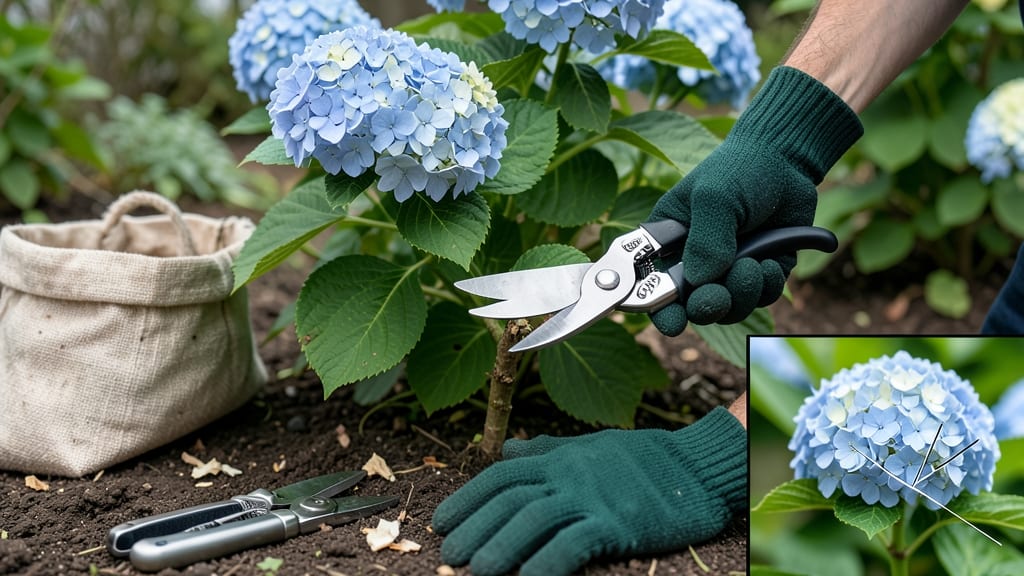
Pruning hydrangeas isn't just about shaping—it's the secret to more blooms and healthier plants. ✂️ I used to avoid it, afraid of killing my bushes, but the right cuts in the right season transform them from sparse to spectacular.
The timing and technique depend on your hydrangea type, and getting it wrong can mean fewer flowers next year.
Most hydrangeas bloom on old wood (last year's growth), so prune right after flowering in late summer—never in fall or winter. Summer-blooming varieties like 'Limelight' get pruned in early spring instead. You'll need sharp pruners, gloves, and a clear day to see the stems.
The goal is simple: remove dead wood, shape lightly, and never cut more than 1/3 of the plant at once.
After pruning, your hydrangeas will reward you with thicker stems and bigger clusters by next season. The first flush of new growth appears within weeks, and the plant's energy shifts from maintenance to blooming.
Just avoid common mistakes like cutting at wrong nodes or pruning at the wrong time—those lead to bare stems and disappointment.
This method works for all hydrangea types, from mopheads to panicle varieties. Whether you're dealing with a 10-year-old bush or a new plant, the same principles apply. Let's get those blooms growing again!
📚 In This Guide
- What you need
- Instructions
- Tips and common mistakes
- Wrapping up and next steps
What you need
- ● Pruning shears: Sharp, bypass-style shears (avoid anvil-type for clean cuts). Size: 6–8 inches for most hydrangeas.
- ● Hand pruners: For smaller stems or tight spaces. Look for: Ergonomic grips and rust-resistant blades.
- ● Loppers: For thicker branches (½–1½ inches). Leverage: 8–10 inches for extra cutting power.
- ● Disinfectant: 70% isopropyl alcohol or a 10% bleach solution (1 part bleach to 9 parts water) to sterilize tools between cuts.
- ● Gloves: Heavy-duty gardening gloves to protect from thorns and sap.
- ● Rubbing alcohol or hydrogen peroxide: For cleaning tools post-pruning.
- ○ Pruning sealant (optional): For large cuts on woody stems to prevent disease (e.g., tree wound paint).
- ● Garden twine or plant ties: To secure heavy branches if needed.
- ● Marking spray: Temporary paint or spray to mark cuts on large shrubs.
- ● Mulch: Shredded bark or compost to protect roots after pruning.
- ● Watering can or hose: For post-pruning hydration (especially in dry climates).
- ● Safety glasses: If pruning near your face or eyes.
When and how to prune hydrangeas for maximum blooms
Pruning hydrangeas isn’t just about shaping—it’s the secret to bigger, fuller blooms next season. Here’s my foolproof method for timing and technique that works for both old and new growth varieties.
🌿 Step 1: Identify Your Hydrangea Type First
Not all hydrangeas bloom the same way, and pruning at the wrong time can mean no flowers next year. Bigleaf hydrangeas (Hydrangea macrophylla) and oakleaf hydrangeas (Hydrangea quercifolia) produce buds on old wood—last year’s growth—so you should only trim dead or spent blooms in late winter or early spring. Panicle hydrangeas (Hydrangea paniculata) and smooth hydrangeas (Hydrangea arborescens) bloom on new wood, so you can prune more aggressively in late winter or early spring.
Look at your plant’s flower stems: if they’re woody and brown when the buds form, they’re old-wood bloomers. If they’re green and flexible, they’re new-wood types. I always mark my calendar with a note on the plant tag so I don’t make this mistake—trust me, pruning the wrong type will leave you with bare stems next summer.
✂️ Step 2: Time Your Pruning for Optimal Growth
For old-wood bloomers, prune right after flowering ends—usually late summer or early fall. Cut back only the dead flower heads and any weak stems, but leave the rest intact. The buds for next year’s blooms are already forming on last year’s growth. If you prune in late winter or early spring, you risk removing next year’s flowers before they even open.
For new-wood bloomers, late winter or early spring is ideal—just as new growth begins. You can even cut them back by one-third to one-half of their height, as they’ll produce fresh flowers on this year’s growth. I like to prune mine in February or March when the soil is still cold but the days are lengthening. Wait until after the last frost to avoid damaging tender new shoots.
🌱 Step 3: Prune Correctly for Shape and Health
Start by removing dead, diseased, or crossing branches first—these compete with healthy growth and can spread disease. Use clean, sharp pruners and make cuts at a 45-degree angle just above a leaf node or outward-facing bud. This encourages new growth to sprout in the right direction and prevents water from pooling on the cut.
For shaping, step back and visualize the plant’s natural form. Old-wood bloomers should have a balanced, open structure with plenty of airflow. New-wood types can handle a more aggressive trim to encourage bushier growth. Never remove more than one-third of the plant’s total volume in a single pruning—this stresses the plant and can reduce flowering. I like to prune in stages if needed, especially for overgrown shrubs.
💧 Step 4: Post-Pruning Care for Strong Recovery
After pruning, water deeply to help the plant recover and reduce stress. Hydrangeas are heavy drinkers, especially after a major trim, so give them 1-2 gallons of water per foot of plant height. Mulch around the base with 2-3 inches of organic mulch (like shredded bark) to retain moisture and protect roots from temperature swings.
Fertilize lightly with a balanced, slow-release fertilizer (like 10-10-10) in early spring to support new growth. Avoid high-nitrogen fertilizers—they encourage leafy growth at the expense of flowers. I also add a handful of compost to the soil around the base to boost microbial activity, which helps roots absorb nutrients more efficiently. Keep an eye out for new shoots emerging from the base—this is a sign your pruning was successful!
⏰ Step 5: Monitor and Adjust for Future Seasons
Watch your hydrangea closely after pruning. If new growth appears weak or leggy, it might need more sunlight or a second round of pruning to encourage branching. Old-wood bloomers should show buds forming along last year’s stems by mid-summer—if you don’t see them, you may have pruned too late or too aggressively.
Adjust your pruning schedule based on what you observe. For example, if your panicle hydrangea blooms later than expected, you might need to prune it a little later next year. Keep a simple journal noting when you prune, how the plant responds, and any adjustments you make. Over time, you’ll develop a routine that works perfectly for your climate and plant variety. This is how I’ve kept my hydrangeas thriving for over a decade—patience and observation are key!
Tips & tricks for pruning hydrangeas like a pro
When it comes to hydrangeas, the right pruning can transform your garden from ordinary to extraordinary. Here’s what I’ve learned after years of trial and error—and how to avoid the common mistakes that leave plants struggling.
Type Identification: The single biggest mistake gardeners make is pruning at the wrong time for their hydrangea variety. Old-wood bloomers like bigleaf and oakleaf types need their pruning done after flowering ends (late summer/early fall), while new-wood types like panicle and smooth hydrangeas thrive with aggressive pruning in late winter/early spring. I always check for woody brown stems (old wood) versus green flexible ones (new wood) before making any cuts. This simple visual check has saved me from years of bare stems!
Timing Secret: For old-wood bloomers, don’t wait until spring to prune—those flower buds are already formed on last year’s growth. Cutting too early removes next year’s blooms before they even appear. I mark my calendar with the expected bloom end date (usually late August for my zone) and set a reminder to prune within 2-3 weeks after flowering finishes. For new-wood types, prune just as you see those first green shoots emerging in February/March—this gives them the whole growing season to develop fresh blooms.
Cutting Technique: The 45-degree angle cut just above a leaf node isn’t just about aesthetics—it’s about directing growth. When you make clean cuts at this angle, you prevent water from pooling on the wound, which reduces disease risk. I also always sterilize my pruners with rubbing alcohol between cuts, especially when dealing with diseased branches. And here’s a pro move: after removing dead wood, I look for the healthiest buds facing outward and make my cuts just above them to encourage that growth pattern.
Post-Pruning Care: After the hard work of pruning, don’t neglect the recovery phase. Hydrangeas need serious hydration after being cut back—think of it like giving them a drink after a workout. I always water deeply (1-2 gallons per foot of plant height) right after pruning, then mulch with 2-3 inches of organic material to lock in moisture. The first few weeks are critical for root recovery, so I check soil moisture regularly during this period. This aftercare routine has made the difference between plants that struggle and ones that thrive after pruning.
Pro Tips for Do You Prune Hydrangea Plants
- When it comes to hydrangeas, the right pruning can transform your garden from ordinary to extraordinary. Here’s what ...
- Type Identification: The single biggest mistake gardeners make is pruning at the wrong time for their hydrangea varie...
- Timing Secret: For old-wood bloomers, don’t wait until spring to prune—those flower buds are already formed on last y...
Frequently asked questions
Got questions about pruning your hydrangeas? You’re not alone! Here are answers to the most common concerns—so you can keep those blooms looking their best without the guesswork.
When is the best time to prune hydrangeas?
The timing depends on your hydrangea type! For bigleaf and oakleaf varieties, prune in late winter or early spring (before new growth starts). Panicle and smooth hydrangeas can handle pruning in late winter or early spring too, but you can also trim them after flowering to shape. Avoid pruning in fall—it can stimulate tender growth that won’t survive winter.
What if I prune at the wrong time?
Don’t panic! Late pruning (like cutting back in summer) won’t kill your plant, but it might reduce blooms for that season. If you accidentally prune too late, focus on removing dead or diseased wood first. For bigleaf hydrangeas, late pruning can even stimulate new growth—just expect smaller flowers. For other types, prune lightly to avoid sacrificing next year’s blooms.
How much should I cut back my hydrangea?
It varies! Bigleaf hydrangeas bloom on old wood, so prune sparingly—just remove dead stems and shape lightly. Panicle and smooth hydrangeas bloom on new wood, so you can cut back harder (up to ⅓ of the plant) in late winter. For overgrown shrubs, step back and assess: Aim to keep the plant’s natural shape while encouraging airflow.
Why aren’t my hydrangeas blooming after pruning?
Several factors could be at play: wrong pruning time (especially for old-wood bloomers), over-pruning, or poor growing conditions (like too much shade or drought). Check your hydrangea type first! If you pruned too late or too aggressively, give it a year to recover. Also, ensure it gets 6+ hours of sun and consistent moisture.
Can I prune hydrangeas in containers?
Container hydrangeas follow the same pruning rules as in-ground plants, but with a few extra tips. Prune in early spring to encourage bushier growth. Since pots dry out faster, water deeply after pruning to reduce stress. If your container plant is root-bound, consider repotting or trimming roots lightly while pruning stems.
Wrapping up and next steps
Pruning hydrangeas isn’t just about keeping them tidy—it’s your secret weapon for vibrant blooms and healthier plants! 🌸 Whether you’re dealing with mopheads, lacecaps, or panicle types, timing and technique matter most.
Now that you’re armed with the when, how, and why, there’s no better time to roll up your sleeves and give your hydrangeas the TLC they deserve.
Ready to transform your garden? Grab your pruners, pick a sunny day, and start pruning with confidence. Your future hydrangea crown will thank you—one lush bloom at a time! 🌿✨