
Pruning
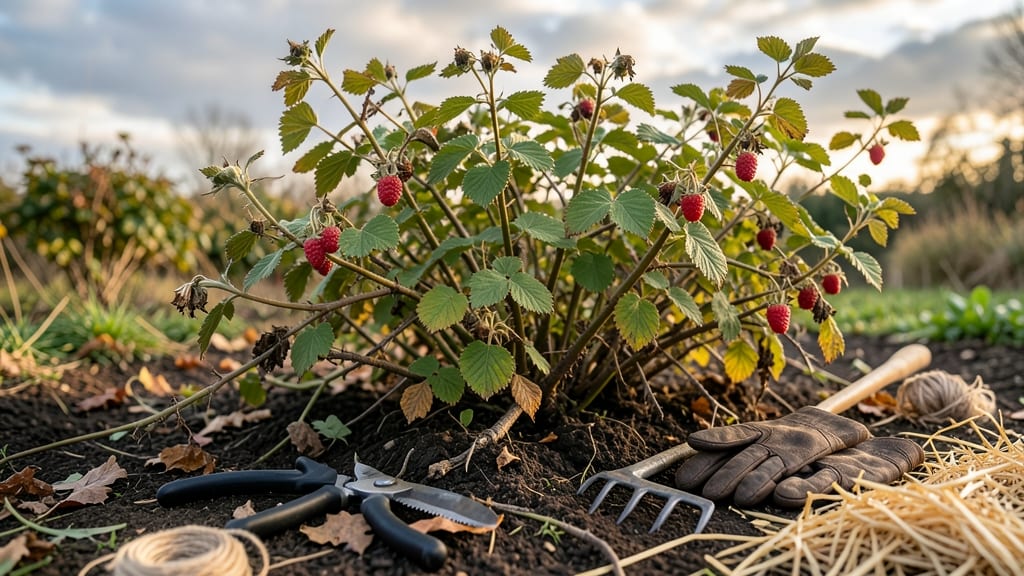
Whether you prune raspberry bushes in the fall depends on their type: summer-bearing varieties require pruning in late winter/early spring, while fall-bearing types tolerate light trimming in fall to clear dead canes and refine shape. In colder regions, avoid aggressive pruning to minimize frost damage.
Fall pruning for raspberries isn't one-size-fits-all—it hinges on the plant's growth cycle. 🌿 Summer-bearing varieties produce fruit on second-year canes, so cutting back in fall would remove next year's potential harvest. Fall-bearing types, however, bear fruit on current season's growth, making them more forgiving for light seasonal maintenance.
The key is climate: in Zone 5 or colder, even minimal fall pruning can stress plants before winter, while Zone 8 bushes handle shaping better when temperatures drop.
For fall-bearing bushes, focus on removing dead or diseased canes and thinning crowded growth to improve air circulation. Use clean, sharp pruners to make cuts at a 45-degree angle just above a healthy bud.
After pruning, apply a 2-3 inch layer of mulch to insulate roots—this protects against temperature swings that can occur in fall. Remember, the goal isn't to shape aggressively but to prep the plant for winter while preserving its energy reserves.
💡 In This Article
- Fall Pruning Rules for Summer-Bearing vs Fall-Bearing Raspberries
- Step-by-Step Fall Pruning Guide for Raspberry Bushes
Fall pruning rules for summer-bearing vs fall-bearing raspberries
The biological difference between summer-bearing and fall-bearing raspberry varieties explains why their pruning needs diverge. Summer-bearing types, like 'Boyne' or 'Nova,' produce fruit exclusively on second-year canes—the ones that grew last year. These canes fruit once in their second season, then die back naturally.
If you prune them in fall, you're removing next year's potential fruit-bearing canes, which is why experts recommend waiting until late winter or early spring when the plant is dormant.
Fall-bearing varieties, such as 'Heritage' or 'Autumn Bliss,' behave differently—they produce fruit on both first-year (current season) and second-year canes. This dual fruiting means they can tolerate light pruning in fall without sacrificing next year's harvest.
The key is understanding their growth cycle: fall-bearing canes grow, fruit, then die, while summer-bearing canes must survive winter to fruit the following year.
In Zone 5 with harsh winters, even minimal fall pruning can stress summer-bearing bushes, while Zone 8 fall-bearing varieties handle shaping better when temperatures drop below 50°F.
Climate plays a critical role in determining how aggressive fall pruning should be. In colder regions, the risk of winter dieback increases when you remove too much foliage. The plant's leaves act as insulation, and removing them too early exposes canes to temperature fluctuations that can cause frost cracks.
In milder climates, fall pruning helps remove diseased canes before winter, reducing pathogen spread. The rule of thumb is: if your last frost date is after November 15th, you have more flexibility with fall pruning.
Here's what's actually happening at the cellular level: when you prune in fall, the plant's meristematic cells (growth points) are still active in fall-bearing varieties, allowing them to regenerate new growth. In summer-bearing types, these cells are preparing for dormancy, and pruning triggers unnecessary stress.
The plant's hormonal response to pruning—specifically the increase in auxin production—varies by season, which is why timing matters so much. 🌱
Consider these key factors when deciding whether to prune in fall:
- Variety: Fall-bearing types tolerate light pruning; summer-bearing types require winter pruning
- Climate Zone: Zone 5-6 needs minimal fall pruning; Zone 7-8 can handle more shaping
- Plant Health: Remove only dead/diseased canes in fall; save major pruning for spring
- Last Frost Date: Prune fall-bearing varieties 4-6 weeks before first frost
What most gardeners don't realize is how the plant's root system responds to fall pruning. When you remove canes, the plant redirects energy to root development—this is beneficial in fall-bearing varieties but counterproductive in summer-bearing types preparing for winter dormancy.
The root-to-shoot ratio becomes critical: fall-bearing plants can handle the energy shift, while summer-bearing varieties need to conserve resources for spring growth.
The science behind this involves photoperiodism—the plant's response to daylight changes. As days shorten in fall, raspberries naturally prepare for dormancy. Fall pruning in summer-bearing types disrupts this process, while fall-bearing varieties use the pruning as a signal to focus on root strengthening before winter.
This is why you'll see fall-bearing bushes produce more vigorous new growth in spring compared to their summer-bearing counterparts after fall pruning.