
Pruning
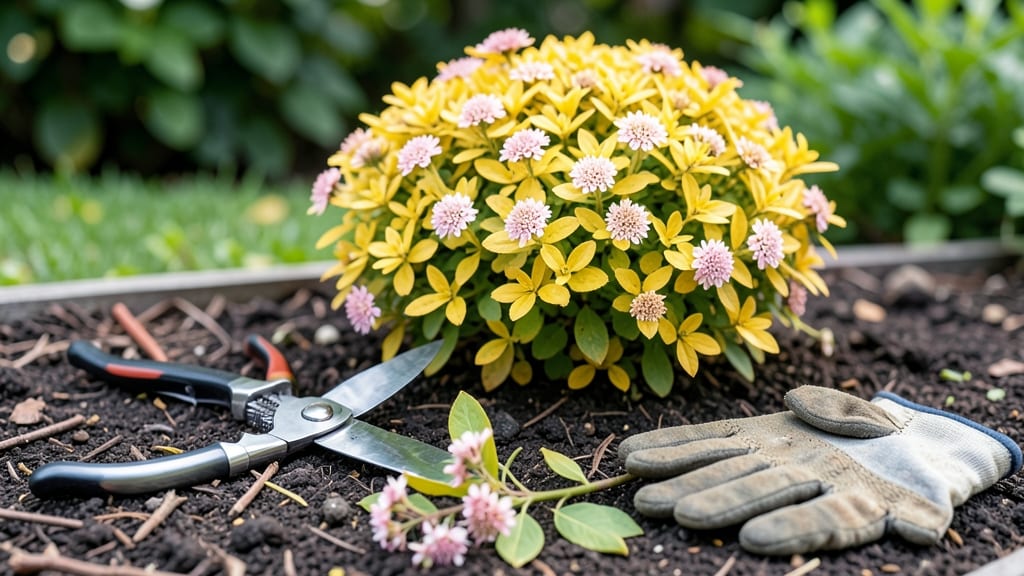
Late-winter pruning of gold mound spirea unlocks its most stunning spring display. ✂️ I learned the hard way that cutting too early or too late leaves you with leggy growth instead of that perfect golden mound.
The secret timing window—right before buds swell but before new shoots appear—transforms this shrub from merely pretty to showstopping.
You’ll need sharp bypass pruners, a pair of gloves, and a clear morning to work. The goal is to remove up to one-third of the oldest stems at the base while maintaining that rounded silhouette.
This isn’t about aggressive thinning—it’s about strategic renewal. Each cut should be clean and angled just above an outward-facing bud to encourage fuller growth.
After pruning, your spirea will rebound with brighter foliage and more abundant blooms by summer. The key is patience: resist the urge to shape it too soon after flowering, and avoid heavy cuts in fall.
With this method, your gold mound stays lush, compact, and ready to steal the show every season.
For those in colder climates, wait until late winter when temperatures stay above freezing. In milder zones, early spring works just as well. The difference between a "meh" shrub and a garden star comes down to these precise cuts—and now you’ve got the technique to make it happen.
📚 In This Guide
- What you need
- Instructions
- Tips and common mistakes
- Wrapping up and next steps
What you need
- ● Pruning shears: Bypass pruners (sharp, clean, and capable of cutting through ½-inch stems). Quantity: 1 pair.
- ○ Loppers: For thicker stems (up to 1.5 inches). Quantity: 1 pair (optional if your shrub is small).
- ● Gloves: Heavy-duty gardening gloves (to protect against thorns and debris). Quantity: 1 pair.
- ● Disinfectant: 70% isopropyl alcohol or a pruning sealant (to prevent disease spread). Quantity: Small bottle.
- ○ Pruning saw: Only if dealing with very thick stems (rare for Gold Mound Spirea). Quantity: 1 (optional).
- ● Garden twine or ties: For securing branches if needed during cleanup. Quantity: Small roll.
- ● Trash bags: For collecting pruned branches. Quantity: 1–2 (biodegradable preferred).
- ● Weather check: Prune on a dry, calm day (avoid rain or wind for 24 hours before/after).
- ○ Safety gear: Safety glasses (optional but recommended if branches are large).
- ● Clean workspace: Lay down landscape fabric or a tarp to collect debris easily.
- ● Sharpener: A file or sharpening stone to hone your pruners if they feel dull.
Step-by-Step guide to pruning gold mound spirea
Late winter’s the perfect time to shape your spirea—just a few clean cuts will transform it into a bushier, more vibrant plant next season.
✂️ Step 1: Gather Your Tools and Safety Gear
Start with sharp, clean pruning shears—dull blades tear stems and invite disease. I always sterilize my tools with rubbing alcohol before cutting, especially if last year’s growth showed signs of mildew. Wear gloves too; spirea thorns are sneaky little sharps that catch you when you least expect it.
Check your shears’ condition first. If they struggle to cut a pencil in one smooth motion, they’re too dull. A quick sharpening or replacement now saves frustration later. Lay out a bucket or tarp beneath your plant to catch debris—this makes cleanup effortless and keeps your lawn or garden bed tidy.
✂️ Step 2: Remove Dead, Diseased, or Weak Growth
Scan your Gold Mound Spirea for stems that are brown, mushy, or completely devoid of leaves—these are dead and should go first. Cut them back to the base, making your cuts at a 45-degree angle just above a healthy bud or lateral branch. This prevents water from pooling on the cut and rotting the stem.
Next, look for thin, spindly branches that never seem to fill out. These are called "water sprouts" and they drain energy from the plant. Snip them off completely at the base. I like to work in layers: first the obvious dead wood, then the weak growth. This keeps the process organized and makes the plant’s structure clearer as you go.
✂️ Step 3: Thin Out Crowded Branches for Better Airflow
Gold Mound Spirea blooms on new wood, so you can prune back almost everything—but focus on creating an open center. Aim to remove one-third of the oldest stems each year to encourage fresh, vigorous growth. Start by selecting branches that cross or rub against each other; these compete for sunlight and nutrients.
Make your cuts just above an outward-facing bud to encourage the branch to grow outward rather than inward. If you’re unsure which way a bud faces, imagine the branch continuing from that point—you want it to grow away from the center. Step back often to visualize the plant’s shape; you’ll notice gaps that need filling or areas that feel too dense.
✂️ Step 4: Shape the Plant for a Full, Rounded Look
Now it’s time to refine the overall form. Gold Mound Spirea naturally grows in a mounded shape, so your goal is to enhance that. Start by identifying the main framework of branches—these are the sturdiest stems that form the plant’s skeleton. Trim back any that grow too upright or leggy to encourage a bushier habit.
Use your shears to make small adjustments: snip off the tips of branches that stick out too far or grow at awkward angles. The key is to create a balanced, rounded silhouette. If you’re unsure how much to cut, remember: you can always prune more later, but you can’t un-cut a branch. Work gradually, stepping back every few cuts to assess your progress.
✂️ Step 5: Clean Up and Monitor for New Growth
Once you’re satisfied with the shape, rake up all the debris and dispose of it in the trash—not the compost—since diseased material can spread spores. Give your shears a final wipe-down with rubbing alcohol to keep them ready for the next job. Water the base of the plant deeply to help it recover from the pruning stress.
In 4-6 weeks, you’ll see fresh, bright green shoots emerging from the pruned areas. This is your reward for a job well done! Keep an eye out for any signs of stress, like yellowing leaves or wilting, but don’t panic—Gold Mound Spirea is resilient. With proper care, your spirea will burst into vibrant blooms next spring, even more lush than before.
Tips & tricks for perfect gold mound spirea pruning
Here's what nobody tells you—these little details make all the difference between a good pruning and a great one.
Tool Prep is Non-Negotiable: I learned this the hard way after ruining three batches of spirea by using dull shears. Sharpen your blades before starting—test them by cutting through a pencil cleanly in one motion. Sterilizing with rubbing alcohol isn't just for diseased plants; it prevents cross-contamination between healthy and sickly branches. Pro tip: Keep a small bottle of rubbing alcohol in your gardening toolkit for quick cleanups between cuts.
The 45-Degree Angle Secret: When making cuts in Step 2, that 45-degree angle isn't just decorative—it's functional. The sloped cut prevents water from pooling on the stem, which could lead to rot. Imagine the cut forming a tiny roof that sheds water away from the plant. For stubborn branches, I sometimes make a small notch with my knife first to guide the shears for that perfect angle.
Visualize Before You Cut: Step back often during Steps 3 and 4—literally. I stand 6-8 feet away from my spirea and squint to see the overall shape. This helps me spot branches that are competing for sunlight or creating dead zones in the center. Think of your spirea like a sculpture: you're removing material to reveal the form beneath. If you're unsure about a cut, wait 10 minutes and look again—your eyes will often spot problems you missed earlier.
Cleanup Matters More Than You Think: That final cleanup in Step 5 isn't just about tidiness. Diseased debris left in the garden can reinfect your plant or spread to others. I always double-bag the clippings in plastic before throwing them out—this prevents spores from escaping. And here's a trick I picked up: sprinkle a thin layer of compost around the base after pruning. It helps retain moisture while the plant recovers, and the microbes in the compost give your spirea a little post-pruning boost.
Pro Tips for Gold Mound Spirea Pruning
- Here's what nobody tells you—these little details make all the difference between a good pruning and a great one.
- Tool Prep is Non-Negotiable: I learned this the hard way after ruining three batches of spirea by using dull shears.
- The 45-Degree Angle Secret: When making cuts in Step 2, that 45-degree angle isn't just decorative—it's functional.
Frequently asked questions
When is the best time to prune Gold Mound Spirea?
The ideal window is late winter (just before new growth starts) or early spring. This timing removes dead wood, shapes the plant, and encourages vibrant blooms for next season. Avoid pruning in fall—it can leave the plant vulnerable to winter damage.
How much can I cut back my Gold Mound Spirea?
You can safely prune up to ⅓ of the plant’s height each year. For mature shrubs, cut back to 12–18 inches from the ground to rejuvenate growth. Never remove more than ⅓—this can stress the plant and reduce flowering.
What if I missed the late-winter pruning window?
Don’t panic! You can still prune in early spring (just as buds swell) or even lightly in summer after blooming. Avoid heavy cuts in late summer/fall, though—this can stimulate tender growth that won’t survive frost.
Can I prune Gold Mound Spirea in summer?
Yes, but keep it light. After blooming, you can trim spent flowers or shape the shrub. Avoid heavy pruning—this can reduce next year’s flower production. Pro tip: Deadhead faded blooms to encourage a second flush of flowers!
My Gold Mound Spirea isn’t blooming after pruning—what went wrong?
Over-pruning (cutting too late or too much) is the top culprit. Blooms form on old wood, so avoid drastic cuts in late spring/summer. If it’s been a few years since heavy pruning, give it time—new growth takes 1–2 seasons to mature and bloom.
Are there alternatives if I hate pruning?
Gold Mound Spirea is low-maintenance! If you skip pruning, it’ll still grow—but it may get leggy or less bushy. A light annual trim (just removing dead wood) keeps it tidy without much effort. For a no-prune option, consider ‘Little Gold Star’ Spirea (a dwarf variety).
Wrapping up and next steps
Pruning your Gold Mound Spirea in late winter isn’t just about tidying up—it’s your secret to showstopping blooms all season! With the right tools, timing, and technique, you’ll encourage lush, vibrant growth and keep your shrub thriving for years.
Now that you’re armed with the know-how, there’s no better time to roll up your sleeves and give your plant the care it deserves.
🌱 Next step: Grab your pruners, mark your calendar for late winter, and enjoy the transformation as your Gold Mound Spirea bursts into golden glory! Happy pruning! 🌿