
Pruning
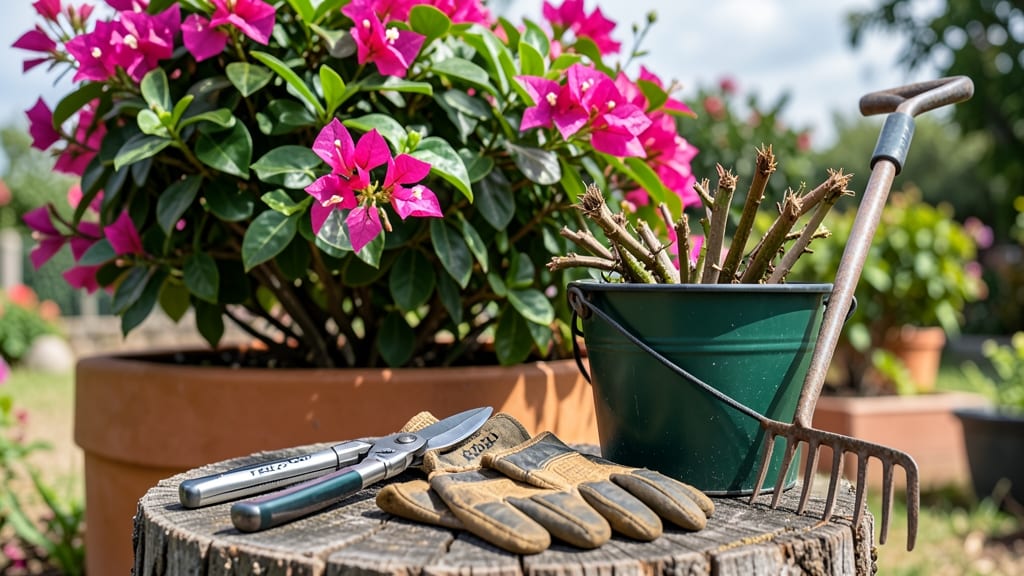
Hard pruning bougainvillea in late winter gives you a lush, bushier plant by spring—the secret to those vibrant canopies you see in tropical landscapes. 🌿 I’ve turned my leggy, sparse bougainvillea into a blooming powerhouse using this method, and the difference is night and day.
The key? Cutting back by one-third to half of the plant’s height, right down to strong stems, not just trimming dead wood.
You’ll need sharp pruning shears, rubbing alcohol (to sterilize cuts), and gloves—bougainvillea thorns are no joke. The best time is February or March, just before new growth starts.
Think of it like giving your plant a fresh start: those sharp cuts encourage thick, bushy growth and more blooms. Most people avoid hard pruning because it looks drastic, but trust me—your bougainvillea will thank you.
After pruning, your plant will look like a bare skeleton, but new shoots appear in 2-3 weeks, and by summer, you’ll have a full, vibrant canopy. The blooms come from fresh growth, so the more you prune correctly, the more flowers you’ll get.
Just avoid cutting into old, woody stems—they won’t regrow. Water deeply after pruning to help the plant recover faster.
This method works for both container-grown and in-ground bougainvillea, and it’s especially useful if your plant has gotten too tall or sparse. The trade-off? You’ll need to be patient—it takes a full growing season to see the full transformation.
But once you’ve done it, you’ll never go back to light pruning again.
📚 In This Guide
- What you need
- Instructions
- Tips and common mistakes
- Wrapping up and next steps
What you need
- ● Pruning shears: Bypass pruners (for clean cuts on smaller stems) or loppers (for thicker branches, 1–2 pairs). Look for sharp, stainless steel blades to prevent rust.
- ● Pruning saw: One handheld pruning saw (for branches thicker than 1 inch). A curved blade works best for bougainvillea’s woody stems.
- ● Gloves: Heavy-duty gardening gloves (2 pairs) to protect against thorns and rough bark. Opt for nitrile-coated or leather for durability.
- ● Disinfectant: 70% isopropyl alcohol or rubbing alcohol (small bottle) to sterilize tools between cuts and prevent disease spread.
- ● Rags or paper towels: 2–3 clean rags for wiping tools and absorbing sap.
- ● Sharpie or marker: One permanent marker (for labeling branches if grafting or propagating later).
- ● Trash bags: 2–3 heavy-duty bags (for collecting pruned branches and debris).
- ● Watering can or hose: One with a gentle spray nozzle to hydrate the plant post-pruning.
- ● Hand pruners: Compact, ergonomic pair for precision trimming in tight spaces.
- ● Pruning sealant: Small tube of wound sealant (like Tanglefoot Tree Wound Pruning Seal) to protect large cuts from pests.
- ● Ladder or step stool: Sturdy, 6–8 ft ladder if your bougainvillea is tall (safety first!).
- ● Compost bin: Access to a bin to recycle pruned branches as mulch.
- ● Sunscreen & hat: SPF 30+ sunscreen and wide-brimmed hat if pruning outdoors on a sunny day.
Step-by-Step instructions for hard pruning bougainvillea
Here's how to revive and reshape your bougainvillea with bold cuts—this is the secret to a lush, flowering powerhouse.
✂️ Step 1: Time Your Pruning for Maximum Regrowth
Prune in late winter or early spring, just as new growth begins but before buds swell. This timing ensures you cut back old, woody stems while stimulating fresh, vibrant shoots. Bougainvillea blooms on new wood, so pruning too early risks removing next season's flowers. Wait until you see tiny green buds forming along the stems—those are your signal.
If your plant is overgrown but still blooming, prune after flowering to maintain color while encouraging a fresh flush. Avoid pruning in fall or winter when the plant is dormant—you’ll cut off next year’s growth potential. I like to mark the last frost date on my calendar and prune 4-6 weeks after to give the plant time to wake up.
✂️ Step 2: Gather Your Tools and Sanitize
Use sharp, clean pruning shears or bypass pruners—dull blades tear stems, inviting disease. Wipe the blades with rubbing alcohol before and after pruning to prevent spreading bacteria or fungi. I also keep a small glove spray handy to disinfect my hands between cuts, especially if the plant has any signs of mildew.
Grab a ladder or sturdy stool if your bougainvillea is tall—reaching awkwardly can lead to uneven cuts or injury. A notebook and pen help track which branches you prune and their original shape. This is especially useful if you’re pruning a mature plant with complex branching.
✂️ Step 3: Identify and Remove Dead or Weak Wood
Start by inspecting the plant for dead, diseased, or crossing branches. Dead wood is brittle and snaps easily when bent—remove it entirely. Diseased branches (yellowing, black spots, or oozing sap) should also go. Crossing branches compete for sunlight and nutrients, so prune one of the two to open the canopy.
Next, look for weak, leggy stems that grow outward instead of upward. These rarely produce flowers and make the plant look unkempt. Cut these back to a strong, healthy bud or lateral branch. You’ll know a stem is healthy if it’s green inside when cut and has a firm, not mushy, texture.
✂️ Step 4: Hard Prune for Shape and Structure
Hard pruning means cutting back one-third to one-half of the plant’s height, focusing on older, woody stems. Make cuts just above a leaf node or bud, at a 45-degree angle to encourage water runoff. Avoid leaving stubs—these can rot and attract pests. Aim to shape the plant into a rounded, open form to maximize airflow and sunlight penetration.
If your bougainvillea is sprawling, prune to encourage upward growth by cutting back the longest, most horizontal branches. For a bushier look, trim back the center stems slightly to allow light to reach the interior. You’ll see new shoots emerging within 2-3 weeks—these are your reward for the bold cuts.
💧 Step 5: Post-Pruning Care for Rapid Recovery
Water the plant deeply after pruning to help it recover from the shock. Bougainvillea is drought-tolerant, but fresh cuts need moisture to heal. Apply a balanced, water-soluble fertilizer (10-10-10) to encourage new growth. I like to fertilize every 4-6 weeks during the growing season, but hold off until you see new leaves unfurling—that’s your cue.
Keep the plant in bright, indirect light for the first week to reduce stress. If pruning in hot weather, provide afternoon shade to prevent sunburn on fresh cuts. You’ll notice new growth within 3-4 weeks, and by late spring, your bougainvillea will be bursting with vibrant blooms.
Tips & tricks for perfect bougainvillea pruning
Here's what nobody tells you about transforming your bougainvillea into a flowering powerhouse—these are the secrets that make all the difference.
Timing is Everything: Pay close attention to those tiny green buds in Step 1—they're your golden signal. If you prune too early, you risk cutting off next season's blooms. I've learned the hard way that pruning in late winter (4-6 weeks after last frost) gives the plant just enough time to wake up without stressing it. The buds will be plump and ready to grow, not just starting to swell. This timing ensures you're cutting back old wood while stimulating fresh growth that will bloom all season.
The Right Tools Make All the Difference: In Step 2, don't skimp on tool quality. I've used cheap pruners that left jagged cuts, which weakened the plant and invited disease. Invest in sharp bypass pruners and keep rubbing alcohol on hand—it's your best defense against spreading bacteria. For tall plants, I use a sturdy ladder with non-slip feet; reaching awkwardly can lead to uneven cuts that stress the plant. Pro tip: Wipe your blades between cuts on diseased branches to prevent cross-contamination.
Cut with Purpose in Step 4: When hard pruning, make your cuts just above a leaf node at a 45-degree angle—this isn't just about aesthetics, it's about plant health. The angled cut helps water runoff, preventing rot. I always aim to remove one-third to one-half of the plant's height, focusing on older, woody stems. This might seem drastic, but trust me, you'll see those fresh shoots emerging within weeks. For sprawling plants, cutting back horizontal branches encourages upward growth that produces more flowers.
Post-Pruning Care is Critical: After all that hard work, don't neglect the recovery phase in Step 5. Deep watering helps the plant heal, but the real magic happens with proper light management. I've seen plants stressed by too much direct sun after pruning—keep it in bright, indirect light for the first week. And that fertilizer? Wait until you see new leaves unfurling before applying—it's the plant's way of telling you it's ready to grow again. This careful recovery period is what turns bold cuts into a vibrant, flowering canopy.
Pro Tips for Hard Pruning Bougainvillea
- Here's what nobody tells you about transforming your bougainvillea into a flowering powerhouse—these are the secrets that make all the difference.
- Timing is Everything: Pay close attention to those tiny green buds in Step 1—they're your golden signal.
- The Right Tools Make All the Difference: In Step 2, don't skimp on tool quality.
Frequently asked questions
about hard pruning bougainvillea—because even pros need a little clarity!When is the best time to hard prune bougainvillea?
The ideal window is late winter or early spring (just before new growth starts), but you can also prune lightly after flowering to encourage a second bloom. Avoid pruning in fall—it reduces cold hardiness. In warm climates, prune twice a year (spring and post-flowering).
How long does it take for bougainvillea to recover after hard pruning?
Recovery time varies: mild pruning shows regrowth in 2–4 weeks, while aggressive cuts may take 6–8 weeks. New shoots appear first at the nodes (buds), so patience is key! Water consistently and fertilize lightly to support regrowth.
What if my bougainvillea doesn’t bloom after hard pruning?
No blooms? You’re likely pruning too late in the season or cutting into old wood (which won’t rebloom). Focus on pruning just above a leaf node (where new growth emerges) and avoid shearing. Bougainvillea blooms on new wood, so timing and technique matter most!
Can I hard prune bougainvillea in containers?
Yes! Container-grown bougainvillea responds even better to hard pruning because you can control water/fertilizer. Just reduce pruning by 20%—containers dry out faster, and stress slows recovery. Repot if roots are circling, and use well-draining soil to prevent rot.
What if I accidentally cut into bare, woody stems?
Don’t panic! Bougainvillea is resilient—stop cutting and let the plant focus on healing. If the stem is completely dead (no buds or green underneath), it won’t regrow. Otherwise, new shoots will sprout from live nodes below the cut. Prune back to the nearest healthy bud next time!
Wrapping up and next steps
Hard pruning your bougainvillea may seem intimidating at first, but with the right tools and confidence, you’ll unlock a lush, vibrant canopy that thrives year-round! 🌿 The key is patience—take your time, follow the sharp cuts technique, and embrace the transformation.
Your efforts will reward you with bold blooms and a healthier plant that stands out in any garden.
Ready to level up your pruning game? Start by observing your bougainvillea’s growth and planning your next pruning session. Whether you’re shaping a sprawling vine or maintaining a compact bush, every snip brings you closer to a stunning, thriving plant! 🌸