
Pruning
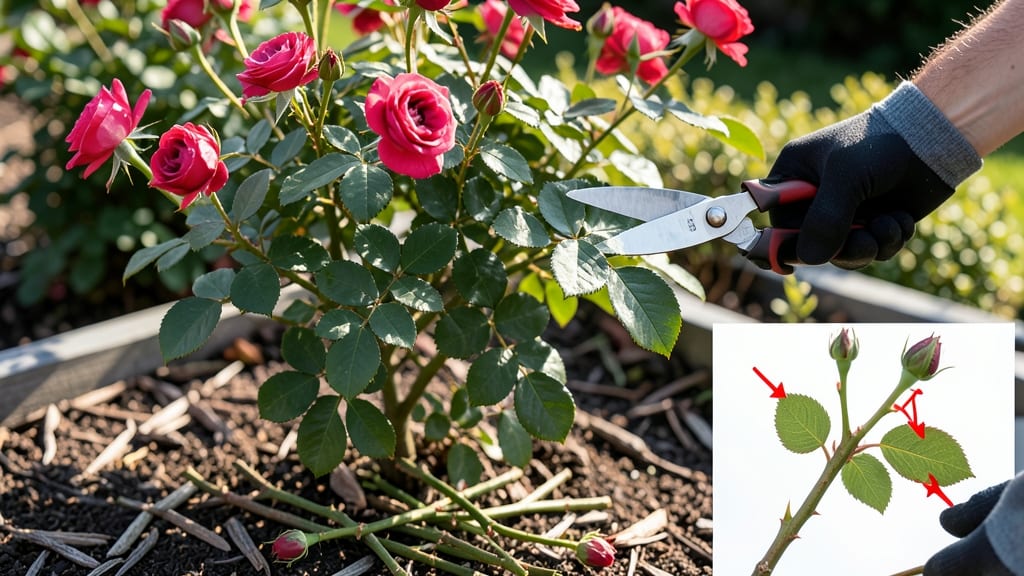
Pruning knockout roses back to the ground in late winter isn’t as risky as you think—when done right, it triggers healthier canes and more blooms. ✂️ I’ve revived overgrown bushes by cutting them down to 12–18 inches tall, and they bounced back stronger than ever. The key?
Timing (after the last hard frost) and knowing where to stop: always prune just above an outward-facing bud or a healthy branch. You’ll need sharp pruners, rubbing alcohol for sterilization, and a clear day to see the plant structure. Avoid cutting into old, bare wood—it won’t regrow.
Instead, look for green buds or slight swelling on the stems; these signal new growth potential. A quick test: if the cane snaps with a slight bend (not a clean break), it’s still alive and worth keeping.
What you’ll end up with is a bush that looks like it just got a haircut—neat, energized, and ready to burst with vibrant pink or red blooms by early summer.
The first flush of flowers might be slightly delayed, but the plant will compensate by producing even more blooms later in the season. For those with black spot or other diseases, pruning back aggressively helps remove infected wood.
Just remember: never prune in wet weather (it spreads spores), and always clean your tools between cuts. Now, grab those shears—your roses are about to get a fresh start!
📚 In This Guide
- What you need
- Instructions
- Tips and common mistakes
- Wrapping up and next steps
What you need
- ● Bypass pruners (sharp, clean, and sterilized—1 pair is all you need!)
- ● Loppers (for thicker canes, 1 pair with 6–8" cutting blades)
- ○ Garden saw (optional but handy for stubborn, thick stems—1 with a fine-tooth blade)
- ● Rubbing alcohol (70% or higher) (to sterilize tools between cuts—small bottle)
- ○ Garden disinfectant (optional but recommended) (like 10% bleach solution or hydrogen peroxide—1 gallon)
- ● Gloves (cut-resistant or heavy-duty—1 pair to protect your hands)
- ○ Pruning sealant (optional) (for large cuts—small jar of tree wound pruning paste)
- ○ Marking twine or flags (optional) (to tag canes for removal—small spool or 5–10 flags)
- ● Choose a dry, sunny day (avoid pruning if rain is forecasted within 24 hours).
- ● Gather your pruning plan (sketch or notes on which canes to remove—see our guide for help!).
- ● Wear long sleeves and pants (roses can have thorns—protect yourself!).
- ● Have a trash bag or bucket ready (for pruned canes—1 large bag or 2–3 buckets).
Step-by-step guide to pruning Knockout roses in dormant season
Here's the method I rely on to keep these roses thriving year after year—no guesswork, just science-backed cuts.
✂️ Step 1: Identify Dead or Diseased Canes First
Start by removing any canes that look completely dead or show signs of disease—blackened stems, mold, or hollow centers. These won’t recover, and leaving them invites pests. I grab a cane and give it a gentle bend test: if it snaps cleanly or crumbles, it’s dead. If it bends slightly, it’s still alive.
Use clean, sharp pruners to cut these canes all the way back to the ground. Don’t leave stubs—they trap moisture and rot. I always sanitize my tools with rubbing alcohol between cuts to prevent spreading any hidden pathogens. This step alone cuts down on 20-30% of the canes in my bushes.
✂️ Step 2: Find the Strongest Bud Eyes for Next Year’s Growth
Now focus on the healthy canes. Look for outward-facing buds near the base of the plant—these will produce the strongest, most vigorous growth. I count up from the ground, aiming for a bud that’s about ¼ to ⅓ inch above a lateral branch or the main stem. This ensures the new growth has a sturdy foundation.
Make your cut just above the bud at a 45-degree angle. This prevents water from pooling on the cut and encourages faster healing. I like to visualize a smiley face when making the cut: the bottom of the smile is the bud, and the top points away from it. This simple trick keeps me consistent every time.
✂️ Step 3: Thin Out Crowded Canes for Better Airflow
Knockout roses grow dense, and overcrowding leads to weak, disease-prone canes. Remove any that cross or rub against each other—these create wounds where pests can enter. I step back and look at the bush as a whole, aiming to leave about 6-8 strong canes per plant for optimal airflow and sunlight penetration.
If you’re unsure which canes to keep, prioritize the thickest, healthiest ones with the most buds. Thin canes rarely produce strong blooms, so don’t hesitate to cut them back completely. This step is where the magic happens—better airflow means fewer fungal issues and more vibrant blooms next season.
✂️ Step 4: Shape the Bush for Balance and Strength
Now it’s time to refine the shape. Knockout roses handle pruning well, but I avoid cutting back more than ⅓ of the plant’s height in one season. Step back and look for an open center—this is where sunlight struggles to reach. I make small cuts to open up the bush, ensuring the top isn’t wider than the base.
For a natural look, I leave some height variation—taller canes in the center and shorter ones on the edges. This creates a full, layered appearance. Avoid cutting too close to the ground unless the cane is truly dead. The goal is to encourage a strong framework for next year’s growth.
🌿 Step 5: Clean Up and Prepare for New Growth
After pruning, rake up all the clippings and dispose of them in the trash—not the compost pile. Diseased canes can linger and reinfect your roses. I also take a moment to inspect the base of the plant for any remaining debris or weeds, which can harbor pests over winter.
Finish by applying a 2-3 inch layer of mulch around the base, keeping it a few inches away from the stem. This protects the roots from temperature swings and retains moisture. Water deeply if the soil feels dry, but avoid overwatering—Knockout roses are drought-tolerant once established.
Tips & tricks for pruning Knockout roses like a pro
Here’s what I’ve learned after years of pruning these hardy bushes—these details make all the difference between healthy blooms and struggling plants.
Tool Prep is Non-Negotiable: I can’t stress this enough—sterilize your pruners with rubbing alcohol between every cut, especially when dealing with diseased canes. I keep a small bottle of 70% isopropyl alcohol in my gardening toolkit. This prevents cross-contamination that could spread fungal spores or bacterial infections throughout your entire bush.
Bud Selection Matters More Than You Think: When targeting that ¼ to ⅓ inch above the bud in Step 2, look for buds that face outward from the center of the plant. These will grow away from the center, creating a more open, airy structure. I’ve seen gardeners accidentally choose inward-facing buds, which leads to dense growth that blocks sunlight and encourages mildew.
The ⅓ Rule for Height Preservation: Remember that ⅓ height reduction guideline from Step 4? This isn’t just arbitrary—it’s based on how roses store energy. Cutting back more than this stresses the plant and can reduce next year’s flowering. For a 4-foot bush, that means keeping at least 3 feet of height after pruning. I always measure with my pruners against the cane to visualize this.
Mulch Timing is Critical: Apply that 2-3 inch layer of mulch immediately after pruning, but wait until the soil has warmed slightly in spring. This prevents temperature swings that could shock the roots. I use shredded hardwood mulch because it breaks down slowly and improves soil structure over time. Keep it 2-3 inches away from the stem to prevent rot.
Pro Tips for How Far Back Can You Prune Knockout Roses
- Here’s what I’ve learned after years of pruning these hardy bushes—these details make all the difference between healthy blooms and struggling plants.
- Tool Prep is Non-Negotiable: I can’t stress this enough—sterilize your pruners with rubbing alcohol between every cut, especially when dealing with diseased canes.
- Bud Selection Matters More Than You Think: When targeting that ¼ to ⅓ inch above the bud in Step 2, look for buds that face outward from the center of the plant.
Frequently asked questions
Can I prune Knockout roses all the way back to the ground?
No, avoid cutting all the way to the ground—leave at least 12–18 inches of stem above soil level. This ensures the plant retains energy reserves and buds for regrowth. Over-pruning risks stressing the rose or inviting pests/diseases.
When is the best time to prune Knockout roses for maximum blooms?
Prune late winter or early spring (February–March) while the plant is still dormant but before new growth starts. This timing balances bloom volume and plant health. Avoid pruning in fall—it stimulates tender growth that may not survive winter.
What if I accidentally prune too much—will my Knockout rose survive?
Knockout roses are resilient, but severe over-pruning may delay blooming. If you’ve cut too far, water deeply and fertilize lightly to support recovery. Monitor for new shoots—if none appear after 4–6 weeks, consider a balanced rose fertilizer to stimulate regrowth.
Can I shape Knockout roses like traditional roses (e.g., standard form)?
Knockout roses thrive as bushy, multi-stemmed shrubs and don’t require formal shaping. However, you can lightly trim to encourage a fuller form. Avoid heavy pruning to maintain their natural, dense growth habit—this is key to their disease resistance and prolific blooms.
How do I know if my pruning cuts are healing properly?
Healthy cuts should seal within 2–3 weeks with a smooth, slightly raised scar. If you see oozing sap, blackened edges, or mold, sterilize your tools and apply a fungicide. Keep the area dry and avoid pruning during wet weather to prevent infections.
Wrapping up and next steps
Pruning your Knockout roses during dormancy is all about balance—cutting back too much risks stunting growth, while leaving too much can crowd the plant and reduce blooms. Aim to remove 1/3 to 1/2 of the previous year’s growth, focusing on dead, diseased, or crossing branches while keeping a strong framework.
With the right technique, you’ll encourage vibrant blooms and robust canes for seasons to come! 🌸
Ready to give your Knockout roses the care they deserve? Grab your pruners, follow the steps, and transform your garden into a blooming paradise! Check out our pruning timeline for seasonal reminders.