
Pruning
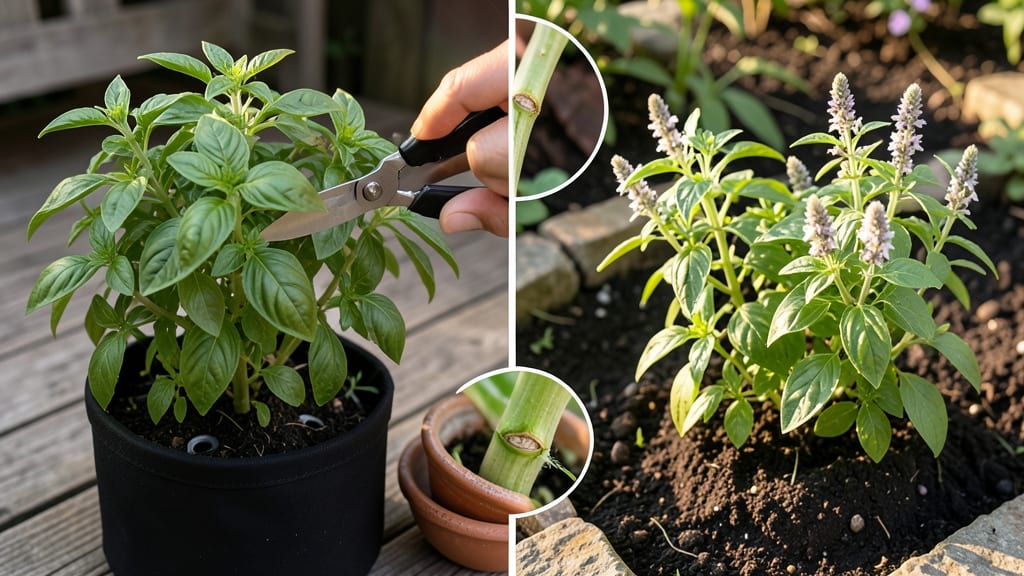
Properly pruning basil isn't just about trimming leaves—it's the secret to a plant that keeps producing lush, flavorful growth all season long. ✂️ I learned the hard way that skipping this step leads to woody stems and bitter leaves, but mastering the pinch-and-harvest method turns a single plant into a self-sustaining herb factory.
The key is timing and technique: always prune early in the morning when oils are concentrated, and focus on the top two sets of leaves to encourage bushier growth. This isn't just about harvest—it's about preventing pests too, since dense foliage deters flies and aphids.
Most gardeners stop here, but the real magic happens when you combine pruning with strategic harvesting.
By following this method, you'll see new shoots forming within 7-10 days, and your plant will stay productive for months longer than unpruned varieties.
The leaves remain tender, the flavor stays bright, and you'll have more basil than you know what to do with—perfect for pesto, salads, or freezing for winter.
Whether you're growing in pots or garden beds, this technique works for both container basil and in-ground plants, though container-grown varieties respond even faster to regular pruning. The only mistake you can make is waiting too long—so grab those shears and get started!
📚 In This Guide
- What you need
- Instructions
- Tips and common mistakes
- Wrapping up and next steps
What you need
- ● Clean, sharp pruning shears – Bypass pruners (2–4 inch blades) for precision cuts (avoid dull tools—crushed stems invite pests!).
- ● Garden gloves – Lightweight, breathable pair to protect hands from thorns and dirt.
- ○ Small container or bucket – For collecting pruned leaves (optional but handy for composting or cooking!).
- ● Rubbing alcohol (70% or higher) – 1–2 oz to sterilize shears before/after use (prevents disease spread).
- ● Water spray bottle – 8–16 oz with water to mist leaves post-pruning (helps reduce stress).
- ● Pruning saw – For thick-stemmed basil plants (rare, but useful for mature woody stems).
- ● Plant food or compost tea – 1 tsp diluted to feed plants after heavy pruning (boosts recovery).
- ● Label markers – If pruning multiple basil varieties, label cuttings to track growth stages.
- ● Sunhat & sunscreen – Because pruning sessions can turn into all-day gardening adventures! ☀️
Step-by-Step guide to pruning basil for bushier, more productive plants
Here's the foolproof method I use to keep basil thriving all season long—no guesswork, just healthy growth.
🌿 Step 1: Identify and Remove Flowering Stems Immediately
Basil's first priority is to flower, not produce leaves. The moment you see a tiny flower bud forming at the leaf axils (where leaves meet stems), pinch it off with your fingers or snip with clean scissors. These buds signal the plant to stop growing leaves and focus on reproduction, which means fewer harvests for you.
I check my plants every 3-4 days during peak growing season. If you wait until flowers appear, the plant will already be shifting energy away from leaf production. The goal is to keep basil in a perpetual vegetative state—think of it as tricking the plant into staying in its youthful, leafy phase.
✂️ Step 2: Pinch Back the Main Stem for Bushier Growth
When your basil reaches about 6 inches tall (or when it has 4-6 true leaves), pinch off the top set of leaves just above a pair of leaves lower on the stem. This encourages lateral branching, which means more stems and therefore more leaves. I use my thumb and forefinger to make a clean break—no jagged cuts that invite disease.
Here's the thing—don't pinch too low. You want to leave at least 2-3 inches of growth below your pinch point. If you cut too aggressively, you'll shock the plant and stunt its recovery. After pinching, give your basil a light watering to help it recover quickly.
🌱 Step 3: Harvest Regularly to Encourage Continuous Growth
Harvest leaves from the outer stems first, cutting just above a leaf node or pair of leaves. This ensures the plant keeps growing upward and outward rather than getting leggy. I aim to harvest about ⅓ of the plant's foliage every 2-3 weeks—this stimulates new growth while preventing the plant from becoming overcrowded.
Never take more than ⅓ of the plant at once, especially in hot weather. Basil is resilient, but you'll stress it if you harvest too aggressively. After each harvest, I give the plant a light misting to help it bounce back faster. You'll notice new growth emerging within 5-7 days if you're harvesting correctly.
☀️ Step 4: Prune for Airflow and Pest Prevention
Throughout the growing season, remove any yellow or damaged leaves immediately. These leaves not only look unsightly but also attract pests and fungal diseases. I run my fingers through the foliage weekly to check for any leaves that need removing—it's a quick habit that pays off big time.
If your basil starts looking leggy or sparse, it's time for a rejuvenation prune. Trim back the longest stems by about ⅓ their length, cutting just above a leaf node. This encourages a fresh flush of growth. I do this prune in early summer when plants often slow down after their initial flush.
⏰ Step 5: Adjust Pruning as Seasons Change
In late summer, when days shorten and temperatures drop, basil naturally slows its growth. At this point, I reduce pruning to just removing flower buds and damaged leaves. The plant needs to conserve energy for winter survival. If you're growing basil in containers, you can bring it indoors before the first frost and continue light pruning under grow lights.
Here's a pro tip: If your basil gets too leggy in fall, don't panic. Give it a hard prune—cut back all stems to about 3 inches tall. This might seem drastic, but it often rejuvenates the plant enough to keep it producing leaves through winter. Just move it to a sunny window or under grow lights to maintain growth.
Tips & tricks for perfect basil pruning
Real talk: Pruning basil wrong can turn your leafy dream plant into a floppy, flower-filled disappointment. These tricks will keep your basil thriving like a pro.
Timing is Everything: Those 3-4 day checks for flower buds in Step 1 are non-negotiable during peak season. I've learned the hard way—waiting until buds are visible means you've already lost precious leaf production. Use a small magnifying glass if needed; those early buds are sneaky. The moment you spot one, pinch it off immediately to keep your basil focused on leaves instead of flowers.
The Pinch Technique: When you reach that 6-inch mark in Step 2, here's what nobody tells you—use your thumb and forefinger to make a clean pinch just above a leaf node. This creates a natural growth point while avoiding the jagged cuts that can invite disease. I always pinch at a 45-degree angle to maximize surface area for new growth. After pinching, that light watering is crucial to help the plant recover quickly.
Harvest Strategy: In Step 3, the ⅓ harvest rule is your best friend. I've seen beginners take half the plant at once, thinking more leaves = better harvest. Wrong! This stresses the plant and can actually reduce future growth. Always harvest from the outer stems first, cutting just above a leaf node. This encourages the plant to grow outward rather than upward, giving you a bushier, more productive basil plant.
Pro Tips for Properly Prune Basil
- Real talk: Pruning basil wrong can turn your leafy dream plant into a floppy, flower-filled disappointment.
- Timing is Everything: Those 3-4 day checks for flower buds in Step 1 are non-negotiable during peak season.
- The Pinch Technique: When you reach that 6-inch mark in Step 2, here's what nobody tells you—use your thumb and forefinger to make a clean pinch just above a leaf node.
Frequently asked questions
Got questions about pruning basil? You’re not alone—growing lush, productive basil plants takes a little know-how! Here are answers to the most common questions to keep your basil thriving.
Why should I prune basil at all?
Pruning basil isn’t just about shaping—it’s about encouraging growth! When you pinch off the top leaves, you stimulate bushier growth and more flavorful leaves. Without pruning, basil often becomes leggy, woody, and less productive. Think of it as a spa day for your plant!
When is the best time to prune basil?
Start pruning when your basil plant has at least 4-6 pairs of leaves (about 4-6 inches tall). This usually happens 4-6 weeks after planting. Prune in the morning on a warm, sunny day to give the plant time to recover. Avoid pruning late in the day or after heavy rain.
What if I prune too much or too little?
Too much pruning (cutting more than 1/3 of the plant) can stress basil, while too little won’t encourage bushiness. Aim for regular, light pruning—remove just the top set of leaves (or a few inches) to maintain shape. If you overdo it, your plant may slow down, but it’ll bounce back with proper care!
Can I prune basil in cold weather?
Basil is a tender annual and struggles in cold temps (below 50°F/10°C). If frost is coming, harvest all leaves and bring potted basil indoors to a sunny windowsill or under grow lights. Outdoor basil in cold climates should be pruned before the first frost to maximize harvests.
What do I do with the pruned leaves?
Don’t waste those clippings! Use them in cooking (pesto, pasta, soups), infused oils/vinegars, or freeze them in ice cube trays for later. You can also root the stems in water to grow new plants—just place cuttings in a jar with 1 inch of water and wait for roots to sprout (about 1-2 weeks).
Wrapping up and next steps
Pruning basil isn’t just about keeping your plant tidy—it’s the secret to a bountiful, flavorful harvest all season long! 🌿 By mastering the pinch-and-harvest method, you’ll encourage bushier growth, prevent woody stems, and enjoy fresh basil for pesto, salads, and sauces.
Remember: consistency is key, and a little effort now means endless rewards in your kitchen.
Ready to put your new skills to the test? Start with one plant today—grab those shears, give it a trim, and watch your basil thrive! Soon, you’ll be the proud gardener with a never-ending supply of aromatic leaves. Happy pruning! 🌱✨