
Pruning
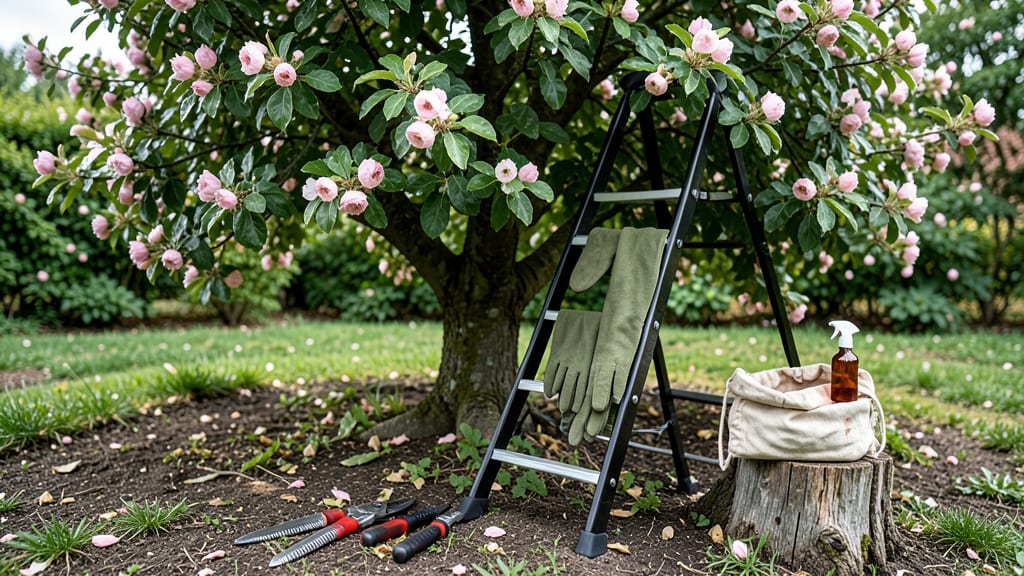
Pruning a crabapple tree in late winter transforms it from a tangled mess into a showstopper. ✂️ I've watched my own crabapple go from scraggly to spectacular in just a few hours of focused work—it's all about timing, technique, and a little patience.
The best time is right after the ground freezes but before buds swell—usually February or March in most climates. You'll need sharp pruners, a ladder, and maybe some protective gloves.
The goal? Remove dead wood, open up the center for airflow, and shape it to encourage those spectacular spring blooms everyone admires.
Start by cutting out any branches that cross or rub—these create wounds where diseases love to hide. Thin out crowded branches to let light reach the center, and don't be afraid to shorten overlong limbs. Your tree will reward you with healthier growth and more abundant flowers come spring.
After pruning, clean up any fallen branches and apply a thin layer of mulch around the base. This keeps moisture in and weeds out while your crabapple recovers. The results? A stronger structure, fewer pests, and blooms that turn heads in your neighborhood.
📚 In This Guide
- What you need
- Instructions
- Tips and common mistakes
- Wrapping up and next steps
What you need
- ● Pruning shears (bypass pruners): Sharp, clean bypass pruners (avoid anvil pruners—they crush stems). Choose a size that fits your hand comfortably (6–8 inches is ideal for most crabapple branches). Pro tip: 💡 Test your shears first! They should cut cleanly through a small branch with minimal effort.
- ● Loppers: For thicker branches (½ to 1½ inches in diameter). Opt for bypass-style loppers with a long handle (20–24 inches) for leverage.
- ● Pruning saw: A curved-tooth pruning saw for branches thicker than 1½ inches. Look for a compact, lightweight design for easy maneuvering.
- ● Extension pole pruner: A 3–6-foot telescoping pole with a pruning head—perfect for high branches without climbing! 🌳
- ● Gloves: Heavy-duty gardening gloves (leather or reinforced fabric) to protect against thorns and rough bark.
- ● Safety glasses: Protect your eyes from debris, especially when sawing.
- ● Disinfectant (70% isopropyl alcohol or bleach solution): Clean tools between cuts to prevent spreading disease. Mix 1 part bleach to 9 parts water for a DIY solution.
- ○ Pruning sealant (optional but helpful): A tree wound dressing (like Tanglefoot or a similar product) to seal larger cuts and reduce infection risk.
- ● Tarp or drop cloth: Lay this underneath the tree to catch debris and make cleanup easier.
- ● Weather check: Prune on a dry, cool day (40–60°F) to minimize stress on the tree and reduce sap flow.
- ● Tree condition: Ensure your crabapple is dormant (late winter/early spring, before buds swell). Avoid pruning during wet or windy conditions.
- ● Safety first: Wear sturdy shoes and avoid working alone if the tree is large or overhanging structures.
Step-by-Step instructions for pruning a crabapple tree
Late winter is the perfect time to shape your crabapple tree for better blooms and stronger growth.
✂️ Step 1: Gather Tools and Inspect the Tree
Start with a clean, sharp bypass pruning shears for small branches and a pruning saw for thicker stems over ½ inch in diameter. Disinfect your tools with rubbing alcohol to prevent spreading disease between cuts. I also like to wear gloves—crabapple branches can be thorny, and the sap sometimes irritates skin.
Examine the tree for dead, diseased, or crossing branches. Dead wood is easy to spot—it’s brown, brittle, and often snaps when you bend it slightly. Diseased branches may have oozing sap, fungal growth, or unusual discoloration. Mark these with flagging tape or a spray paint dot so you don’t miss them during pruning.
✂️ Step 2: Remove Dead, Diseased, and Weak Growth
Begin by cutting out dead, diseased, or damaged branches at their point of origin. Make your cuts just outside the branch collar—the swollen area where the branch meets the trunk or another branch. This ensures the tree can seal the wound properly. For larger branches, use the three-cut method: make an undercut, then a top cut, and finally remove the branch by twisting it gently.
Next, look for weak or crossing branches. Weak growth often grows at sharp angles or appears thinner than others. Crossing branches rub against each other, creating wounds that invite pests and disease. Remove one of the two branches where they intersect, always choosing the smaller or weaker branch to preserve the tree’s natural shape.
✂️ Step 3: Thin the Canopy for Better Airflow
Crabapple trees bloom best when they receive good airflow and sunlight. Step back and visualize the tree’s structure—aim to create an open, vase-like shape. Remove branches that grow inward or downward to prevent congestion. Focus on removing no more than 25% of the tree’s foliage in one season to avoid stressing it.
Pay special attention to water sprouts—fast-growing, vertical shoots that steal energy from flowering branches. These often appear along the trunk or main limbs. Cut them back to a lateral branch or bud to encourage a fuller, more balanced canopy. Thin the outer layer first, then move inward to maintain an even distribution of light.
✂️ Step 4: Shape the Tree for Stronger Blooms
Now it’s time to refine the tree’s shape. Crabapple trees benefit from a balanced, open center that allows sunlight to reach all branches. Start at the bottom and work your way up, pruning branches that grow too close together or block light from reaching the interior. For horizontal branches, trim back the tips slightly to encourage bushier growth and more blooms.
If your tree has suckers—shoots growing from the base or roots—remove them completely at the ground level. These compete with the main tree for nutrients and weaken its structure. After shaping, step back again to check for balance. The goal is a tree that looks natural but has room for air and light to circulate freely.
✂️ Step 5: Clean Up and Monitor Recovery
Once pruning is complete, rake up and dispose of all debris, especially diseased branches. Never leave cuttings on the ground, as they can harbor pests or pathogens. Seal larger wounds with pruning sealant if they’re over ½ inch in diameter, but skip it for small cuts—the tree’s natural healing process works best without interference.
Water the tree deeply after pruning to help it recover, especially if winter was dry. Monitor the tree over the next few weeks for signs of stress, like yellowing leaves or wilting. If you see new growth emerging from the pruned areas, that’s a good sign the tree is healing well. Avoid heavy pruning for the next 12 months to allow it to fully recover and prepare for next year’s blooms.
Tips & tricks for perfect crabapple tree pruning
Here's what nobody tells you about shaping your crabapple tree—these tricks will help you avoid common mistakes and get results that last.
Tool Prep Pays Off: Before you even touch the tree, take 5 minutes to sharpen your pruning shears and saw. A dull blade crushes rather than cuts cleanly, which damages the tree's bark. I test sharpness by slicing through a piece of newspaper—if it tears, your tools need honing. For stubborn branches, a small file can work wonders on your saw's teeth in just a few strokes. Safety first: Wear gloves and eye protection—crabapple sap can irritate skin and those thorns are sharper than you'd expect.
Branch Collar Know-How: When you're making cuts in Step 2, focus on preserving that branch collar—the swollen area where the branch meets the trunk. This is the tree's natural healing zone. If you cut too close, you create an open wound that invites disease. A good rule of thumb is to make your cut just outside the collar, leaving a small bump. For larger branches, the three-cut method prevents bark from tearing, but don't rush—take your time to make clean cuts that heal properly. I've seen too many trees develop cankers from improper cuts.
Canopy Vision Trick: Step back often during Step 3 to visualize your tree's structure. Hold a small mirror or use your phone camera to see the canopy from different angles—this helps you spot branches you might miss from ground level. Think of your tree as a vase shape: wider at the bottom, narrower at the top. Remove branches that grow inward first, then work your way to the center. Remember the 25% rule—never remove more than a quarter of the foliage in one season. Your goal is sunlight reaching all branches, not a skeletonized tree.
Post-Pruning Care: After you've finished shaping, give your tree a deep watering—especially important if winter was dry. The 12-month recovery period mentioned in Step 5 is crucial, but you can help by monitoring for signs of stress. Look for new growth at pruned areas as a positive sign. For trees in urban areas with limited space, consider adding mulch around the base to retain moisture and regulate soil temperature. I've found that mulching also helps suppress those pesky suckers that try to steal nutrients from your main tree.
Pro Tips for Prune A Crabapple Tree
- Here's what nobody tells you about shaping your crabapple tree—these tricks will help you avoid common mistakes and get results that last.
- Tool Prep Pays Off: Before you even touch the tree, take 5 minutes to sharpen your pruning shears and saw.
- Branch Collar Know-How: When you're making cuts in Step 2, focus on preserving that branch collar—the swollen area where the branch meets the trunk.
Frequently asked questions
Got questions about pruning your crabapple tree?
Here are answers to the most common concerns—from timing to tools—to help you prune like a pro.
When is the best time to prune a crabapple tree?
The ideal window is late winter (just before buds swell) or early spring. Avoid pruning in fall—it can encourage new growth that won’t harden off before winter. If you must prune in summer, do it after flowering to protect blooms for next year.
Can I prune a crabapple tree in the fall?
Pruning in fall is risky because it stimulates tender new growth that may not survive frost. However, if you must remove dead or diseased branches, do it at least 6 weeks before the first hard freeze. Otherwise, wait for late winter to avoid stressing the tree.
How much can I cut off a crabapple tree in one year?
Never remove more than 25% of the canopy in a single year—this prevents shock and promotes healthy regrowth. For young trees, light pruning (10–15%) is often enough. Older or overgrown trees may need gradual thinning over 2–3 years.
What if my crabapple tree isn’t blooming after pruning?
Lack of blooms usually means over-pruning or cutting back flowering wood (old wood blooms on crabapples!). Focus on shaping and removing dead/diseased branches. Avoid heavy cuts to branches that produce flowers. If blooms are sparse, fertilize lightly in early spring.
Do I need special tools to prune a crabapple tree?
Basic tools suffice: pruning shears (for small branches), loppers (for ½–2" diameter), and a pruning saw (for thicker branches). Sterilize blades with rubbing alcohol to prevent disease spread. A ladder or pole saw helps with tall trees—safety first!
Wrapping up and next steps
Pruning your crabapple tree in late winter isn’t just about shaping—it’s about setting the stage for vibrant blooms and a healthier tree. 🌸 By following the right steps, you’ll encourage strong growth, prevent disease, and enjoy stunning spring flowers for years to come.
Now that you’re armed with the know-how, grab those pruners and get ready to transform your tree into a thriving centerpiece!
Ready to take it further? Next, check out our guide on identifying common crabapple diseases—so you can keep your tree looking its best all season long! 🌿