
How To
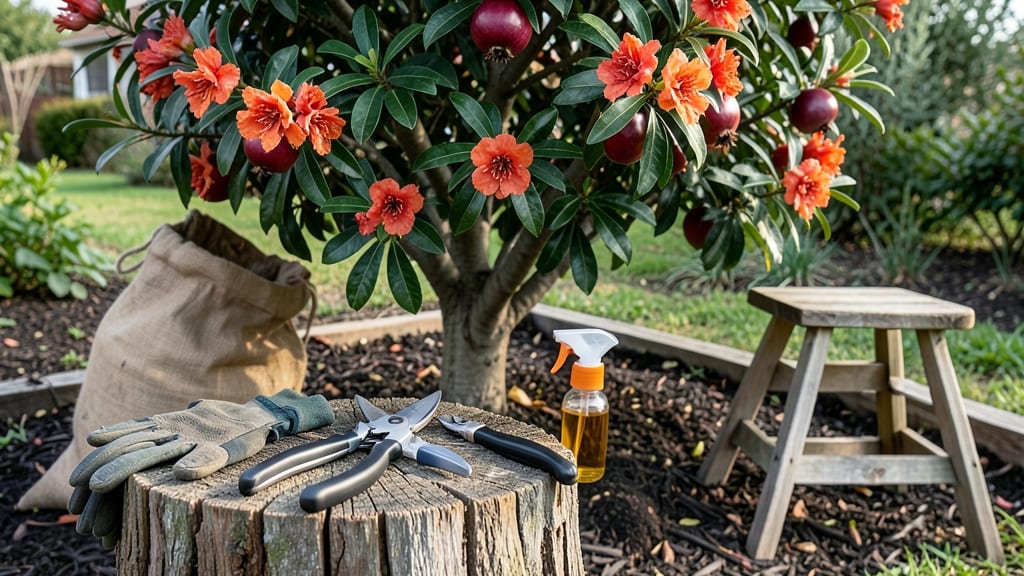
Pruning a pomegranate tree in late winter gives you the strongest framework for next year's harvest—thicker canes, better airflow, and fewer fruitless branches. 🌱 I learned the hard way that skipping dormant-season pruning means weaker wood, crowded growth, and smaller fruit.
The key is cutting back by one-third of last year’s growth while keeping the tree’s natural shape.
You’ll need sharp pruners, rubbing alcohol for sterilizing cuts, and a clear day to see the tree’s structure. Focus on removing dead wood, crossing branches, and any growth that crowds the center—this prevents disease and lets sunlight reach the fruit.
After pruning, give the tree a light fertilizer to help it recover before new growth starts in spring.
📚 In This Guide
- What you need
- Instructions
- Tips and common mistakes
- Wrapping up and next steps
What you need
- ● Bypass pruners – Sharp, clean, and sterilized (7-inch handles work best for thicker branches). Quantity: 1 pair.
- ● Loppers – For branches ½ to 1.5 inches thick. Quantity: 1 pair.
- ● Pruning saw – For stubborn, thick branches (20-inch blade, crosscut or bow saw). Quantity: 1.
- ● Gloves – Heavy-duty, cut-resistant (thorns are sharp!). Quantity: 1 pair.
- ● Disinfectant – 70% isopropyl alcohol or bleach solution (1 part bleach to 9 parts water) to sterilize tools. Quantity: Small spray bottle or container.
- ● Rubbing alcohol or hydrogen peroxide – For cleaning wounds on the tree. Quantity: Small bottle.
- ● Tarp or drop cloth – To collect debris. Quantity: 1 (4x6 ft or larger).
- ○ Marking twine or flags – Optional, for tagging branches to remove later. Quantity: Small roll.
- ● Safety glasses – Protects eyes from debris. Quantity: 1 pair.
- ● Long sleeves/pants – Protects against thorns and sun exposure.
- ● Ladder or step stool – For taller trees (ensure it’s stable!). Quantity: 1.
- ○ Pruning sealant – Optional: Helps larger cuts heal faster (e.g., Tanglefoot Tree Wound Pruning Sealer). Quantity: Small tube.
- ● Sharpie or paint – To mark cuts if pruning in stages. Quantity: 1.
- ● Choose a dry, sunny day (avoid rain or high humidity for 24 hours before/after pruning).
- ● Ensure the tree is dormant (late winter/early spring, before buds swell).
- ● Have a clear plan – Sketch or mentally map out branches to remove.
- ● Check local pruning regulations if your tree is near power lines or in a HOA area.
Step-by-step guide to pruning a pomegranate tree
Here's how I prune my pomegranate tree every winter—it keeps the plant healthy and packed with fruit.
✂️ Step 1: Choose the Right Time and Tools
Prune during late winter or early spring while the tree is still dormant but before buds begin to swell. This timing ensures you're not removing growth that would support next year's fruit. I use sharp, clean pruning shears (sterilized with rubbing alcohol) and loppers for thicker branches—never dull tools, as they tear bark and invite disease.
Wear gloves (pomegranate thorns are vicious) and have a bucket nearby to collect clippings. I always prune on a dry day to prevent splintering wood. The goal here is to shape the tree while encouraging strong, productive canes—never remove more than 25% of the tree's total growth in one season.
✂️ Step 2: Remove Dead, Diseased, or Weak Wood
Start by scanning the tree for dead branches (gray, brittle wood that snaps easily) and diseased wood (blackened, oozing, or fungal spots). Cut these out first at the branch collar—the swollen area where the branch meets the trunk. Never leave stubs; clean cuts heal better and prevent rot.
Next, look for weak or crossing branches—these compete for energy and reduce fruit production. If two branches grow toward each other, remove the smaller one at its base. You'll know you're on the right track when the tree's structure opens up, allowing sunlight to reach the center where fruit forms.
✂️ Step 3: Thin Out Overcrowded Growth
Pomegranate trees produce fruit on new wood, so focus on thinning suckers (shoots growing from the base) and water sprouts (fast-growing vertical shoots). Use your shears to cut these back to a bud or lateral branch—never to a stub. This redirects energy to the main structure and future fruit-bearing canes.
I like to step back every few cuts to visualize the tree's shape. Aim for an open vase form with a strong central leader and well-spaced branches. If a branch is growing inward, prune it back until it points outward—this prevents shading and improves air circulation, which is critical for preventing fungal diseases.
☀️ Step 4: Shape for Sunlight and Airflow
Pomegranates need full sun to produce fruit, so prune to maintain an open canopy. Remove any branches that block sunlight from reaching the center of the tree. Cut back overly vigorous branches by one-third to encourage bushier growth and more fruiting spurs.
Pay special attention to the lower branches—if they're too dense, they'll shade the ground and prevent new suckers from growing. Thin these out to 6-12 inches from the ground, leaving room for new growth. After pruning, the tree should look balanced, with light able to penetrate to the center.
⏰ Step 5: Clean Up and Monitor for Recovery
Rake up and dispose of all clippings (don't compost them—they may harbor disease). Sterilize your tools again with rubbing alcohol to prevent spreading pathogens. Water the tree deeply after pruning to help it recover, but avoid overwatering, which can stress the plant.
Over the next few weeks, watch for new growth—this is your sign that the tree is healing. If you see sap oozing from cuts, it's normal and part of the healing process. Avoid pruning again until next dormant season, unless you notice dead or diseased branches that need immediate removal.
Tips & tricks for pruning a pomegranate tree
These simple tricks will help you prune like a pro—keeping your tree healthy and fruit-filled for years.
Timing is Everything: The late winter to early spring window is crucial because it's when the tree is still dormant but ready to burst into growth. I've seen people prune too early when buds are still tight or too late when new shoots appear—both can stress the tree. Watch for those tiny bud swellings to confirm you're not too late. The goal is to encourage new growth while protecting next year's fruit production.
Tool Prep Makes All the Difference: Sterilizing your pruning shears with rubbing alcohol between cuts is non-negotiable. I learned this the hard way after seeing my tree develop fungal spots from contaminated tools. Also, never use dull blades—they crush wood instead of making clean cuts, which slows healing. A quick test: if you have to force the shears through a branch, they're too dull. Keep a small bottle of rubbing alcohol and a clean rag handy for quick sterilization between cuts.
Visualize the Tree's Future: Step back every 5-10 cuts to visualize your progress. You're aiming for that open vase shape where sunlight can reach the center. I like to imagine the tree as an umbrella—you want the branches to spread outward evenly, not crowd together. This isn't just about looks; proper airflow prevents fungal diseases that can ruin your harvest. If you're unsure, snap a photo before you start so you can compare your progress.
Recovery Care is Key: After pruning, the tree needs time to heal. Deep watering helps, but don't overdo it—the roots need oxygen too. I've noticed that trees recover faster when pruned on a slightly cloudy day rather than a hot, sunny one. Keep an eye out for new growth within 2-3 weeks as your sign that everything's on track. If you see sap oozing from cuts, that's normal—it's part of the tree's natural healing process.
Pro Tips for Prune A Pomegranate Tree
- These simple tricks will help you prune like a pro—keeping your tree healthy and fruit-filled for years.
- Timing is Everything: The late winter to early spring window is crucial because it's when the tree is still dormant b...
- Tool Prep Makes All the Difference: Sterilizing your pruning shears with rubbing alcohol between cuts is non-negotiab...
Frequently asked questions
Got questions about pruning your pomegranate tree?
Here are some of the most common ones—and their answers—to help you prune like a pro!
When is the best time to prune a pomegranate tree?
Prune your pomegranate tree in late winter or early spring (just before buds swell) when the tree is dormant. This timing promotes vigorous growth and fruit production. Avoid pruning in fall, as it can stimulate new growth that may be damaged by frost.
How much should I cut back my pomegranate tree?
Remove 20-30% of the tree’s oldest canes to encourage new growth and fruit production. Focus on dead, diseased, or crossing branches first. Never cut more than 30% in one season—this can stress the tree and reduce fruit yield.
Will pruning my pomegranate tree affect fruit production?
Yes! Proper pruning boosts fruit production by improving airflow and sunlight exposure. Removing crowded or weak branches directs energy to healthier canes, leading to larger, sweeter pomegranates. Just avoid over-pruning—balance is key!
What if I prune at the wrong time?
Pruning during active growth (spring/summer) can stress the tree and make it vulnerable to pests or disease. If you must prune outside dormant season, do so lightly—just remove dead or diseased branches. Always prioritize timing for best results!
Can I prune a young pomegranate tree differently?
Young trees (under 3 years old) need minimal pruning—just remove dead or crossing branches to encourage a strong structure. Focus on shaping the tree in its first few years to avoid overcrowding as it matures.
Wrapping up and next steps
Pruning your pomegranate tree during dormancy isn’t just about shaping—it’s about setting the stage for a bountiful harvest and healthier growth. By following the right techniques, you’ll encourage stronger canes, better airflow, and those juicy, vibrant fruits you love.
Now that you’re armed with the know-how, grab those shears and get pruning! 🌿✂️
Ready to take it further? Monitor your tree’s progress throughout the year—adjust pruning as needed—and watch it thrive! For extra tips, check out our guide on pomegranate tree care year-round.