
Pruning
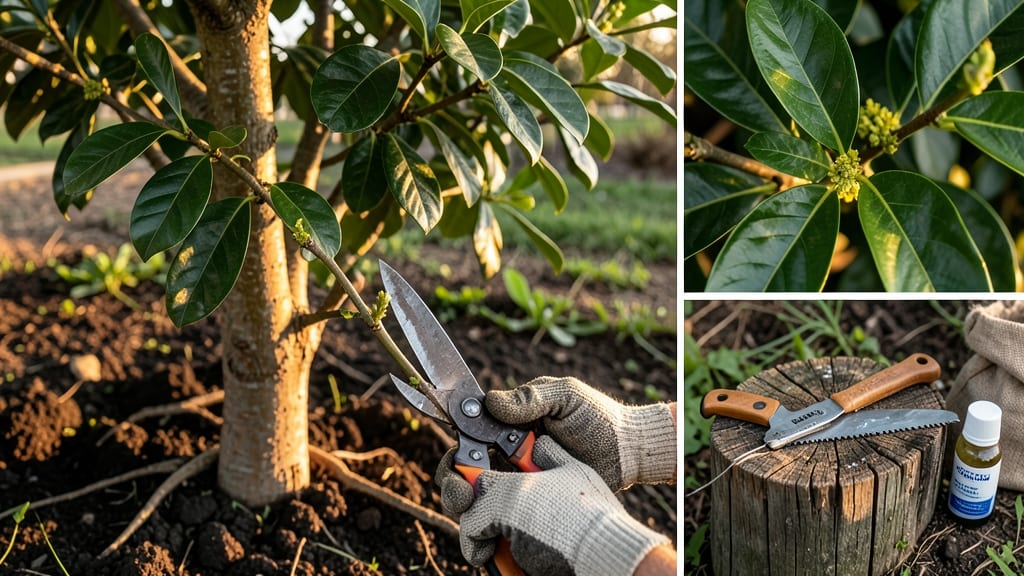
To prune avocado trees, focus on spring flush growth—this is when your tree decides whether to grow leaves or fruit. ✂️ I’ve watched my avocado go from scraggly to productive by pruning at the right time, and the difference in fruit production is shocking.
The key isn’t just cutting branches—it’s encouraging the tree to invest energy where you want it: in new growth and fruit. You’ll need sharp pruners, a saw for thicker branches, and a clear day to avoid stressing the tree.
Start by removing dead or crossing branches first—these compete with your fruit-bearing goals. Then, cut back last year’s growth by about one-third, just above an outward-facing bud. This opens the canopy to sunlight and air, which means more flowers next season.
After pruning, your tree will respond with a burst of new growth—within 2-3 weeks—and those new shoots are where the magic happens. They’ll produce flowers, and with proper care, those flowers turn into fruit. The best part? You’ll see fewer leafy branches and more harvestable avocados by summer.
This method works for container-grown trees too, just scale down the cuts. And if you’re in a cooler climate, wait until after the last frost before pruning. Here’s how to make it foolproof—no guesswork, just results.
📚 In This Guide
- What you need
- Instructions
- Tips and common mistakes
- Wrapping up and next steps
What you need
- ● Pruning shears – Bypass pruners (8-10 inch blades) for clean cuts on small branches (up to ½ inch thick). Sterilize with rubbing alcohol before and after use to prevent disease spread.
- ● Pruning saw – Curved-tooth saw (10-12 inch blade) for thicker branches (½ inch to 2 inches). Look for a non-serrated edge to avoid tearing wood.
- ● Loppers – Long-handled (24-30 inch) for reaching higher branches safely. Opt for bypass-style loppers for precision.
- ● Gloves – Heavy-duty, cut-resistant gloves (e.g., mechanics or gardening gloves) to protect hands from thorns and sap.
- ● Disinfectant – 70% isopropyl alcohol or bleach solution (1 part bleach to 9 parts water) to sterilize tools between cuts.
- ● Rubbing alcohol or hydrogen peroxide (3%) – For cleaning wounds on the tree (3% concentration is safe for plants).
- ○ Pruning sealant (optional but recommended) – Tree wound sealant (e.g., Tanglefoot Tree Wound Pruning Sealer) to protect large cuts (over ½ inch) from pests and disease.
- ● Ladder or sturdy stool – Ensure it’s stable and tall enough to reach the tree’s canopy safely. A step ladder (6-8 feet) works for most home avocado trees.
- ● Trash bags or bucket – For collecting pruned branches and debris. A 5-gallon bucket with a lid works well for smaller jobs.
- ● Sharpie or permanent marker – To mark branches for removal if you’re unsure about cuts during the process.
- ● Hand saw – For very thick branches (over 2 inches) if your pruning saw isn’t up to the task.
- ● Pole pruner – Extendable 20-30 foot reach for tall trees (great for commercial or large backyard avocados).
- ● Work boots or closed-toe shoes – Protects feet from dropped branches or sharp tools.
- ● Safety glasses – Shields eyes from debris, especially when using a saw.
- ● Tree growth regulator (e.g., Paclobutrazol) – Apply to new growth after pruning to encourage stronger, fruit-bearing branches (follow label instructions!).
- ● Camera or phone – Snap before-and-after photos to track your tree’s progress over time!
Step-by-Step guide to pruning avocado trees for healthy growth
Spring is the perfect time to refresh your avocado tree and set it up for a bountiful harvest.
✂️ Step 1: Gather the Right Tools and Safety Gear
Start by collecting your tools: clean, sharp pruning shears for smaller branches and a pruning saw for thicker limbs. I always wear heavy-duty gloves—avocado branches have sharp edges that can snag skin. A small broom and bucket help collect debris, and rubbing alcohol wipes sterilize tools between cuts to prevent disease spread.
Work on a dry, sunny day when the tree isn't stressed. Avoid pruning after rain or when temperatures exceed 90°F, as the tree will struggle to heal wounds. This is also when you'll notice last year's dead wood—it's easier to spot now than during the growing season.
✂️ Step 2: Remove Dead, Diseased, or Crossing Branches First
Scan the tree for branches that are brown, brittle, or showing signs of disease like black spots or oozing sap. These need to come off immediately—they drain energy from healthy growth. Use your pruning shears to make clean cuts just outside the branch collar, the swollen area where the branch meets the trunk.
Next, look for branches growing toward the center of the tree or rubbing against others. These compete for sunlight and can create wounds. Cut these back to the nearest outward-facing bud or branch. You'll see new growth emerge from these buds in 4-6 weeks—this is your signal the tree is responding well.
✂️ Step 3: Thin the Canopy for Better Airflow and Sunlight
Avocado trees thrive with good airflow to prevent fungal diseases. Step back and visualize the tree's shape—aim for an open, vase-like form with a strong central leader. Remove branches that block sunlight from reaching the inner canopy, focusing on the lower third of the tree first.
Cut back branches that grow straight up instead of outward—they create weak crotches that can split under fruit weight. Make your cuts at a 45-degree angle just above an outward-facing bud. You'll notice leaves on the remaining branches turn a brighter green within 2-3 weeks, indicating improved light exposure.
✂️ Step 4: Shape the Tree for Fruit Production
Avocado trees bear fruit on new growth, so encourage vigorous, outward-facing branches. Prune back overly vigorous vertical shoots to a side branch or bud. For horizontal branches, trim the tips to stimulate branching—this creates more fruiting sites.
Leave 3-4 main scaffold branches evenly spaced around the trunk. These should be 3-4 feet apart and angled outward. Avoid over-pruning—never remove more than 25% of the tree's foliage in one session. You'll see new flushes of growth in 6-8 weeks, signaling the tree is ready for its next cycle.
🌿 Step 5: Clean Up and Monitor Recovery
Rake up all debris and dispose of it away from the tree to prevent pests and diseases. Sterilize your tools again with rubbing alcohol to avoid spreading pathogens. Water the base of the tree deeply after pruning to help it recover, but avoid overwatering—the roots need time to adjust.
Watch for new growth in the coming weeks. If you see excessive water sprouts (thin, vertical shoots), prune them back immediately. These compete with fruit production. Within 3 months, your tree should show stronger structure and better fruit set—this is your reward for a job well done.
Tips & tricks for pruning avocado trees
Pruning your avocado tree right takes patience and attention to detail—here's what I've learned after years of trial and error to keep my trees thriving.
Timing is Everything: Spring is absolutely the best time to prune, but don't wait until summer heat sets in. The 90°F temperature threshold mentioned in the instructions is critical—avoid pruning when temps exceed this mark. I've noticed my trees heal much faster in cooler spring conditions, and you'll see those first flushes of new growth appear more reliably. The 4-6 week window mentioned for new growth to emerge from buds is a great benchmark, but cooler spring weather might extend this slightly.
Cutting Technique Matters: When making those 45-degree angle cuts above outward-facing buds in Step 3, don't rush—take your time to position the cut properly. I've ruined several pruning jobs by making sloppy cuts that either left stubs or damaged the branch collar. Use a sharp pruning saw for thicker branches to make clean cuts that heal faster. The 3-4 main scaffold branches you leave should be spaced 3-4 feet apart—this spacing creates the perfect balance between sunlight exposure and structural support.
Visual Cues for Healthy Pruning: After your initial cuts, watch for these signs of success: leaves should turn a brighter green within 2-3 weeks as they get better light exposure, and you'll notice new growth emerging from buds in 4-6 weeks. If you see excessive water sprouts (those thin vertical shoots) popping up later, prune them back immediately—they're energy vampires that compete with fruit production. The 25% foliage limit is non-negotiable; I've learned this the hard way by over-pruning and stressing my trees.
Post-Pruning Care: That deep watering after pruning is crucial, but don't drown the roots. I've found the best approach is to water thoroughly once, then let the soil dry slightly before watering again. This helps the tree establish new roots without becoming waterlogged. The 3-month recovery period mentioned is accurate—be patient and resist the urge to prune again too soon. You'll know you've done it right when you see stronger structure and better fruit set by summer.
Pro Tips for Prune Avocado
- Pruning your avocado tree right takes patience and attention to detail—here's what I've learned after years of trial ...
- Timing is Everything: Spring is absolutely the best time to prune, but don't wait until summer heat sets in. The 90°F...
- Cutting Technique Matters: When making those 45-degree angle cuts above outward-facing buds in Step 3, don't rush—tak...
Frequently asked questions
Got questions about pruning your avocado tree? You're not alone! Here are some of the most common concerns—plus clear, actionable answers to keep your tree thriving.
When is the best time to prune an avocado tree?
The ideal window is late winter to early spring (just before new growth starts) or after harvest. Avoid heavy pruning in summer—it stresses the tree. For spring flush revival, focus on shaping in February-March when buds swell but before leaves unfurl. Pro tip: If you missed the spring window, light pruning in early fall (September-October) is safer than nothing!
How much can I trim off without harming the tree?
Never remove more than 25-30% of the canopy in a single session—avocados are sensitive to drastic cuts. For young trees, prioritize structural shaping (removing water sprouts and crossing branches). Mature trees can handle selective thinning (5-10% annually) to improve airflow. Warning: Over-pruning delays fruit production and weakens the tree.
What if my avocado tree isn’t fruiting after pruning?
Patience is key! Avocados need 3-5 years to mature after heavy pruning. Boost fruit set by:
- Pruning after flowering (not before)
- Ensuring full sun (6+ hours daily)
- Fertilizing with zinc and potassium (critical for fruit development)
Can I prune avocado trees in containers?
Yes! Container-grown avocados need more frequent pruning (every 6-12 months) to control size. Use sharp, sterilized shears and trim:
- Roots if they circle the pot (gently loosen and prune ¼ of roots at repotting)
- Branches rubbing together or growing inward
- Leggy growth from lack of light (cut back by ⅓ to encourage bushiness)
What should I do if my avocado tree bleeds sap after pruning?
Sap bleeding (latex) is normal but can attract pests. To minimize it:
- Prune on a dry, cool day (not hot/humid)
- Use sealant (like pruning paste) on large cuts (>½ inch)
- Avoid pruning during wet seasons (fungus risk)
Wrapping up and next steps
Pruning your avocado tree isn’t just about shaping—it’s your secret weapon for bigger harvests and healthier growth! 🌱 By following the right techniques during spring flush, you’ll encourage strong branches, better air circulation, and a bounty of delicious fruit. Remember: patience and precision pay off in the long run.
Now that you’re armed with the know-how, grab those pruners and get to work! Start small, observe your tree’s response, and adjust as needed. Happy pruning—and may your avocado tree thrive! 🍑✨