
Pruning
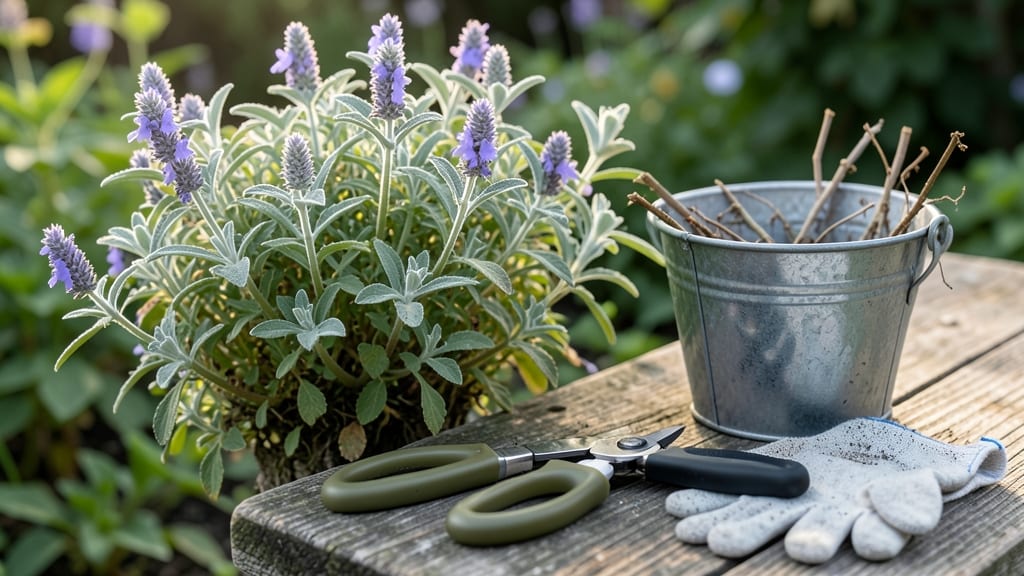
Late-winter pruning turns catmint from a floppy mess into a bushy, blooming powerhouse by summer. ✂️ After years of trial and error, I learned the secret isn't cutting back hard—it's strategic trimming that encourages dense growth without sacrificing flowers.
The right cuts at the right time mean more lavender-blue blooms and fewer leggy stems by June.
You only need two tools: sharp bypass pruners and a pair of gloves (catmint stems are fuzzy and can irritate skin). The timing is critical—wait until after the last frost but before new growth appears.
Cut back one-third of the plant's height, focusing on the oldest stems first. This forces energy into fresh, vigorous shoots that'll bloom all season.
What you end up with is a catmint bush so dense it repels deer, resists powdery mildew, and attracts pollinators like crazy. The flowers stay vibrant longer, and the foliage stays lush even in drought. My neighbors now ask for cuttings every year—proof this method works.
Works for all catmint varieties, whether you're growing in containers, borders, or slopes. The same principles apply to perennial catmint (Nepeta spp.) and even the newer compact varieties. Here's exactly how to do it without killing your plant (learned that the hard way).
The Hidden Triggers Behind Catmint’s Growth Woes
Catmint (Nepeta spp.) is a hardy, low-maintenance perennial—but even the toughest plants need a little help to thrive. If your catmint isn’t blooming as expected or looks leggy and sparse, the issue likely stems from one (or more) of these common biological and environmental triggers.
Understanding why your plant behaves a certain way is the first step to fixing it. Let’s break down the science behind the struggle.
Catmint is a semi-evergreen perennial that relies on balanced growth to produce those iconic lavender-blue blooms.
When stems grow too long without intervention, the plant diverts energy away from flower production and toward vegetative growth—think of it like a student cramming for exams instead of studying for the big test.
- Why it happens: Catmint’s apical dominance (growth hormone control) kicks in when the main stem grows unchecked. The terminal bud (the tip) produces auxin, a hormone that suppresses side shoot development.
Without pruning, these side shoots stay dormant, and the plant focuses on elongating rather than branching out. - Actionable insight: Late-winter pruning removes the dominant apical buds, forcing the plant to send out multiple lateral (side) shoots—each of which can produce flowers.
This is why a hard cutback (cutting back by ⅓ to ½) in late winter or early spring triggers bushier, more abundant blooms.
Catmint is a sun lover, and insufficient light is one of the fastest ways to turn a vibrant bloomer into a floppy, sparse shadow of its former self.
While it can tolerate partial shade, less than 4–6 hours of direct sunlight daily signals the plant to prioritize survival over reproduction.
- Why it happens: Light triggers photoperiodism—the plant’s internal clock that regulates flowering. Short daylight hours (common in shaded spots) reduce florigen, a protein hormone that promotes bloom formation.
Additionally, shade-stressed catmint may produce long, weak stems as it stretches toward any available light (etiolation). - Actionable insight: If your catmint is in partial shade, consider relocating it to a sunnier spot or pruning nearby taller plants to improve light penetration.
Even a few extra hours of morning sun can make a difference in flower production.
Catmint isn’t a heavy feeder, but soil deficiencies or excesses can throw off its growth patterns. Too much nitrogen, for example, encourages leafy growth at the expense of flowers, while poor soil structure can limit root development—both of which weaken the plant’s ability to support blooms.
- Why it happens: - Excess nitrogen (N): Promotes lush foliage but delays or reduces flowering because the plant prioritizes leaf and stem growth.
This is common in freshly amended soil or if you’re using high-nitrogen fertilizers (like lawn fertilizers). - Phosphorus (P) or potassium (K) deficiency: These nutrients are critical for root development and flower formation.
Without enough P, the plant struggles to set buds; without K, it may produce weak stems prone to disease. - Compacted or poor-draining soil: Restricts root growth, limiting the plant’s ability to absorb water and nutrients efficiently.
- Actionable insight:
- Test your soil (a simple DIY kit works) to check for imbalances.
- Avoid high-nitrogen fertilizers—opt for a balanced 5-10-10 or low-nitrogen formula (like 3-4-6) in early spring.
- Amend heavy or clay soil with compost or sand to improve drainage and aeration.
Catmint is a woody-based perennial, meaning its stems can become lignified (woody) over time. Without regular pruning, older stems lose their flexibility and flowering capacity, turning into stiff, unproductive branches.
- Why it happens: As catmint ages, its older stems (especially those over 2 years old) produce fewer flowers and are more susceptible to disease and pest damage.
The plant’s natural senescence (aging process) kicks in, and without rejuvenation pruning, it becomes less vigorous. - Actionable insight: - Rejuvenation pruning (cutting back ⅔ of the plant in late winter) stimulates new growth from the base, replacing old wood with fresh, flowering stems. - Remove dead or diseased stems year-round to prevent energy drain and pest spread.
Catmint is drought-tolerant once established, and overwatering or soggy soil can suffocate its roots, leading to root rot (Phytophthora or Pythium) and stunted growth.
- Why it happens:
- Waterlogged soil cuts off oxygen to roots, triggering anaerobic conditions that produce ethanol, a toxic byproduct for plants.
- Poor drainage (common in clay or compacted soil) prevents excess water from escaping, leading to root suffocation.
- Actionable insight:
- Ensure well-draining soil by mixing in compost or perlite if your native soil is heavy.
- Water deeply but infrequently—catmint prefers dry spells between waterings once established.
- Avoid planting in low-lying areas where water pools after rain.
While catmint is relatively pest-resistant, aphids, spider mites, or fungal infections (like powdery mildew) can sap its energy, leading to reduced flowering and poor growth.
- Why it happens:
- Aphids feed on sap, weakening stems and causing curling leaves—diverting energy away from blooms.
- Powdery mildew (common in humid conditions) coats leaves, blocking sunlight and reducing photosynthesis.
- Root-knot nematodes (microscopic worms) damage roots, limiting nutrient uptake.
- Actionable insight:
- Inspect plants regularly for signs of pests (sticky residue, webbing) or disease (white powder, yellow spots).
- Use neem oil or insecticidal soap for aphids/mites.
- Improve air circulation (prune nearby plants, space catmint properly) to reduce humidity-related fungal issues.
Revitalize Your Catmint with Smart Pruning
If your catmint looks leggy, sparse, or overgrown, it’s time to take action! Pruning catmint properly can transform it from a floppy mess into a lush, blooming powerhouse. Below are practical fixes for common issues, along with prevention tips to keep your plant thriving year-round.
Cause: Neglecting pruning for too long leads to thick, woody stems that reduce flowering and weaken the plant.
Fix: 🔪 Step 1: Cut Back Hard Use clean, sharp pruners or shears to trim back one-third to half of the plant’s height in late winter or early spring. Focus on removing old, woody stems at the base—these won’t regrow well.
🌱 Step 2: Encourage New Growth After cutting, you’ll notice fresh green shoots emerging from the base. These will develop into bushier, more vibrant stems by summer.
💡 Pro Tip: If your catmint is severely woody, consider renewal pruning—cut it back to just a few inches above the ground. It may take a season to recover, but it’ll reward you with vigorous new growth!
Cause: Over-pruning in late summer/fall or not pruning at all can signal the plant to focus on foliage instead of blooms.
Fix: ⏰ Step 1: Time It Right Prune late winter or early spring (just as new growth begins) to encourage robust flowering. Avoid cutting back after mid-summer—this can reduce next year’s blooms.
🌺 Step 2: Lighten Up the Canopy If your catmint is too dense, thin out some of the oldest stems to improve airflow and sunlight penetration. This prevents overcrowding and encourages more flowers.
💡 Pro Tip: Deadhead spent blooms throughout the growing season to redirect energy into new flowers. Pinch back lightly after blooming to promote a second flush of flowers in some varieties.
Cause: Too little light, over-fertilizing with nitrogen, or pruning too late in the season can lead to weak, sprawling stems.
Fix: 🌞 Step 1: Optimize Light & Soil Move your catmint to a sunnier spot (at least 6–8 hours of sunlight daily) and ensure well-draining soil. Amend heavy or clay soil with compost to prevent root stress.
✂️ Step 2: Prune for Structure In late winter, cut back leggy stems to just above a set of healthy leaves or buds. This encourages branching and a fuller shape.
💡 Pro Tip: If your catmint is in a container, rotate it occasionally so all sides get even light exposure. This prevents one-sided growth.
Cause: Poor pruning techniques (like using dirty tools) can introduce pathogens or pests, leading to spots, mildew, or infestations.
Fix: 🧼 Step 1: Sterilize Your Tools Always clean pruners with rubbing alcohol or a bleach solution (1 part bleach to 9 parts water) before and after pruning to prevent disease spread.
🌿 Step 2: Remove Affected Parts If you spot yellow leaves, black spots, or chewed foliage, trim those areas immediately and dispose of them in the trash (not compost). Avoid wetting foliage when watering to reduce fungal risks.
💡 Pro Tip: Apply a neem oil spray (mix 1 tsp neem oil + 1 tsp mild soap per quart of water) if you notice early signs of powdery mildew or aphids.
To keep your catmint healthy and blooming beautifully:
- Prune annually in late winter/early spring—never skip a year!
- Avoid heavy fertilization—catmint thrives in lean, well-draining soil.
- Water at the base and avoid overhead sprinkling to prevent fungal diseases.
- Mulch lightly (1–2 inches) with gravel or organic mulch to retain moisture without suffocating roots.
- Monitor for pests regularly—early action prevents major damage.
With these fixes, your catmint will bounce back stronger, bushier, and more abundant than ever. Happy pruning! 🌿✂️
Frequently asked questions about pruning catmint
When is the absolute best time to prune catmint for maximum blooms?
Late winter to early spring is ideal—just as new growth begins but before buds swell. This timing forces the plant to produce fresh, bushy stems that'll flower abundantly by summer. Avoid pruning after mid-summer, as this can reduce next year's blooms.
How much should I cut back? Can I be too aggressive?
Start with one-third to half of the plant's height, focusing on older, woody stems first. For severely overgrown plants, you can cut back ⅔ of the height in late winter—just leave a few inches above the base. The plant will recover with vigorous new growth!
Should I deadhead catmint flowers during the growing season?
Yes! Deadheading spent blooms throughout summer encourages continuous flowering. Simply pinch off faded flowers just above a set of leaves. For some varieties, a light pinch back after the first flush can even trigger a second round of blooms later in the season.
What if my catmint looks sad after pruning? Is it dying?
Not at all! It's normal for catmint to look bare after winter pruning—this is how it prepares for fresh growth. Within weeks, you'll see new shoots emerging from the base. Keep the soil slightly moist (but not soggy) and give it full sun to encourage recovery.
Can I prune catmint in containers differently than in-ground plants?
Yes! Container-grown catmint benefits from the same late-winter pruning, but with one extra tip: rotate the pot occasionally for even light exposure. This prevents one-sided growth. Also, check drainage—containers dry out faster, so ensure good airflow around the plant to prevent fungal issues.