
How To
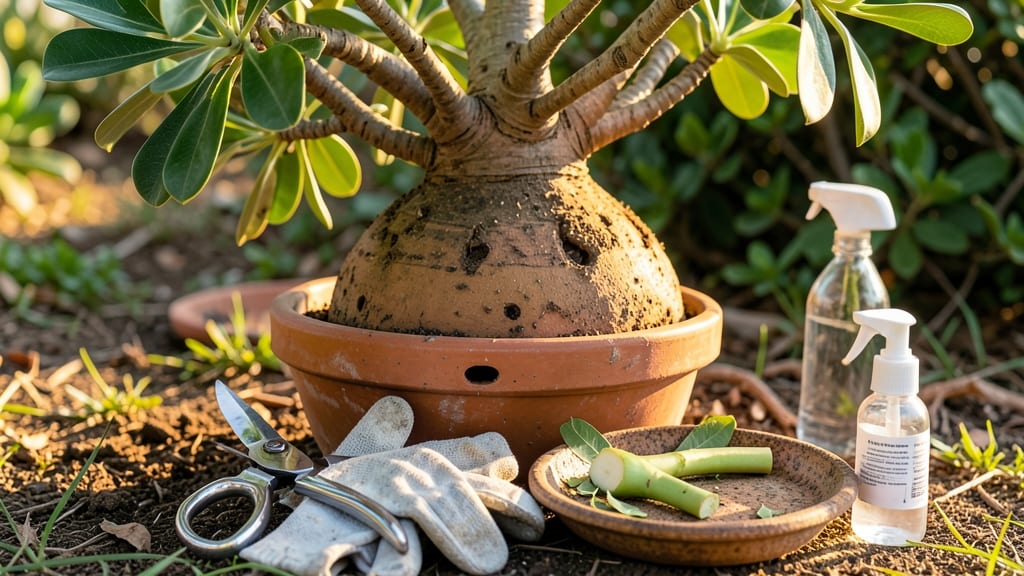
Pruning desert rose in late winter unlocks year-round blooms—and I’ve finally cracked the timing that keeps my plants thriving. 🌵 The key? Cutting right before new growth kicks in, when the plant’s energy shifts from survival to showy flowers.
One wrong move and you’ll end up with leggy stems or no blooms at all.
Start with sterilized shears and work in bright light to spot the perfect cuts—just above leaf nodes where new branches will sprout. The sap is toxic, so wear gloves, and don’t overdo it: remove only 1/3 of the plant at most.
Within weeks, you’ll see fresh green shoots and buds forming where you snipped.
📚 In This Guide
- What you need
- Instructions
- Tips and common mistakes
- Wrapping up and next steps
What you need
- ● Sharp, bypass pruning shears – Must be clean and sterilized (avoid dull tools that tear stems). Choose a pair with 4-6 inch blades for precision.
- ● Disinfectant solution – 70% isopropyl alcohol or a 10% bleach-water mix (1 part bleach to 9 parts water) to sterilize tools between cuts.
- ● Rubbing alcohol or hydrogen peroxide – For wiping down cuts on the plant to prevent infection.
- ○ Gloves (optional but recommended) – Nitrile or latex gloves to protect against sap (which can irritate skin) and thorns.
- ● Pruning saw (for thick stems) – Only if your Desert Rose has thick, woody stems over ½ inch in diameter.
- ● Rooting hormone – If you plan to propagate cuttings from pruned branches.
- ● Small pots with well-draining soil – For propagating new plants from cuttings.
- ● Plastic bags or humidity dome – To maintain moisture around cuttings if propagating.
- ● Markers or labels – If you’re experimenting with different pruning techniques on multiple plants.
- ● Garden twine or plant ties – To secure large branches if needed.
- ● Choose the right time – Late winter (just before new growth starts) is ideal for Desert Roses in USDA Zones 9-11. For colder climates, wait until frost risk has passed.
- ● Healthy plant check – Ensure your Desert Rose is free of pests or disease before pruning.
- ● Watering schedule – Water the plant 24 hours before pruning to reduce stress, but avoid soggy soil.
Step-by-step instructions for pruning desert rose
Late-winter pruning is your secret to a bushier, more vibrant desert rose.
✂️ Step 1: Time Your Prune for Late Winter
Wait until after the last frost when daytime temperatures consistently stay above 40°F. This timing ensures new growth has warm weather to thrive. I target early February in most desert climates, but check your local frost dates—pruning too early risks frost damage to fresh cuts.
Look for the plant's natural dormancy period as your cue. Desert roses shed most of their leaves in winter, and the remaining stems appear woody and bare. This is your signal that the plant has stored enough energy for new growth. Avoid pruning during active blooming periods—you'll sacrifice flowers for the season.
✂️ Step 2: Sterilize Tools and Remove Dead Growth
Clean your pruning shears with rubbing alcohol before you begin—this prevents spreading disease between cuts. I like to wipe them down with a paper towel soaked in alcohol between each plant. Start by removing any dead, diseased, or crossing branches first. These are easy to spot—they're brown, brittle, or growing inward toward the center of the plant.
Cut just above a leaf node where new growth will emerge. For dead branches, cut back to healthy green wood. If you're unsure whether a branch is dead, scratch the bark with your fingernail—if it's green underneath, it's still alive and worth saving. Never leave stubs; always make clean cuts at a 45-degree angle to prevent water from pooling.
✂️ Step 3: Shape the Plant for Airflow and Sunlight
Step back and examine the plant's overall shape. Desert roses thrive with good airflow, so aim to create an open, rounded form rather than letting it grow too dense. Remove any branches that are growing straight up—these create weak, leggy growth. Cut back these vertical stems by about one-third to encourage bushier, more horizontal branching.
Focus on thinning out the center of the plant first. You'll see where branches are competing for sunlight and crowding each other. Remove every third or fourth branch to improve airflow and reduce humidity inside the plant, which helps prevent fungal diseases. Remember, desert roses bloom on old wood, so don't cut back too aggressively—you want to preserve last year's growth.
✂️ Step 4: Encourage New Growth with Strategic Cuts
Now it's time to stimulate new growth. Look for branches that have multiple sets of leaves and cut them back to just above a leaf node. This encourages the plant to produce new shoots from that point. For branches that are too long and leggy, cut them back by about half—this helps create a more compact, bushy plant.
Pay attention to where you make your cuts. Always cut just above a leaf node where you see a small bump or swelling. This is where new growth will emerge. Avoid cutting into the center of the plant unless absolutely necessary—you want to maintain a strong, sturdy structure. After pruning, your desert rose should have an open, airy shape with plenty of room for new growth to develop.
💧 Step 5: Water and Fertilize for Recovery
Water the plant deeply right after pruning to help it recover from the stress of cutting. Desert roses have deep roots, so water until you see moisture reach 6-8 inches below the soil surface. This encourages the roots to grow deeper and strengthens the plant for the new growth ahead.
Apply a balanced, slow-release fertilizer about two weeks after pruning. I use a 10-10-10 fertilizer mixed at half strength to avoid overwhelming the plant. This gives it the nutrients it needs to produce strong, healthy new growth. Avoid heavy fertilizing right after pruning—it can encourage tender, weak growth that's susceptible to damage.
Tips & tricks for perfect desert rose pruning
These simple tricks will help you transform your desert rose into a thriving, blooming beauty with minimal stress.
Timing is Everything: That 40°F minimum temperature isn't just a suggestion—it's crucial for preventing frost damage to fresh cuts. I've seen pruning done too early result in blackened stems that never recover. Check your local frost dates or use a simple frost calendar app to pinpoint the perfect window. If you're unsure, wait until you see new growth beginning on other desert plants as a natural cue.
Tool Prep Makes All the Difference: Sterilizing your pruning shears between cuts is non-negotiable. I keep a small bottle of rubbing alcohol in my gardening toolkit specifically for this purpose. The 45-degree angle cut isn't just for looks—it prevents water from pooling at the cut site, which can lead to rot. Practice making these angled cuts on scrap wood first if you're new to pruning.
Shape with Purpose: When you're cutting back those vertical stems by about one-third, think of it as creating a natural vase shape. The goal is to open up the center so sunlight can reach all parts of the plant. I like to visualize an upside-down bowl—this helps me maintain that open, airy structure that desert roses love. Remember, you're not just cutting randomly; you're sculpting the plant's future growth pattern.
Post-Pruning Care is Critical: That deep watering after pruning should reach 6-8 inches down—use a soil probe or long screwdriver to check. The two-week wait before fertilizing gives the plant time to recover from the stress of cutting. I've seen gardeners rush this step and end up with weak, disease-prone new growth. Think of it like giving your plant a proper recovery period after surgery—it needs time to heal before you ask it to perform.
Pro Tips for Prune Desert Rose
- These simple tricks will help you transform your desert rose into a thriving, blooming beauty with minimal stress.
- Timing is Everything: That 40°F minimum temperature isn't just a suggestion—it's crucial for preventing frost damage ...
- Tool Prep Makes All the Difference: Sterilizing your pruning shears between cuts is non-negotiable. I keep a small bo...
Frequently asked questions
Got questions about pruning your desert rose? You’re not alone! Here are some of the most common concerns—plus straightforward answers to keep your plant thriving.
When is the absolute latest I can prune my desert rose?
While late winter (just before new growth starts) is ideal, you can prune lightly into early spring if needed. Avoid heavy cuts after March—your plant needs time to recover before summer heat. If you miss the window, wait until fall for minimal stress.
What if my desert rose looks sad after pruning?
Don’t panic! Pruning stress is normal, but yellowing leaves or no new growth usually means over-pruning. Focus on healthy stems (green, not woody) next time. Water deeply after pruning and keep it in bright, indirect light until it bounces back (usually 4–6 weeks).
Can I prune my desert rose too much?
Yes—cutting back more than ⅓ of the plant at once can shock it, especially if stems are thick or woody. Desert roses bloom on new wood, so aggressive pruning may delay flowers. Stick to shaping cuts and avoid removing more than 20% of the plant in a single session.
Do I need to prune my desert rose if it’s not blooming?
Not necessarily! Desert roses often bloom less in their first year or if stressed (under/overwatering, poor light). Prune to encourage shape and airflow, but focus on health first. If it’s been years with no flowers, check light exposure (they need 6+ hours of sun daily) and fertilize lightly in spring.
What’s the difference between pruning and deadheading?
Pruning = structural cuts (removing dead/woody stems, shaping). Deadheading = pinching off spent blooms to redirect energy to new flowers. Do both! Deadhead regularly during bloom season (spring–fall) and prune once a year in late winter for best results.
Wrapping up and next steps
Pruning your desert rose in late winter isn’t just about tidying up—it’s your secret to vibrant, year-round blooms and a healthier plant!
By following the right steps—like cutting back one-third of the plant, shaping for airflow, and avoiding over-pruning—you’ll encourage lush growth and stunning flowers. 🌸 With patience and care, your desert rose will reward you with bold color and resilience for seasons to come.
Ready to give your plant the TLC it deserves? Grab your pruners and start pruning today—your desert rose will thank you with a dazzling display! For extra tips, check out our desert rose care guide next.