
Pruning
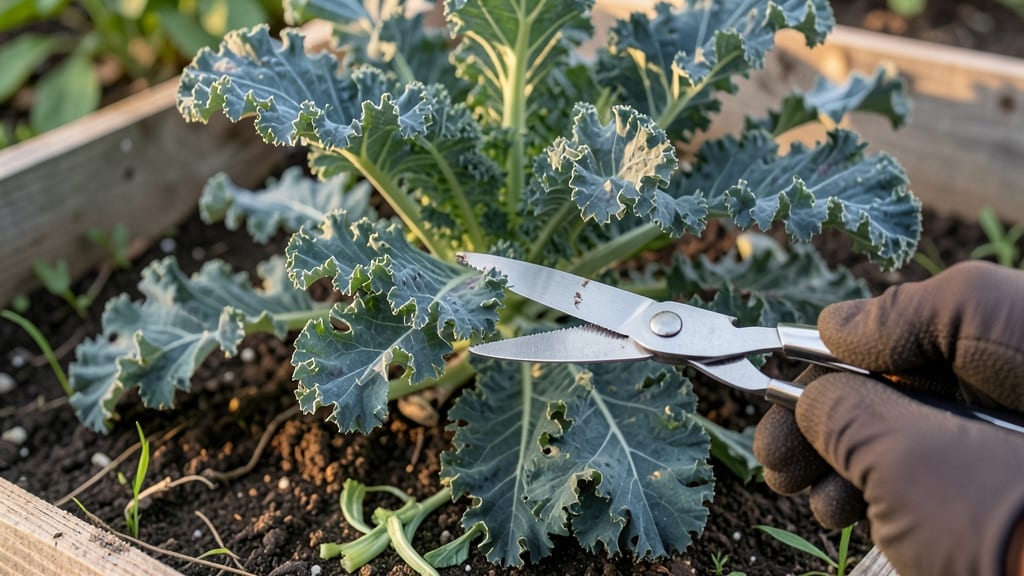
Pruning kale isn’t about shaping—it’s about harvesting smarter to keep your plants producing bold, tender leaves for months. 🌱 I’ve learned the hard way that skipping this step means tougher stems and smaller yields by winter. The secret? Cutting just right to trigger new growth while keeping the plant happy.
You’ll need sharp pruning shears (or clean scissors) and gloves—kale’s spiky stems pack a punch. Start by harvesting outer leaves first, cutting 1-2 inches above the base where new leaves form. This encourages the plant to send energy to the center, creating bushier growth.
Within 2-3 weeks, you’ll see fresh, tender leaves replacing what you’ve cut. The plant stays productive longer, and you avoid the bitter, fibrous leaves that come from overgrown kale. It’s a no-fail way to extend your harvest into late fall—or even winter with protection.
This works for all kale varieties, from curly to lacinato. Just remember: never cut more than 1/3 of the plant at once, or you’ll stress it out. Now grab those shears—your next salad is waiting!
📚 In This Guide
- What you need
- Instructions
- Tips and common mistakes
- Wrapping up and next steps
What you need
- ● Sharp pruning shears: A bypass pruner (4-6 inch blade) for clean cuts—avoid dull tools that crush stems!
- ● Gloves: Heavy-duty gardening gloves (waterproof, if possible) to protect against thorns and dirt.
- ● Disinfectant: Rubbing alcohol (70% isopropyl) or a 10% bleach solution (1 part bleach to 9 parts water) to sterilize tools between cuts.
- ● Bucket or tray: A 5-gallon bucket or shallow tray to collect pruned leaves and stems.
- ● Watering can or hose: For post-pruning hydration—aim for 1 inch of water per week, especially after trimming.
- ● Compost bin or bag: To recycle pruned leaves as nutrient-rich compost (kale scraps are great for compost!).
- ● Knee pad or stool: For comfort if you’re pruning larger plants or working in tight spaces.
- ● Plant marker or label: To track varieties (e.g., "Curly Blue" vs. "Red Russian") if you grow multiple types.
- ● Epsom salt: A handful sprinkled in the soil post-pruning can boost magnesium levels for lush regrowth.
- ● Garden journal: To log pruning dates, weather, and plant responses for future reference.
Step-by-step instructions for pruning kale
Here's how I keep my kale producing harvest after harvest—no guesswork, just proven techniques.
✂️ Step 1: Identify the Right Time to Prune
Prune kale in the early morning when plants are still crisp and dew-covered. This timing reduces stress on the plant and gives it time to recover before afternoon heat. I look for mature outer leaves—those with at least 4-6 inches of stem attached—as these are ready for harvest and pruning.
Never prune after a hard frost or when plants are already stressed from drought. Kale is a cold-hardy crop, but even it needs energy to recover. The best time is spring and fall, when temperatures stay between 50-75°F and growth is active but not frantic.
🌿 Step 2: Use Proper Pruning Technique for Bushier Growth
Cut leaves at a 45-degree angle, about 1 inch above a leaf node (the bump where new leaves emerge). This angle prevents water from pooling on the stem, which can cause rot. I use clean, sharp pruners or scissors—dull blades crush stems and invite disease.
Leave the inner leaves and growing point intact. Kale grows from a central bud, so removing too much at once shocks the plant. Here's the trick: after harvest, you'll see new side shoots emerge from the stem—these are your future leaves. The more you prune correctly, the bushier your plant becomes.
💧 Step 3: Water and Fertilize After Pruning
Give your kale a deep watering right after pruning to help it recover. The roots need moisture to support new growth, especially if you've removed a significant portion of the plant. I water until the top 6 inches of soil feel evenly damp—not soggy, just consistently moist.
Add a balanced organic fertilizer (like 10-10-10) or compost tea to the soil after watering. Kale is a heavy feeder, and pruning removes nutrients stored in the leaves. I mix a handful of compost into the soil around the base, then water again to activate the nutrients. Avoid high-nitrogen fertilizers—they promote leafy growth at the expense of flavor.
☀️ Step 4: Monitor for Regrowth and Repeat
Watch for new growth within 7-10 days. You'll see smaller leaves emerging from the stem—this is your plant's way of telling you it's recovering. If growth is slow, check for pests like aphids or cabbage worms on the undersides of leaves. Treat with neem oil if needed, but prune only when the plant is pest-free.
Repeat the process every 2-3 weeks during the growing season. The key is consistency—prune before the plant puts all its energy into flowering (bolting). If you see a tall, elongated stem with a flower bud at the top, it's too late. Your goal is to keep the plant in a continuous harvest cycle for months.
Tips & tricks for perfect kale pruning
Real talk: Pruning kale isn't just about harvesting—it's about teaching your plants to grow stronger. Here's how I've perfected the process after years of trial and error.
Timing is Everything: The early morning dew isn't just about convenience—it's about plant physiology. That morning crispness means the leaves are fully hydrated, making them easier to cut cleanly at the perfect 45-degree angle. I've found that waiting until after 10 AM in summer can cause the leaves to wilt slightly during cutting, which stresses the plant unnecessarily. Also, that 4-6 inch stem length is crucial: shorter stems mean you're cutting too close to the growing point, which can damage the plant's ability to produce new leaves.
Tool Selection Matters: I can't stress this enough—dull scissors are the enemy of healthy kale. That 1-inch cut above the leaf node requires precision, and a sharp tool makes all the difference. I keep a dedicated pair of pruners just for my kale patch, and I sharpen them every season. The angle isn't just about aesthetics—it creates a natural water runoff path that prevents those pesky fungal infections that can set in after heavy dew nights.
Post-Pruning Recovery Hack: That deep watering isn't just about immediate hydration—it's about giving your plant a chance to establish new root growth. I've noticed that plants watered within 30 minutes of pruning show new side shoots within 5-7 days, while those left until evening can take 10-14 days. The secret is to water until you see moisture emerge from the drainage holes in your pots or feel consistent dampness 6 inches down. This consistent moisture triggers the plant's recovery mechanisms.
Visual Growth Cues: Those smaller leaves emerging within 7-10 days are your plant's way of saying "thank you." I look for three key indicators: first, the new leaves should be at least 2 inches long before you prune again; second, they should have that characteristic kale blue-green color (not yellow or purple); and third, the stem should feel firm when you gently squeeze it. If you're seeing yellowing between veins, that's a sign of nutrient deficiency—time to add that compost tea and give your plant a nutrient boost.
Pro Tips for Prune Kale
- Real talk: Pruning kale isn't just about harvesting—it's about teaching your plants to grow stronger. Here's how I've...
- Timing is Everything: The early morning dew isn't just about convenience—it's about plant physiology. That morning cr...
- Tool Selection Matters: I can't stress this enough—dull scissors are the enemy of healthy kale. That 1-inch cut above...
Frequently asked questions
Got questions about pruning kale? You’re not alone! Here are answers to the most common concerns—so you can keep your plants thriving and your harvests bountiful.
When is the best time of year to prune kale?
Prune kale throughout the growing season, but focus on late summer to early fall for the biggest harvests. In mild climates, you can even prune lightly in winter (if frost-free). Avoid heavy pruning during extreme heat or cold—kale recovers best in cool (50–70°F) conditions.
How much of the plant should I cut off when pruning?
Leave at least 3–4 inches of stem after cutting to encourage regrowth. For mature plants, trim outer leaves first, then work inward. Never remove more than ⅓ of the plant at once—this prevents stress and ensures bushier regrowth. Think of it like giving your kale a "haircut," not a buzz cut!
Can I prune kale if it’s bolted (flowering)?
If your kale bolts, stop pruning immediately—the plant shifts energy to seed production, and leaves become bitter. However, you can harvest the outer leaves before bolting starts (they’re still edible!) and replant for a fresh crop. Bolt-resistant varieties (like ‘Winterbor’) may tolerate light pruning longer.
What should I do if my kale looks sad after pruning?
Wilted or yellowing leaves post-pruning? Check for underwatering, pests (like aphids), or disease. Boost recovery by:
- Watering deeply at the base (avoid wetting leaves).
- Applying a balanced fertilizer (like 10-10-10) if soil is nutrient-poor.
- Removing damaged leaves to prevent rot.
Is pruned kale still as nutritious as unpruned?
Pruned kale retains (and sometimes concentrates) nutrients like vitamin C, calcium, and antioxidants. Younger, regrowth leaves may even have higher vitamin K levels than mature ones. Just ensure you’re harvesting leaves before they get too tough—tender is tastier and more nutrient-dense!
Wrapping up and next steps
Pruning kale is your secret weapon for a bushier, more productive harvest—and it’s easier than you think! 🌱 By following these steps, you’ll encourage healthier growth, extend your harvest season, and even boost flavor.
Whether you’re a seasoned gardener or a beginner, every snip brings you closer to a thriving kale patch.
Ready to take the next step? Try pruning your kale this weekend and watch it flourish! For even more tips, check out our guide on seasonal kale care—your garden (and taste buds) will thank you.