
Pruning
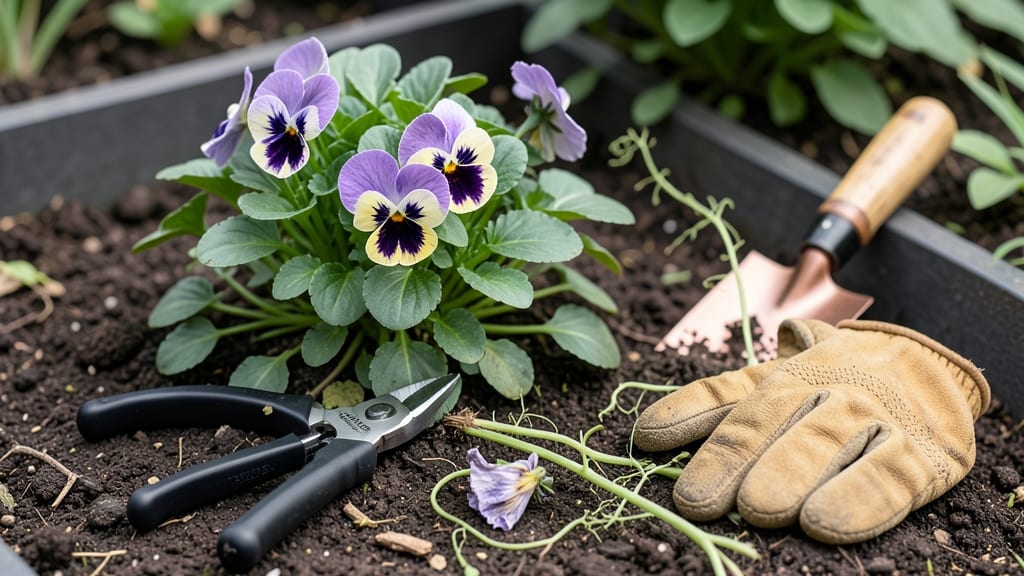
Pruning pansies isn't just about tidying up—it's the secret to nonstop blooms from spring through frost. 🌸 I learned this after my first season of pansies faded early, looking sad and leggy by July.
The trick is simple: remove spent flowers, shape the plants, and give them a mid-season boost to keep them flowering like crazy all season long.
You only need sharp scissors or pruners and about 15 minutes every few weeks. The key is cutting just above the next set of leaves or buds—never into bare stems. This encourages new growth and forces the plant to put energy into fresh blooms instead of seed production.
I've seen pansies go from wilted to vibrant again in just a few days after a good pruning.
By deadheading regularly, you'll extend the blooming season by 4-6 weeks, and the plants stay compact and bushy. The flowers stay brighter, too—no faded petals or brown centers. Plus, you'll prevent the plants from going to seed, which saps their energy and shortens their lifespan.
This works for both garden beds and containers, and the same principles apply whether you're growing pansies in full sun or partial shade. Once you get the rhythm, it becomes second nature—and your pansies will thank you with showstopping color all season.
📚 In This Guide
- What you need
- Instructions
- Tips and common mistakes
- Wrapping up and next steps
What you need
- ● Bypass pruners (sharp, clean, and sterilized with rubbing alcohol or a 10% bleach solution to prevent disease spread). Size: 5-7 inches for precision.
- ● Garden shears or scissors (for delicate stems or small plants; avoid dull tools that crush stems!).
- ● Gloves (nitrile or leather to protect hands from thorns or soil-borne pathogens).
- ● Disinfectant wipes or spray bottle (for cleaning tools between cuts).
- ● Compost bin or bucket (to collect pruned stems for nutrient recycling).
- ● Watering can or hose (with a gentle spray nozzle to hydrate plants post-pruning).
- ● Handheld magnifying glass (to inspect stems for pests/disease before pruning).
- ● Pruning saw (for thick, woody stems—though pansies rarely need this!).
- ● Plant food or fertilizer (balanced 10-10-10 or slow-release granules to boost recovery).
- ● Mulch (straw or shredded leaves) to retain moisture and protect roots after pruning.
Step-by-Step instructions for pruning pansies
Here's the simple, effective method I use to keep pansies blooming nonstop—no fancy tools required.
✂️ Step 1: Identify and Remove Spent Blooms
Start by scanning your pansies for flowers that have faded or turned brown. These are your first targets—spent blooms signal the plant to redirect energy into seed production instead of new flowers. Use clean, sharp pruners or even your fingers to pinch off the entire flower head just above the first set of healthy leaves below it.
I always work in the morning when blooms are fresh. This gives the plant the entire day to recover and focus on producing new buds. If you see any buds that look shriveled or discolored, snip those too—they won’t open properly and just waste plant resources.
✂️ Step 2: Thin Out Overcrowded Foliage
Pansies grow in dense clusters, and when leaves get too crowded, air can’t circulate well—this invites fungal diseases like powdery mildew. Look for stems where leaves are growing too close together or where the center of the plant looks congested. With your pruners, make a clean cut about ½ inch above a healthy leaf node.
This isn’t about removing massive chunks—just opening up the plant so light and air can reach the center. You’ll see new side shoots emerge within a week, filling in any gaps naturally. If you’re pruning four plants, aim to thin about 20-30% of the total foliage per plant.
✂️ Step 3: Cut Back Leggy Stems for Bushier Growth
Leggy stems—those long, bare stems with just a few leaves at the top—are a sign your pansies need a growth reset. These stems won’t produce many flowers and make the plant look ragged. Use your pruners to cut these stems back to within 1-2 inches of the base.
Don’t worry—this isn’t cruel. Pansies are resilient, and cutting back leggy growth encourages the plant to branch out and produce shorter, bushier stems with more blooms. After pruning, you might see a temporary slowdown in flowering, but within 2-3 weeks, you’ll notice fresh new growth and a fuller plant.
💧 Step 4: Fertilize and Water After Pruning
Once you’ve finished pruning, give your pansies a light feeding with a balanced, water-soluble fertilizer (like 10-10-10) diluted to half strength. This helps them recover faster and supports new growth. Water the plants thoroughly at the base—avoid getting water on the leaves to prevent fungal issues.
Keep the soil consistently moist but not soggy for the next 7-10 days. You’ll know you’re doing it right when you see new leaves emerging from the base of the plant and fresh buds forming. This is the plant’s way of saying, “Thanks for the trim—I’m ready to bloom again!”
⏰ Step 5: Schedule Regular Maintenance Pruning
Pansies are heavy bloomers, so they need regular maintenance to keep producing flowers. Plan to prune every 4-6 weeks during the growing season (spring through fall). In winter, you can cut back lightly after heavy rains or snow to keep plants tidy and encourage new growth as temperatures warm.
I like to set a reminder on my phone for every other month—it’s easy to forget, and pansies will keep blooming longer if you stay on top of it. The key is consistency: a little pruning now means fewer deadheads later and a plant that looks vibrant all season long.
Tips & tricks for pruning pansies like a pro
These simple tricks will help you keep your pansies looking their best with minimal effort—and avoid the common mistakes that lead to fewer blooms.
Timing is Everything: I always prune in the morning when the plants are well-hydrated and the blooms are fresh. This gives your pansies the entire day to recover and focus on producing new buds. If you're working with four plants, I recommend spacing out the pruning over two mornings—two plants each day—to avoid overwhelming the plants all at once.
Tool Prep Matters: Before you start, sterilize your pruners with rubbing alcohol to prevent spreading disease between plants. I also like to sharpen my pruners beforehand—dull blades can crush stems and create entry points for infections. For a quick fix, you can even use clean scissors or your fingernails if you're in a pinch, though pruners give you more control.
Visual Cues for Perfect Cuts: When thinning foliage in Step 2, look for where the leaves are growing too close together. The ideal cut is about ½ inch above a healthy leaf node—this is where new growth will emerge. You'll know you're doing it right when you see fresh side shoots appearing within a week. If you're unsure, snap off a small section of a leggy stem and watch how it responds over the next few days.
Seasonal Adjustments: During winter, reduce your pruning frequency to every 8-12 weeks unless you notice heavy rain or snow damage. In summer's heat, focus on removing only the most overcrowded areas to avoid stressing the plants. The key is to maintain just enough airflow to prevent fungal issues while keeping the plants looking tidy.
Pro Tips for Prune Pansies
- These simple tricks will help you keep your pansies looking their best with minimal effort—and avoid the common mistakes that lead to fewer blooms.
- Timing is Everything: I always prune in the morning when the plants are well-hydrated and the blooms are fresh.
- Tool Prep Matters: Before you start, sterilize your pruners with rubbing alcohol to prevent spreading disease between plants.
Frequently asked questions
Got questions about pruning pansies? You’re not alone! Here are answers to the most common concerns—so you can keep your blooms thriving all season long.
When is the best time to prune pansies?
Prune pansies after they bloom (typically spring to early summer) to encourage new growth. Lightly trim faded flowers in the morning when dew is present—this reduces stress on the plant. Avoid heavy pruning in extreme heat or cold, as it can shock the plant.
How much should I cut back pansies?
Remove only the spent blooms (deadheading) or up to one-third of the plant if it’s leggy. Never cut into woody stems—focus on soft growth. Over-pruning can weaken pansies, so err on the side of caution!
Can I prune pansies in winter?
Winter pruning is a no-go for most pansies (hardy varieties like Viola tricolor may handle light trims). Wait until spring when new growth appears. If your pansies are dormant, skip pruning entirely—they’ll rebound on their own.
What if my pansies look sad after pruning?
Wilting or yellowing leaves post-prune? You likely cut too much. Water deeply, move to partial shade, and avoid fertilizing for 2 weeks. If stems turn mushy, fungal infection may be the culprit—remove affected parts and improve airflow.
Are there pansy varieties that don’t need pruning?
Some self-cleaning pansies (like Viola cornuta) drop spent blooms naturally, reducing deadheading needs. However, even these benefit from occasional trims to boost bushiness. Always check your variety’s care tags for specifics!
Wrapping up and next steps
Pruning pansies is your secret weapon for vibrant, long-lasting blooms—whether you're shaping them for spring color or winter charm! 🌸 By removing spent flowers, leggy stems, and overcrowded foliage, you’ll encourage fresh growth and keep your garden thriving. Remember: consistency is key!
Now that you’re armed with the know-how, grab those shears and give your pansies the TLC they deserve. Next up? Try experimenting with deadheading other spring favorites—like violas or snapdragons—to see how pruning transforms their performance! 🌱