
Pruning
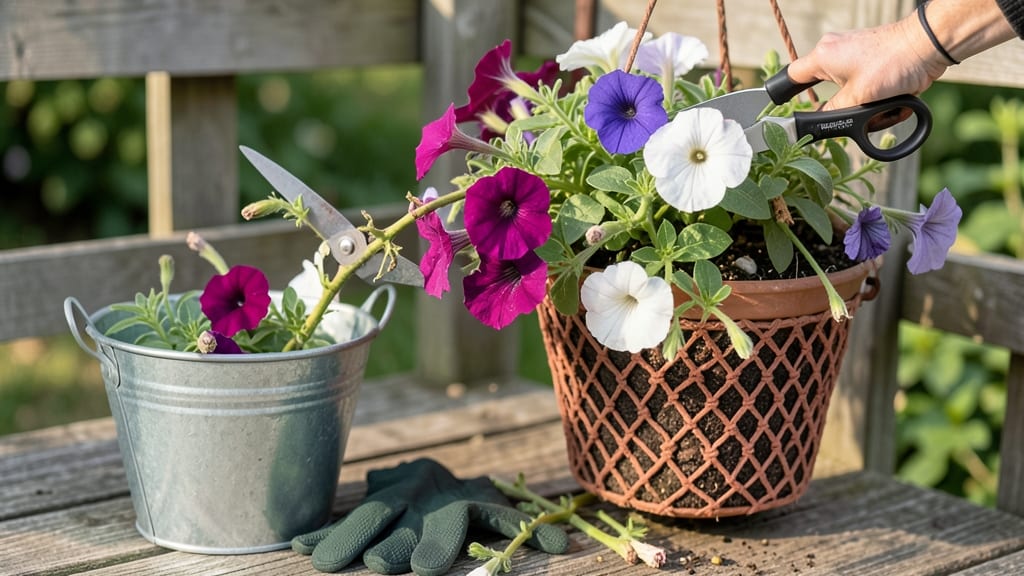
Pruning petunias in hanging baskets turns a single plant into a cascading waterfall of blooms. 🌸 The secret is consistent trimming—just a few minutes every week keeps your petunias flowering nonstop, not just for summer but all season long.
My baskets used to look sparse by August, but now they're packed with fresh blooms until frost. Start with clean, sharp pruners and focus on two key moves: deadheading spent blooms and trimming leggy stems.
Cut just above a set of leaves where new growth appears, and you'll trigger bushier, fuller plants. The goal is to encourage more stems and flowers, not just longer vines.
You'll see the difference in just a few weeks—more blooms, denser foliage, and a shape that spills beautifully over your porch or balcony. The plants stay compact, resist disease better, and keep producing until cold weather stops them. Works for all petunia varieties, from trailing types to bushier mounds.
Here's how to do it right the first time—no guesswork, just results.
📚 In This Guide
- What you need
- Instructions
- Tips and common mistakes
- Wrapping up and next steps
What you need
- ● Clean, sharp bypass pruners – A pair of 5- to 6-inch pruners with a comfortable grip (e.g., Felco or Fiskars) for precise cuts.
- ● Hand pruners or small shears – For trimming smaller stems or deadheading individual flowers (e.g., Corona or Gonicc).
- ● Rubbing alcohol (70% isopropyl) or bleach solution – To sterilize tools before and after pruning (mix 1 part bleach with 9 parts water).
- ○ Gloves (optional but recommended) – Nitrile or cotton gloves to protect hands from thorns or sap.
- ● Water spray bottle – For lightly misting plants after pruning to reduce stress.
- ● Disposable tray or bucket – To collect trimmings and debris for easy cleanup.
- ● Pruning saw (for thick stems) – If your petunias have overly woody or thick growth (rare but possible in mature plants).
- ● Plant food or fertilizer – A balanced liquid fertilizer (10-10-10 or 20-20-20) to give your petunias a post-pruning boost.
- ● Garden kneeler or stool – For comfortable access to hanging baskets at varying heights.
- ● Pruning shears with a built-in magnifier – Helpful for close-up work in small baskets.
Step-by-Step instructions for pruning petunias in hanging baskets
Here's how I keep my petunias blooming like crazy all season—no deadheading stress, just simple cuts and happy plants.
✂️ Step 1: Identify and Remove Dead Flowers Daily
Check your baskets every morning for spent blooms—they're easy to spot when they're wilted or turning brown. Use clean, sharp pruners (or even your fingers) to pinch off the entire flower stem just above the next set of leaves or side bud. I always work my way around the basket so I don't miss any hidden deadheads.
This isn't just about looks—removing dead flowers prevents the plant from wasting energy making seeds. You'll see new buds forming within days of consistent deadheading. The key is to do this regularly; once a week of neglect leads to leggy stems and fewer blooms.
✂️ Step 2: Trim Leggy Stems for Bushier Growth
After a few weeks, you'll notice some stems growing tall and sparse between leaves. These "leggy" stems need attention—use your pruners to cut them back to about 4 inches from the base. This might seem drastic, but trust me, it triggers bushier growth with more flowers.
Make your cuts just above a leaf node where new growth can emerge. I like to do this on cloudy days when the sun isn't beating down—it gives the plant a gentler recovery period. You'll see new side shoots forming within 7-10 days, and those will produce more blooms than the single leggy stem.
✂️ Step 3: Shape the Basket for Even Blooms
Every 4-6 weeks, give your petunias a shaping trim to maintain a full, rounded appearance. Look for stems that are growing outward or downward—these need to be cut back to about half their length. This prevents the basket from looking lopsided and ensures even sunlight exposure for all parts of the plant.
Use your pruners to make clean cuts at a 45-degree angle just above a leaf node. This technique reduces water pooling on the cut and encourages faster healing. After shaping, give your basket a gentle shake to help the branches settle into their new positions.
⏰ Step 4: Adjust Trimming for Seasonal Changes
As summer progresses, your trimming routine will change slightly. When temperatures rise above 85°F, reduce heavy pruning—petunias get stressed by heat and need time to recover. Instead, focus on removing only the most obvious dead flowers and lightly shaping the edges.
In fall, when you notice blooms slowing down, give your petunias one final light trim to remove any remaining dead flowers and leggy stems. This keeps them looking tidy until the first frost. I always fertilize after this final trim to give them a boost for late-season blooms.
💧 Step 5: Post-Pruning Care for Healthy Recovery
After any significant pruning, give your petunias extra attention. Water thoroughly at the base of the basket to help new growth establish. I like to use a watering can with a gentle spray to avoid disturbing the soil too much. Keep the basket in a spot with morning sun and afternoon shade for the first few days after pruning.
Watch for new growth emerging from the leaf nodes—this is your sign that the pruning worked. You might see some temporary slowdown in blooms, but within 2-3 weeks, your petunias will be back to their full, flowering glory. This is when they'll really reward you with that nonstop bloom cycle you're after.
Tips & tricks for pruning petunias in hanging baskets
Here's what nobody tells you about keeping your petunias thriving—these tricks will transform your baskets from sparse to spectacular.
Timing Secret: The daily deadheading in Step 1 works best when done in the morning. This is when petunias are at their peak hydration, making the stems easier to pinch off cleanly. I've found that removing spent blooms before 10 AM gives plants the entire day to recover and focus energy on new buds. If you miss a day, don't panic—just catch up the next morning and watch those buds appear within 3-5 days.
Tool Technique: For Step 2 and Step 3, I recommend using pruners with a 45-degree angle blade—this creates a larger cut surface that heals faster. If you're using fingers, be extra careful with those leggy stems. The 4-inch cut might seem aggressive, but trust the process: those side buds hidden along the stem will burst into action. Pro tip: Wipe your pruners with rubbing alcohol between cuts to prevent spreading any potential plant diseases.
Seasonal Strategy: When temperatures hit that 85°F threshold in Step 4, switch to a "light touch" approach. Instead of heavy shaping, I focus on removing only the most obvious dead flowers and any stems that are clearly struggling. Petunias get heat-stressed easily, so let them focus on survival rather than recovery. In fall, that final light trim is crucial—it removes any remaining energy drains (like dead blooms) so the plant can put all its effort into late-season blooms.
Recovery Hack: After any significant pruning (especially Step 3 shaping), give your baskets a "recovery shake" every few days. Gently grasp the basket and move it side to side—this helps branches settle into their new positions and prevents them from growing lopsided. The 2-3 week recovery time mentioned in Step 5 is when you'll see the real magic happen, so be patient and resist the urge to over-prune during this period.
Pro Tips for Prune Petunias In A Hanging Basket
- Here's what nobody tells you about keeping your petunias thriving—these tricks will transform your baskets from spars...
- Timing Secret: The daily deadheading in Step 1 works best when done in the morning. This is when petunias are at thei...
- Tool Technique: For Step 2 and Step 3, I recommend using pruners with a 45-degree angle blade—this creates a larger c...
Frequently asked questions
Got questions about keeping your petunias thriving in hanging baskets? Here are some of the most common concerns—plus quick, expert-friendly answers to keep those blooms coming!
When is the best time to prune petunias in hanging baskets?
Prune petunias throughout the growing season—spring through fall. Start in early spring to shape the plant, then prune lightly after each flush of blooms (about every 4–6 weeks) to encourage bushier growth. Avoid heavy pruning in late summer if frost is near, as new growth may not survive.
How much should I cut back petunias in a hanging basket?
For general maintenance, trim just above a leaf node (where leaves meet the stem) to promote branching. If deadheading (removing spent blooms), snip stems back to the next set of leaves. For a hard reset (like after winter), cut back by one-third to stimulate fresh, vigorous growth.
Can I prune petunias too much? What are the signs?
Yes! Over-pruning can stress the plant, leading to leggy growth (long, sparse stems) or fewer blooms. Watch for bare stems or yellowing leaves—these signal you’ve gone too far. Aim for 10–25% of the plant’s foliage per pruning session, and avoid cutting into woody stems.
Should I prune petunias in hanging baskets in winter?
In mild climates (USDA Zones 8–11), you can lightly trim dead or damaged growth in winter to keep the basket tidy. However, avoid heavy pruning until spring. In colder zones, let the plant rest—prune only after the last frost when new growth appears.
What if my petunias stop blooming after pruning?
Lack of blooms often means too little sunlight or over-fertilizing with high-nitrogen feed. After pruning, switch to a balanced bloom booster (10-10-10 or 20-20-20) and ensure baskets get 6+ hours of sun daily. Also, check for pests (like spider mites) that may stress the plant.
Still stumped? Drop your question in the comments—we’re happy to help your petunias put on a show!
Wrapping up and next steps
Pruning your petunias in hanging baskets doesn’t have to be intimidating—it’s all about timing, technique, and a little TLC! With regular trims, you’ll unlock nonstop blooms and keep those cascading flowers looking their best year-round. Remember: deadhead, shape, and fertilize—your petunias will thank you with vibrant, lush growth.
Now that you’re armed with the know-how, grab those shears and get pruning! 🌸 Start with a quick check of your baskets this weekend, and soon, you’ll be the envy of the neighborhood with your flourishing, well-maintained petunias. Happy gardening!