
Pruning
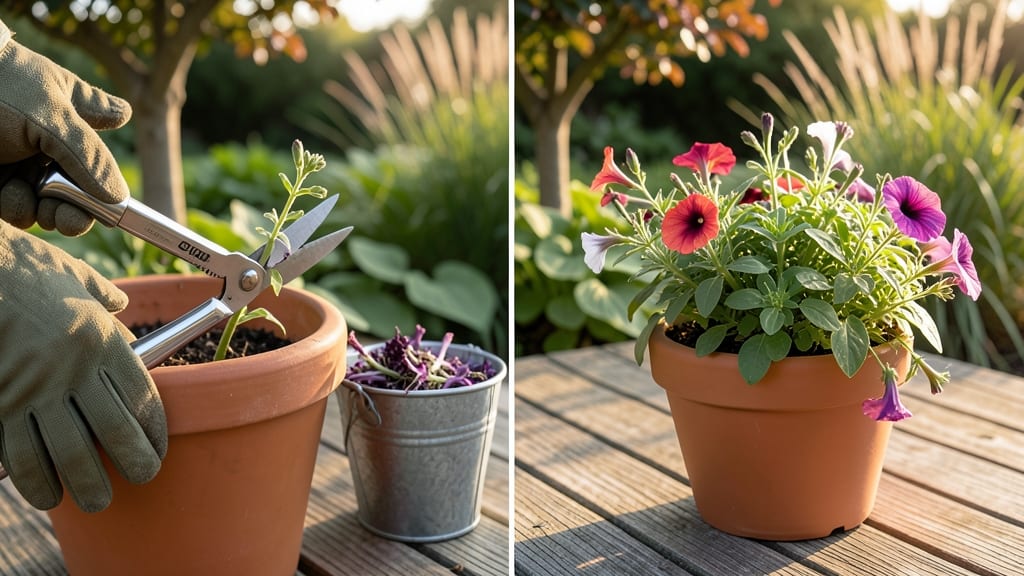
Pruning petunias in pots isn’t just about keeping them tidy—it’s the secret to nonstop blooms and those lush, trailing cascades that make containers pop. 🌸 I’ve learned that skipping this step means fewer flowers and leggy stems that flop over the pot edges by midsummer.
The right cuts encourage bushier growth and force the plant to focus energy on producing more blooms instead of just vines.
You only need three things: sharp pruning shears (dull blades tear stems), a small container of water (to clean the shears between cuts), and a sunny day when the temperature’s above 60°F.
The timing matters too—pinch back early growth when plants are young, then deadhead spent blooms regularly throughout the season. For trailing varieties like ‘Supertunia,’ you’ll want to trim the tips to encourage branching, while bush types benefit from a light trim right above leaf nodes.
After pruning, your petunias will bounce back with new shoots in 7-10 days, and the blooms keep coming thicker than before. The key is consistency: a quick 5-minute trim every week keeps them looking their best.
Just avoid cutting into woody stems (they won’t regrow), and never prune more than one-third of the plant at once—that’s how you end up with sad, bare pots instead of vibrant cascades.
This method works for any potted petunia, from spiller varieties to upright types. Even if you’ve killed petunias before, this approach is forgiving—just follow the simple rules, and you’ll have a showstopping container display all season long. Let’s get those shears ready!
📚 In This Guide
- What you need
- Instructions
- Tips and common mistakes
- Wrapping up and next steps
What you need
- ● Sharp pruning shears or scissors: Choose bypass pruners (not anvil-type) to avoid crushing stems. A pair with a 4- to 6-inch blade works best for precision. Sterilize them with rubbing alcohol before and after use to prevent disease spread. 🔪
- ● Clean, sharp garden knife or razor blade: For trimming very fine stems (like new growth or deadheading). A X-Acto knife or similar works well.
- ○ Gloves (optional but recommended): Lightweight gardening gloves protect your hands from thorns (if your petunias have any) and dirt. Nitrile or cotton gloves are great choices.
- ● Disinfectant (rubbing alcohol or hydrogen peroxide): A small bottle to clean tools between cuts. 70% isopropyl alcohol is ideal.
- ● Containers or bucket: A 5-gallon bucket or two smaller ones to collect trimmings and debris.
- ○ Water spray bottle (optional): A 16-ounce spray bottle with water to mist cuts and encourage faster healing.
- ● Choose the right time: Prune in the morning on a cloudy day or when temperatures are below 85°F (29°C) to reduce stress on the plant. Avoid pruning after heavy rain or in extreme heat. ⏰
- ● Healthy petunias: Only prune plants that are actively growing (new leaves or buds). Skip pruning if your petunias are wilting, diseased, or dormant.
- ● Patience and observation: Spend a few minutes inspecting your petunias before cutting. Look for dead, yellow, or leggy stems—these are your targets!
- ● Plant food or fertilizer: A balanced liquid fertilizer (10-10-10 or 20-20-20) to give your petunias a nutrient boost after pruning. Dilute to half-strength for best results.
- ● Mulch: A light layer of organic mulch (like shredded bark) to retain moisture and protect roots after pruning.
- ● Plant markers or labels: If you have multiple varieties, use small stakes or tags to keep track of what you’ve pruned.
- ● Compost bin: For repurposing trimmings into nutrient-rich compost.
Step-by-Step instructions for pruning petunias in pots
Here's the simple method I use to keep petunias bushy, blooming, and cascading beautifully all season.
✂️ Step 1: Wait for the Right Time to Prune
Prune petunias in pots twice a year—once in early spring after the last frost when new growth appears, and again in mid-summer when blooms slow down. You'll know it's time when you see new leaves unfurling and stems growing about 4-6 inches long. Pruning too early can stunt growth, while waiting too long means you're cutting back spent blooms instead of shaping the plant.
Use clean, sharp pruners or scissors to make cuts just above a leaf node (the bump where leaves grow). This encourages new growth from that spot. Avoid cutting too close to the base—petunias don’t like being sheared too severely. If you’re unsure, err on the side of cutting less rather than more.
🌿 Step 2: Cut Back Leggy or Overgrown Stems
Look for tall, leggy stems that have lost their lower leaves or are growing away from the plant’s center. These are the ones to trim first—they’re not producing blooms and can make the plant look unkempt. Use your pruners to cut these stems back by about one-third, or until you reach a sturdy leaf node with multiple branches.
Don’t throw away the cuttings! You can propagate new petunia plants from healthy stems. Place them in water or directly into fresh potting mix to root. This is a great way to expand your collection without spending money. Just make sure the cuttings have a few leaves and a node where roots can form.
✂️ Step 3: Deadhead Spent Blooms Regularly
After each flush of blooms, you’ll notice wilting or faded flowers hanging on the plant. These are called "spent blooms," and they drain energy from the plant that could be going toward new flowers. Use your fingers or pruners to pinch or snip these off at the base of the flower stem, just above the next set of leaves.
I like to do this every few days during peak blooming season. It might feel like a lot of work, but it keeps your petunias producing longer and more abundantly. If you skip this step, you’ll end up with fewer blooms and more seed pods forming, which is a sign the plant is putting energy into reproduction instead of flowers.
☀️ Step 4: Encourage Bushier Growth and More Blooms
After your initial pruning, step back and observe how your petunia is growing. If it’s still looking leggy or sparse, it might need a little more encouragement. Pinch back the tips of new growth to promote branching. This means snipping off the very top inch or so of the stem, just above a leaf node.
Here’s the thing—petunias respond well to this kind of gentle pruning. Within 2-3 weeks, you’ll see new side shoots forming, which will fill out the plant and produce even more blooms. Water the plant lightly after pruning to help it recover, but don’t overdo it—petunias in pots can be prone to root rot if they sit in soggy soil.
🪴 Step 5: Maintain and Repeat for Continuous Blooms
Once you’ve shaped your petunia, keep up with regular deadheading to maintain those gorgeous blooms. I also like to rotate the pot every few days so the plant grows evenly toward the light. Petunias will naturally trail over the edges of pots, but if one side looks bare, it’s probably leaning toward the sun.
By late summer, your petunias might start slowing down again. Give them a light trim to remove any dead or yellowing leaves, and add a balanced fertilizer to give them a boost for a final flush of blooms. With consistent care, your petunias will keep cascading and flowering until the first frost—sometimes even longer if you bring them indoors to a sunny spot.
Tips & tricks for pruning petunias in pots
Here's what nobody tells you about keeping your petunias looking their absolute best all season long.
Timing is Everything: The twice-a-year schedule in Step 1 works perfectly, but here's the secret: early spring pruning should happen when you see those first fresh leaves pushing through, not when the frost is just gone. I've learned this the hard way—waiting too long means you're cutting back growth that could've been blooming. For mid-summer, watch for when your petunias start producing fewer flowers despite good care—that's your signal to prune again.
Leaf Node Location: When making cuts in Step 1 and Step 4, look for that little bump where leaves grow—this is your leaf node. Cut just above it at a 45-degree angle to prevent water from pooling. I always test my pruners by making a small cut on a scrap piece of paper first to ensure my angle is right. This small detail makes a huge difference in how quickly your petunias recover and start producing new growth.
Pruning Propagation Payoff: Those cuttings you're supposed to save in Step 2? Don't just toss them in water and forget about them. For best results, dip the cut end in rooting hormone (optional but helpful), then place in moist potting mix instead of water. Keep the soil consistently moist and in bright, indirect light. Within 2-3 weeks, you'll have new baby petunias ready to transplant—it's like getting free plants! Just be patient if your kitchen is cool, as rooting takes longer in cooler conditions.
Deadheading Discipline: The "every few days" in Step 3 might sound like a lot, but here's my trick: set a timer on your phone for every 3 days during peak bloom season. When it goes off, spend just 5 minutes deadheading. You'll be amazed at how much more your petunias will bloom. I also keep a small pair of pruners in my gardening tote so I can snip spent blooms while I'm out there anyway—it becomes second nature after a while.
Pro Tips for Prune Petunias In Pots
- Here's what nobody tells you about keeping your petunias looking their absolute best all season long.
- Timing is Everything: The twice-a-year schedule in Step 1 works perfectly, but here's the secret: early spring pruning should happen when you see those first fresh leaves pushing through, not when the frost is just gone.
- Leaf Node Location: When making cuts in Step 1 and Step 4, look for that little bump where leaves grow—this is your leaf node.
Frequently asked questions
Got questions about keeping your potted petunias lush and blooming? Here are some answers to the most common queries—so you can prune like a pro!
When is the best time to prune petunias in pots?
Prune your petunias after they’ve finished blooming for the season (late fall or early winter) to encourage fresh growth. For ongoing maintenance, trim spent blooms weekly during peak bloom time (spring/summer) to promote more flowers. Avoid pruning during frost or extreme heat.
How much should I cut back petunias in pots?
For light pruning, snip off just the faded blooms or leggy stems. For a harder reset, cut back ⅓ of the plant’s height (but leave at least 6–8 inches). Never remove more than ⅓ at once—this can stress the plant. Use clean, sharp shears to avoid damaging stems.
Can I prune petunias in pots after rain or watering?
Wait 2–3 hours after watering or rain to prune—wet foliage can spread disease if cut. If you must prune immediately, use sterilized shears and avoid touching healthy leaves. Always trim in the morning for the best results, as wounds dry faster in sunlight.
What do I do if my petunias look sick after pruning?
If leaves turn yellow, wilt, or develop spots, it could signal over-pruning, disease, or pests. Check for aphids or powdery mildew. Fix it: Reduce pruning, water at the base (not overhead), and apply neem oil if needed. If the plant is severely stressed, trim only the damaged parts and hold off on heavy cuts.
Can I prune petunias too much?
Yes! Over-pruning (cutting more than ⅓ of the plant at once) can stunt growth or prevent blooming. Petunias are fast growers, so focus on light, regular trims rather than drastic cuts. If you’ve already overdone it, let the plant recover with fertilizer and extra water.
Wrapping up and next steps
Pruning your potted petunias is a simple yet powerful way to boost blooms, encourage trailing cascades, and keep your plants thriving! 🌸 With the right tools, timing, and technique, you’ll enjoy a lush, vibrant display all season long.
Now that you’re equipped with the know-how, roll up your sleeves and give your petunias the TLC they deserve—your future blooms will thank you!
Ready for the next step? Try experimenting with deadheading spent flowers weekly to see even more dramatic results. Happy pruning! 🌿✂️