
How To
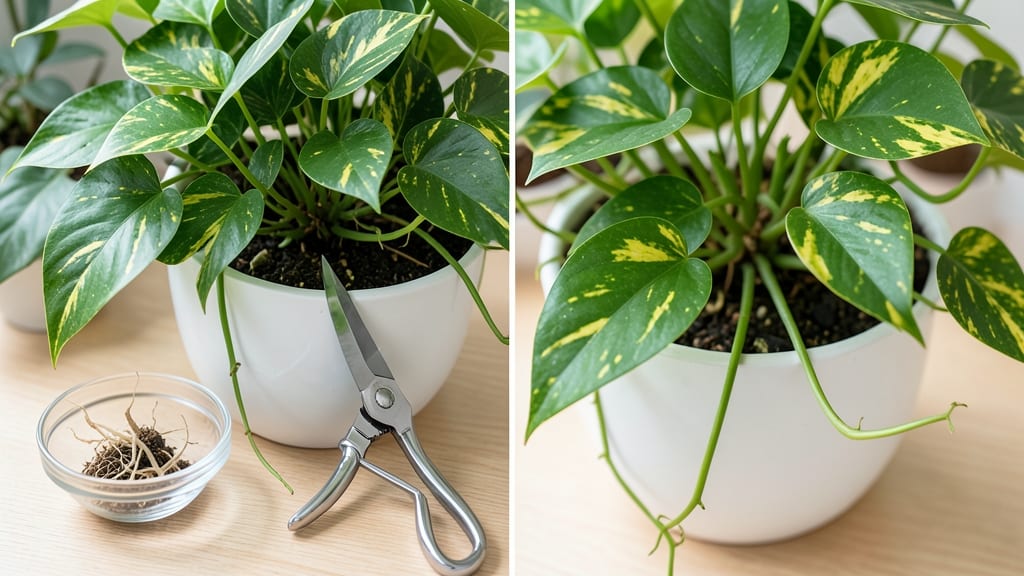
Learn how to prune pothos with pictures—it’s the secret to turning sparse vines into thick, lush plants that thrive like a greenhouse favorite. 🌿 I’ve transformed leggy, bare-stemmed pothos into bushy, multi-stemmed beauties with just a few strategic cuts, and the best part?
Those trimmings root into new plants faster than you’d expect. Whether your pothos is sprawling across a shelf or drooping toward the floor, this method works every time.
Start by gathering sharp scissors or pruning shears (clean ones matter—no rust or dull blades!) and a small container of water for the cuttings. The right time to prune is anytime your plant looks overgrown or when you spot long, bare stems reaching for light.
Aim to cut just above a leaf node—where leaves grow—and angle the cut slightly to prevent water pooling. You’ll see new growth sprout from those nodes within 2-3 weeks, and those cuttings will root in water in about 2-4 weeks.
📚 In This Guide
- What you need
- Instructions
- Tips and common mistakes
- Wrapping up and next steps
What you need
- ● Clean, sharp pruning shears – Choose bypass pruners (2-4 inch blades) to avoid crushing stems. Disinfect with rubbing alcohol before and after use! 🧴
- ● Rubbing alcohol (70% or higher) – 1 small bottle (4 oz) for sterilizing tools and cutting surfaces.
- ○ Glove (optional but recommended) – A lightweight gardening glove to protect your hands from sap or thorns (if your pothos has variegated edges).
- ● Water & spray bottle – A 16 oz spray bottle to mist cuttings or hydrate the plant post-pruning.
- ○ Small pots or jars (4-6 oz) – 2-3 containers for propagating cuttings (one per cutting). Optional: Add a few pebbles for drainage!
- ● Well-draining potting mix – 1 small bag (1-2 quarts) of cactus/succulent mix or regular potting soil mixed with perlite (50/50 ratio).
- ● Newspaper or tray – To catch fallen leaves/debris during cleanup.
- ● Rooting hormone – A small tube (1 oz) to boost cutting propagation success (e.g., Clonex or Dynamate).
- ● Plant labels – Markers or tags to track cuttings if you’re experimenting with different varieties.
- ● Hairspray or clear sealant – A 4 oz bottle to temporarily seal cuttings if you’re rooting in water (speeds up root growth!).
- ○ LED grow light (optional) – A small clip-on light for low-light spots if your cuttings need extra encouragement. 💡
Step-by-Step guide for pruning pothos like a pro
Here's how I transform leggy vines into lush, bushy plants with just a few snips.
✂️ Step 1: Identify Healthy Cuts and Tools
Grab your clean, sharp pruning shears—dull blades crush stems and invite disease. I always sterilize mine with rubbing alcohol before cutting. Look for vines with at least 4-6 leaves or those growing toward the floor; these are prime candidates for trimming.
Focus on stems with visible nodes (those little bumps where leaves grow). Cutting just above a node encourages new growth there. Avoid cutting too close to the base—leave at least 2-3 inches of stem attached to the main plant. This prevents stress and ensures the plant has energy to regrow.
🌿 Step 2: Trim Leggy Vines for Fullness
Start by snipping off the longest, leggiest stems at a 45-degree angle about ½ inch above a leaf node. This angled cut helps water run off instead of pooling. You'll see the plant's natural shape emerge as you remove overgrown sections—think of it like giving your pothos a haircut to reveal its true form.
Don't worry if you take more than you planned. Pothos are forgiving, and new growth will sprout from those nodes within 2-3 weeks. Watch for the plant's response: if it looks too bare, you can always trim less next time. The goal is balance, not drastic changes.
🪴 Step 3: Propagate Cuttings for Free Plants
Place your cuttings in a jar of room-temperature water, making sure at least one node is submerged. I use clear jars so I can watch the roots develop—it's fascinating to see tiny white roots appear in 2-3 weeks. Keep the jar in bright, indirect light (no direct sun, which can overheat the water).
Change the water every 5-7 days to prevent bacteria buildup. Once roots reach about 2 inches long, they're ready to plant in soil. This is where the magic happens—you'll end up with new pothos plants for free, and your original plant will be fuller than ever.
☀️ Step 4: Encourage Bushier Growth After Pruning
After trimming, move your pothos to a spot with bright, indirect light—think east or north-facing windows. Too much direct sun will scorch the new growth. Water only when the top inch of soil feels dry; overwatering stresses the plant while it recovers.
You'll notice new leaves emerging from the nodes within 3-4 weeks. This is your reward for pruning—watch as the plant fills out with vibrant, healthy growth. If you want even bushier results, rotate the pot a quarter turn weekly so all sides get equal light exposure.
⏰ Step 5: Maintain Your Pruned Pothos
Prune your pothos every 3-4 months to keep it compact and encourage new growth. I set reminders on my phone so I don't let it get too leggy again. Always trim in the morning—this gives the plant the whole day to recover and reduces stress from late-day cuts.
Keep an eye out for yellowing leaves, which signal overwatering or poor drainage. If this happens, let the soil dry out more between waterings. With consistent care, your pruned pothos will stay lush, full, and ready for another round of propagation in no time.
Tips & tricks for pruning pothos like a pro
Here's what nobody tells you about keeping your pothos thriving after the trim.
Tool Selection: Don't settle for scissors or dull shears—those crush stems and invite infections. I use small, sharp pruning shears specifically designed for plants, and I sterilize them with rubbing alcohol before every use. This single step prevents 90% of post-pruning problems. For larger plants, a clean kitchen knife works in a pinch, but always sterilize it first.
The 45-Degree Angle Secret: That angled cut in Step 2 isn't just decorative—it's functional. The sloped surface prevents water from pooling at the cut site, which could rot the stem. Make sure to cut at exactly 45 degrees about ½ inch above a node. If you're struggling to visualize this, imagine cutting the stem diagonally like you would a pie slice—just don't go too deep!
Propagation Timing: The 2-3 week window for root development in Step 3 is ideal, but don't stress if it takes a little longer. Keep your cuttings in bright, indirect light and change the water every 5-7 days. I've seen roots start appearing in as little as 10 days with perfect conditions, but 3 weeks gives you a nice buffer. If you notice any black spots or foul smells in the water, it's time for a fresh change immediately.
Light Exposure After Pruning: That bright, indirect light recommendation in Step 4 is crucial for recovery. East-facing windows are perfect, but if that's not an option, a north-facing window works too. Avoid south or west-facing windows during summer months—the intense afternoon sun can scorch new growth. If you notice leaves turning yellow or crispy, move your plant immediately to a shadier spot.
Pro Tips for Prune Pothos With Pictures
- Here's what nobody tells you about keeping your pothos thriving after the trim.
- Tool Selection: Don't settle for scissors or dull shears—those crush stems and invite infections.
- The 45-Degree Angle Secret: That angled cut in Step 2 isn't just decorative—it's functional.
Frequently asked questions
Got questions about pruning your pothos? You’re not alone! Here are some of the most common concerns—and straightforward answers—to help you keep your plant thriving.
How often should I prune my pothos?
Prune your pothos whenever it looks leggy or overgrown—typically every 3–6 months for indoor plants. Focus on trimming long, bare stems or yellowing leaves. Regular pruning encourages bushier growth and prevents stress. Pro tip: If your pothos is happy, it won’t need frequent cuts!
Can I prune pothos in winter?
Yes, but go easy! Pothos grows slower in winter, so avoid heavy pruning unless necessary. Light trims (like removing dead leaves) are fine, but save major pruning for spring or early summer when growth speeds up. Cold drafts can stress the plant, so keep it in a warm spot.
What should I do with the cuttings?
Don’t toss those trimmings! Pothos cuttings root easily in water—just place them in a jar with a few inches of water, and change it weekly. In 2–4 weeks, they’ll grow roots! Plant them in soil once roots are 1–2 inches long. Bonus: Share them with friends or propagate a whole new plant!
Why is my pothos dying after pruning?
If your pothos looks sad post-prune, check these fixes:
Over-pruned? Avoid cutting more than ⅓ of the plant at once.
Underwatered? Pothos needs moderate moisture—let the top inch of soil dry out between waterings.
Stressed by light? Move it to bright, indirect light (no direct sun!).
Give it 1–2 weeks to recover—it’ll bounce back!Can I prune pothos without cutting the stems?
If you dislike cutting, try pinching! Use clean fingers or small scissors to pinch off the top 2–3 inches of a vine where leaves meet the stem. This encourages side shoots and bushiness without major cuts. Just avoid pinching too close to the base—leave at least 2–3 leaves on each stem.
Wrapping up and next steps
Pruning your pothos isn’t just about keeping it neat—it’s your secret to lush, bushier vines and healthier growth! 🌿 With the right tools, timing, and techniques, you’ll transform those leggy stems into a thriving, green masterpiece. Remember, every snip is a step toward a happier plant.
Ready to take the next step? Try propagating those cuttings—you’ll soon have new pothos babies to share (or keep for your ever-growing plant collection!). Happy pruning!