
Pruning
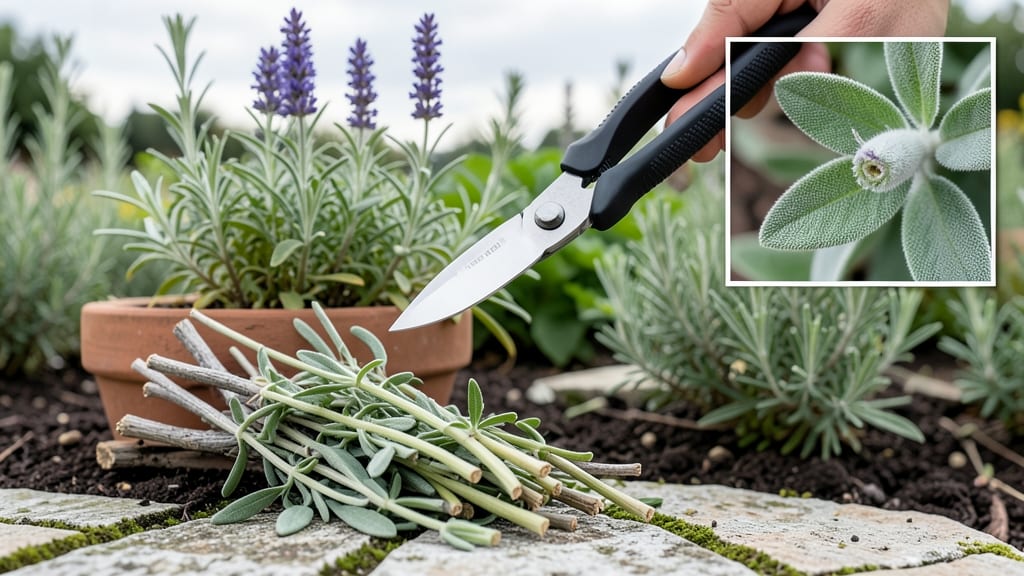
Pruning sage herb isn't just about shaping—it's about unlocking thicker growth and longer harvests all season long. 🌿 I learned the hard way that cutting at the wrong time or in the wrong spots turns lush plants into leggy sticks.
The key is timing: prune after flowering or in early spring, when new growth is about to burst. You only need sharp pruners and a clear morning to work. Snip just above leaf nodes where new shoots will emerge, and avoid cutting into woody stems—those won't regrow.
Even a few strategic cuts can double your plant's bushiness within weeks, and those trimmings? Perfect for culinary use or propagation. The payoff is real: plants stay compact, produce more leaves, and resist pests better. I've gone from struggling with sparse sage to harvesting enough for cooking all winter.
The secret is patience—never take more than one-third of the plant at once. Works for both potted and in-ground sage, and the same method applies to other woody herbs like rosemary and thyme. Let's get those stems snipping!
📚 In This Guide
- What you need
- Instructions
- Tips and common mistakes
- Wrapping up and next steps
What you need
- ● Sharp pruning shears: A bypass pruner (for clean cuts) or anvil pruner (for thicker stems). Look for stainless steel blades (rust-resistant) with a 4- to 6-inch blade for precision.
- ● Garden gloves: A pair of cut-resistant, breathable gloves (e.g., nitrile-coated or leather) to protect your hands from thorns and sap.
- ● Disinfectant (70% isopropyl alcohol or bleach solution): 1 part bleach to 9 parts water—sterilize tools before and after pruning to prevent disease.
- ● Sharpie or permanent marker: For labeling pruned cuttings if you plan to propagate.
- ● Hand pruners (for small stems): A small, ergonomic pair (e.g., Felco F-2) for delicate trimming.
- ● Pruning saw: Only if your sage has thick, woody stems (rare for most varieties).
- ● Compost bin or bucket: To collect clippings for mulch or compost.
- ○ Rooting hormone: If propagating cuttings (optional but boosts success rates).
- ● Hose or watering can: To clean tools and hydrate the plant post-pruning.
- ● Check the weather forecast: Prune on a dry, overcast day or early morning to avoid stressing the plant.
- ● Know your sage’s growth stage: Young plants need light pruning; mature plants can handle harder cuts.
- ● Identify dead, diseased, or pest-infested branches before starting.
Step-by-Step instructions for pruning sage herb
Here’s how I keep my sage lush and productive—no guesswork, just proven techniques.
✂️ Step 1: Prune for Shape in Early Spring
Wait until new growth appears in early spring (usually March or April, depending on your climate). Sage grows best when pruned after it’s actively pushing new leaves. Use clean, sharp pruning shears to cut just above a set of leaves where new growth will emerge—this encourages bushiness.
I like to trim back one-third of the plant’s height to promote fuller growth. Avoid cutting into old, woody stems—focus on the green, flexible new growth. If your sage looks leggy, cut back the longest stems first to restore balance.
✂️ Step 2: Harvest Leaves Regularly for Flavor and Growth
Throughout the growing season, harvest leaves as needed—this isn’t just pruning, but it keeps the plant productive. Pinch off individual leaves from the tips of stems, leaving at least half the leaf attached to avoid stressing the plant. You’ll notice the plant fills out more densely when you remove spent growth.
Never take more than one-third of the plant’s leaves at a time. Over-harvesting weakens sage and can lead to stunted growth. I harvest in the morning when oils are most concentrated for the best flavor.
✂️ Step 3: Light Pruning After Harvesting
After a heavy harvest, give your sage a light trim to encourage fresh growth. Focus on removing any yellowed or damaged leaves—these can attract pests or disease. Cut just above a healthy leaf node (the point where leaves grow out) to guide new growth in the right direction.
If your sage is growing in a pot, prune the bottom leaves to improve airflow and prevent soil-borne issues. This also helps the plant focus energy on new top growth rather than supporting old, lower stems.
✂️ Step 4: Late-Summer Cleanup for Winter Prep
In late summer (August or September), do a final light pruning to remove any dead, diseased, or overcrowded stems. This prepares the plant for winter dormancy and keeps it tidy. Avoid heavy pruning now—you want the plant to harden off before cold weather.
Trim back any long, leggy growth that’s lost its compact shape. Sage can handle a light haircut this time of year, but don’t cut into old wood—this can weaken the plant before winter. Mulch around the base with 2-3 inches of organic mulch to protect roots.
⏰ Step 5: Winter Dormancy and Minimal Pruning
During winter (December-February), sage goes dormant. Avoid pruning entirely unless you see dead or damaged growth. If you live in a cold climate, protect potted sage by moving it to a sheltered spot or wrapping the pot in burlap to insulate roots.
In early spring, when you see new buds forming, that’s your cue to start pruning again. Resist the urge to prune in late winter—sage is vulnerable to cold damage when it’s not actively growing.
Tips & tricks for pruning sage herb
These little adjustments make all the difference between a struggling herb and one that thrives year after year.
Timing is Everything: The early spring pruning in Step 1 is your golden window—wait until you see those first fresh green leaves pushing through. I’ve learned the hard way that pruning too early can shock the plant, while waiting too long means you’re cutting into last year’s growth. Look for those new shoots as your cue, and you’ll get that perfect bushy shape every time.
Harvesting Technique: When harvesting in Step 2, I always pinch leaves from the tips rather than cutting stems. This encourages the plant to branch out and fill in more densely. And remember, morning harvests give you the most potent flavor—those essential oils are strongest when the sun’s just starting to warm the leaves.
Seasonal Pruning Strategy: The late-summer cleanup in Step 4 is about preparation, not drastic changes. Focus on removing only the dead or overcrowded stems—think of it as tidying up before winter’s big sleep. That 2-3 inches of mulch around the base? It’s not just decoration; it’s insulation that keeps roots happy through cold months.
Winter Protection: Don’t skip the winter care in Step 5, especially if you’re in a cold climate. I’ve seen potted sage freeze solid when left out in freezing temps. That burlap wrapping might look makeshift, but it works—it’s like putting a cozy blanket around your plant’s roots. And resist the urge to prune in winter—sage is dormant for a reason.
Pro Tips for Prune Sage Herb
- These little adjustments make all the difference between a struggling herb and one that thrives year after year.
- Timing is Everything: The early spring pruning in Step 1 is your golden window—wait until you see those first fresh green leaves pushing through.
- Harvesting Technique: When harvesting in Step 2, I always pinch leaves from the tips rather than cutting stems.
Frequently asked questions
Got questions about pruning sage like a pro? Here are some of the most common ones—and their answers—to help you keep your herb thriving year-round!
When is the best time to prune sage?
The ideal time to prune sage is in early spring (just as new growth begins) or after it flowers in late summer/fall. Avoid heavy pruning in winter, as the plant is dormant. Light trims to shape or remove dead wood can happen anytime, but major pruning should wait for active growth periods.
Can I prune sage in winter?
Pruning sage in winter is generally not recommended unless you’re removing dead or diseased branches. The plant is dormant, and aggressive cuts can stress it or invite pests. If you must prune, stick to minimal shaping—wait for spring to encourage robust new growth.
How much should I cut back sage at once?
Aim to remove no more than 1/3 of the plant’s foliage in a single session. For mature sage, prune back to healthy, woody stems (about 6–12 inches from the base) to encourage bushiness. Over-pruning can weaken the plant or reduce next year’s harvest. Think “less is more” for long-term health!
What if my sage looks leggy or woody after pruning?
Leggy or woody sage often means it needs more frequent light trims throughout the growing season. Pinch back tips in spring/summer to encourage branching. If the center is bare, prune just above a leaf node to redirect growth outward. Over time, consistent pruning will restore a fuller shape.
Can I use sage cuttings for propagation?
After pruning, use healthy cuttings (4–6 inches long) to propagate new plants. Dip the ends in rooting hormone (optional), plant in well-draining soil, and keep moist until roots form (4–6 weeks). Sage is easy to grow from cuttings—just avoid overwatering!
What do I do if sage turns yellow or dies back after pruning?
Yellowing or die-back can signal over-pruning, disease, or root issues. Check for pests (like spider mites) or fungal spots. If the plant is otherwise healthy, it may just need time to recover. Reduce future cuts, water moderately, and fertilize lightly in spring. If roots are rotten, repot in fresh, dry soil.
Wrapping up and next steps
Pruning sage isn’t just about keeping your plant tidy—it’s the secret to unlocking lush, flavorful growth year-round! 🌿 By following the right timing, tools, and techniques, you’ll encourage bushier foliage, stronger stems, and even more aromatic leaves for your cooking.
Remember, consistency is key, whether you’re shaping young plants or reviving mature ones.
Now that you’re armed with the know-how, roll up your sleeves and give your sage a little TLC.
Grab those shears, step outside, and watch your herb thrive—your future meals (and your green thumb) will thank you! Ready to dive deeper? Check out our guide to harvesting sage for maximum flavor and yield.