
How To
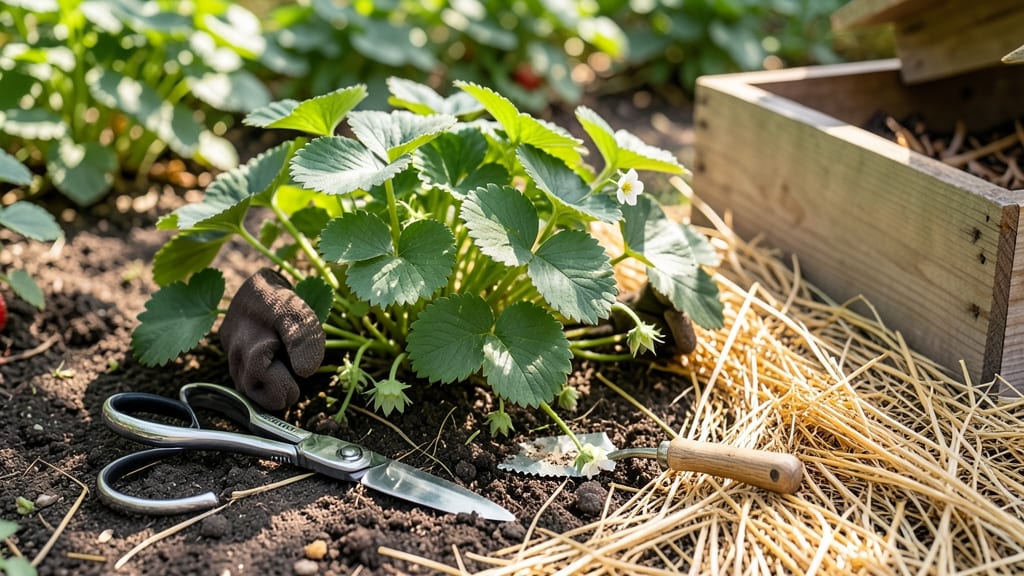
Pruning strawberries isn't just about cutting—it's about unlocking bigger, sweeter harvests all season long. 🌱 I learned the hard way that skipping this step means fewer berries and more crowded, disease-prone plants. The right cuts at the right time transform your patch from scrappy to showstopping.
Start by removing old fruit after harvest and dead leaves to prevent rot, then trim runners in summer to focus energy on berries. In late fall, cut back yellowed foliage to prep for winter.
Just 30 minutes of pruning every few weeks keeps plants healthy, boosts air flow, and cuts down on pests—so you spend less time fighting problems and more time enjoying fresh strawberries.
📚 In This Guide
- What you need
- Instructions
- Tips and common mistakes
- Wrapping up and next steps
What you need
- ● Pruning shears or sharp bypass pruners – Opt for clean, sterilized tools with sharp blades (4-6 inches) to avoid crushing stems or spreading disease. (Avoid dull scissors—they tear instead of cut!)
- ○ Gloves (optional but recommended) – Wear gardening gloves to protect your hands from thorns and dirt. (Look for breathable, durable fabric like nitrile-coated cotton.)
- ● Disinfectant (70% isopropyl alcohol or bleach solution) – Clean tools before and after pruning to prevent fungal/bacterial spread. (Mix 1 part bleach to 9 parts water for a DIY solution.)
- ○ Garden twine or plant ties (optional) – Useful for supporting heavy runners or training vines if your strawberries sprawl.
- ● Know your strawberry type – June-bearing, everbearing, or day-neutral plants have different pruning needs. (Check your plant tags or research your variety!)
- ● Dry, sunny day – Prune when plants are not wet (disease risk!) and soil is workable (not soggy).
- ● Compost or mulch – Have a bucket handy to collect pruned leaves/runners for composting. (Avoid piling mulch directly on crowns—keep it 2-3 inches away.)
- ● Watering can or hose – Keep plants hydrated before/after pruning to reduce stress. (Light watering 1-2 days prior helps too!)
Step-by-Step guide for pruning strawberries
Here's the precise method I use to keep my strawberry plants productive year after year.
✂️ Step 1: Identify and Remove Old Fruit-Bearing Stems
Strawberries produce fruit on first-year flower stems (called primocanes) that appear in summer. These stems die back after fruiting. In early spring, before new growth starts, cut these old stems down to the ground with clean, sharp pruners. You'll recognize them by their brown, woody appearance and lack of green leaves.
I like to prune on a dry morning when the plants aren't wet—this prevents spreading disease through open wounds. Remove these stems completely; they won't produce fruit again and compete with new growth for energy. This step ensures your plant focuses energy on developing strong second-year flower stems (called floricanes) for next year's harvest.
🌱 Step 2: Thin Crowded Crowns for Air Circulation
After removing old stems, examine the plant's crown (the base where leaves and stems emerge). Strawberries naturally spread via runners, creating dense clusters. In late spring, when new growth is about 2-3 inches tall, thin the crown to leave 4-6 of the strongest, healthiest stems per plant.
Use your fingers or pruners to gently separate and remove excess stems at the base. You'll know you've done enough when you can see light and air moving through the plant's center. This prevents fungal diseases like gray mold that thrive in crowded, humid conditions. Real talk: I used to skip this, and my plants always struggled with rot—don't make that mistake.
☀️ Step 3: Manage Runners Strategically
Strawberry runners (long stems with baby plants at the tips) appear in late spring to summer. For established plants, remove 80% of runners by pinching them off at the base. Leave only 1-2 runners per plant if you want to propagate new plants, or none if you're prioritizing fruit production.
Here's the thing—if you leave too many runners, your main plant becomes weak and produces fewer berries. I mark my calendar for June 15th (adjust for your climate) to do this annually. For the runners you keep, let them root and develop their own crowns before separating them in early fall.
⏰ Step 4: Summer Maintenance for Ongoing Health
Throughout the growing season, remove any yellow or diseased leaves immediately with pruners dipped in rubbing alcohol. Also, trim back any flower clusters that appear on the current year's growth (primocanes) if you're not harvesting from them. This redirects energy to next year's fruit production.
I do this every 2-3 weeks during peak growing months. You'll notice new leaves emerging from the center of the plant after each pruning—that's your signal the plant is responding well. This summer maintenance keeps your strawberries vigorous and prevents overcrowding that leads to smaller berries.
✂️ Step 5: Fall Cleanup for Winter Preparation
In late fall, after the first frost, remove all remaining leaves and stems that show signs of disease. Cut back any remaining healthy foliage by half its height to reduce winter damage. This protects the crown from freezing and gives the plant a fresh start in spring.
Spread a 2-3 inch layer of mulch around the plants (but not touching the crown) to insulate roots. I use straw because it breaks down slowly and adds organic matter. This final pruning step ensures your plants survive winter and rebound strongly in spring—trust me, your next year's harvest will thank you.
Tips & tricks for pruning strawberries like a pro
These game-changing strategies will transform your strawberry plants from struggling survivors to thriving powerhouses.
The Timing Secret: Early spring is your golden window for Step 1—those old primocanes must come out before new growth begins. I've learned the hard way that waiting even a week can mean lost energy as the plant diverts resources to already-dead stems. For Step 5, wait until after your first frost to do your fall cleanup; this lets the plant store nutrients for next year's growth. The difference between a mediocre harvest and a jaw-dropping one often comes down to these precise timing cues.
Tool Upgrade: Never use dull pruners again! Clean, sharp pruners make all the difference in Step 1 and Step 4. I dip my pruners in rubbing alcohol between cuts when dealing with diseased leaves (Step 4), and I keep a small bottle nearby for quick sterilization. For Step 3, I find finger-pricking runners at their base works better than pruners—it's more precise and prevents accidental damage to nearby stems.
Visual Cues for Perfect Pruning: In Step 2, when thinning crowded crowns, look for stems that are growing inward or crossing over others—these are your first candidates for removal. For Step 3, runners you should remove are the long, thin stems with tiny plantlets at the tips, while the ones to keep will have thicker stems and more developed leaves. The goal is to create a plant that looks like an open umbrella rather than a dense thicket.
Seasonal Strategy: Create a pruning calendar based on these steps: Mark your calendar for early spring (Step 1), late spring when new growth hits 2-3 inches (Step 2), June 15th for runner management (Step 3), and every 2-3 weeks during summer (Step 4). For fall (Step 5), schedule your cleanup after your first frost date. This systematic approach ensures you're always working with the plant's natural growth cycles rather than against them.
Pro Tips for Prune Strawberries
- These game-changing strategies will transform your strawberry plants from struggling survivors to thriving powerhouses.
- The Timing Secret: Early spring is your golden window for Step 1—those old primocanes must come out before new growth begins.
- Tool Upgrade: Never use dull pruners again!
Frequently asked questions
Got questions about pruning strawberries? You’re not alone! Here are some of the most common concerns—plus clear, actionable answers to keep your plants thriving.
When is the best time to prune strawberries?
Prune June-bearing strawberries after they finish fruiting (late summer), while everbearing and day-neutral varieties can be pruned in early spring or after harvest. Avoid pruning during extreme heat or cold—aim for mild, dry weather to reduce stress on the plant.
Do I need to remove all the old leaves?
No! Only remove yellow, diseased, or dead leaves—healthy green leaves photosynthesize and feed the plant. Over-pruning can weaken strawberries, so leave at least half the foliage intact unless you’re dealing with pests or disease.
Will pruning make my strawberries stop producing fruit?
Not if done right! Pruning encourages stronger growth and more flowers next season. However, if you cut back too aggressively (e.g., removing all runners or crowns), you might see a temporary dip in yield. Focus on selective pruning to balance productivity and plant health.
What if my strawberries don’t have runners?
Runners (those long stems with baby plants) may skip a year if your strawberries are overcrowded, nutrient-deficient, or stressed. Boost growth by:
- Adding compost or balanced fertilizer in spring.
- Ensuring they get 6+ hours of sunlight daily.
- Watering deeply but avoiding soggy soil.
My strawberries look sad after pruning—what went wrong?
Don’t panic! Common mistakes include:
- Pruning too late in the season (cuts can’t heal before winter).
- Using dull or dirty tools (sanitize with rubbing alcohol!).
- Removing too many leaves at once—strawberries need foliage to feed roots.
Wrapping up and next steps
Pruning strawberries might seem like a small task, but it’s the secret to a bountiful harvest! By removing runners, dead leaves, and overcrowded growth, you’re giving your plants the energy to focus on what matters—juicy, sweet berries.
Whether you’re a seasoned gardener or just starting, these year-round tricks will keep your strawberries thriving.
Now that you’re armed with the know-how, roll up your sleeves and get pruning! 🌱 Start small—even a few minutes a week makes a difference—and watch your strawberry patch transform. Happy gardening!