
How To
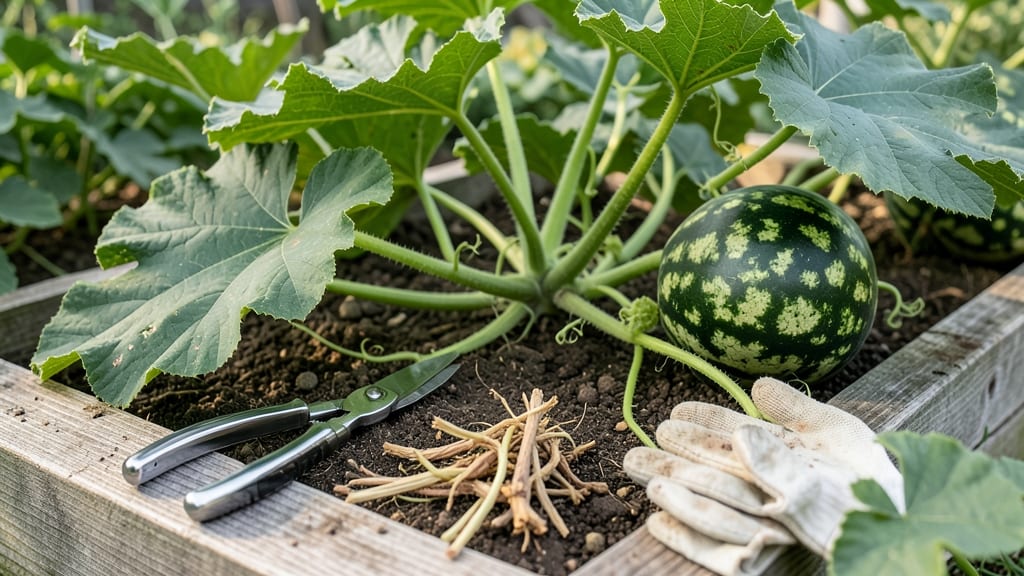
To prune watermelon plants means doubling your harvest with just a few strategic cuts. ✂️ I learned the hard way—skipping pruning last year left me with half the expected fruit, all small and uneven. This method strengthens vines, directs energy to fruit, and keeps plants manageable without sacrificing yield.
The key is timing and technique: remove weak runners early, thin suckers to 2-3 strong vines, and never cut more than 25% of the plant at once. Watermelons need their leaves—too much pruning starves the fruit.
With the right approach, you’ll see thicker vines, larger blooms, and melons that actually ripen before the birds get them.
📚 In This Guide
- What you need
- Instructions
- Tips and common mistakes
- Wrapping up and next steps
What you need
- ● Pruning shears – Sharp, clean, and sterilized (bypass pruners work best). Quantity: 1 pair.
- ● Garden gloves – Durable, cut-resistant (nitrile-coated for grip). Quantity: 1 pair.
- ● Disinfectant (70% isopropyl alcohol or bleach solution) – 1:9 bleach-to-water ratio (for sterilizing tools between cuts).
- ● Garden twine or plant ties – 3–4mm diameter (to support vines post-pruning). Quantity: 1–2 rolls.
- ● Watering can or hose – For post-pruning hydration.
- ● Organic mulch (straw, grass clippings, or wood chips) – 2–3 inches thick (to retain moisture and suppress weeds). Quantity: Enough to cover the base.
- ● Hand pruners – For smaller, harder-to-reach cuts. Quantity: 1 pair.
- ● Garden knife – For precise cuts on thicker vines.
- ○ Plant growth regulator (optional) – Follow label instructions (to control excessive growth).
- ● Compost or balanced fertilizer (10-10-10) – For post-pruning nutrient boost.
- ● Sun hat & sunscreen – Because no one prunes in discomfort! 😎
Step-by-Step guide to pruning watermelon vines
Here’s how I prune watermelons to boost fruit size and plant health—no fancy tools needed.
✂️ Step 1: Remove Weak or Damaged Growth Early
Start by inspecting your watermelon vines for any thin, leggy, or yellowing stems. These are energy vampires—sucking nutrients away from your fruit. Use clean, sharp pruners to snip them at the base, just above a leaf node. I always prune on a dry morning so the cuts heal faster and disease risk drops.
Watch for vines growing toward the ground or tangled in weeds. These compete with your main runners for sunlight and water. Remove them immediately—you’ll see stronger central vines within days. If a stem has brown spots or looks mushy, cut it back aggressively to prevent rot from spreading.
🌿 Step 2: Train the Main Vine and Side Shoots
Watermelons thrive when you guide their growth. Let the strongest, healthiest vine (the one closest to your trellis or main stem) grow freely—this is your "main runner." Any side shoots branching off this vine should be pruned back to just 2-3 leaves from the main stem. This forces energy into fewer, larger fruit instead of tiny melons.
Here’s the trick: When you see a new shoot emerging from the main stem, pinch it off when it’s still small (about 2 inches). You’ll notice fewer but bigger melons forming later in the season. If you’re growing in a small space, limit yourself to 2-3 main vines per plant—more than that crowds the fruit and reduces size.
☀️ Step 3: Prune for Better Airflow and Sunlight
Thick, tangled vines invite pests and diseases like powdery mildew. Every 2-3 weeks, step back and look for areas where leaves overlap or block sunlight. Thin out crowded spots by removing the smallest or weakest leaves—prioritize keeping the largest, healthiest ones on the outer edges of the plant.
Pay special attention to the area around developing fruit. If leaves shade a melon completely, it won’t ripen properly. Gently pull back or prune nearby vines to let sunlight reach the fruit. You’ll know you’re doing it right when the melons develop a uniform, deep green color and start showing their signature stripes.
⏰ Step 4: Late-Season Pruning for Ripening Fruit
About 4-6 weeks before your first frost, shift focus to your ripening melons. Stop all aggressive pruning—now you’re just managing growth to protect what’s left. Remove any new vines that haven’t flowered yet, as they’ll never produce fruit before cold weather sets in.
For existing fruit, leave the vines attached but prune back any side shoots that aren’t bearing melons. This redirects the plant’s energy into ripening the fruit you already have. Check melons weekly—ripe watermelons will feel heavy for their size and have a creamy yellow spot where they rested on the ground. Harvest these first to make room for others.
🌱 Step 5: Post-Harvest Cleanup (Fall/Winter)
Once all melons are harvested, don’t just chop everything down. Use pruners to cut back vines to about 6 inches above the ground. This makes it easier to spot pests or diseases next spring. Remove all plant debris from the garden—compost only healthy-looking vines; diseased material should go in the trash.
If you’re in a warm climate, you can prune back watermelon plants after harvest and let them regrow for a second, smaller crop. Just be prepared to adjust your watering—mature plants need less once fruiting is done. In colder areas, prune and compost everything to prevent overwintering pests from returning next season.
Tips & tricks for pruning watermelon vines
These simple tricks will help you maximize your watermelon harvest with less effort—and avoid common mistakes that waste your plants' energy.
Timing is Everything: The 2-3 weeks between pruning sessions in Step 3 is perfect for monitoring growth. I like to set a reminder on my phone to check my plants every two weeks—this keeps me consistent and prevents overcrowding. If you notice new shoots popping up faster than expected, it might be time to prune more frequently.
Visual Cues Matter: When pinching off side shoots in Step 2, look for the 2-inch rule—but also check for leaf color. Healthy leaves should be a vibrant green, not yellow or spotted. If you see brown spots or mushy stems, cut those back immediately to prevent disease from spreading through the plant.
Seasonal Adjustments: The 4-6 weeks before your first frost is your final chance to protect your melons. I always check my local frost date and mark it on my calendar so I don't miss this critical window. In warm climates, you can extend the season by pruning back after harvest, but remember to reduce watering once the fruit is gone.
Equipment Essentials: While clean, sharp pruners are ideal, you can use garden shears in a pinch. Just make sure to sterilize them with rubbing alcohol between cuts to prevent spreading disease. For pinch pruning in Step 2, your fingers work perfectly—no fancy tools needed!
Pro Tips for Prune Watermelon
- These simple tricks will help you maximize your watermelon harvest with less effort—and avoid common mistakes that waste your plants' energy.
- Timing is Everything: The 2-3 weeks between pruning sessions in Step 3 is perfect for monitoring growth.
- Visual Cues Matter: When pinching off side shoots in Step 2, look for the 2-inch rule—but also check for leaf color.
Frequently asked questions
Got questions about pruning watermelons? You’re not alone! Here are some of the most common concerns—plus quick, actionable answers to keep your vines thriving.
When is the best time to prune watermelon plants?
Prune watermelons early in the season (when vines are 12–18 inches tall) to encourage bushier growth and more fruit. Avoid pruning during flowering or fruiting—this can stress the plant and reduce yields. Focus on removing suckers (side shoots) in the morning for faster recovery.
How much should I cut back watermelon vines?
Leave the main vine intact but trim aggressively on side shoots. Cut suckers back to 1–2 leaves below the main stem. For sprawling varieties, thin vines to 2–3 main runners per plant to redirect energy to fruit production. Over-pruning can weaken the plant, so never remove more than 30% of the foliage at once.
What if I missed pruning early in the season?
Don’t panic! You can still prune later in the season, but focus on removing diseased or dead leaves and thinning out overcrowded vines. Avoid heavy pruning after flowering—prioritize supporting healthy growth over aggressive shaping. If your plant is already fruiting, prune only to improve airflow and reduce pest risks.
Will pruning watermelons increase my harvest?
Yes! Proper pruning boosts fruit size and quality by redirecting the plant’s energy to fewer, larger melons. Well-pruned vines also produce earlier and more consistently. However, over-pruning can backfire—if you remove too much foliage, the plant may struggle to photosynthesize enough for fruit development. Balance is key!
How do I prune watermelons to prevent pests or diseases?
Prune to improve airflow by removing crowded or yellowing leaves. Always use sterilized tools (rubbing alcohol or bleach wipe) to avoid spreading pathogens. Focus on trimming lower leaves that touch the soil (a common entry point for pests). If you spot powdery mildew or aphids, prune infected areas immediately and dispose of clippings far from the garden.
Can I prune watermelon plants in containers?
Container-grown watermelons need even more pruning to prevent overcrowding. Use smaller, bush-type varieties (like ‘Sugar Baby’) for pots, and prune aggressively to control vine sprawl. Remove suckers early and train vines along a trellis or cage to save space. Just ensure your container has drainage holes—root-bound plants stress easily.
Wrapping up and next steps
Pruning your watermelon vines isn’t just about keeping them tidy—it’s your secret weapon for bigger, sweeter fruit and healthier plants! 🌱 By mastering the art of selective trimming, you’ll encourage stronger growth, better airflow, and fewer pests.
Whether you’re a seasoned gardener or just starting out, these techniques are game-changers for your harvest.
Now that you’re armed with the know-how, roll up your sleeves and get pruning! Start small—even a single vine can make a difference—and watch your watermelon plants thrive. Ready for next season? Save those pruned cuttings to propagate new plants or share tips with fellow gardeners. Happy growing! 🌞