
Pruning
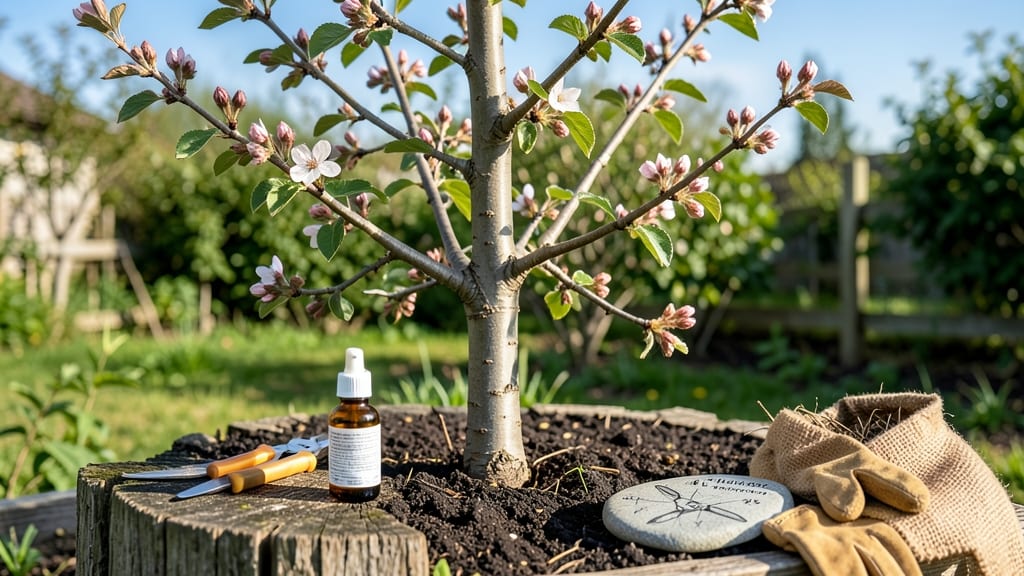
Pruning young apple trees in their first three years sets the stage for a lifetime of fruit production. ✂️ I learned the hard way—skipping pruning led to crowded branches, poor airflow, and tiny, misshapen apples.
The right cuts now mean a strong, open-centered tree that yields bushels of quality fruit in just a few years.
You’ll need sharp pruners, rubbing alcohol for sterilizing cuts, and a clear day to avoid sap bleeding. The goal is to shape an open vase form: remove competing leaders, thin out crowded branches, and encourage outward growth.
Most pruning happens in late winter before buds swell, but light shaping can happen in summer too.
By following these three steps—removing water sprouts, shortening vigorous shoots, and opening the center—you’ll create a tree with better air circulation and sunlight penetration. The result? Fewer disease issues, larger fruit, and a tree that’s easier to harvest as it matures. Your future harvests will thank you.
This method works for dwarf, semi-dwarf, and standard apple trees alike. Just adjust the scale of your cuts to match the tree’s size. The key is consistency—prune every year, and your tree will reward you with strong growth and abundant fruit for decades.
📚 In This Guide
- What you need
- Instructions
- Tips and common mistakes
- Wrapping up and next steps
What you need
- ● Pruning shears: Bypass pruners (sharp, clean, and 5-7 inches long) for small branches (½-inch thick). Pro tip: 💡 Sterilize blades with rubbing alcohol to prevent disease spread!
- ● Loppers: For branches ½ to 1½ inches thick—look for long-handled models (18-24 inches) for leverage.
- ● Hand saw: Pruning saw with a curved blade for thicker branches (1½+ inches). Avoid cheap saws—they dull quickly!
- ● Gloves: Heavy-duty, cut-resistant gloves (e.g., mechanics’ gloves) to protect from thorns and splinters.
- ● Disinfectant: 70% isopropyl alcohol or a 10% bleach solution to clean tools between cuts.
- ● Pruning sealant: (e.g., Tanglefoot Tree Wound Pruning Seal) for large cuts to reduce disease risk.
- ● Ladder or step stool: For taller trees—extendable ladders (12-16 ft) work best.
- ● Twine or tree tape: To mark branches you plan to remove before cutting.
- ● Safety glasses: Protect your eyes from debris (especially when sawing).
- ● Choose a dry day—wet branches are harder to cut and can spread disease.
- ● Work during dormant season (late winter/early spring) for young trees (or summer if pruning for fruit thinning).
- ● Have a clear workspace: Remove weeds, rocks, or obstacles within a 5-foot radius of the tree.
- ● Wear comfortable, sturdy shoes—you’ll be moving around the tree!
Step-by-Step guide to pruning young apple trees
Here's my go-to method for shaping young apple trees—it builds a sturdy framework while keeping your tree healthy and productive.
✂️ Step 1: Identify and Remove Weak or Crossing Branches
Start by examining the tree for branches that grow inward or cross others—these create wounds and compete for energy. I look for branches thinner than a pencil or those growing at sharp angles (less than 45°
Use clean, sharp pruners to make your cuts just outside the branch collar—the swollen area where the branch meets the trunk. Never leave stubs, as they invite disease. If a branch is larger than ½ inch thick, use a pruning saw instead. The goal here is to open up the center of the tree so light and air circulate freely. Next, focus on establishing a strong central leader—the main vertical trunk. If your tree has multiple leaders competing, remove all but the strongest, straightest one. I check for the branch with the best upward growth and thickest base. Cut the others at their point of origin. For the remaining branches, select 3-5 well-spaced "scaffolding" branches that form a natural framework. These should be spaced 12-24 inches apart vertically and 8-12 inches apart around the trunk. Prune any branches growing too close together or directly opposite each other—this prevents future rubbing and damage. Now, step back and look at the overall shape. Remove any "water sprouts"—fast-growing, vertical shoots that pop up along the trunk or branches. These steal energy from fruit production. I also trim back any branches that are growing too densely, leaving 6-8 inches of space between leaves on each branch. For young trees, limit pruning to removing no more than 20-25% of the tree’s total foliage in one session. This keeps the tree strong enough to recover quickly. After pruning, clean your tools with rubbing alcohol to prevent spreading disease between cuts. Watch for new growth in 4-6 weeks—that’s your sign the tree is healing well. Prune young apple trees during their dormant season—late winter or early spring, just before buds swell but before new growth starts. This timing minimizes stress and bleeding from the tree. Avoid pruning in fall, as fresh cuts won’t heal before winter’s cold sets in. If you must prune in summer, do it early in the season and only for structural adjustments. Summer pruning can stress the tree, so keep cuts minimal. After pruning, water the base of the tree deeply to help it recover. You’ll see stronger branches and better fruit set next season if you follow this schedule.✂️ Step 2: Shape the Tree’s Central Leader and Scaffolding Branches
✂️ Step 3: Thin Out Excess Growth and Encourage Fruit Production
⏰ Step 4: Time Your Pruning for Best Results
Tips & tricks for pruning young apple trees
Here's what I've learned after pruning dozens of young apple trees—these tricks will help you avoid common mistakes and create a strong framework for years of fruit production.
The Branch Collar Rule: When you make cuts in Step 1, always target the branch collar—the swollen area where the branch meets the trunk. I can't stress this enough: cutting too close or leaving stubs invites disease and weakens the tree. For branches thicker than ½ inch, use a pruning saw to avoid tearing the bark. The goal is clean cuts that heal properly, not quick cuts that look messy.
Visual Spacing Trick: In Step 2, when selecting your 3-5 scaffolding branches, imagine a clock face around the trunk. Space branches roughly 3-4 hours apart (about 8-12 inches apart) to prevent future crowding. For vertical spacing, aim for branches that are 12-24 inches apart—this creates room for fruit clusters to develop without competing for sunlight.
Water Sprout Rescue: Those fast-growing water sprouts in Step 3 might look harmless, but they steal energy from fruit production. If you're unsure whether to remove one, do this test: gently bend it. If it snaps easily, it's a weak sprout that should go. If it bends but doesn't break, it might be worth keeping—but trim it back by half to redirect its energy to fruit-bearing branches.
Seasonal Timing Secret: The dormant season window in Step 4 is critical—buds should be swollen but not yet open. In my zone 5 climate, that's typically late February to early March. If you miss this window, summer pruning is possible but should be limited to removing only the most problematic branches. After pruning, give your tree a deep watering to help it recover, especially if you've removed more than 20% of the foliage.
Pro Tips for Prune Young Apple Trees
- Here's what I've learned after pruning dozens of young apple trees—these tricks will help you avoid common mistakes and create a strong framework for years of fruit production.
- The Branch Collar Rule: When you make cuts in Step 1, always target the branch collar—the swollen area where the branch meets the trunk.
- Visual Spacing Trick: In Step 2, when selecting your 3-5 scaffolding branches, imagine a clock face around the trunk.
Frequently asked questions
Got questions about pruning young apple trees? You’re not alone—even experienced gardeners need a refresher now and then! Here are some of the most common concerns, answered in plain terms to keep your tree thriving.
How do I know if I’m pruning too much or too little?
For young apple trees (under 3 years old), aim to remove no more than 25% of the total canopy in a single session. Over-pruning stresses the tree and stunts growth, while under-pruning can lead to a crowded, weak structure. Look for a balance: open the center for airflow but leave enough leaves to fuel photosynthesis.
What’s the best time of year to prune young apple trees?
Late winter or early spring (just before buds swell) is ideal—this is when the tree is dormant but about to burst into growth. Avoid pruning in fall, as wounds take longer to heal, making trees vulnerable to disease. If you must prune in summer, do it after harvest to reduce stress.
Should I seal pruning cuts on young apple trees?
No! Sealing cuts with paint or pruning sealant is unnecessary for young, healthy trees. Apple trees naturally form a protective layer over wounds. Sealants can trap moisture, promoting rot. Just make clean cuts at a 45-degree angle (for branches > ½ inch thick) and let nature do its job.
My young apple tree has no fruit—is pruning to blame?
Not necessarily! Young apple trees (especially dwarf varieties) focus energy on root and branch growth for the first 3–5 years. Pruning helps shape the tree but won’t force fruit production. If your tree is healthy but still bare, it might need a little more time—or a different variety that fruits earlier.
What if I accidentally prune a water sprout or sucker?
Don’t panic! Water sprouts (fast-growing vertical shoots) and suckers (shoots from the base or roots) are common but can drain energy from your tree. If you’ve already pruned them, simply remove any new growth that appears. For future reference, prioritize cutting them back to a bud or branch collar to redirect energy to fruit production.
Can I prune young apple trees in container pots the same way?
Yes, but with extra caution! Container-grown trees have limited root space, so pruning should be even more conservative (10–15% max per year). Focus on removing dead or crossing branches and avoid heavy cuts that could stress the tree. Repot every 2–3 years to accommodate growth.
Wrapping up and next steps
Pruning young apple trees isn’t just about trimming—it’s about setting the stage for a lifetime of fruitfulness. By following these steps, you’ll encourage a strong, open canopy that lets sunlight and air flow freely, reducing disease and boosting harvests. 🍏🌿
Now that you’re armed with the know-how, grab those shears and get pruning! Start small, stay consistent, and watch your tree thrive. Need more confidence? Plan your next pruning session when the tree is dormant—it’s the perfect time to refine your skills.