
Pruning
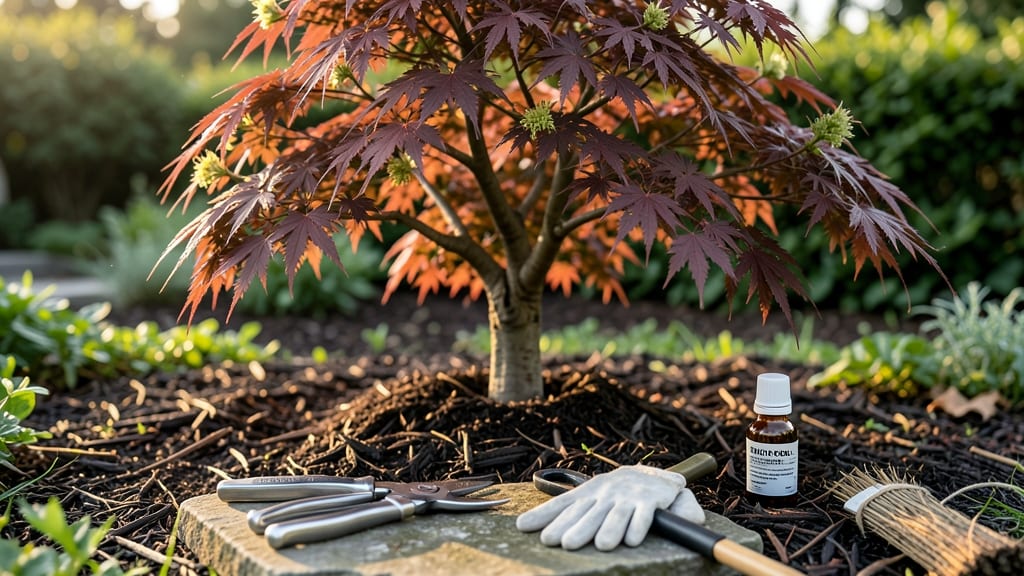
Late-winter pruning transforms your Japanese acer into a showstopper by summer. ✂️ I’ve learned that cutting at the right time—just before buds swell—gives these delicate trees the energy to produce vibrant foliage and even more dramatic blooms.
The key isn’t just trimming; it’s sculpting with purpose, removing what weakens while preserving the graceful shape that makes Acer palmatum so special.
You’ll need sharp bypass pruners, rubbing alcohol for sterilizing cuts, and a ladder if your tree stands taller than your reach. Start by removing dead or crossing branches first—they’re the easy wins that clear space for new growth.
Then, thin out crowded areas to let sunlight reach the center, where summer’s fiery leaves will unfurl. Think of it like giving your tree a spa day: less clutter means more energy for the good stuff.
By summer, you’ll see the payoff: stronger canes, lush foliage, and possibly even clusters of delicate flowers if you pruned correctly. The secret is patience—never remove more than 25% of the canopy in one go, or you’ll stress the tree.
And always cut just above a bud or branch collar, never leaving stubs. That small detail makes all the difference between a healthy tree and one struggling to recover.
Works for all Japanese acers—whether your tree is a dwarf variety or a sprawling Acer palmatum ‘Bloodgood’. The same principles apply, so you can use this method year after year.
Just remember: the best time to prune is late winter, but if you miss it, early spring is the next best option. Now grab those shears and let’s get to work!
📚 In This Guide
- What you need
- Instructions
- Tips and common mistakes
- Wrapping up and next steps
What you need
- ● Bypass Pruners – Sharp, high-quality pruners (e.g., Felco or Corona) for clean cuts on smaller branches (up to ½ inch thick).
- ● Loppers – For medium branches (½ to 1½ inches thick); look for bypass or anvil-style with long handles for leverage.
- ● Pruning Saw – A fine-toothed saw (8-10 teeth per inch) for thicker branches (1½+ inches).
- ● Disinfectant (70% isopropyl alcohol or pruning sealant) – To sterilize tools between cuts and prevent disease spread.
- ● Gloves – Heavy-duty gardening gloves to protect against thorns and sap.
- ● Twine or Pruning Wrap – For temporarily securing large cuts (if needed).
- ● Bucket & Rag – To collect debris and wipe down tools.
- ● Handheld Leaf Blower or Broom – To clear debris from under the tree post-pruning.
- ● Pruning Paint or Sealant – For sealing large cuts (over ½ inch) to prevent decay.
- ● Ladder or Step Stool – If your tree is tall; prioritize safety!
- ● Notebook & Pen – To sketch a pruning plan or track cuts for future reference.
Step-by-step guide to pruning Japanese maples for health and beauty
Late winter is the perfect time to shape your Japanese acer—here’s how to do it right for vibrant summer blooms.
✂️ Step 1: Remove Dead or Damaged Branches First
Start by identifying branches that are clearly dead—these will be dry, brittle, and snap easily when bent. Use clean, sharp pruning shears to make a clean cut just outside the branch collar (the swollen area where the branch meets the trunk). This prevents unsightly stubs and promotes faster healing.
If a branch is only partially dead, check the inner bark. Scrape a small section with your thumbnail—green underneath means it’s still alive. Cut it back to the last healthy section. Never leave dead wood on the tree; it invites pests and disease. Work your way around the tree, removing all obvious deadwood first.
✂️ Step 2: Thin Out Overcrowded or Crossing Branches
Look for branches that rub against each other or grow too close together. These compete for sunlight and nutrients, weakening the tree. Use your shears to remove the smaller or weaker of the two branches, cutting back to the branch collar. This opens up the canopy, allowing better airflow and light penetration.
Pay special attention to branches growing inward toward the center of the tree. These rarely receive sunlight and can become weak or diseased. Thin these out first, then step back to visualize the tree’s shape. You’re aiming for an open, balanced structure that lets light reach all parts of the canopy.
✂️ Step 3: Shape the Tree for Balance and Form
Now it’s time to refine the tree’s natural shape. Japanese acers have a graceful, layered habit, so focus on preserving that. Use hand pruners for smaller branches and loppers for thicker stems. Cut just outside the branch collar at a slight outward angle—this encourages the wound to heal cleanly and prevents water from pooling.
Step back frequently to check your progress. You want to maintain the tree’s natural silhouette while removing any awkward growth. Avoid cutting more than 25% of the tree’s foliage in one season—this can stress the plant. If you’re unsure, err on the side of caution and leave more branches intact.
💧 Step 4: Clean Up and Apply Wound Dressing (If Needed)
After pruning, gather all the clippings and dispose of them properly—don’t leave them on the ground, as they can harbor pests. Wipe down your shears with rubbing alcohol to prevent the spread of disease between cuts. For larger wounds (over ½ inch in diameter), you can apply a thin layer of wound dressing to protect the tree, but this isn’t always necessary.
Water the tree deeply after pruning to help it recover. Japanese acers are sensitive to stress, so mulch around the base with 2-3 inches of organic mulch (like shredded bark) to retain moisture and regulate soil temperature. Avoid piling mulch directly against the trunk—keep it 2-3 inches away to prevent rot.
☀️ Step 5: Monitor and Adjust Through the Growing Season
In the weeks following pruning, keep an eye on the tree for any signs of stress, like yellowing leaves or wilting. If you notice new growth emerging from old cuts, it’s a good sign the tree is healing. However, if you see excessive leaf drop or stunted growth, you may have pruned too aggressively—adjust your approach next time.
As summer progresses, you can do light maintenance pruning to shape the tree further. Remove any suckers (shoots growing from the base) and any branches that spoil the tree’s form. Japanese acers respond well to gentle shaping, so take your time and enjoy the process—your tree will thank you with vibrant foliage and stronger canes for years to come.
Tips & tricks for pruning Japanese maples like a pro
Late-winter pruning transforms your Japanese acer into a showstopper—here’s how to avoid common pitfalls and get it right.
Tool Prep is Non-Negotiable: Before you touch a branch, sterilize your pruning shears with rubbing alcohol. I learned this the hard way after accidentally spreading bacterial canker between cuts. Sharp tools also make cleaner cuts that heal faster—dull blades tear tissue, inviting disease. Test your shears on a scrap branch first to ensure they’re razor-sharp.
The 25% Rule Saves Trees: Never remove more than 25% of the foliage in one season, as the instructions emphasize. I once overzealous pruned 30% and my tree struggled for years. Think of it like giving your tree a haircut—you wouldn’t shave off a third of someone’s head! Focus on strategic cuts rather than aggressive thinning. This preserves energy for spring blooms.
Branch Collar Matters More Than You Think: When cutting, always target the branch collar—the swollen area where the branch meets the trunk. I used to cut flush, which left ugly stubs that never healed properly. The collar contains protective cells that help wounds close faster. If you’re unsure where it is, look for the slight swelling just above where the branch attaches to the trunk.
Visualize the Tree’s Silhouette: Step back every 10-15 minutes and squint at your tree. This forces you to see the big picture rather than getting lost in details. Japanese acers thrive on their natural grace—preserve that layered, graceful shape. If you’re unsure about a cut, wait 24 hours and reassess before making final decisions. Patience prevents irreversible mistakes.
Pro Tips for Japanese Acer Pruning
- Late-winter pruning transforms your Japanese acer into a showstopper—here’s how to avoid common pitfalls and get it right.
- Tool Prep is Non-Negotiable: Before you touch a branch, sterilize your pruning shears with rubbing alcohol.
- The 25% Rule Saves Trees: Never remove more than 25% of the foliage in one season, as the instructions emphasize.
Frequently asked questions
Got questions about pruning your Japanese Acer? You’re not alone! Here are some of the most common queries—and straightforward answers—to help you trim with confidence.
When is the absolute best time to prune Japanese Acer trees?
The ideal window is late winter to early spring (just before buds swell). This timing promotes vigorous growth and minimizes stress. Avoid pruning in fall or during extreme heat—your tree will thank you with healthier canes and better blooms next season!
Can I prune Japanese Acer in winter if it’s still freezing?
Yes, but with caution! Prune on warmer winter days (above 40°F/4°C) to reduce shock. If your area has harsh freezes, wait until late winter when the ground thaws slightly. Never prune during a frost—wait for a mild, dry spell instead.
How much can I cut back without harming the tree?
For Japanese Acer, aim to remove no more than 25% of the canopy in one session. Over-pruning stresses the tree, leading to weak growth or fewer blooms. Focus on dead, crossing, or overcrowded branches first—this keeps your tree balanced and blooming beautifully!
Will pruning affect my Japanese Acer’s flowers?
Pruning correctly actually boosts blooms! By removing old wood and improving airflow, you encourage new growth where flowers form. Just avoid heavy cuts in spring-flowering varieties—prune after blooms fade to preserve next year’s flowers.
What if my Japanese Acer doesn’t have many branches to prune?
If your tree is young or naturally sparse, focus on shaping rather than heavy cuts. Thin out a few weak or misplaced branches to encourage stronger growth. For mature trees with few blooms, check for nutrient deficiencies or pests—sometimes pruning isn’t the issue!
Wrapping up and next steps
Pruning your Japanese acer in late winter isn’t just about shaping—it’s about setting the stage for vibrant blooms and resilient canes all season long. By following the right techniques, timing, and tools, you’ll encourage healthier growth and stunning summer displays. 🌸
Ready to give your tree the care it deserves? Grab your pruners, review your notes, and get started! With a little effort now, you’ll be rewarded with a Japanese acer that’s the envy of the neighborhood. Happy pruning! ✂️