
Pruning
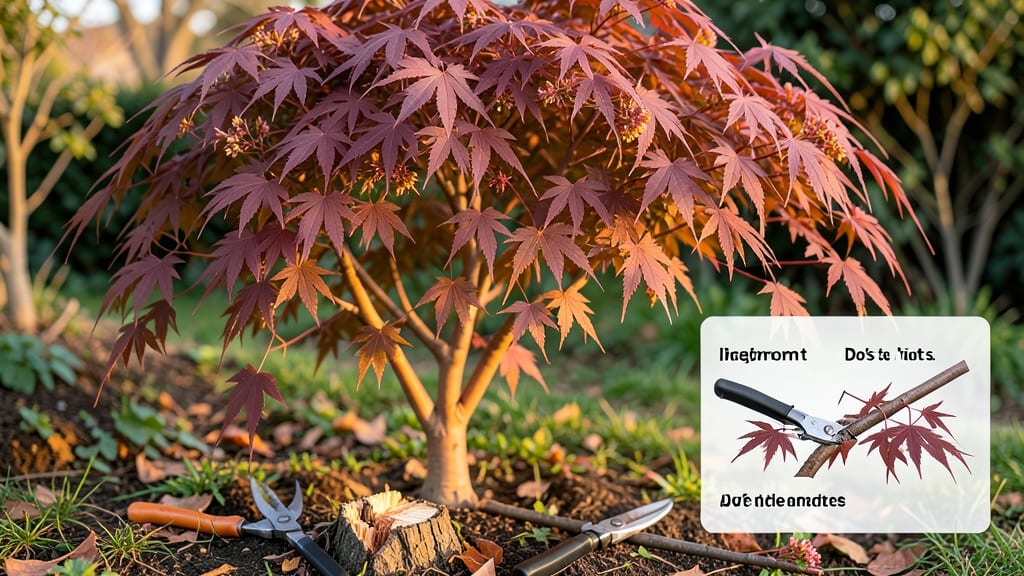
Your Japanese maple’s sad, leggy branches aren’t just a phase—they’re a cry for help from years of pruning mistakes. ✂️ I’ve watched these trees go from lush canopies to skeletal shadows after well-meaning cuts, and the fix starts with knowing what not to do.
The wrong timing, cuts, or overzealous trimming can turn vibrant foliage into a sad, weak mess.
Most gardeners mess up in three key ways: pruning at the wrong time (spring or fall), cutting too close to the trunk, or removing too much growth at once. Japanese maples are sensitive—over-pruning stresses them, while improper cuts invite disease.
The goal isn’t to shape like a topiary but to encourage natural, healthy growth by making precise cuts just above leaf nodes.
When done right, you’ll see fresh, vibrant growth within weeks—new shoots pushing out where old branches once sagged. The key is patience: only remove dead or crossing branches, and never take more than 25% of the canopy in one season.
Even a small correction now keeps your tree thriving for decades.
This isn’t about drastic transformations—it’s about restoring balance. Start with a sharp pair of pruners, a clean cut, and a plan to prune only when the tree is dormant. The results? A Japanese maple that stays strong, full, and stunning year after year.
📚 In This Guide
- What you need
- Instructions
- Tips and common mistakes
- Wrapping up and next steps
What you need
- ● Bypass pruners – Sharp, clean bypass pruners (4-6” blades) for small branches (Skip anvil pruners—they crush instead of cut!
- ● Loppers – Heavy-duty bypass loppers (8-10” blades) for branches ½” to 1½” thick. Look for ratcheting handles for leverage.
- ● Pruning saw – A curved-tooth pruning saw for branches 1½”+ thick. Avoid cheap saws—they tear wood.
- ● Disinfectant – 70% isopropyl alcohol or a pruning sealant (like Tanglefoot Tree Wound Pruning Seal) to prevent disease.
- ● Gloves – Garden gloves (nitrile-coated for grip) to protect from thorns and sap.
- ● Extension pole – A 3-5 ft telescoping pole with a pruner attachment for high branches.
- ● Sharpie or marker – For marking cuts before you make them (helps visualize shape!).
- ● Bucket or tarp – To collect debris and keep your workspace clean.
- ● Hand lens (10x magnification) – For spotting hidden pests or disease before pruning.
- ● Tree wound dressing – Only use sparingly (controversial, but some swear by Tree Seal for large cuts).
- ● Pruning shears with a bypass blade – For fine-tuning small branches (like Felco F-2 models).
- ● Safety glasses – Protects eyes from falling debris (especially in windy conditions!).
- ● Notebook & pen – To sketch your tree’s structure before you start cutting.
- ● Choose the right time – Prune in late winter or early spring (before buds swell) or summer after flowering. Avoid pruning in fall or winter (disease risk!).
- ● Check the weather – Pick a dry, calm day (no rain for 24 hours before/after).
- ● Assess your tree – Walk around it to spot dead, crossing, or weak branches from all angles.
- ● Have a plan – Sketch or mentally map where you’ll make cuts to avoid over-pruning or uneven shapes.
How to prune Japanese maples without causing damage
Pruning these stunning trees wrong leads to dead branches and weak growth—here’s how to do it right.
✂️ Step 1: Prune at the Right Time
Wait until late winter or early spring, just before buds swell but before new growth starts. Pruning too early risks exposing fresh cuts to harsh winter winds, while pruning too late removes next season’s growth. I always check for bud swell—when you see those tiny green bumps, it’s time to act.
Never prune in fall. The tree needs time to heal before winter stress sets in. If you must prune in late summer, limit cuts to removing only dead or diseased branches—no shaping work. Japanese maples are sensitive to late-season cuts, which can lead to weak growth or even dieback.
✂️ Step 2: Use the Right Tools and Technique
Sharp, clean pruning shears or loppers are a must—dull tools crush branches, leaving ragged cuts that invite disease. I sterilize my tools with rubbing alcohol between cuts to prevent spreading any hidden pathogens. For branches thicker than ½ inch, use loppers or a pruning saw with a fine-tooth blade.
Make cuts at a 45-degree angle, just outside the branch collar (the swollen area where the branch meets the trunk). Never leave stubs—this leads to decay. If a branch is too thick to cut cleanly in one go, make a small notch on the underside first to control the cut direction.
🌿 Step 3: Remove Only What’s Necessary
Japanese maples have delicate bark that heals slowly. Only remove dead, diseased, or crossing branches—never more than 25% of the tree’s canopy in a single session. I start by thinning from the inside out, removing branches that rub against others or grow inward.
Watch for water sprouts (fast-growing, upright shoots) and suckers (shoots from the base)—these sap energy from the tree. Snip them off at the base with clean shears. Avoid heavy pruning of new growth; Japanese maples respond poorly to aggressive cuts, especially on young trees.
⏰ Step 4: Clean Up and Monitor Recovery
After pruning, rake up and dispose of all debris—never leave cuttings on the ground, as they can harbor pests or disease. I seal larger cuts with a thin layer of pruning sealant (optional for Japanese maples, but helpful in humid climates). Water the tree deeply to help it recover.
Monitor the tree for 2-3 weeks after pruning. If new growth appears vibrant and healthy, you’ve done well. Yellowing leaves or wilting branches signal over-pruning or stress. If you see dieback, it’s a sign you removed too much foliage—next time, be more conservative.
🌱 Step 5: Avoid These Common Pitfalls
Here’s the thing—most pruning mistakes come from well-meaning but misguided cuts. Don’t top the tree to reduce height; this creates ugly, weak regrowth. Don’t prune for thick foliage—Japanese maples naturally have fine texture, and over-thinning weakens their structure.
I’ve seen people prune too aggressively to "open up" the canopy, but this exposes the tree to sunburn. Instead, focus on air circulation—remove only crowded or diseased branches. And never prune in response to pests; treat infestations first, then prune only the affected areas.
Tips & tricks for pruning Japanese maples without damage
Real talk: I’ve seen beautiful Japanese maples turn into sad, leggy shadows after well-intentioned (but wrong) pruning. Here’s how to avoid those mistakes and keep your tree thriving.
Timing is Everything: That late winter/early spring window is non-negotiable. If you’re unsure about bud swell, here’s my trick: Look for tiny green bumps along the branches—those are your cue. And remember, pruning in fall is like giving your tree a paper cut before winter—it just won’t heal properly. I’ve seen people prune in summer to "clean up," but that’s when Japanese maples are most vulnerable to stress.
Tool Prep Prevents Problems: Sterilizing your tools between cuts isn’t just for show—it’s how you prevent spreading disease from one branch to another. I keep rubbing alcohol in a small spray bottle by my toolbox and give everything a quick wipe before each cut. Also, for branches thicker than ½ inch, I always switch to my pruning saw. Trying to cut thick branches with shears leaves those ugly, uneven cuts that never heal right.
The 25% Rule Saves Trees: This is where most people go wrong—they see a "messy" tree and go overboard. Japanese maples only tolerate removing up to 25% of their canopy in one session. I mark branches with tape before cutting to visualize what I’m removing. And here’s a visual cue: If you’re removing more than a few branches in one area, you’re probably overdoing it.
Recovery Checklist: After pruning, I always do a 2-3 week health check. If new growth is slow or leaves look yellow, that’s your tree’s way of saying "too much, too soon." I’ve learned to trust the tree’s pace—if it’s struggling, it’s better to prune less next time than risk dieback. And that pruning sealant? Only use it in humid climates—it’s not necessary in dry areas where the cuts will dry out naturally.
Pro Tips for Japanese Maple Pruning Mistakes
- Real talk: I’ve seen beautiful Japanese maples turn into sad, leggy shadows after well-intentioned (but wrong) pruning.
- Timing is Everything: That late winter/early spring window is non-negotiable.
- Tool Prep Prevents Problems: Sterilizing your tools between cuts isn’t just for show—it’s how you prevent spreading disease from one branch to another.
Frequently asked questions
Got questions about pruning your Japanese maple? You’re not alone!
Here are some of the most common concerns—and the answers you need to keep your tree thriving.
When is the best time to prune a Japanese maple to avoid mistakes?
The ideal window is late winter or early spring (just before buds swell), but you can also prune in summer after new growth appears. Avoid pruning in fall or winter when the tree is dormant—this can invite disease or frost damage. If you must prune in summer, do it early to minimize stress.
What are the most common pruning mistakes that kill Japanese maple branches?
Over-pruning (removing more than 25% of foliage at once) is a top culprit, as it weakens the tree. Other mistakes include:
- Cutting too close to the trunk (leave a ¼-inch stub to prevent disease).
- Pruning during wet weather (fungus risk!).
- Ignoring dead wood—always remove all blackened or brittle branches.
Can I prune a Japanese maple in summer without harming it?
Yes, but timing matters! Light pruning in early summer (June) helps shape the tree and encourages bushier growth. Avoid heavy cuts in late summer—this can stimulate tender new growth that won’t harden before frost. If you prune in summer, focus on dead wood and thinning to improve airflow.
My Japanese maple has dead branches after pruning—what went wrong?
Dead branches often signal over-pruning, disease, or improper cuts. Check for:
- Large wounds (prune smaller branches to reduce stress).
- Signs of verticillium wilt (yellowing leaves, black streaks in stems).
- Pruning during wet or windy conditions (increases infection risk).
If branches die post-pruning, trim them back to healthy wood and apply fungicide if needed. Keep the tree well-watered to aid recovery.
Are there alternatives to traditional pruning for Japanese maples?
For minimalists, try:
- Thinning cuts (removing entire branches at the base) to improve light penetration.
- Pinching (gently squeezing off new growth tips in spring) to encourage bushiness.
- No-prune styling—some varieties (like Acer palmatum ‘Bloodgood’) handle zero pruning beautifully if planted in the right spot.
For stressed trees, avoid heavy shaping—focus on health over aesthetics.
Wrapping up and next steps
Pruning your Japanese maple with care is the key to keeping it thriving for years to come! Avoiding common mistakes—like over-pruning, cutting too late, or ignoring dead branches—will help your tree stay vibrant and healthy.
With the right tools, timing, and techniques, you’re well on your way to mastering this rewarding task.
Ready to put your new skills into action? Grab your pruners and give your Japanese maple the love it deserves! 🌿✨