
Pruning
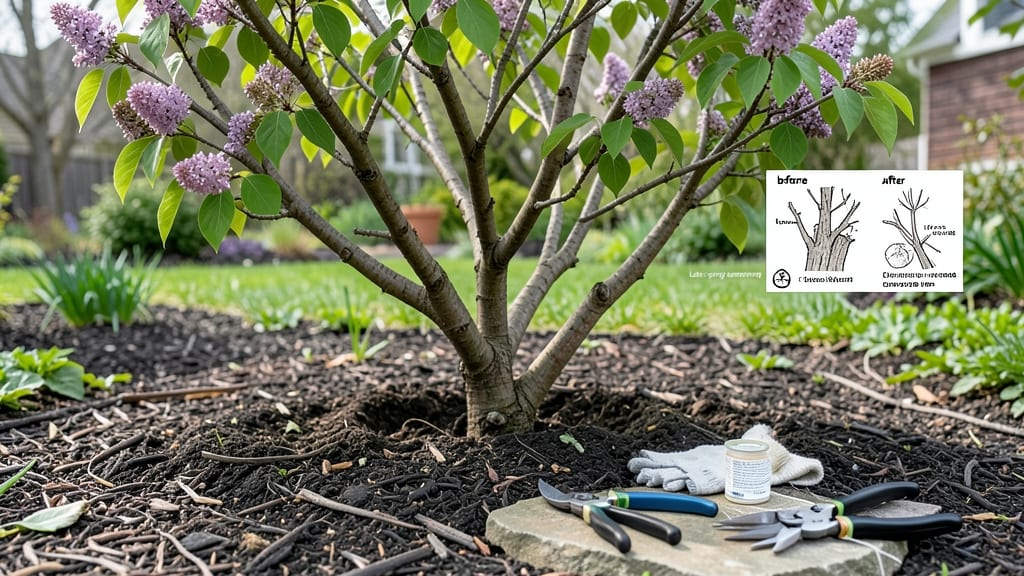
Pruning the wrong way on your lilac tree can mean fewer blooms next spring—but with a lilac tree pruning diagram as your guide, you’ll avoid costly mistakes. ✂️ My first attempt left my lilac looking like a sad, overgrown bush, but after studying the proper cuts and timing, it now bursts with fragrant purple blooms every year.
The secret lies in understanding which branches to trim and when, so you encourage new growth without sacrificing next year’s flowers.
You’ll need sharp pruning shears, gloves, and a clear day in late winter or early spring before buds swell. The key is cutting just above a bud that faces outward on the branch—this ensures the new growth points away from the center, keeping the tree open and airy.
A simple diagram shows exactly where to make each cut, so you avoid the common mistake of pruning too late or too aggressively.
After pruning, your lilac will send out fresh, vibrant shoots by early summer, setting the stage for a healthier plant and even more abundant blooms the following spring.
The secret weapon? Patience—lilacs reward careful pruning with decades of reliable fragrance and color. You’ll see the difference in just one growing season.
This method works for both old and new lilac varieties, whether you’re shaping a mature tree or training a young one. The same principles apply whether you’re pruning a single branch or giving the whole plant a fresh start. Let’s get those blooms back on track!
📚 In This Guide
- What you need
- Instructions
- Tips and common mistakes
- Wrapping up and next steps
What you need
- ● Pruning shears: Bypass pruners (for cuts under ½ inch) – 1 pair (look for sharp, ergonomic handles).
- ● Loppers: Bypass or anvil type (for cuts ½ to 2 inches) – 1 pair (pivoting loppers make thick branches easier).
- ● Pruning saw: Curved-tooth saw (for branches over 2 inches) – 1 saw (avoid rust—opt for stainless steel).
- ● Gloves: Heavy-duty, cut-resistant (to protect from thorns and sharp tools) – 1 pair (gardening gloves with reinforced palms work best).
- ● Safety glasses: ANSI-rated – 1 pair (debris can fly—don’t skip this!).
- ● Ladder or step stool: Sturdy, non-slip (if your lilac is over 6 feet tall) – 1 unit (always prioritize stability!).
- ● Disinfectant: Rubbing alcohol (70%+) or pruning sealant – small bottle (sanitizes tools between cuts to prevent disease).
- ● Marking twine or flags: Colored twine or stakes – as needed (marks branches to remove for better visibility).
- ● Garden hose or spray bottle: – 1 unit (keeps tools clean and dust-free during work).
- ● First-aid kit: – small kit (for minor cuts or scrapes—better safe than sorry!).
- ● Timing: Prune right after flowering (late spring to early summer) for best results.
- ● Weather: Choose a dry, overcast day to avoid stressing the tree.
- ● Diagram reference: Have your lilac tree pruning diagram handy (print or save to your phone!).
How to prune a lilac tree for maximum blooms
Here's the method I've used for years to keep my lilacs flowering like crazy—no guesswork, just science-backed cuts.
✂️ Step 1: Time Your Pruning for Best Results
Prune your lilac right after flowering, typically in late May or early June. This gives the plant time to develop next year's flower buds before winter. If you prune in fall or winter, you'll cut off the buds forming for spring blooms—no flowers next year.
Watch for when your lilacs finish blooming completely. The flowers should turn brown and drop naturally before you touch the shears. I always mark my calendar because lilacs grow fast, and waiting too long means missing the ideal window.
🌿 Step 2: Remove Dead, Diseased, or Weak Wood First
Start by cutting out any branches that are dead, diseased, or crossing. Dead wood is easy to spot—it's brown, brittle, and doesn't bend. Diseased branches may have dark spots or ooze. Remove these completely at the base to improve air circulation and prevent future problems.
Next, look for branches growing inward or rubbing against others. These will eventually damage each other and create entry points for pests. Cut these back to the main stem or a healthy outward-growing branch. Use clean, sharp pruners to make smooth cuts just above a leaf bud or lateral branch.
✂️ Step 3: Thin Out Overcrowded Branches
Lilacs naturally grow thick, dense canopies. To keep them healthy, remove about one-third of the oldest wood each year. Start at the center of the plant and work outward. Older branches are thicker and often produce fewer flowers, so thinning them encourages new growth and better blooms.
Look for branches that are thinner than a pencil—these are new growth and should be kept. Cut back older branches to a strong lateral branch or the main stem. Never leave stubs; always cut just above a bud or branch collar to prevent disease.
☀️ Step 4: Shape the Tree for Light and Airflow
Step back and look at your lilac's overall shape. You want to create an open, vase-like form that lets sunlight reach the center. Cut branches that grow straight up or inward to maintain an outward, rounded silhouette. This prevents a dense, shaded center where flowers won't develop.
Focus on the outer third of the plant. Shorten branches by cutting just above a leaf bud that faces outward. Avoid cutting back into old wood—you want to encourage new growth from the current season's branches. A well-shaped lilac will have a balanced, airy look and produce more blooms.
🌱 Step 5: Clean Up and Monitor for Recovery
After pruning, rake up and dispose of all clippings to reduce disease risk. Lilac prunings can harbor pests and fungi, so don't compost them if your tree has had issues. Water the base of the plant deeply to help it recover from the stress of pruning.
Watch for new growth in the spring. Healthy lilacs will sprout fresh, green shoots from the pruned areas. If you see yellowing leaves or wilting, it might mean you pruned too late or too aggressively. Next year, adjust your timing or cuts accordingly. With consistent care, your lilac will reward you with stunning blooms for decades.
Tips & tricks for perfect lilac tree pruning
Common mistakes can turn a healthy lilac into a shadow of its former self—here's how to avoid them.
Timing is Everything: I can't stress this enough—prune your lilac immediately after flowers fade completely. The window is narrow: once you see browned flower clusters dropping naturally (usually late May to early June), act within a week. Waiting even a few days risks cutting off next year's buds. Mark your calendar now based on your local bloom time.
Tool Prep Prevents Problems: Clean, sharp pruners are non-negotiable. I sterilize mine with rubbing alcohol between cuts to prevent disease spread. Dull blades tear wood, creating jagged wounds that invite pests. Test your shears by making a clean cut on a scrap branch—if it crushes instead of slices, sharpen them first. For thick branches, use loppers or a pruning saw.
Visual Cues Over Guesswork: When thinning branches in Step 3, look for the classic "pencil test"—branches thinner than a pencil are new growth to keep. For older branches, make your cuts just above a leaf bud that faces outward. I draw a quick sketch of my lilac's shape before starting to visualize where each cut should go. This ensures your final shape maintains that perfect vase-like form for maximum sunlight exposure.
Recovery Checklist: After pruning, don't just walk away—monitor your lilac's recovery. Water deeply for the first week, then check for new growth in spring. If you see yellowing leaves or wilting, you may have pruned too aggressively. For next year, adjust by removing slightly less wood or pruning earlier. The goal is to encourage new growth while preserving the plant's health.
Pro Tips for Lilac Tree Pruning Diagram
- Common mistakes can turn a healthy lilac into a shadow of its former self—here's how to avoid them.
- Timing is Everything: I can't stress this enough—prune your lilac immediately after flowers fade completely. The wind...
- Tool Prep Prevents Problems: Clean, sharp pruners are non-negotiable. I sterilize mine with rubbing alcohol between c...
Frequently asked questions
Got questions about pruning your lilac tree? You’re not alone! Here are some of the most common concerns—plus straightforward answers to keep your tree thriving.
When is the best time to prune a lilac tree?
The ideal time is right after flowering (late spring to early summer). This ensures you don’t cut off next year’s blooms, which form on old wood. Avoid pruning in fall or winter, as it can stimulate late-season growth that’s vulnerable to frost damage. Pro tip: If you missed the window, wait until early spring—but prioritize removing dead or diseased branches first.
How much should I trim back my lilac tree?
For most lilacs, prune back 1/3 of the current season’s growth to encourage bushiness and airflow. Older branches can be cut back to a strong lateral branch or the ground if they’re overcrowded. Avoid heavy pruning (more than 1/3) unless reviving an overgrown tree—this can stress the plant. Use your lilac tree pruning diagram as a guide for precise cuts!
What if I prune at the wrong time and lose my flowers?
Don’t panic! Lilacs are resilient. If you prune too late (after mid-summer), you’ll likely sacrifice that year’s blooms, but the tree will recover. Focus on correcting the timing next year and maintaining regular care. For severe mistakes, fertilize lightly in spring to support regrowth.
Can I shape my lilac tree into a specific form, like a hedge?
Yes, but lilacs aren’t as malleable as formal hedges. Light pruning to encourage a rounded shape works best—avoid shearing, which can damage branches. For hedges, plant lilacs closer together (3–4 feet apart) and prune lightly after flowering. If you want a tree-like form, remove lower branches to create a trunk.
What should I do if my lilac tree isn’t blooming after pruning?
Several factors could be at play:
- Age: Young lilacs (under 3 years) may not bloom yet.
- Over-pruning: Cutting back too aggressively can delay flowers.
- Nutrition: Poor soil or lack of fertilizer (like phosphorus) can stunt blooms.
- Disease: Check for pests or fungal issues (like powdery mildew).
Wrapping up and next steps
Pruning your lilac tree doesn’t have to be intimidating—with the right lilac tree pruning diagram and timing, you’ll encourage vibrant blooms and a stronger plant for years to come! Remember to cut back old wood after flowering, shape with confidence, and always sterilize your tools to prevent disease.
Your efforts will reward you with fragrant, lush blooms that brighten your garden.
Ready to get started? Grab your pruners, print out that diagram, and give your lilac the care it deserves. Happy pruning! 🌿✂️