
Pruning
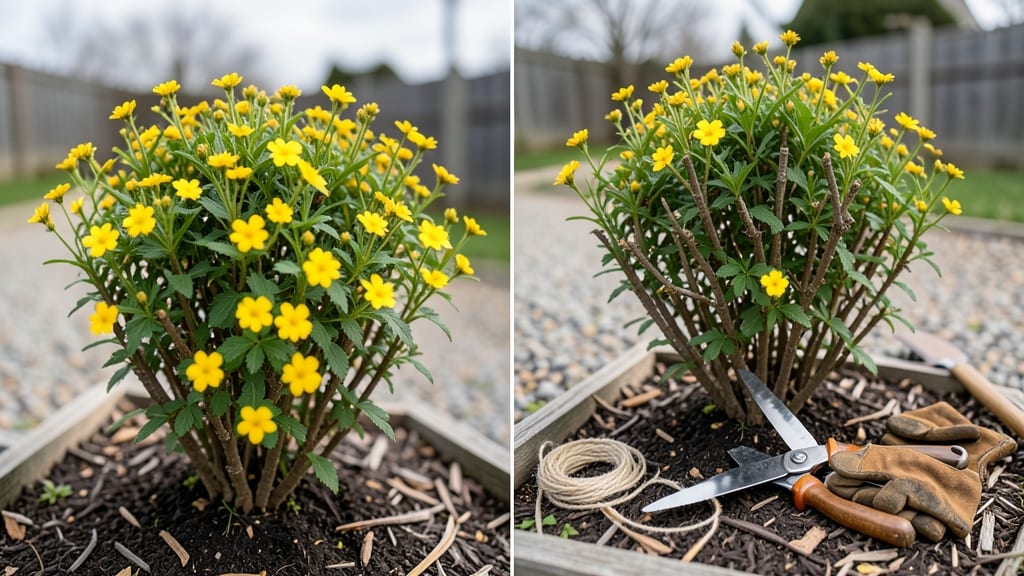
Pruning your potentilla bush isn’t just about shaping—it’s the secret to nonstop summer blooms that make neighbors stop and stare. 🌸 I’ve learned the hard way that skipping this step means fewer flowers and leggy branches, but mastering the right cuts transforms your bush into a lush, flowering machine.
The best time to prune is late winter or early spring, before new growth starts. Grab your pruners, gloves, and a bucket for clippings—you’ll need to cut back about one-third of the oldest stems to the ground.
This might sound drastic, but trust me, your bush will reward you with fresh, vibrant blooms by early summer. After pruning, watch for new shoots emerging within 2-3 weeks. Keep the soil moist but not soggy, and avoid heavy fertilizing right away—your bush needs time to recover.
The result? A bush that flowers from summer through fall, with fewer pests and stronger stems. This method works for all potentilla varieties, whether you’ve got the classic shrub type or the trailing kinds. The key is patience and precision—your bush will thank you with blooms that last.
📚 In This Guide
- What you need
- Instructions
- Tips and common mistakes
- Wrapping up and next steps
What you need
- ● Sharp bypass pruners – 1 pair (for clean cuts on smaller stems)
- ● Loppers – 1 pair (for thicker branches, 2–4 inches in diameter)
- ● Pruning saw – 1 (for stubborn, woody stems)
- ● Garden gloves – 1 pair (to protect hands from thorns and debris)
- ● Disinfectant (rubbing alcohol or 10% bleach solution) – small bottle (to sterilize tools between cuts)
- ● Rake or leaf blower – 1 (for clearing fallen leaves and debris)
- ○ Garden twine or ties – small roll (optional, for securing large branches temporarily)
- ● Hand pruners with a bypass blade – For precision trimming of delicate stems
- ● Garden shears – For shaping foliage if desired
- ● Pruning sealant – small tube (to protect large cuts from pests/disease)
- ● Wheelbarrow or bucket – 1 (for collecting pruned branches)
- ● Safety glasses – 1 pair (if working with heavy branches)
How to prune potentilla bushes for continuous blooms
Here’s how I keep my potentillas flowering all season long—no overgrown mess, just steady, vibrant blooms.
✂️ Step 1: Time Your First Cut for Early Spring
Prune your potentilla bushes in early spring, right as new growth begins but before buds swell. This is usually 3-4 weeks before your last frost date. You’ll see fresh, bright green shoots pushing through the old stems—wait until you spot at least 2-3 inches of new growth before cutting.
Use clean, sharp pruners to make your cuts at a 45-degree angle, about ¼ inch above a leaf node or outward-facing bud. This encourages bushier growth and prevents water from pooling on the stem. I always wear gloves—potentillas can have thorny stems!
✂️ Step 2: Remove Dead or Weak Wood
Scan the bush for dead, diseased, or crossing branches—these compete for nutrients and weaken the plant. Snip them back to the main stem or to a healthy bud. Dead wood is easy to spot: it’s brittle, brown, and won’t bend when you test it.
Thin out crowded stems to improve airflow and sunlight penetration. Aim to leave 3-5 strong, healthy stems per bush—this keeps the plant compact and encourages more blooms. If you’re unsure which stems to keep, prioritize the ones with the most vigorous new growth and best shape.
✂️ Step 3: Light Summer Pruning After Blooms Fade
Once your potentilla finishes flowering, give it a light trim in mid-summer to maintain shape and encourage another round of blooms. Cut back spent flower stems to just above the nearest set of healthy leaves or buds. This prevents the plant from wasting energy on seed production.
I like to shape the bush at this stage—remove any stems that are growing inward or rubbing against others. A well-shaped potentilla looks fuller and blooms more abundantly. Avoid heavy pruning now, though—just a light touch keeps the plant happy without shocking it.
✂️ Step 4: Final Prune in Late Fall or Early Winter
In late fall or early winter, after the plant has gone dormant, give it a harder prune to tidy up and prepare for next year. Cut back one-third of the oldest stems to the ground—this rejuvenates the bush and promotes fresh, vigorous growth in spring.
Leave the younger stems for now; they’ll carry next year’s blooms. If your potentilla is particularly leggy, you can trim it back even more, but don’t remove more than half the plant in one go. Mulch around the base afterward to protect the roots from winter cold.
⏰ Step 5: Monitor and Adjust Through the Seasons
Check your potentilla monthly during the growing season for any new growth or spent blooms. A little maintenance keeps it looking its best. If you notice yellowing leaves, it might need more sunlight or better drainage—adjust accordingly.
Real talk: Over-pruning is a common mistake. If you cut too much in one go, your bush might struggle to rebound. Stick to the thirds rule—never remove more than one-third of the plant in a single pruning session. With consistent care, your potentilla will reward you with nonstop color all season!
Tips & tricks for perfect potentilla bush pruning
These precision strategies will help you keep your potentillas looking their absolute best all season long.
Timing is Everything: The early spring cut is your most important window—don't rush it. I've learned the hard way that waiting until buds swell means you're cutting off potential blooms. Instead, focus on those 2-3 inches of fresh green growth pushing through. This timing ensures you're encouraging new growth while preserving next year's flower buds. If you're in doubt about frost dates, check your local agricultural extension service—they provide precise frost forecasts by region.
Cutting Angle Matters: That 45-degree angle isn't just for looks—it's a water-shedding technique. When you cut at this angle about ¼ inch above a leaf node, you create a natural barrier that prevents water from pooling on the stem, which can lead to rot. I always visualize making a tiny roof over the bud. This small detail makes a huge difference in plant health, especially in humid climates where fungal diseases can be a problem.
The Thirds Rule: Never remove more than one-third of the plant in a single pruning session. This is your safety net against over-pruning. In Step 4, when you're cutting back one-third of the oldest stems, think of it as creating space for new growth. I've seen gardeners accidentally remove half the bush in one go, and it takes years to recover. When in doubt, err on the side of caution—you can always prune more next season, but you can't un-cut what's already gone.
Seasonal Shape Maintenance: During that light summer trim (Step 3), focus on creating an open center rather than just cutting back. I like to shape my bushes into a rounded form, which improves airflow and sunlight penetration to the center. This open structure prevents disease and encourages more blooms. Think of it like styling hair—you want volume at the base and a natural taper toward the top. A well-shaped potentilla will look fuller and bloom more abundantly throughout the season.
Pro Tips for Potentilla Bush Pruning
- These precision strategies will help you keep your potentillas looking their absolute best all season long.
- Timing is Everything: The early spring cut is your most important window—don't rush it.
- Cutting Angle Matters: That 45-degree angle isn't just for looks—it's a water-shedding technique.
Frequently asked questions
Got questions about keeping your Potentilla bush in tip-top shape? You’re not alone! Here are some of the most common queries—and their straightforward answers—to help you prune like a pro.
When is the best time to prune a Potentilla bush?
Prune your Potentilla late winter or early spring (just before new growth starts) to encourage vigorous blooms. For light shaping, you can also trim after flowering in summer—but avoid heavy cuts then. Never prune in fall; it can leave the plant vulnerable to cold damage.
How much should I cut back my Potentilla bush?
For most varieties, cut back about one-third of the plant’s height to a strong set of buds. If your bush is overgrown, you can reduce it by half, but avoid removing more than ⅓ in a single season. Dead or diseased stems should be cut to the ground immediately.
What if my Potentilla bush doesn’t bloom after pruning?
Lack of blooms often means pruning too late or cutting back too aggressively. Ensure you prune in late winter/early spring and leave some old wood (Potentillas bloom on both new and old growth). If the issue persists, check for over-fertilizing with high nitrogen, which promotes leafy growth over flowers.
Can I prune Potentilla bushes in containers differently?
Container-grown Potentillas follow the same rules, but prune slightly earlier (late winter) to account for limited root space. Thin out crowded stems to improve airflow, and repot every 2–3 years to refresh the soil. Use well-draining potting mix to prevent root rot, which can stress the plant after pruning.
What should I do if I accidentally prune too much?
Don’t panic! If you’ve over-pruned, stop cutting immediately and focus on care. Keep the soil moist (but not soggy) and fertilize lightly with a balanced, bloom-boosting formula (like 10-10-10). Your Potentilla may take a year to recover, but it’ll bounce back with proper attention.
Wrapping up and next steps
Mastering potentilla bush pruning is your ticket to vibrant, long-lasting blooms and a thriving garden!
With the right tools, timing, and techniques—like deadheading spent flowers and shaping for airflow—you’ll keep your potentilla looking its best year-round. Don’t let fear of pruning hold you back—every snip is a step toward a healthier, more beautiful bush!
Ready to take action? Grab your pruners and schedule that pruning session—your potentilla (and your garden’s curb appeal) will thank you! For extra confidence, revisit the FAQs or watch a quick tutorial before you start.