
Pruning
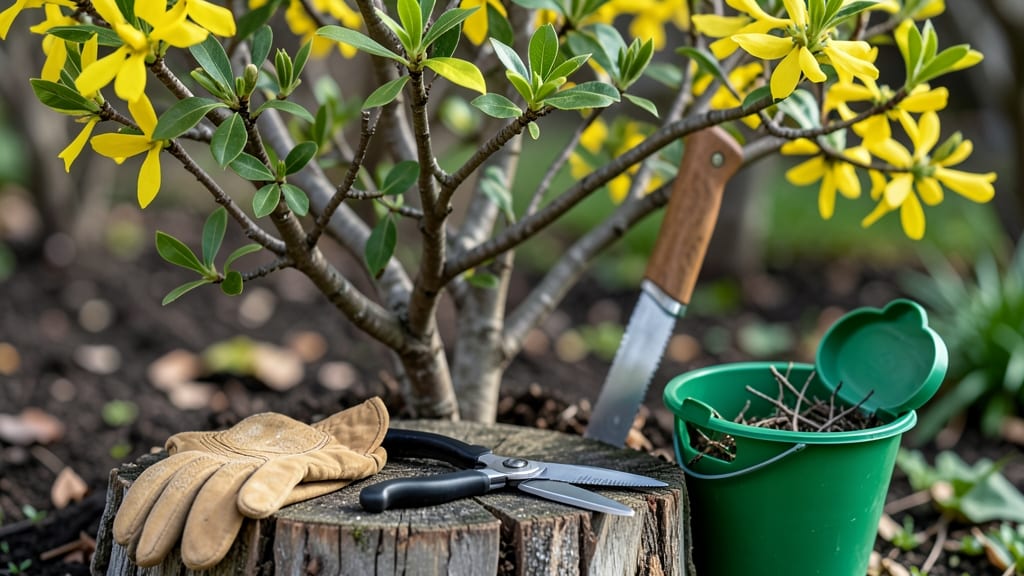
When your forsythia looks like a tangled mess instead of a golden spring showstopper, pruning overgrown forsythia isn’t just about cleaning up—it’s about reviving its blooming power.
I’ve turned my own unruly bush from a chaotic tangle into a neat, vibrant focal point that neighbors admire, and the secret lies in strategic cuts made at the right time. The key? Timing, technique, and knowing exactly where to cut to encourage lush regrowth—not just random hacking.
You’ll need sharp bypass pruners, a sturdy ladder (for those high branches), and a clear sunny day. The best time to prune is right after flowering, when the plant has finished blooming for the season. This gives it the entire growing season to recover before winter.
Most people make two critical mistakes: pruning too late (after summer growth starts) or cutting into old wood (the thick, woody stems that won’t regrow). We’re going to avoid both—promise.
By following these steps, you’ll end up with a bush that’s dense with new growth and covered in even more cheerful yellow blooms next spring. The cuts you make now will determine how full and healthy your forsythia looks in just a few months.
Think of it as a reset button for your shrub—one that actually works. Let’s get those branches under control without sacrificing next year’s flowers.
This method works for any forsythia variety, whether it’s a mature bush or one that’s just gotten a little out of hand. The principles stay the same: cut back one-third of the oldest stems each year, always cutting just above a bud or branch junction.
Even if your forsythia is currently more "wild thicket" than "manicured beauty," you’ll have it back to its best in no time. Ready to transform that jungle into a showpiece?
📚 In This Guide
- What you need
- Instructions
- Tips and common mistakes
- Wrapping up and next steps
What you need
- ● Pruning shears – Bypass pruners (for small branches, 5–7 inches long) or anvil pruners (for thicker stems, up to 1 inch in diameter). Sharpness is key!
- ● Loppers – Bypass-style, with a 12–16-inch cutting range for medium branches (1–2 inches thick). Leverage handles reduce strain.
- ● Pruning saw – For branches thicker than 2 inches. Choose a bow saw or pruning saw with a fine-toothed blade.
- ● Garden gloves – Heavy-duty, cut-resistant (e.g., leather or synthetic mesh) to protect hands from thorns and rough bark.
- ○ Disinfectant (optional but recommended) – Rubbing alcohol (70%+) or a pruning sealant to sterilize tools between cuts and prevent disease spread.
- ● Bucket or trash bag – For collecting pruned branches and debris.
- ● Step stool or ladder – If your forsythia is taller than 6 feet, use a stable, non-slip stool or ladder with a weight limit of at least 250 lbs.
- ● Hand pruners with a ratchet mechanism – For easier cutting of stubborn branches.
- ● Extension pole pruners – If you’re dealing with very tall or hard-to-reach branches.
- ● Sharpie or permanent marker – To mark branches for removal if you’re unsure about cuts.
- ● Compost bin or green waste bag – For repurposing pruned branches as mulch.
- ● Safety glasses – To protect eyes from flying debris, especially when using a saw.
How to prune overgrown forsythia for healthier growth and better blooms
Forsythia thrives when pruned correctly—here’s how to transform tangled growth into a vibrant, blooming shrub.
Time Your Prune for Maximum Impact
Prune forsythia immediately after it finishes blooming, typically in late spring (around May or June). This ensures you don’t cut off next year’s flower buds, which form on old wood. If you missed the window, wait until early summer—just avoid pruning in fall or winter, as it leaves the plant vulnerable to cold damage.
Check your plant’s bloom cycle first. If flowers are already fading, it’s safe to prune. If buds are still tight and green, wait a few weeks. Forsythia blooms early, so timing is everything—this is the moment that matters.
Assess and Plan Your Cuts
Step back and examine the shrub’s structure. Look for crossing branches (rubbing against each other), dead or diseased wood (brown, brittle stems), and overly dense growth (where sunlight can’t penetrate). Use clean, sharp pruning shears to make precise cuts—dull tools tear bark and invite disease.
Focus on thinning out rather than shearing. Remove 1/3 of the oldest stems at the base to encourage new growth. This rejuvenates the plant and prevents a woody, leggy appearance. Mark branches to remove with a piece of tape or twine before cutting—it’s easier to visualize the final shape this way.
Make Clean, Strategic Cuts
For dead or diseased branches, cut back to healthy green wood just above a outward-facing bud. Angle the cut slightly downward to prevent water from pooling. If a branch is too thick (over 1 inch in diameter), make the cut in three stages to avoid tearing the bark—start with an undercut, then a top cut, and finish by removing the branch.
For crossing or rubbing branches, remove the weaker of the two. If both are strong, prune the one growing inward. Never leave stubs—cut back to the branch collar (the swollen area where the branch meets the trunk). This ensures proper healing and reduces the risk of rot.
Shape and Encourage Future Blooms
After removing deadwood and crossing branches, step back and assess the shrub’s shape. Forsythia responds well to an open, vase-like form—this allows sunlight to reach the center, promoting more blooms. Avoid heavy shearing (like topiary), as forsythia blooms on old wood and needs natural structure.
Once pruned, water deeply to help the plant recover. Apply a balanced, slow-release fertilizer (like 10-10-10) to support new growth. Forsythia is hardy, but a little extra care now means brighter blooms next spring. Expect to see new shoots within 4-6 weeks—that’s your signal the prune worked.
Clean Up and Monitor Progress
Rake up and dispose of all pruned debris to reduce disease risk. Sterilize your pruning tools with rubbing alcohol or a 10% bleach solution (1 part bleach to 9 parts water) to prevent spreading pathogens. Forsythia is tough, but proper cleanup keeps it that way.
Watch for new growth in the center of the shrub—this is where future blooms will form. If you notice yellowing leaves or stunted growth, it could mean over-pruning or poor soil. In that case, add compost and mulch around the base to improve soil health. With the right cuts, your forsythia will bounce back stronger than ever.
Tips & tricks for pruning overgrown forsythia
Real talk: Pruning forsythia is more about strategy than brute force. These are the secrets that'll help you avoid common mistakes and get results that look like you hired a pro.
Timing is Everything: The late spring window (after blooms fade but before buds form) is non-negotiable. I've seen people prune in fall and wonder why their forsythia didn't bloom the next spring—those buds were already cut off! If you missed this year's window, early summer is your second chance. The plant's natural cycle is what determines success here.
Visualize Before You Cut: Here's what nobody tells you—mark branches to remove with tape before you start cutting. This simple step prevents that "I cut too much" panic. I always step back and mentally trace the vase-like shape I want, then mark the branches blocking light from reaching the center. It's like giving your plant a makeover blueprint.
Cutting Technique Matters: That three-stage cut for thick branches (over 1 inch) isn't just for show—it prevents bark tearing that invites disease. Start with the undercut, then the top cut, and finish by gently twisting the branch free. I've seen people skip this and end up with ugly tears that take forever to heal. The branch collar is your friend—always cut there for clean healing.
Recovery Care: After pruning, your forsythia needs a little TLC. That deep watering and fertilizer application in Step 4 isn't optional—it's what turns a good prune into a great one. I've noticed plants that get skipped on this step often show slower regrowth. Think of it as post-op care for your shrub. And watch for those new shoots in 4-6 weeks—they're your promise of next year's blooms.
Pro Tips for Prune Overgrown Forsythia
- Real talk: Pruning forsythia is more about strategy than brute force. These are the secrets that'll help you avoid co...
- Timing is Everything: The late spring window (after blooms fade but before buds form) is non-negotiable. I've seen pe...
- Visualize Before You Cut: Here's what nobody tells you—mark branches to remove with tape before you start cutting. Th...
Frequently asked questions
Got questions about tackling that unruly forsythia? You’re not alone! Here are answers to the most common concerns about pruning overgrown forsythia—so you can restore its glory without the guesswork.
When is the best time to prune forsythia?
Prune forsythia right after it blooms (typically late March to early May) to encourage dense, vibrant flowers next year. Avoid pruning in fall or winter—this shrub blooms on old wood, so cutting too late removes next year’s flower buds! For severely overgrown bushes, you can do a light structural prune in late summer to shape it, but avoid heavy cuts.
How much can I cut back my forsythia?
For most overgrown forsythia, never remove more than 1/3 of the plant in a single year. If your shrub is wildly out of control, spread pruning over 2–3 years to avoid stress. Focus on dead, crossing, or weak branches first, then thin out the center to improve airflow. Never cut back to the ground—this will kill the shrub!
Will pruning reduce next year’s flowers?
Pruning after blooming won’t hurt next year’s flowers—in fact, it boosts them! The key is timing: Cutting before flowers appear removes the buds for that season. If you prune too late (after June), you may see fewer blooms next year. For the best results, prune immediately after flowers fade to maximize next season’s display.
What if my forsythia doesn’t bloom after pruning?
If your forsythia skips blooming post-prune, check these fixes:
- Timing issue: Did you prune before flowers appeared? Shift to pruning after blooms next year.
- Over-pruning: If you cut too aggressively, the plant may focus on regrowth. Stick to 1/3 max per year.
- Sunlight: Forsythia needs full sun (6+ hours/day). Shady spots reduce blooms.
- Age: Older shrubs may bloom less. Rejuvenate with annual light pruning and fertilizer.
Give it a year—forsythia often rebounds with even bigger blooms after proper pruning!
Are there alternatives if my forsythia is too far gone?
If your forsythia is severely diseased, dead, or beyond saving, consider these options:
- Replace it: Plant a new forsythia (like ‘Spectabilis’ or ‘Lynwood Gold’) in the same spot for instant color.
- Try a similar shrub: Weigela, abelia, or spirea offer spring blooms with easier pruning.
- Divide and propagate: If the roots are healthy, dig up sections to replant elsewhere.
Don’t rush to remove it—forsythia is hardy! But if it’s yellowing, dying back, or covered in pests, replacement may be kinder.
Wrapping up and next steps
Pruning your overgrown forsythia doesn’t have to be daunting—it’s all about timing, technique, and a little patience. 🌸 By following strategic cuts, you’ll encourage healthier growth, denser blooms, and a beautifully shaped shrub.
Remember, the best time to act is right after flowering, and always use sharp tools to make clean cuts.
Now that you’re armed with the know-how, roll up your sleeves and give your forsythia the fresh start it deserves! For even more pruning confidence, explore our gardening resources or connect with local horticulture groups for hands-on tips. Happy pruning—your garden will thank you! 🌿