
Pruning
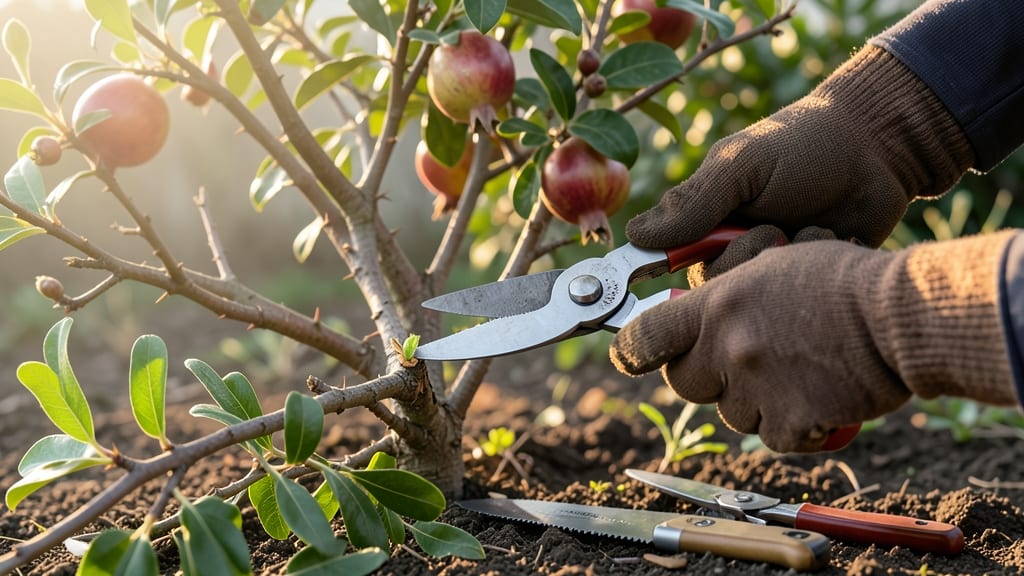
Pruning your pomegranate bush in late winter gives it a clean slate for explosive summer growth. ✂️ I’ve turned my once-scrubby bush into a fruit-bearing powerhouse by cutting back just right—no fancy tools or horticultural degree required.
The key is timing: dormant season pruning (when the bush looks like a stick forest) forces energy into fewer, stronger canes that produce bigger, sweeter fruit.
You’ll need sharp pruners, rubbing alcohol for sterilizing cuts, and a bucket for trimmings. The goal is to remove dead wood first, then thin out crowded branches to let light and air reach the center.
Think of it like giving your bush a haircut—too little and it gets wild, too much and you stunt its growth. I’ve found that cutting back one-third of the oldest canes each year keeps the plant balanced without sacrificing next season’s harvest.
After pruning, your bush will reward you with fresh green shoots by spring and heavier fruit production by fall. The cuts heal quickly, and the plant focuses its energy on plump, vibrant fruit instead of weak, spindly growth.
Just avoid pruning in late summer—you’ll trigger new growth that won’t harden off before winter, leaving tender canes vulnerable to frost.
For best results, prune on a dry day when the bush is fully dormant (after the last frost but before buds swell). If you’re in a warmer climate, aim for late winter to early spring—just don’t wait until the leaves appear.
A little annual maintenance now means fewer surprises (and more fruit) later. Ready to transform that tangled mess into a productive powerhouse?
📚 In This Guide
- What you need
- Instructions
- Tips and common mistakes
- Wrapping up and next steps
What you need
- ● Pruning shears (bypass or anvil type) – Sharp, clean, and sterilized (preferably with a 6-8" blade for thicker canes).
- ● Loppers – For branches ½" to 2" in diameter (bypass style recommended).
- ● Pruning saw – For stubborn, thick canes (3"+ diameter).
- ● Disinfectant (70% isopropyl alcohol or bleach solution) – 1 part bleach to 9 parts water (to prevent disease spread).
- ● Garden gloves – Durable, cut-resistant (thorns are no joke!).
- ● Rake or broom – For clearing debris post-prune.
- ○ Marking twine or flags – Optional but helpful for labeling cuts if needed.
- ● Hand pruners with a crimping tool – For sealing larger cuts (reduces sap loss).
- ● Pruning sealant – Only use if your bush is in a dry climate (controversial—skip if unsure!).
- ● Notebook & pen – To sketch your pruning plan or track growth.
- ● Wheelbarrow or bucket – For hauling clippings away.
- ● Wait until dormant season (late winter/early spring, before buds swell).
- ● Check local frost dates—prune after the last expected frost.
- ● Gather inspiration! Study your bush’s structure before cutting.
Step-by-Step instructions for pruning a pomegranate bush
Here's the method I've used for years to keep my pomegranate bushes healthy and productive.
✂️ Step 1: Time Your Pruning for Dormancy
Prune your pomegranate bush during its dormant season, which is typically late winter to early spring before new growth begins. In most climates, this means February to March when temperatures are consistently below 50°F. The goal is to shape the bush while it's resting, so it can focus all its energy on new growth and fruit production in spring.
If you live in a warmer climate where winter is mild, you can prune in late fall after the leaves have dropped. Avoid pruning in late summer or fall in colder regions—this can stimulate new growth that won't harden off before winter, leaving it vulnerable to frost damage. You'll know it's the right time when the bush looks completely bare and the ground is dry.
✂️ Step 2: Remove Dead, Diseased, or Weak Canes
Start by inspecting the bush for any dead, diseased, or weak canes. Dead canes are dry, brittle, and often dark or grayish in color. Diseased canes may have black spots, mold, or oozing sap. Weak canes are thin, spindly, and lack the sturdy structure of healthy growth. Use clean, sharp pruning shears to cut these canes back to the ground or to a healthy bud if they're still attached near the base.
This step is critical because dead and diseased wood can spread pathogens to healthy parts of the plant. I always disinfect my pruning tools with rubbing alcohol between cuts to prevent cross-contamination. If you find any canes with signs of fungal disease, like powdery mildew, remove them immediately and dispose of them in the trash—not the compost pile.
✂️ Step 3: Thin Out Overcrowded Branches
Next, focus on thinning out the bush to improve airflow and sunlight penetration. Pomegranate bushes produce fruit on new wood, so you want to maintain a balance of old and new growth. Look for branches that are growing inward or rubbing against each other—these should be removed entirely. Aim to create an open center with branches spaced 6-12 inches apart.
I like to step back and visualize the bush as a vase shape, with the widest part near the base and tapering slightly toward the top. This shape allows sunlight to reach all parts of the plant, which is essential for fruit development. If you're unsure which branches to remove, err on the side of caution and leave more—you can always prune back further next year.
✂️ Step 4: Shape the Bush for Optimal Growth
Now it's time to shape the bush by cutting back the remaining branches. Start with the oldest canes—these are usually the largest and may be 3-5 years old. Cut these back by one-third to one-half of their length to encourage new growth. This rejuvenates the bush and ensures it doesn't become too woody or unproductive.
For younger canes, you can be more selective. Look for branches that are growing in the direction you want the bush to expand. If a branch is growing too close to another or is weak, cut it back to a healthy bud or lateral branch. Always make your cuts at a 45-degree angle, about 1/4 inch above a leaf node or outward-facing bud. This encourages the plant to grow outward rather than inward.
🪴 Step 5: Clean Up and Apply Mulch
After pruning, gather all the clippings and dispose of them properly. If the branches were healthy, you can chop them into smaller pieces and use them as mulch around the base of the bush. However, if any branches showed signs of disease, bag them and throw them away to prevent the spread of pathogens.
Apply a 2-3 inch layer of mulch around the base of the bush, keeping it 6 inches away from the trunk to prevent rot. I use shredded bark or wood chips because they break down slowly and improve soil moisture retention. Water the bush deeply after pruning to help it recover and encourage new growth. Avoid fertilizing immediately after pruning—wait until new growth appears in spring.
Tips & tricks for pruning a pomegranate bush
These simple strategies will help you prune like a pro and keep your pomegranate bush thriving for years.
Timing is Everything: The dormant season timing in Step 1 is crucial—don't rush it! I've learned the hard way that pruning too early can stimulate unwanted growth before the bush is ready. Wait until the ground is dry and the bush is completely bare, even if that means delaying until late March in colder climates. This ensures the plant puts all its energy into new, healthy growth rather than trying to recover from premature pruning.
Tool Prep Matters: Before you even touch a branch in Step 2, disinfect your pruning shears with rubbing alcohol. I keep a small bottle of 70% isopropyl alcohol in my gardening toolkit—it's the easiest way to prevent spreading disease between cuts. If you're working with multiple bushes, wipe down your tools after every 3-4 cuts. This small step can save your entire garden from fungal infections.
Visualize the Shape: When thinning branches in Step 3, step back frequently to visualize the vase shape mentioned. I like to use a small garden flag or stake to mark the center of the bush as my reference point. This helps me maintain that crucial 6-12 inch spacing between branches. Think of it like creating a window—you want sunlight to flow through the center to reach all parts of the plant.
Cutting Technique: The 45-degree angle mentioned in Step 4 might seem tricky, but it's worth mastering. Practice on small branches first to get comfortable—you want to cut just above a leaf node or outward-facing bud. This angled cut prevents water from pooling where the branch connects to the main stem, which reduces rot risk. I use a small piece of tape on my shears as a guide to maintain consistent angles.
Pro Tips for Prune Pomegranate Bush
- These simple strategies will help you prune like a pro and keep your pomegranate bush thriving for years.
- Timing is Everything: The dormant season timing in Step 1 is crucial—don't rush it! I've learned the hard way that pr...
- Tool Prep Matters: Before you even touch a branch in Step 2, disinfect your pruning shears with rubbing alcohol. I ke...
Frequently asked questions
Got questions about pruning your pomegranate bush? You’re not alone! Here are some of the most common queries—and their straightforward answers—to help you tackle dormant-season pruning like a pro.
When is the best time to prune a pomegranate bush?
The ideal window is late winter to early spring, just before new growth begins—but after the coldest snaps. In warmer climates (zones 8-11), prune in January–February. Avoid pruning in fall, as it can stimulate tender growth that may freeze.
How much can I cut back a pomegranate bush?
For established bushes, aim to remove 20–30% of the oldest canes (those 3+ years old) to encourage new, vigorous growth. Never cut more than 1/3 of the plant in one season—this can stress the bush and reduce fruit production. Think of it as a haircut, not a buzz cut!
What if my pomegranate bush isn’t producing fruit?
Lack of fruit often stems from overcrowded canes or poor pruning habits. Thin out thin, weak, or crossing branches to improve airflow and sunlight penetration. Also, ensure your bush gets full sun (6+ hours/day) and well-draining soil. Patience matters—young bushes may take 2–3 years to bear fruit after pruning.
Can I prune a pomegranate bush in summer?
While you can prune in summer (to shape or remove diseased branches), it’s not ideal for major structural cuts. Summer pruning can stress the plant and may reduce next year’s fruit set. If you must, do it early summer (June) and keep cuts small. Always sterilize tools to prevent infections!
What should I do with the pruned branches?
Use pruned branches for compost, mulch, or even propagation! Cut healthy canes into 6–12" sections, let them dry for a day, then plant them in soil. Pomegranates root easily—just keep them moist until new growth appears. Avoid burning branches unless they’re diseased.
How do I know if I’ve pruned too much?
Watch for yellowing leaves, stunted growth, or no new buds in spring. If your bush looks shocked (like it’s in survival mode), you’ve likely over-pruned. Next time, err on the side of less—pomegranates are resilient but not invincible!
Wrapping up and next steps
Pruning your pomegranate bush during the dormant season isn’t just about tidying up—it’s a power move for healthier canes and a bountiful harvest! 🌱 By removing dead wood, thinning crowded branches, and shaping the plant, you’re setting the stage for stronger growth and sweeter fruit.
With the right tools, timing, and technique, you’ll turn pruning from a chore into a rewarding ritual.
Now that you’re armed with knowledge, grab your pruners and get pruning! Start small if you’re new, and soon you’ll be a pro. Happy growing—and here’s to next year’s juiciest pomegranates! 🍇✨