
Pruning
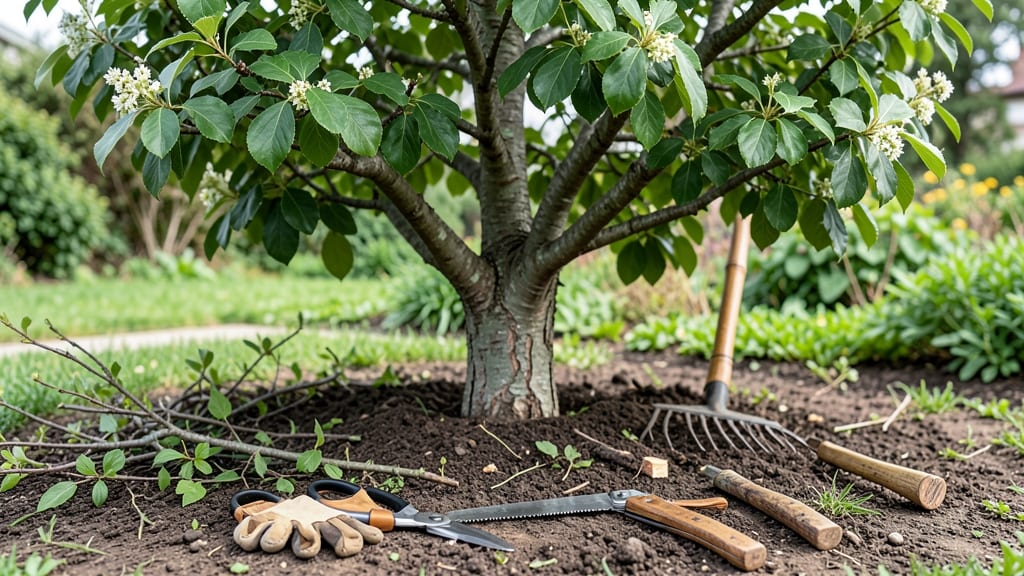
Late-winter is when serviceberry trees wake up from dormancy—and that’s exactly when you should prune them. ✂️ I’ve learned the hard way that skipping this step means weaker canes, fewer spring blooms, and less fruit for wildlife.
The best time is just before buds swell, when the tree’s energy is low but the branches are still visible. You’ll need three basic tools: sharp bypass pruners for small branches, a pruning saw for thicker stems, and gloves to protect against thorns.
Serviceberries respond best to open-center shaping, where you remove crossing branches and dead wood while keeping the center airy. This encourages strong new growth where fruit forms. After pruning, you’ll notice more sunlight reaching the center and fewer crowded branches competing for resources.
The tree will reward you with healthier blooms in spring and a bumper crop of berries for birds and humans alike. Just avoid cutting into old wood—serviceberries fruit on new growth from current season’s branches.
For post-pruning care, water deeply if winter was dry, and watch for signs of stress like yellowing leaves. A light application of balanced fertilizer in early spring helps recovery. This isn’t just pruning—it’s setting your tree up for a decade of productivity.
📚 In This Guide
- What you need
- Instructions
- Tips and common mistakes
- Wrapping up and next steps
What you need
- ● Pruning shears (bypass or anvil) – Sharp, clean blades (10–12" for small branches, 14–16" for thicker canes). Disinfect with rubbing alcohol between cuts to prevent disease.
- ● Loppers – For branches ½–2 inches thick (long-handled for reach).
- ● Pruning saw – For thick canes (2+ inches) (bow saw or curved-blade preferred).
- ● Garden gloves – Cut-resistant (e.g., leather or reinforced nitrile) to protect hands from thorns and splinters.
- ● Ladder or step stool – For tall trees (6+ feet) (stable, non-slip surface).
- ○ Disposable pruning sealant – Optional but helpful for sealing large cuts (e.g., Tree Wound Pruning Sealant).
- ● Trash bags or bucket – For removing debris (wet branches = heavy!).
- ● Sharpie or permanent marker – To mark branches for removal (if planning ahead).
- ● Extension pole saw – For high branches without a ladder.
- ● Rubbing alcohol (70%+) – To sterilize tools between cuts.
- ● Tree paint or pruning paste – For large cuts (1+ inch diameter) (controversial but some swear by it!).
- ● Work boots with ankle support – For uneven terrain.
- ● Safety glasses – To protect eyes from debris.
Step-by-step guide to pruning serviceberry trees in late winter
Late winter is the perfect time to shape your serviceberry tree for better fruit production and airflow.
✂️ Step 1: Remove Dead, Diseased, or Damaged Branches
Start by identifying branches that are completely dead (no green bark when scratched) or diseased (mushroom growth, oozing sap, or unusual cankers). Use sharp pruning shears to make clean cuts just outside the branch collar—the swollen area where the branch meets the trunk. This ensures the tree can seal the wound properly and prevents infection.
For larger branches over ½ inch thick, use a pruning saw. Cut on the underside of the branch at a slight angle to avoid tearing the bark. You'll see healthier canes emerge from the center of the tree as you remove these problem branches, which improves light penetration and air circulation.
✂️ Step 2: Thin Out Crowded or Rubbing Branches
Look for branches that cross each other or rub against one another—these create wounds that invite pests and disease. Remove the weaker of the two branches by cutting back to the branch collar. This step opens up the tree's canopy, allowing sunlight to reach the inner branches where fruit develops.
Also target branches growing straight upward ("water sprouts") or those that grow inward toward the center. These compete for energy and reduce fruit production. Aim to maintain an open, vase-like shape with branches spaced 12-18 inches apart along the main trunk.
✂️ Step 3: Prune to Encourage Flowering and Fruit Production
Serviceberries produce fruit on one-year-old wood, so avoid heavy pruning that removes too many flowering branches. Focus on light pruning—removing no more than 20-25% of the tree's total canopy in a single season. Cut back some of the oldest, largest branches by ⅓ of their length to rejuvenate growth and stimulate new flowering shoots.
Watch for "sucker" growth at the base of the tree—these vigorous shoots steal energy from fruit production. Remove them completely at ground level. You'll notice new, vigorous shoots emerging from the main trunk and branches after pruning, signaling the tree is redirecting energy toward fruit-bearing wood.
✂️ Step 4: Clean Up and Sterilize Tools
After pruning, gather all cuttings and dispose of them in a sealed bag or burn them to prevent disease spread. Wipe your pruning shears and saw with 70% isopropyl alcohol or a 10% bleach solution (1 part bleach to 9 parts water) to sterilize them. This step is critical for preventing fungal spores from transferring to healthy branches.
Finally, apply a thin layer of pruning sealant to cuts larger than ¼ inch to protect against moisture loss and infection. The sealant should be water-based and specifically labeled for fruit trees. You'll see the tree's wounds heal within 2-3 weeks, with new growth appearing by early spring.
Tips & tricks for pruning serviceberry trees
Here's what I've learned after years of shaping these beautiful trees—these details make all the difference.
Branch Collar Precision: The branch collar is your secret weapon. When removing branches in Step 1, look for that swollen area where the branch meets the trunk—it's nature's sealant. Cutting just outside this collar (not flush with the trunk) ensures the tree can heal properly. I've seen too many pruning jobs where cuts were made too close, leaving ugly wounds that never close. Use a sharp tool and make clean cuts at a slight angle on the underside for larger branches.
Light Pruning Strategy: Remember, serviceberries produce fruit on one-year-old wood, so we're working with a delicate balance. In Step 3, when cutting back those oldest branches by ⅓, focus on the largest ones first. This stimulates new growth while preserving the flowering branches. I learned this the hard way—after removing too much canopy in one season, my tree struggled to produce fruit the following year. Think of it as giving your tree a haircut rather than a shave.
Tool Sterilization: Step 4 isn't just about cleanup—it's about protecting your tree's future health. That 10% bleach solution is your best friend here. I've seen fungal infections spread rapidly through trees when pruners weren't properly sterilized between cuts. After cleaning, always apply that water-based pruning sealant to any cuts larger than ¼ inch. You'll notice the difference in how quickly those wounds heal—typically within 2-3 weeks—as new growth emerges in early spring.
Pro Tips for Pruning A Serviceberry Tree
- Here's what I've learned after years of shaping these beautiful trees—these details make all the difference.
- Branch Collar Precision: The branch collar is your secret weapon. When removing branches in Step 1, look for that swo...
- Light Pruning Strategy: Remember, serviceberries produce fruit on one-year-old wood, so we're working with a delicate...
Frequently asked questions
Got questions about pruning your serviceberry tree? You’re not alone! Here are answers to the most common concerns—so you can confidently shape your tree for bountiful blooms and strong canes.
When is the absolute best time to prune a serviceberry tree?
The ideal window is late winter (just before buds swell) or early spring—this prevents disease spread and encourages vigorous growth. Avoid pruning in fall (unless removing dead wood), as wounds may not heal before winter. Pro tip: If you miss late winter, wait until summer (but avoid heavy cuts then).
How much can I trim back a mature serviceberry tree?
For mature trees, never remove more than 25% of the canopy in a single year—this prevents stress. Focus on dead, diseased, or crossing branches first, then thin out crowded growth to improve airflow. Young trees (under 5 years) can handle light shaping (10-15% max) to encourage structure.
What if my serviceberry isn’t flowering after pruning?
Serviceberries bloom on old wood, so avoid heavy pruning in late winter/early spring if flowers are already visible. If blooms are sparse, check for:
Wait until after flowering to prune if blooms are a priority!
Can I prune a serviceberry tree in winter if it’s still snow-covered?
Yes! Late winter (after snowmelt but before buds break) is perfect—just avoid frosty days when branches are brittle. If pruning during a cold snap, work on warmer days (above 40°F) and sterilize tools with rubbing alcohol to prevent bacterial spread.
Are there any alternatives to traditional pruning for serviceberries?
If you’re short on time, try selective thinning (removing only dead or rubbing branches) to maintain health without heavy cuts. For wild or neglected trees, gradual pruning over 2–3 years (removing 10% annually) reduces shock. Note: Serviceberries thrive with minimal intervention—focus on removing what’s unnecessary rather than aggressive shaping.
Wrapping up and next steps
Pruning your serviceberry tree in late winter isn’t just a chore—it’s a gift that sets the stage for vibrant blooms, lush canes, and a bountiful harvest of berries.
By removing dead wood, thinning crowded branches, and shaping the tree with care, you’re investing in its long-term health and beauty. Now’s the time to take action!
Ready to roll up your sleeves? Grab your pruners, review your notes, and head out to your serviceberry with confidence. Every cut is a step toward a thriving tree—and a garden you’ll love for years to come. Happy pruning! 🌿✂️