
Pruning
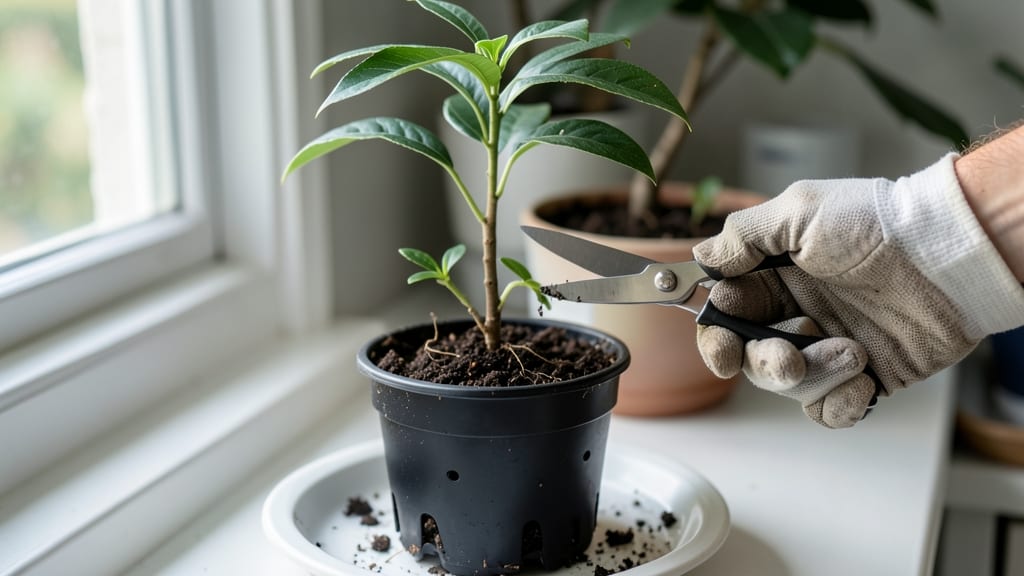
Pruning an avocado seedling isn't just about trimming—it's about teaching your tree to grow strong from the start. ✂️ I learned the hard way that skipping this step leads to leggy, weak plants that struggle to support fruit later.
The right cuts now mean a sturdy, productive tree in years to come, with a canopy that catches sunlight efficiently and resists disease. You'll need just three things: sharp pruning shears, rubbing alcohol (to sterilize between cuts), and a clear day to work.
The process takes less than 10 minutes for a young seedling, but the long-term payoff is worth every minute. We're talking a tree that grows 12-18 inches per year with proper care, not one that stretches toward the light like a desperate teenager.
Start by removing any dead or crossing branches at the base—these compete with your plant for resources. Then focus on shaping: aim for an open center with branches spaced 6-12 inches apart. The goal is sunlight reaching all parts of the canopy, not just the outer edges.
After pruning, wipe your shears with alcohol to prevent spreading any potential infections. This method works year-round for young seedlings, though winter pruning is gentler on the plant. The key is consistency: a little maintenance now prevents major structural problems later.
Your avocado will thank you with thick, healthy stems ready to bear fruit when the time comes.
📚 In This Guide
- What you need
- Instructions
- Tips and common mistakes
- Wrapping up and next steps
What you need
- ● Pruning shears or bypass pruners – Sharp, clean, and sterilized (7- to 10-inch blades work best for seedlings). Must be sharp to avoid crushing stems.
- ○ Disposable gloves – Nitrile or latex-free (to avoid sap irritation). Optional but recommended for messy or thorny varieties.
- ● Rubbing alcohol (70% or higher) or bleach solution – For sterilizing tools between cuts (1 part bleach to 9 parts water).
- ○ Pruning sealant (optional but helpful) – Wound sealant like Tree Seal or pruning wax to prevent disease entry (for cuts larger than ½ inch).
- ● Small bucket or tray – To collect clippings and debris for composting or disposal.
- ● Sharp pencil or marker – For labeling branches if you’re training the seedling (e.g., marking future cuts).
- ● Loppers (for thicker stems) – If your seedling has woody growth (3/8 inch or thicker), a 10-inch lopper with bypass blades is ideal.
- ● Hand saw (for stubborn branches) – A pruning saw with a fine-tooth blade for larger, stubborn stems.
- ● Hose or spray bottle with water – To clean tools and rinse sap off hands after pruning.
- ● Garden twine or plant ties – If you’re shaping the seedling (e.g., staking or training branches).
- ● Fungicide spray (copper-based) – For post-pruning treatment if your area has high humidity or disease risk.
- ● Healthy seedling – Wait until your avocado seedling is at least 6–12 months old and has 3–5 sturdy branches before pruning.
- ● Good weather – Prune on a dry, overcast day or in the early morning to reduce stress on the plant.
- ● Clean workspace – Remove weeds, debris, and pests around the base of the seedling to avoid contamination.
How to prune avocado seedlings for a healthier, fuller tree
Pruning young avocado seedlings might seem intimidating, but it’s the secret to a strong, productive tree. Here’s my straightforward approach—no fancy tools, just smart cuts.
✂️ Step 1: Identify and Remove Dead or Weak Branches
Start by inspecting your seedling for any branches that look brown, brittle, or completely lifeless. These are easy to spot—they won’t bend, and the bark might peel or crack. Use clean, sharp pruning shears to snip these branches all the way back to the main stem or a healthy bud. If a branch is only partially dead, cut it back to the last healthy section.
This step is all about cleanup. Dead branches don’t just look ugly—they can harbor pests and diseases that might spread to the rest of your tree. I always prune these first because it’s the least risky part of the process. You can’t mess this up, so don’t overthink it.
✂️ Step 2: Shape the Canopy by Pruning Overlapping or Crossing Branches
Next, look for branches that are rubbing against each other or growing inward toward the center of the tree. These are called "water sprouts" or "crossing branches," and they’ll eventually weaken the tree by competing for sunlight and nutrients. Use your pruning shears to make a clean cut just above a leaf node or outward-facing bud. This encourages the tree to grow outward rather than inward.
Here’s the thing—you don’t need to remove a ton of branches at once. Focus on the most obvious offenders first. The goal is to create an open canopy that lets sunlight and air circulate freely. Think of it like giving your tree a little haircut to keep it looking neat and healthy.
✂️ Step 3: Encourage Vertical Growth by Trimming the Top
Avocado seedlings often grow tall and leggy, especially if they’re reaching for light. To encourage a stronger, more compact structure, trim the very top of the seedling just above a set of leaves or a healthy bud. This might sound counterintuitive—why cut the top when you want the tree to grow taller?—but it actually signals the tree to put energy into thickening its trunk and developing side branches.
I like to make this cut when the seedling is about 2-3 feet tall. Wait until after the seedling has had a chance to establish itself for a few months, though. If you prune too early, you might stunt its growth entirely. After trimming, keep an eye on the tree—you’ll start seeing new side shoots within a few weeks.
🌿 Step 4: Thin Out Excessive Leaf Growth for Better Airflow
If your seedling has dense, bushy foliage, it’s time to thin it out. Focus on the inner leaves that aren’t getting much sunlight. Gently twist or snip them off, being careful not to damage the surrounding branches. The idea is to create space between branches so air can move freely around the tree. This reduces the risk of fungal diseases and helps the tree develop stronger, more resilient branches.
Don’t go overboard here—you’re not trying to turn your seedling into a bonsai. Just remove enough leaves to let light and air reach the center of the tree. You’ll know you’ve done enough when you can see through the canopy without too much trouble.
⏰ Step 5: Prune at the Right Time for Best Results
Timing matters when it comes to pruning avocado seedlings. The best time to prune is in late winter or early spring, just as new growth begins to appear. Avoid pruning during the hottest months or right before winter, as this can stress the tree. If you’re pruning a young seedling, you can do light maintenance pruning throughout the year, but stick to the basics—removing dead branches and shaping as needed.
After pruning, give your seedling a little extra care. Water it well and keep an eye on it for the first few weeks. You might notice new growth sprouting from the spots where you made cuts—that’s a good sign! Just be patient and let the tree recover before doing any more heavy pruning.
Tips & tricks for pruning avocado seedlings
Real talk: Pruning your avocado seedling might feel like surgery at first, but these tricks will help you build confidence—and a stronger tree.
Tool Prep: Sterilize your pruning shears with rubbing alcohol before you start. I learned this the hard way after my first pruning session left my tree with some mysterious brown spots. Clean tools prevent introducing bacteria or fungi through open cuts. For stubborn branches, dip the shears in alcohol between cuts to maintain sterility throughout the process.
Visual Cues for Healthy Cuts: When making cuts in Step 2 and Step 3, look for the "leaf node" or the small bump where leaves attach to the branch. This is your target spot—cutting just above it ensures new growth will sprout from that exact location. If you're unsure, imagine drawing an invisible line from the branch outward (away from the center of the tree) and make your cut there. This simple trick creates a more open, healthier canopy.
Timing Secret: Late winter or early spring is ideal because your seedling is just waking up from dormancy. The tree can heal quickly from pruning cuts and put energy into new growth. If you must prune outside this window, avoid extreme heat—summer pruning can stress the tree and attract pests. I've found that pruning on a slightly overcast day helps reduce stress on the plant even more.
Post-Pruning Care: After finishing all your cuts, give your seedling a good drink of water—this helps the tree recover faster. I also apply a thin layer of tree wound sealant to larger cuts (about ½ inch or thicker) to prevent disease entry points. For smaller cuts, nature handles the healing just fine. Monitor your tree for the first two weeks, looking for any signs of stress like yellowing leaves or wilting.
Pro Tips for Pruning An Avocado Seedling
- Real talk: Pruning your avocado seedling might feel like surgery at first, but these tricks will help you build confidence—and a stronger tree.
- Tool Prep: Sterilize your pruning shears with rubbing alcohol before you start.
- Visual Cues for Healthy Cuts: When making cuts in Step 2 and Step 3, look for the "leaf node" or the small bump where leaves attach to the branch.
Frequently asked questions
about pruning avocado seedlings—because even the pros need a little extra guidance! Here are answers to the most common queries to help you grow a thriving tree.When is the best time to prune an avocado seedling?
Prune young avocado seedlings year-round, but focus on late winter or early spring (just before new growth starts) for the best results. Avoid heavy pruning during summer heat or winter dormancy—this can stress the plant. Light trimming to shape or remove dead branches is fine anytime!
How much can I cut off a young avocado seedling?
For seedlings, never remove more than 25-30% of the foliage in one session. If you’re shaping, trim back 1/3 of the new growth to encourage bushier growth. Over-pruning can shock the plant—think of it like giving your seedling a light haircut, not a buzz cut!
What if my avocado seedling doesn’t grow after pruning?
If your seedling seems stunted or stops growing, check for over-pruning, pests, or root issues. Ensure it’s in bright, indirect light and well-watered. A balanced fertilizer (like 10-10-10) can help revive growth. If branches turn yellow or wilt, reduce pruning and monitor closely.
Do I need special tools to prune an avocado seedling?
Nope! Start with clean, sharp scissors or pruning shears for small branches. For larger stems, use bypass pruners. Always sterilize tools with rubbing alcohol to prevent disease. Avoid dull tools—they crush stems instead of making clean cuts.
Can I prune an avocado seedling too much?
Over-pruning
weakens the plant, reduces fruit production (if it ever bears), and can even kill young seedlings. Stick to light, strategic cuts and focus on removing dead, crossing, or diseased branches first. Think quality over quantity—your avocado will thank you!
Wrapping up and next steps
Pruning your avocado seedling isn’t just about trimming—it’s about shaping its future! 🌱 With the right techniques, you’ll encourage a sturdy canopy, better fruit production, and a healthier plant. Remember, consistency and patience are key, so don’t rush the process.
Now that you’re armed with knowledge, take the next step: grab those pruners and give your seedling the care it deserves. Watch it thrive and reward you with lush growth—one strategic cut at a time!